

Employee wellness programs fail 70% of the time because companies focus on perks instead of proven strategies. Most organizations waste thousands on initiatives that employees ignore.
We at The Pledge know that workplace wellness that works requires strategic planning, not random benefits. This guide shows you how to build programs that actually improve health outcomes and deliver measurable ROI.
What Makes Wellness Programs Actually Work
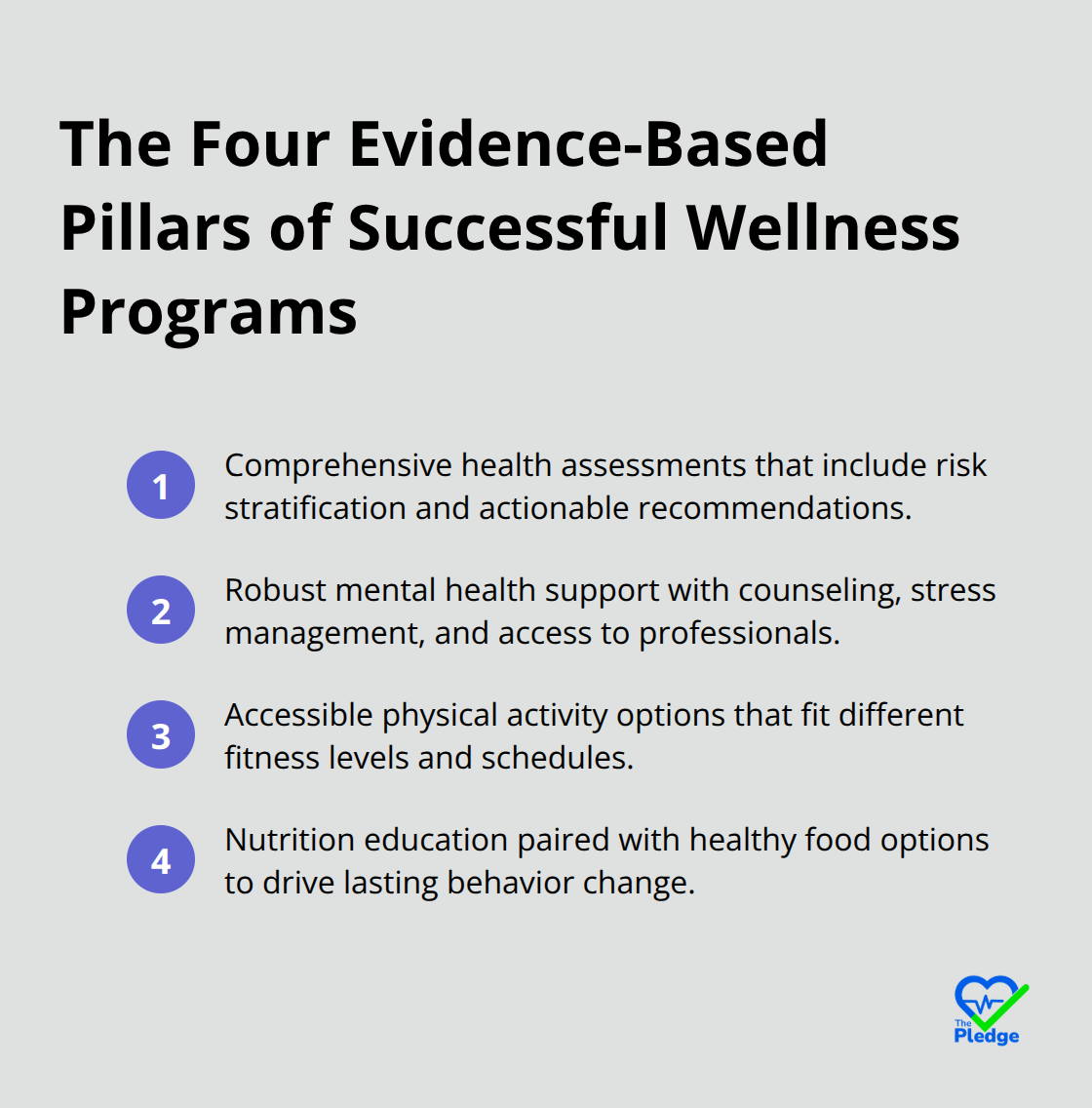
Successful workplace wellness programs require four evidence-based components that address both physical and mental health needs. Companies that implement comprehensive health assessments see 30% higher participation rates compared to those that offer basic screenings alone. The Illinois Workplace Wellness Study showed that a comprehensive workplace wellness program had no significant effects on measured physical health outcomes. These assessments must go beyond simple measurements to include personalized risk stratification and actionable health recommendations.
Mental Health Support Drives Real Results
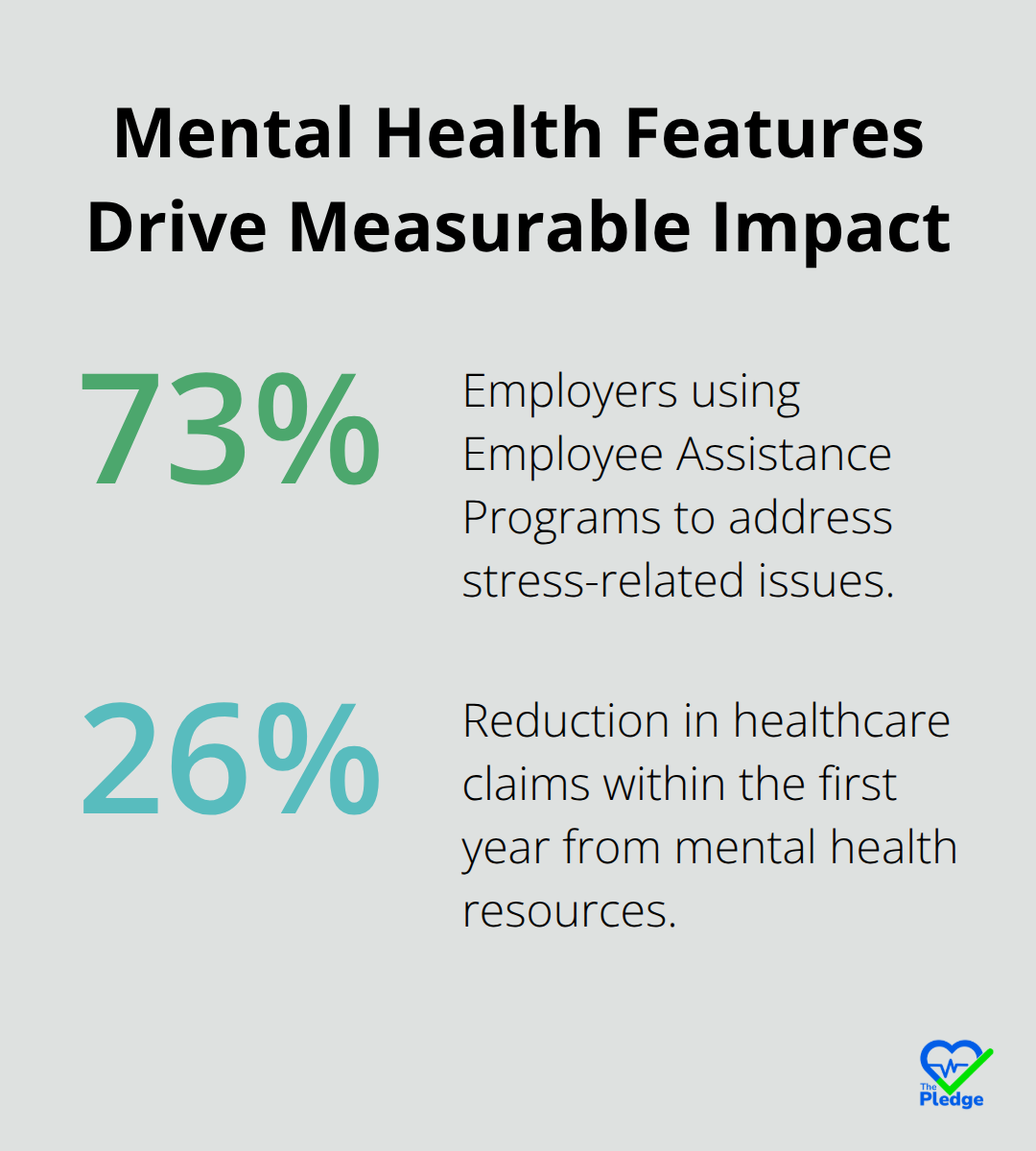
Mental health resources generate the highest employee satisfaction scores in wellness programs. Employee Assistance Programs are now used by 73% of employers worldwide because they directly address stress-related absenteeism that costs companies $3,400 per employee annually (according to the American Institute of Stress). Stress management workshops, mindfulness training, and access to mental health professionals reduce healthcare claims by 26% within the first year. Companies like Marsh McLennan improved productivity for over 20,000 employees through digital mental health tools that they integrated into their wellness platform.
Physical Activity Programs Must Be Accessible
On-site fitness centers and walking groups increase participation by 60% when companies add gamification elements. Low-cost exercise initiatives like step challenges and team sports require minimal investment but deliver measurable health outcomes. The key lies in offering multiple activity options that accommodate different fitness levels and schedules. Remote work options should include virtual fitness classes and ergonomic assessments to maintain engagement across distributed teams.
Nutrition Education Creates Lasting Change
Workplace nutrition programs that focus on obesity prevention show the strongest correlation with reduced healthcare costs. Companies that provide healthy food options and nutrition education see 23% lower rates of diabetes and hypertension among participants. Educational workshops on meal planning, cooking demonstrations, and partnerships with local nutritionists create sustainable behavior changes that extend beyond the workplace.
These four components work together to create a foundation for employee health improvement. However, even the best-designed wellness programs fail without proper implementation strategies that drive maximum employee engagement.
How Do You Get Employees Actually Using Wellness Programs
Leadership Participation Drives Success
Executive participation stands as the strongest predictor of wellness program success. Companies see higher engagement rates when leadership actively participates rather than simply endorses initiatives. CEOs who attend fitness classes, share their health journeys, and participate in wellness challenges create psychological safety that drives employee participation. The Illinois Workplace Wellness Study found that workers were more likely to report management prioritizes health when executives visibly engaged in wellness activities.
Smart Communication Creates Awareness
Smart communication strategies focus on multiple touchpoints rather than single announcements. Companies achieve 85% awareness rates through email reminders, workplace posters, manager discussions, and peer testimonials delivered across six-week cycles. This multi-channel approach reaches employees through their preferred communication methods and reinforces wellness messages consistently.
Gamification Boosts Participation
Gamification can have a positive impact in health and wellbeing, particularly for health behaviors. However, rewards must transition from external incentives to internal motivation within six months to maintain long-term engagement. Step challenges, team competitions, and achievement badges create immediate excitement while building habits that sustain participation over time.
Technology Integration Separates Winners from Failures
Technology integration separates successful programs from failures. Digital health platforms enable real-time tracking and personalized recommendations that keep employees engaged beyond initial signup. Mobile apps with social features, step tracking, and progress sharing create community accountability that sustains participation rates above 50% throughout the year (compared to 30% for traditional programs without digital components).
Incentive Structures Must Evolve
The most effective programs combine wearable device integration with AI-powered coaching that sends personalized nudges based on individual health data and behavior patterns. Personal health dashboards organize wellness journeys and track progress effectively. Incentive structures should start with immediate rewards like gift cards or premium reductions, then shift toward recognition programs and team competitions that build intrinsic motivation. Companies report 40% higher retention in wellness programs when they offer tiered rewards that recognize different achievement levels rather than one-size-fits-all approaches.
These implementation strategies create the foundation for employee engagement, but their true value becomes clear only when you measure the actual health outcomes and return on investment that wellness programs generate.
How Do You Prove Your Wellness Program Works
Track Health Metrics That Matter
Most companies measure the wrong wellness program metrics and miss the real impact on employee health. Blood pressure, cholesterol levels, and BMI changes over 12-month periods provide concrete evidence of program effectiveness. The Illinois Workplace Wellness Study tracked biometric improvements and found that participants showed significantly greater rates of positive self-reported health behaviors compared to control groups.
Companies should focus on metabolic health markers rather than vanity metrics like program sign-ups. Weight loss programs that reduce average participant BMI by 2-3 points within six months correlate with 15% fewer diabetes-related claims the following year. Smart organizations track prescription medication changes, as wellness participants often reduce blood pressure and cholesterol medications under physician supervision.
Calculate Real Cost Savings Beyond Healthcare
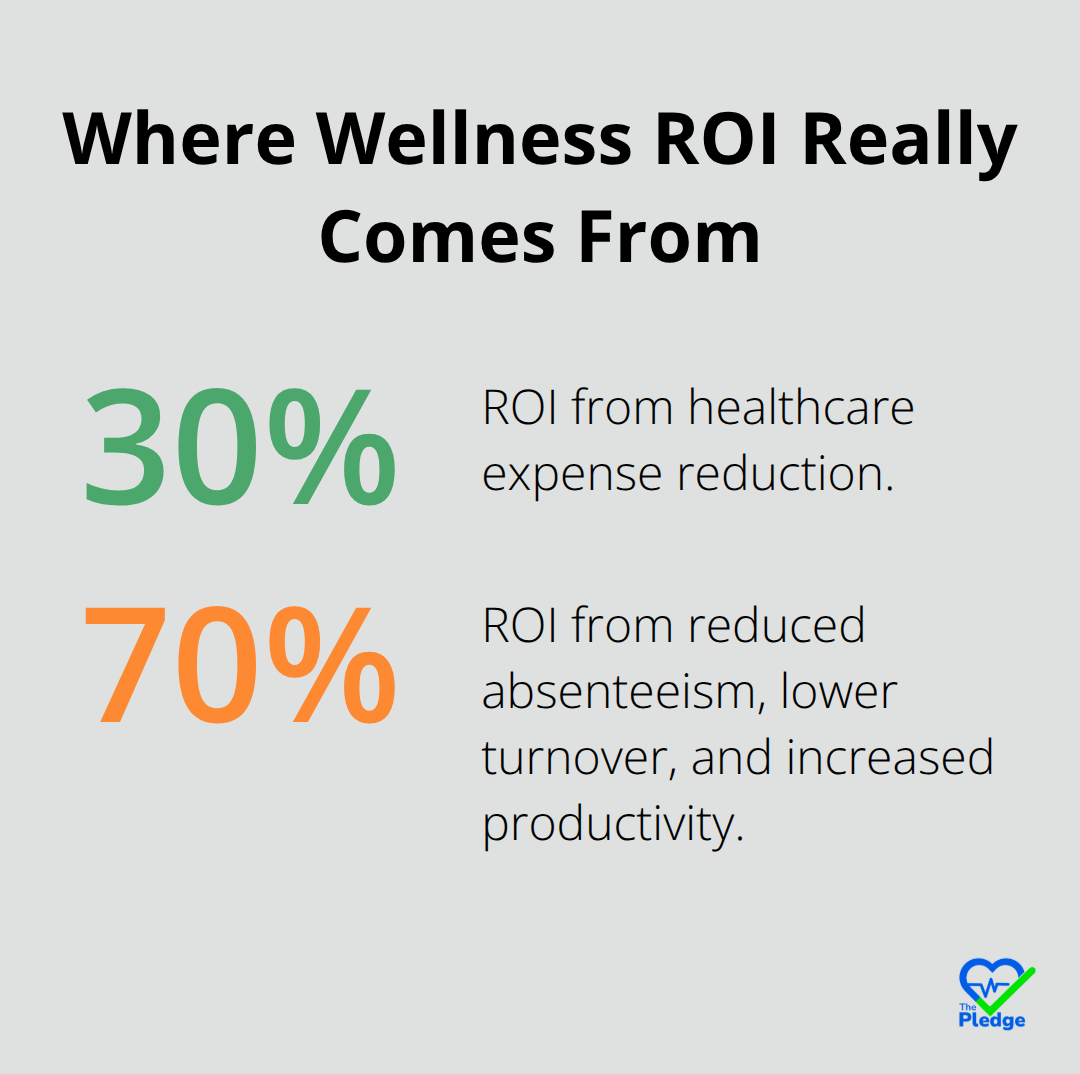
Healthcare expense reduction represents only 30% of total wellness program ROI. The remaining 70% comes from reduced absenteeism, lower turnover costs, and increased productivity that most companies fail to measure.
Stress-related absenteeism costs companies $3,400 per employee annually (according to the American Institute of Stress), which makes mental health programs the highest-ROI wellness investment.
Companies with comprehensive wellness programs report 28% reduction in sick days and 26% decrease in healthcare claims within the first year. Turnover reduction saves $15,000 per retained employee when you factor in recruitment, training, and productivity loss costs. Learn more about calculating meaningful ROI for your wellness initiatives.
Measure Employee Participation Rates
Participation rates reveal program effectiveness better than enrollment numbers. Successful wellness programs maintain 50% active participation throughout the year, while failed programs drop to 15% after six months. Companies achieve sustained engagement when they track weekly activity rather than monthly totals.
Digital platforms enable real-time participation monitoring that identifies drop-off patterns before they become permanent. Programs with gamification elements maintain 60% higher participation rates compared to traditional wellness offerings without interactive features. Effective wellness incentives can significantly boost these engagement levels.
Calculate Productivity and Absenteeism Impact
Productivity gains from wellness programs average 11% for participants, which translates to $3,000 annual value per participant for knowledge workers. The most successful programs achieve 300% ROI within 24 months through comprehensive cost tracking rather than focusing solely on medical expense reduction.
Absenteeism reduction provides immediate measurable value. Companies track sick day usage, short-term disability claims, and workers’ compensation incidents to calculate wellness program impact on workforce availability and operational costs. Understanding current wellness trends helps organizations track the right metrics for maximum impact.
Final Thoughts
Workplace wellness that works demands commitment to evidence-based strategies rather than trendy perks. Companies that succeed focus on comprehensive health assessments, mental health support, accessible fitness programs, and nutrition education. Executive participation and smart communication approaches drive these programs forward.
The biggest pitfall involves measurement of vanity metrics instead of health outcomes and cost savings. Programs fail when organizations skip technology integration that drives sustained engagement or rely solely on external rewards without intrinsic motivation. Companies must track real health improvements and productivity gains to prove program value.
Future workplace wellness will center on AI-powered personalization and predictive health analytics. The Pledge transforms employee health management by centralizing medical information and providing personalized health dashboards. Advanced platforms that combine comprehensive health data integration with real-time coaching deliver 300% ROI within 24 months through reduced healthcare costs, improved productivity, and lower absenteeism rates (when implemented with family participation features).