Interest in wellness programs is high, but participation tells a different story. At The Pledge, we’ve seen firsthand how the gap between enthusiasm and action undermines even the best-designed initiatives.
The good news: this gap is fixable. We’ll walk you through the specific barriers keeping employees on the sidelines and share proven wellness program adoption strategies that actually work.
Why Participation Drops When Time Gets Tight
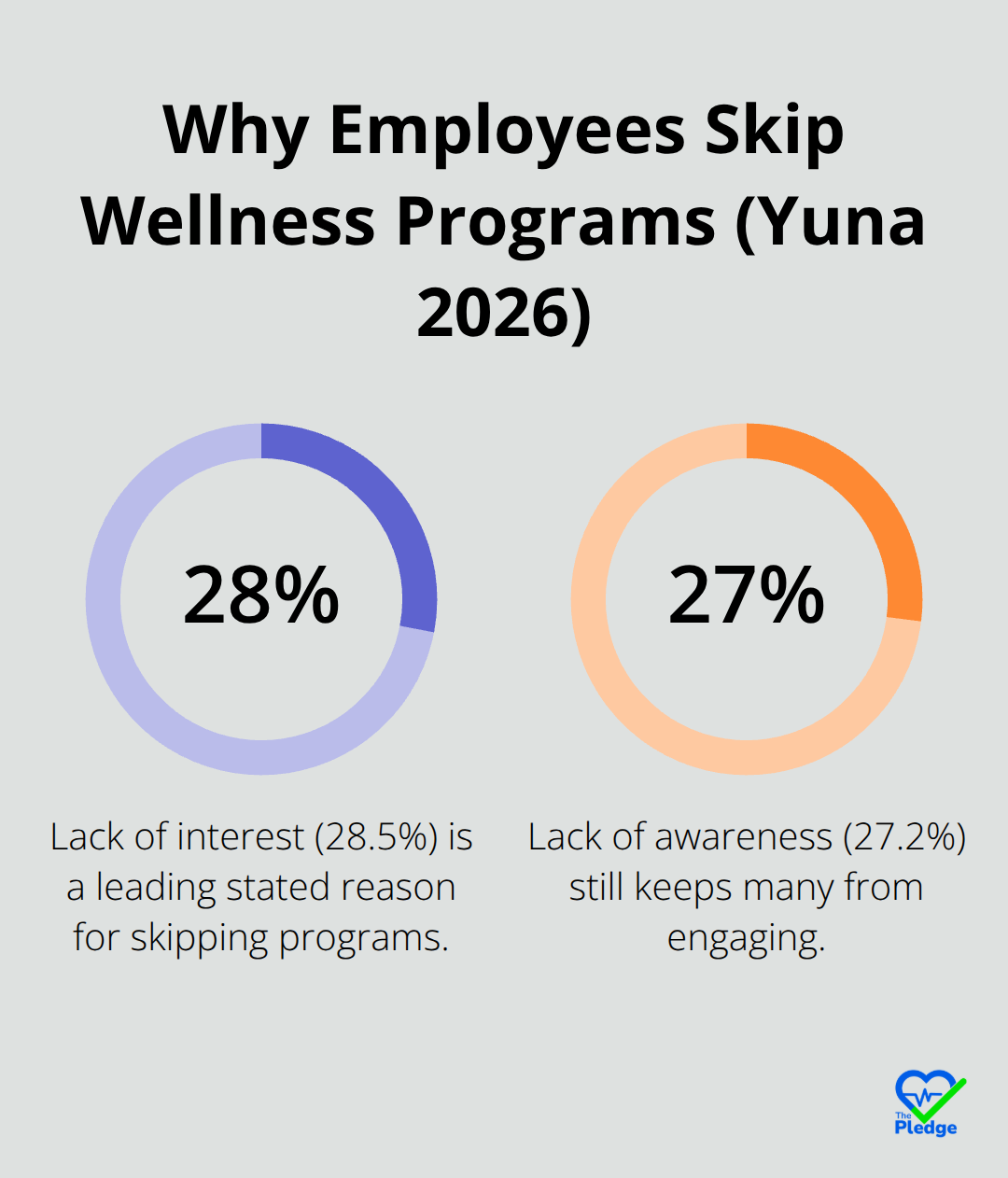
Employees genuinely want to be healthier. The problem isn’t motivation-it’s friction. According to Yuna’s 2026 research, time constraints as the primary reason they skip wellness programs, followed by lack of interest at 28.5% and lack of awareness at 27.2%. Time isn’t just an excuse; it’s the dominant barrier, and most wellness programs make it worse, not better. When employees must navigate separate portals, attend scheduled classes, or carve out dedicated time slots, participation collapses. The math is simple: if a wellness program requires more effort than the perceived benefit, employees will choose to skip it.
This is especially true for salaried workers managing back-to-back meetings and hourly employees juggling multiple commitments.
The Awareness Gap Masks a Clarity Problem
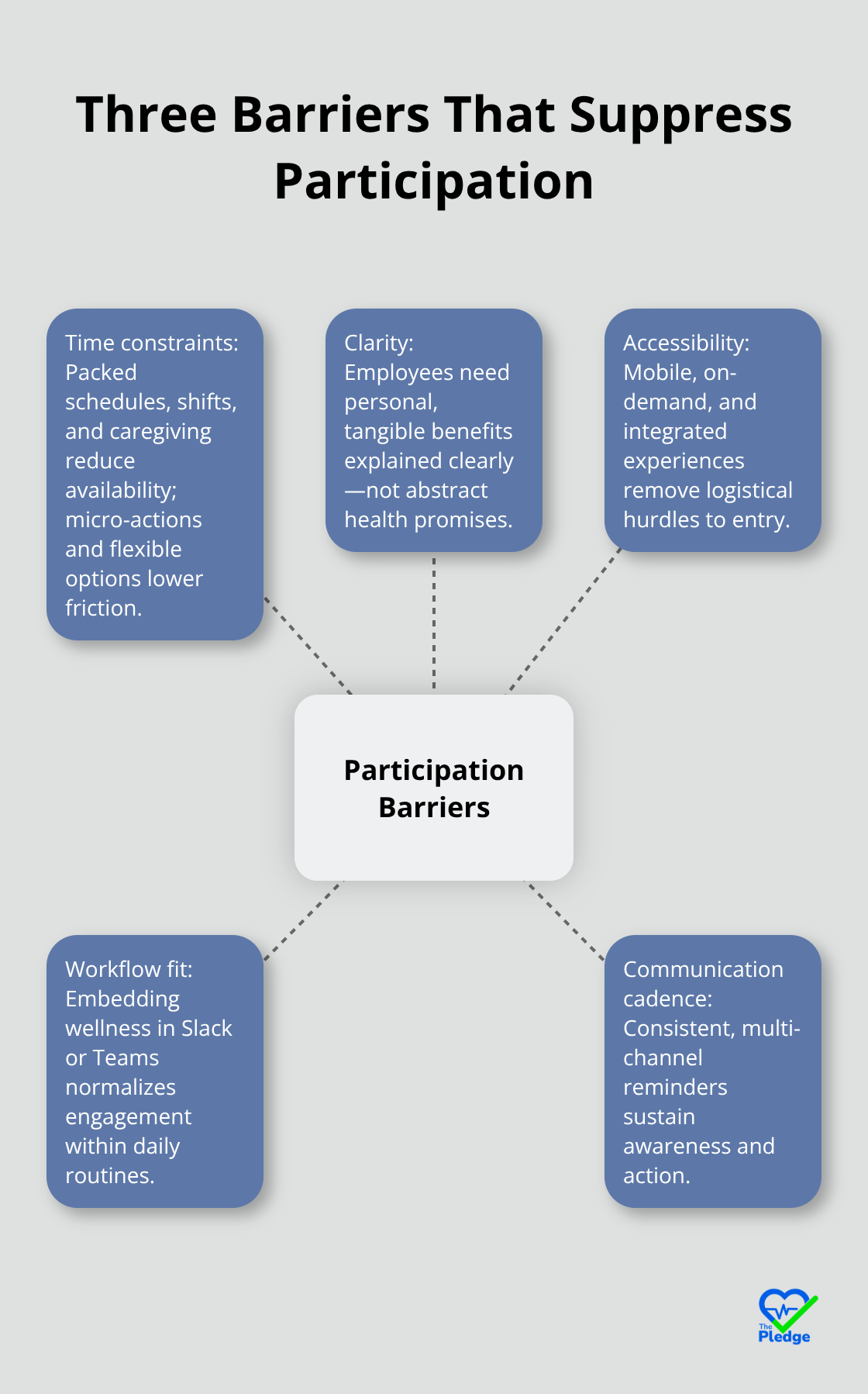
Most wellness programs misdiagnose their real problem. They assume employees don’t know the program exists. Yuna found that 73% of employees are actually aware of wellness programs, yet engagement remains uneven. The real issue is clarity. Employees don’t understand what the program offers them personally, why they should care, or how it fits into their life. When wellness messaging focuses on abstract health concepts-lower cholesterol, reduced stress, better sleep-employees tune out. They need to know the tangible, immediate benefit: Does this help me feel less exhausted at 3 p.m.? Will it reduce my out-of-pocket healthcare costs? Can I do it on my phone during lunch? Without clear answers, even aware employees stay on the sidelines.
Poor communication across multiple channels compounds this problem. If employees hear about the program once during onboarding and never again, awareness fades. Research from the International Foundation of Employee Benefit Plans shows that meaningful communication must happen consistently across email, internal messaging, bulletin boards, wellness calendars, and leadership endorsements. One announcement doesn’t stick.
Accessibility Determines Who Participates
The third barrier is often invisible until you examine actual participation data. A fitness class offered at 6 a.m. on-site doesn’t work for parents dropping kids at school. A nutrition workshop during work hours excludes remote workers. A biometric screening that requires a 30-minute appointment alienates shift workers. The gap between program offerings and employee reality is where participation dies. Preventive lifestyle interventions typically achieve only 7–21% participation across organizations, with fitness programs peaking at 21%. That gap isn’t random-it reflects poor alignment between program design and how employees actually live.
Mobile accessibility is non-negotiable. Employees expect to engage with wellness on their phones, on their schedule, with minimal friction. A platform with 24/7 on-demand resources, integration with Slack or Teams, and flexible participation options sees dramatically higher engagement than one requiring downloads, logins, or scheduled attendance. The most successful programs embed wellness into existing workflows rather than asking employees to add another task to their day.
What Drives Real Participation
These three barriers-time, clarity, and accessibility-explain why interest doesn’t translate to action. But they also point to solutions. Employees will participate when programs fit their lives, communicate real benefits, and remove friction from the experience.
The next section explores the specific strategies that close this gap and turn interested employees into active participants.
What Actually Moves Employees From Interest to Action
The gap between awareness and participation closes when programs address the three barriers we identified: time, clarity, and accessibility. Removing friction is non-negotiable. Employees participate when wellness fits seamlessly into their existing routine, when the personal benefit is unmistakable, and when engagement requires minimal effort. The strategies below aren’t theoretical-they’re built on real participation data and workplace adoption patterns.
Match Programs to How Employees Actually Live
Personalization eliminates the one-size-fits-all problem that alienates most employees. Instead of offering a generic fitness class, identify what your workforce actually does. Desk-bound workers suffering from back pain need seated stretching or standing desk resources. Parents with young children want 10-minute home workouts they can do during nap time. This isn’t complicated-it requires listening. Surveys and wellness platforms that track employee interests reveal patterns. According to research from the International Foundation of Employee Benefit Plans, meaningful engagement benchmarks include 60-80% participation in biometric screenings and health assessments when programs are tailored to employee needs. The difference between a generic offering and a personalized one often means 30-40 percentage points in participation. Aaptiv provides 10,000 on-demand workouts with AI-powered plans tailored to individual employees, eliminating the excuse that schedules don’t align.
Make Rewards Meaningful and Transparent
Incentives work, but only when they’re substantial enough to matter and clearly communicated. Small rewards-a coffee gift card, a branded water bottle-don’t move participation. According to the RAND Corporation, meaningful financial incentives like premium reductions or HSA contributions significantly outperform token gestures. A 2024-2025 report from the International Foundation of Employee Benefit Plans found that adding incentives can raise participation by 23-26 percentage points. The structure matters too. Reward participation and engagement, not just outcomes. An employee who completes ten workouts deserves recognition even if their weight hasn’t shifted. Gamification amplifies this effect-leaderboards, progress bars, and team challenges create accountability and friendly competition. Harvard Business Review research shows that a 10% improvement in wellness engagement yields about $2,400 per employee in annual profit through productivity and cost reductions, making the investment in incentives mathematically sound.
Embed Wellness Into Tools Employees Already Use
Integration with daily workflows is the single most effective participation driver. If your wellness platform requires downloading a separate app, logging in, and navigating a portal, participation will stall. Instead, integrate wellness into Slack, Teams, or email-the tools employees check dozens of times daily. Send a 5-minute guided breathing exercise through Teams at 3 p.m. when energy dips. Post a walking challenge in Slack with real-time leaderboards. Offer mobile-first access so employees engage on phones during breaks, not at home on computers. The International Foundation of Employee Benefit Plans emphasizes that flexible programs offering varied activities and multiple participation levels recruit more participants. Mobile accessibility is non-negotiable-24/7 on-demand resources with app integration see dramatically higher engagement. According to research, time constraints remain a primary barrier, but micro-actions (5-10 minute activities) with flexible scheduling significantly reduce this friction. When wellness becomes frictionless, participation normalizes.
Leadership Visibility Accelerates Adoption
Employees notice when executives and managers participate in wellness programs. When leaders model healthy behaviors-taking walking meetings, sharing personal wellness stories, or sponsoring team challenges-they signal genuine commitment. This visibility transforms wellness from a peripheral HR initiative into a normal workplace practice. Gallup research found that employees with strong peer connections at work show higher engagement overall, and wellness programs that leverage this dynamic through team challenges and group activities see measurable participation increases. Leaders who visibly participate create permission for others to prioritize health without guilt or stigma.
The strategies above address the three barriers that keep interested employees on the sidelines. But knowing what works isn’t enough-you need to measure whether these strategies actually move the needle in your organization. The next section shows you how to track participation, analyze outcomes, and adjust your approach based on real data.
Measuring Success and Adjusting Your Approach
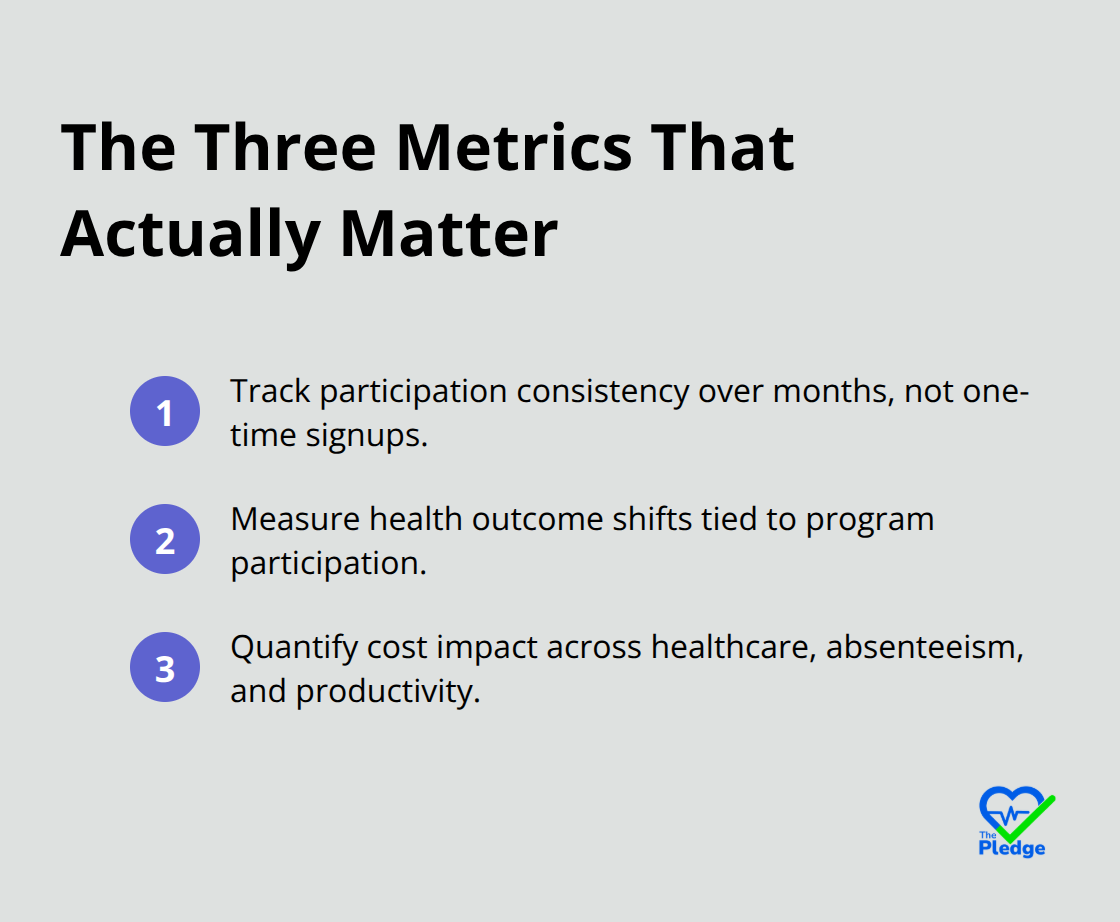
Measuring wellness program success requires abandoning vanity metrics. Many organizations track enrollment numbers and call it a win, then wonder why healthcare costs keep rising. The real question isn’t how many employees signed up-it’s how many actively participate, whether their health improves, and whether the program delivers financial returns. Organizations often implement solid strategies, then fail to measure what matters, which prevents them from identifying what works or what needs adjustment. The three metrics that actually matter are participation consistency, health outcome shifts, and cost impact.
Track Participation That Sticks
Participation isn’t a one-time event. An employee who completes a health assessment once doesn’t count as engaged. Track repeat participation-how many employees return to the program week after week, month after month. Meaningful engagement benchmarks include 60-80% participation in biometric screenings and health assessments when programs align with employee needs. The real proof lies in sustained engagement. If participation drops 50% after month two, your program has a retention problem that no number of initial signups can mask. Measure monthly active users, completion rates across challenges or programs, and the percentage of employees engaging at least twice per month. These numbers reveal whether your adoption strategies actually work or just create short-term buzz.
Prove Health Outcomes Are Real
Health outcomes provide the evidence that participation translates to real change. Track metrics like weight reduction in weight management programs, stress and burnout scores before and after program implementation, and screening completion rates for disease management. If your program shows no measurable health improvement after six months, the strategies need adjustment. Cost savings lag behind participation by 6-12 months, so don’t expect immediate ROI. However, comprehensive wellness programs yield 3-6 dollars of return per dollar spent, with sustained initiatives reducing absenteeism, healthcare costs, and disability claims. Track healthcare spending per employee, absenteeism rates, and productivity metrics like job satisfaction scores. The strongest programs show measurable improvement in all three within 18-24 months.
Listen to Employees and Adjust
Gathering employee feedback is the final, often-skipped step that separates programs that stagnate from those that improve. Don’t assume you understand why participation is low or why certain programs work. Ask directly through surveys, focus groups, and wellness committee input. Identify specific barriers-is the mobile app confusing, are incentives insufficient, is communication unclear, or do programs not match employee interests? Use this feedback to make targeted adjustments. If 40% of employees cite time constraints, introduce 5-10 minute micro-activities. If awareness remains low despite communication efforts, try different channels-perhaps a Slack integration reaches your workforce better than email. Organizations that achieve 50%+ participation continuously iterate based on what employees tell them, not what leadership assumes will work. Building a culture of wellness requires this ongoing dialogue between leadership and employees.
Final Thoughts
The gap between wellness interest and participation closes when organizations address three core barriers: time, clarity, and accessibility. Employees skip programs not because they don’t care about health, but because programs demand effort without delivering obvious personal benefit. Wellness program adoption strategies that remove friction-personalization, meaningful incentives, workflow integration, and leadership visibility-directly counter these barriers and transform how employees engage with health initiatives.
Organizations that achieve 60-80% participation in health assessments and maintain repeat engagement see measurable shifts in healthcare costs, absenteeism, and productivity within 18-24 months. Comprehensive wellness programs deliver 3-6 dollars of return per dollar invested, with sustained initiatives reducing healthcare spending by approximately 25%. These outcomes reflect organizations that treated participation as a strategic priority, not an afterthought, and continuously refined their approach based on employee feedback rather than assumptions.
The Pledge centralizes health data, sends personalized reminders, and integrates seamlessly with existing benefits, making wellness management straightforward for employees. When employees access their health information, track progress, and engage with wellness programs through a single, user-friendly platform, participation increases and sustained engagement becomes achievable. Start with the barriers your employees face, implement strategies that address them directly, and measure what matters to build a wellness culture where participation becomes the natural choice.