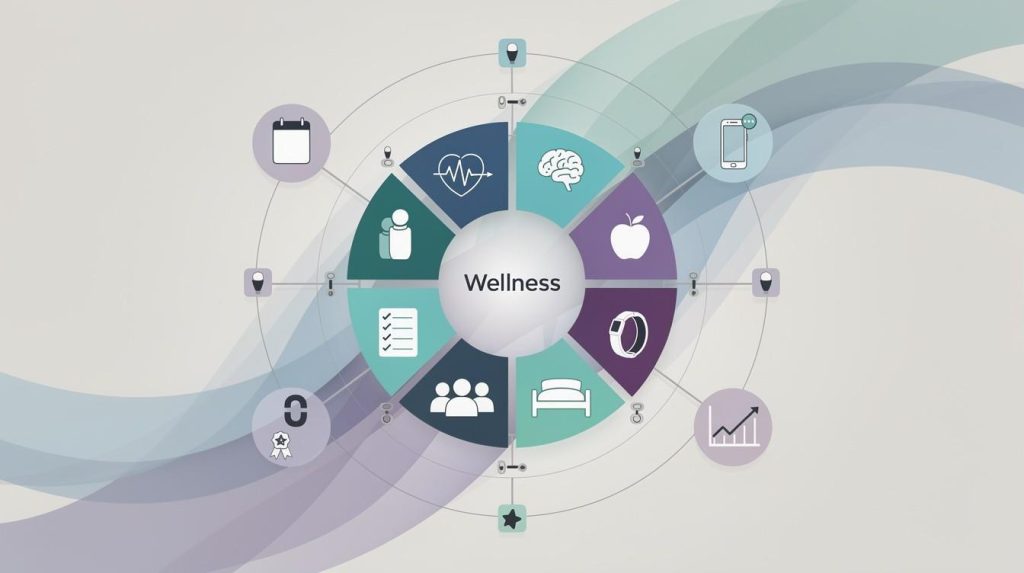
Most employee wellness programs fail because they treat everyone the same. Generic fitness challenges and one-size-fits-all health initiatives don’t work when employees have different needs, preferences, and life situations.
At The Pledge, we’ve seen firsthand that comprehensive wellness engagement requires personalization, achievable goals, and real support systems. This post walks through why traditional programs fall short and how to build wellness initiatives that actually stick.
Why Engagement Fails in Standard Wellness Programs
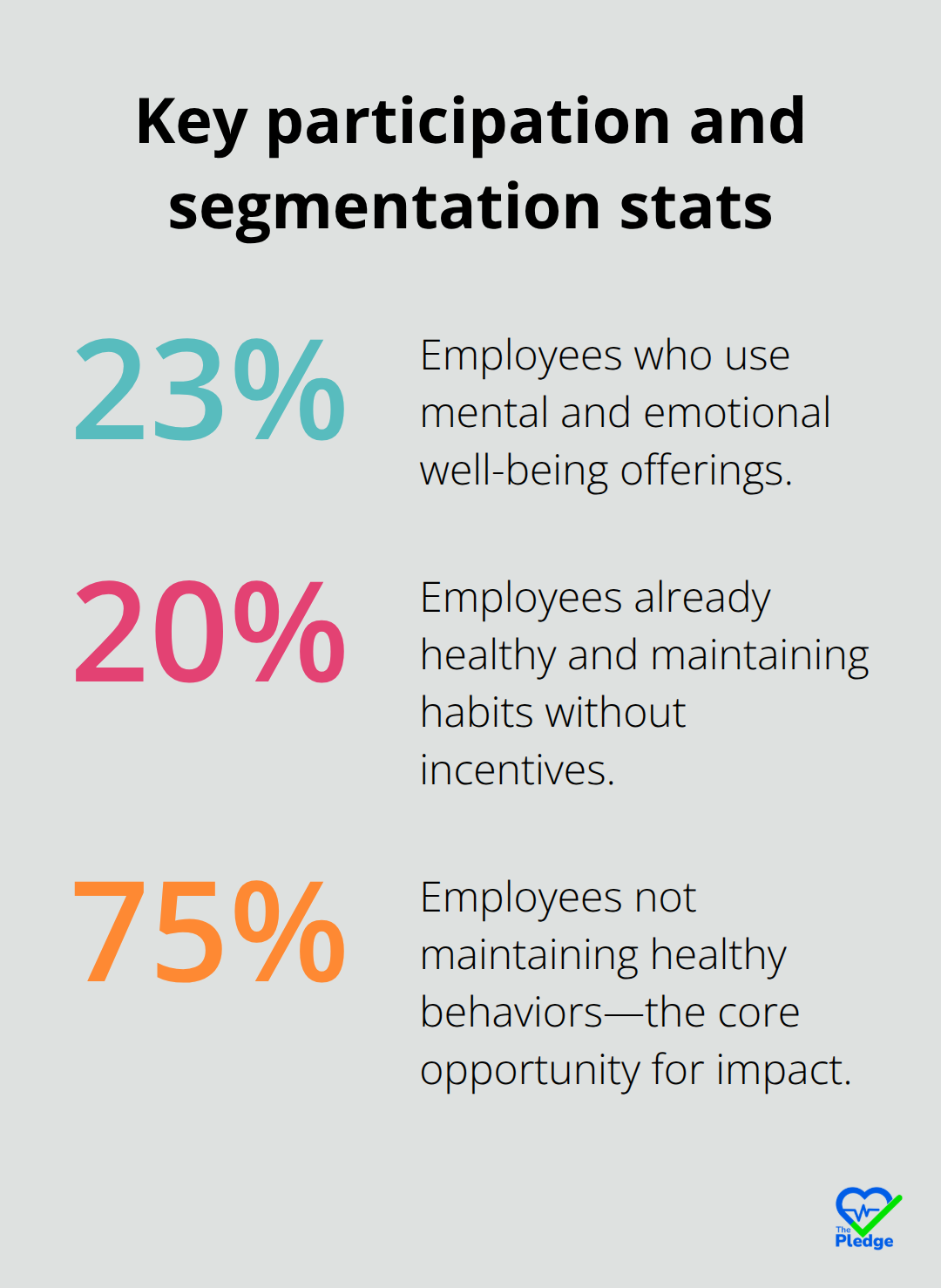
Most wellness programs start with good intentions but collapse under the weight of poor design and misaligned expectations. Gartner’s 2021 Employee Value Proposition Benchmarking Survey found that only 23% of employees actually use mental and emotional well-being offerings. That gap reveals the core problem: availability does not equal engagement. Generic gym discounts, step challenges, and one-time health screenings feel disconnected from what employees actually need. When a program treats a 25-year-old with young children the same way it treats a 55-year-old managing chronic conditions, participation drops fast. Employees see these initiatives as checkbox exercises rather than genuine support for their lives.
The Numbers Behind Low Participation
Participation rates tell the real story. Most organizations struggle to reach 30-40% engagement on wellness activities, which means 60-70% of employees do not participate at all.
Research from the Mind the Workplace 2024 Report by Mental Health America found that three in four workers report work stress affects their sleep. Yet fewer than half of workplaces offer transparent communication about how benefits address these issues. When employees do not understand how a program solves their specific problems, they skip it entirely. Wellness programs fail when companies rely on participation rates instead of meaningful outcomes. This means that program quality matters far less than whether people actually show up and participate.
Workforce Segmentation Reveals the Real Opportunity
The real issue surfaces when organizations fail to segment their workforce. Approximately 20% of employees are already healthy and maintain good habits without incentives. About 30% will engage readily with incentives and clear communication. Another 30% require substantial effort and ongoing support to change behavior. Between 5-12% may actively resist participation. The remaining 75% are not maintaining healthy behaviors and represent the actual opportunity for impact. Yet most programs treat all these groups identically, wasting resources on the already-healthy while failing to reach those who need support most.
Why Personalization Drives Results
Personalized messaging outperforms generic tips significantly, and employees respond better when programs address their actual barriers (whether childcare constraints, mental health challenges, or managing multiple chronic conditions). Programs that ignore these differences see participation collapse within months. Organizations that tailor health recommendations to individual needs and life situations unlock far stronger engagement than those that broadcast one-size-fits-all messages. The next section explores how to build programs that actually meet employees where they are.
How to Build Engagement That Lasts
Tailor Health Recommendations to Individual Needs
Personalization is not optional anymore. The data makes this clear: organizations that tailor health recommendations to individual circumstances see dramatically higher participation than those broadcasting generic messages. Approximately 30% of your workforce will engage readily with incentives and clear communication about how a program solves their specific problem, while another 30% require substantial ongoing support. This distinction matters because your engagement strategy must account for these different groups rather than treating everyone identically. Start with health risk assessments and claims data to understand what employees actually need-whether that’s managing stress, losing weight, controlling chronic conditions, or improving sleep. Harvard Business Review research shows that a 10% improvement in wellness engagement generates about $2,400 in annual profit per employee, which means the investment in personalization pays for itself quickly.
Use Real-Time Tools to Track Personal Progress
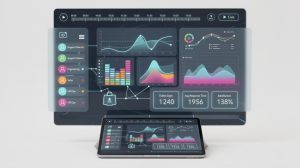
Mobile health dashboards and real-time tracking tools help employees see their own progress against goals that matter to them personally, not arbitrary company targets. When an employee watches stress reduction improve their sleep quality or sees consistent activity lower their blood pressure, they stay engaged. This differs fundamentally from telling someone they need to walk 10,000 steps because the company said so. Employees respond to concrete, measurable changes in their own health rather than abstract targets. The visibility into personal outcomes transforms wellness from a corporate mandate into a self-directed health journey.
Build Momentum Through Achievable Milestones
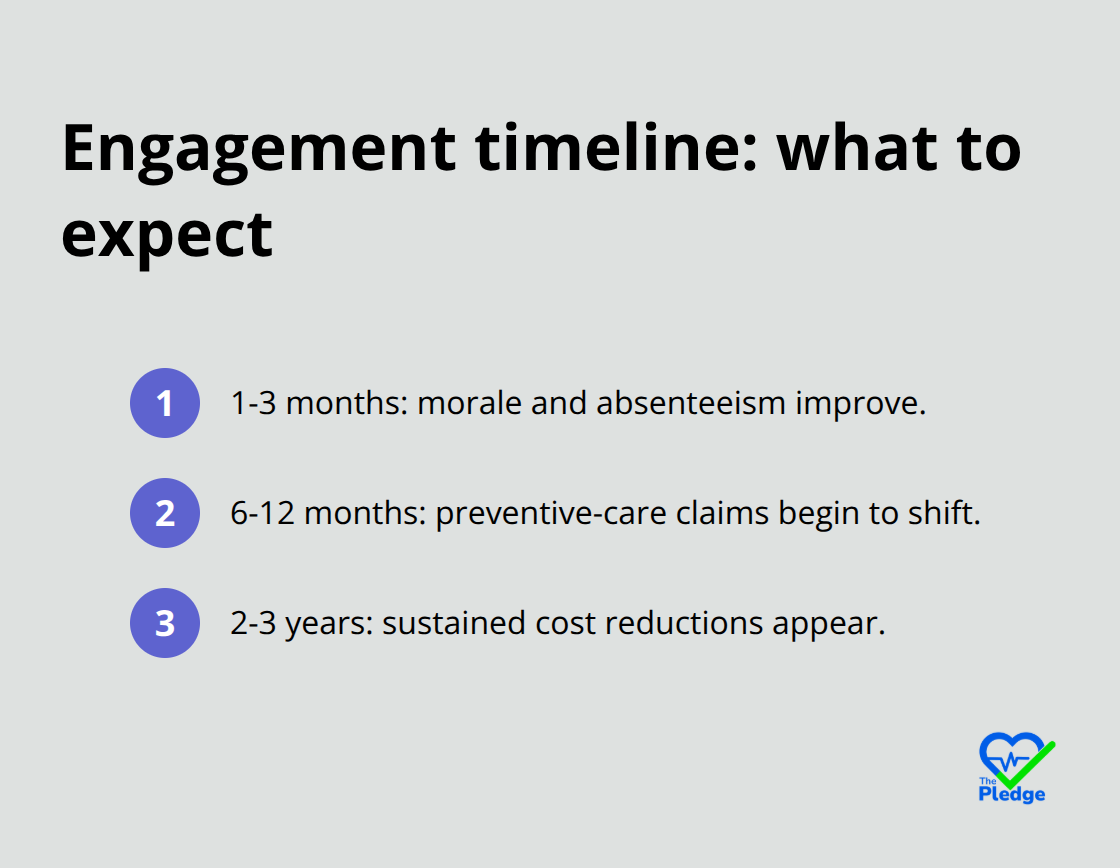
Celebrate smaller wins and integrate family participation into your program design. Research shows that high-engagement wellness programs deliver 3-4x better ROI on cost containment than low-engagement programs. The engagement timeline matters: you see improvements in morale and absenteeism within 1-3 months, preventive-care claims shift within 6-12 months, and sustained cost reductions appear within 2-3 years. Achievable milestones keep employees motivated through that timeline instead of burning out after six weeks.
Try targets that employees can actually reach-completing a health assessment, attending two fitness sessions, or finishing a stress-management module-then recognize these completions visibly.
Leverage Peer Influence and Family Support
Peer influence drives sustained participation far more than individual incentives alone, so recruit wellness champions within departments and create opportunities for employees to support one another. Including spouses and family members in wellness initiatives significantly raises participation because family influence shapes health behavior more powerfully than employer messaging. Transparent communication about what the program costs, how benefits connect to employee health outcomes, and what changes the organization has made based on feedback builds trust and moves participation from temporary to sustained. This foundation of trust and peer support positions your organization to move beyond engagement metrics and into the technology infrastructure that sustains long-term behavior change.
The Right Technology Makes Engagement Stick
Most organizations buy wellness tools and assume adoption will follow. That assumption fails repeatedly. The problem is not that good technology does not exist-it is that companies deploy technology without connecting it to the personalized engagement strategies covered in the previous section. Real-time dashboards, mobile apps, and gamification only work when they reinforce the tailored health recommendations and peer support systems you have already built. Technology without strategy becomes another abandoned app on employee phones.
Start With Transparent Cost Visibility
Employees need to see how their health choices connect to their actual benefits and costs, not abstract health scores. When an employee understands that managing their blood pressure reduces their premium contributions by a specific dollar amount, or that attending preventive care visits saves them out-of-pocket costs, engagement shifts from optional to essential. Research shows that transparent personal cost impact demonstrations increase participation rates compared to generic health messaging. Mobile-friendly platforms should display this information prominently-not buried in a secondary menu. Real-time tracking of progress toward personal milestones (not company-wide targets) keeps employees motivated because they see changes in their own health metrics week to week.
Integrate All Health Information Into One Platform
Integration with existing health plans and benefits is foundational, not optional. Employees should access their health dashboard, claims information, benefit details, and wellness tools from a single platform rather than juggling multiple logins and fragmented systems. This integration reduces friction, which directly increases usage. When an employee can see their EOB alongside their health recommendations and family care coordination tools, the platform becomes genuinely useful rather than one more thing to manage. Fragmented systems create barriers that employees simply abandon.
Align Rewards With Real Financial Value
Gamification and reward systems work only when the rewards align with what employees actually value. Premium reductions, HSA contributions, and graduated incentives outperform generic points or badges. Meaningful financial incentives increase participation rates, particularly among employees who engage readily with clear incentives. The mistake companies make is offering rewards that feel disconnected from real value-a coffee gift card for completing a health screening feels trivial compared to a $300 annual HSA contribution for sustained engagement. Structure your rewards on a timeline that matches the engagement phases: immediate recognition for task completion, short-term rewards at the 6-12 month mark when preventive-care benefits emerge, and longer-term benefits that compound as employees maintain healthy behaviors.
Design Mobile Apps for Speed and Simplicity
Employees will not engage with complex interfaces or multi-step processes. The app should allow employees to complete health assessments, track progress, view personalized recommendations, and access family sharing features within two or three taps. Push notifications work when they are personalized and timely-reminding an employee about a specific health goal they set, not broadcasting generic wellness tips to everyone. The data shows that personalized messages drive significantly higher engagement than batch communications.
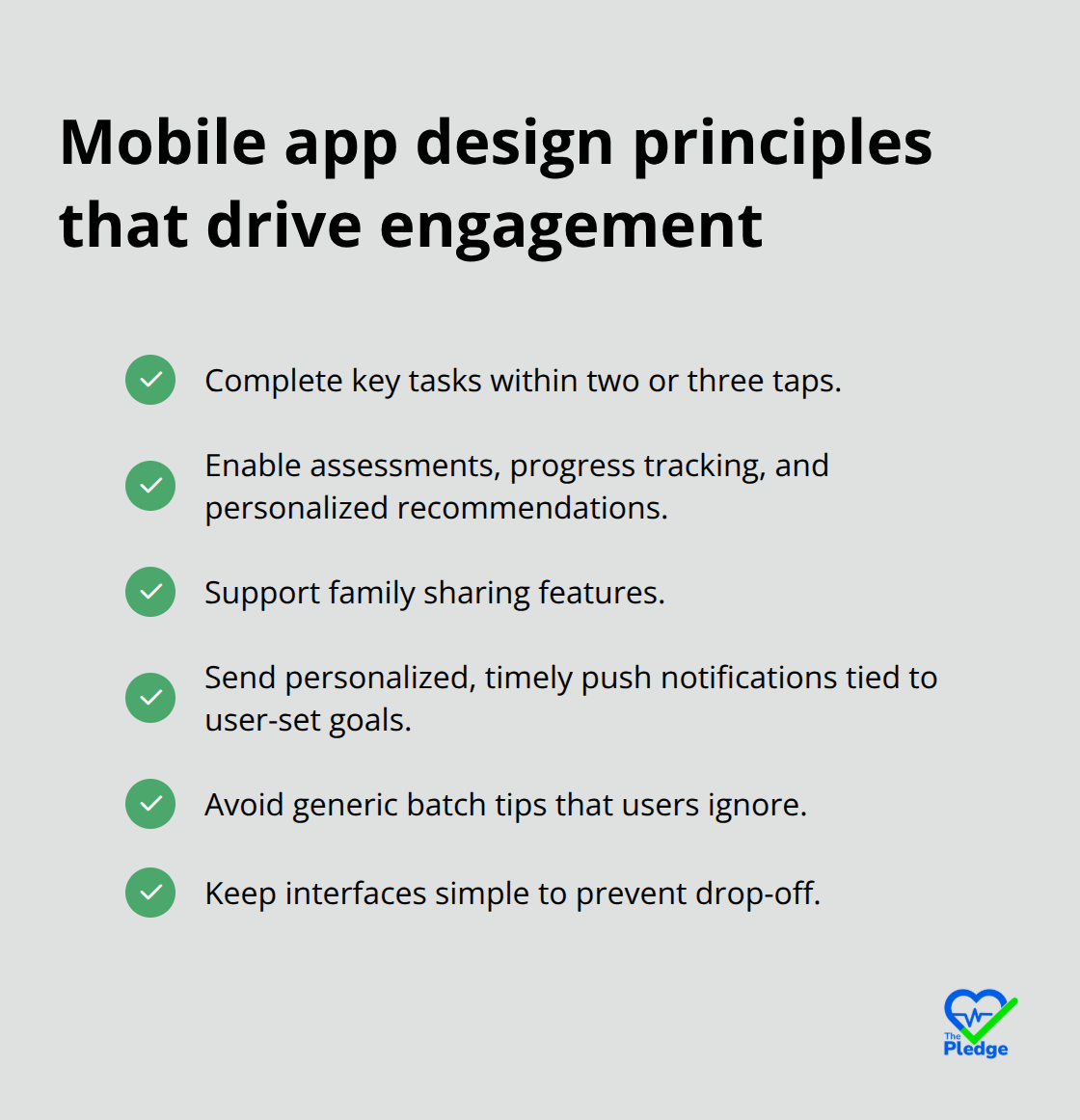
Simplicity determines whether employees actually use the tool or delete it after the first week.
Measure Engagement Through Behavior Change, Not Just Task Completion
Track engagement from initial action (HRA completion, screening rates) through ongoing behavior change and sustained participation. Most organizations stop measuring after the first health screening, which misses the real story. Participation rates in year one often exceed 60-80%, but retention drops sharply if the program does not deliver ongoing support and visible health improvements. The programs that stick combine technology-enabled transparency, meaningful rewards tied to real financial benefits, family participation features, and consistent measurement of actual health outcomes rather than just task completion rates.
Final Thoughts
Comprehensive wellness engagement delivers measurable financial returns alongside genuine health improvements. Organizations that implement personalized programs, transparent cost visibility, and peer support systems see high-engagement initiatives yield 25-35% cost reductions compared to 5-10% from low-engagement efforts. High-engagement wellness programs deliver 3-4x better ROI than low-engagement alternatives, and a 10% improvement in wellness engagement generates approximately $2,400 in annual profit per employee.
The strategies that work combine personalization with achievable milestones, family participation, and technology that reduces friction. Segment your workforce realistically: about 30% engage readily with clear incentives, another 30% require substantial support, and the remaining 75% represent your actual opportunity for impact. Tailor health recommendations to individual circumstances rather than broadcasting generic messages, and use mobile platforms that integrate claims data, benefits information, and personalized health dashboards into one accessible interface.
Most organizations still deploy fragmented tools, generic messaging, and disconnected systems that employees abandon within weeks. The Pledge simplifies care coordination while your organization focuses on building the engagement strategies outlined in this post, transforming wellness from a checkbox exercise into sustained behavior change that improves both employee health and organizational costs.