

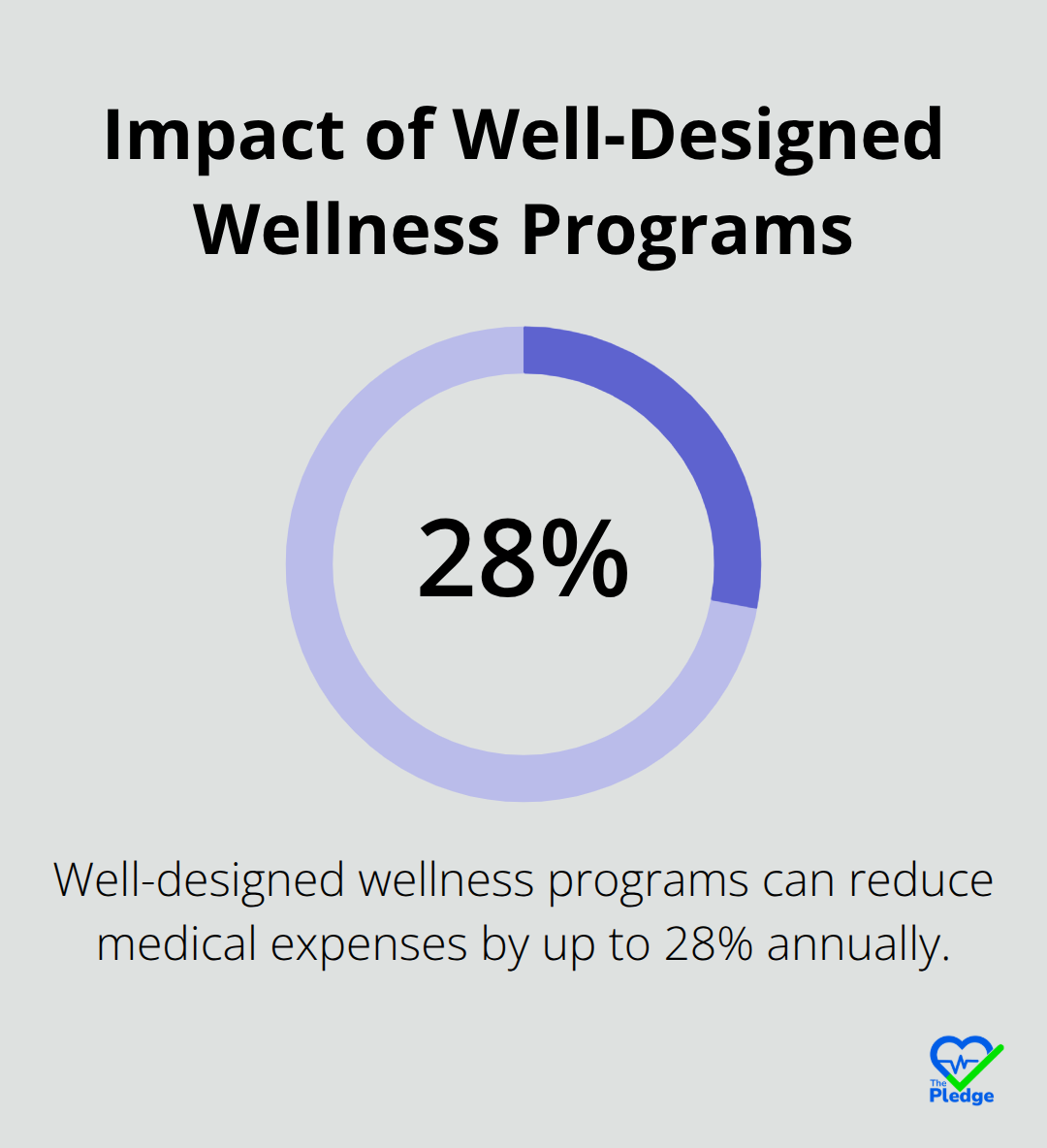
Wellness incentives in the workplace have become a game-changer for companies looking to boost employee health while cutting healthcare costs. Research shows that well-designed programs can reduce medical expenses by up to 28% annually.
At The Pledge, we’ve seen how the right incentive structure transforms workplace culture and drives real results. The key lies in choosing incentives that actually motivate your workforce.
What Wellness Incentives Actually Work
Financial Incentives That Drive Real Participation
Companies that implement premium reductions see increased participation rates. WellSteps research shows that $30-$40 monthly premium differentials hit the sweet spot for motivation without creating entitlement. Leading organizations offer up to $600 annually in health insurance savings for employees who complete health assessments and biometric screenings.
Cash bonuses work even better for specific achievements. One major corporation awards $600 for participation in on-site screenings, with additional cash incentives tied to health management activities. Health Savings Account contributions of $100-$200 based on wellness program completion create immediate financial value. Gym membership reimbursements up to $400 annually promote sustained physical activity while they reduce healthcare costs.
Time-Based Rewards That Employees Value Most
Vacation days rank among the most valued workplace benefits according to employee surveys. Companies that offer additional PTO for fitness goal achievement see 45% higher program engagement than those that use only financial incentives. Flexible schedule rewards, such as compressed work weeks for wellness program graduates, address work-life balance concerns that affect 71% of workers.
Mental health days tied to stress management workshop attendance have gained traction (especially with 75% of employees who report significant workplace stress). Organizations that provide wellness-earned flex time report 22% higher job satisfaction scores and measurably lower burnout rates.
Recognition Programs That Build Lasting Culture
Public recognition multiplies wellness program impact. Employees who receive acknowledgment for health achievements are 3x more likely to feel they belong at work and 90% less likely to experience regular burnout. Quarterly wellness awards that feature trips or significant prizes for sustained participation create aspirational goals that maintain year-round engagement.
Team-based challenges with group recognition foster peer support and accountability. Companies that implement wellness leaderboards and achievement badges report sustained participation rates 40% higher than programs that rely solely on individual incentives.
The success of these incentive structures depends heavily on how you structure and implement them within your organization’s unique culture and goals.
How Do You Build Programs That Actually Work
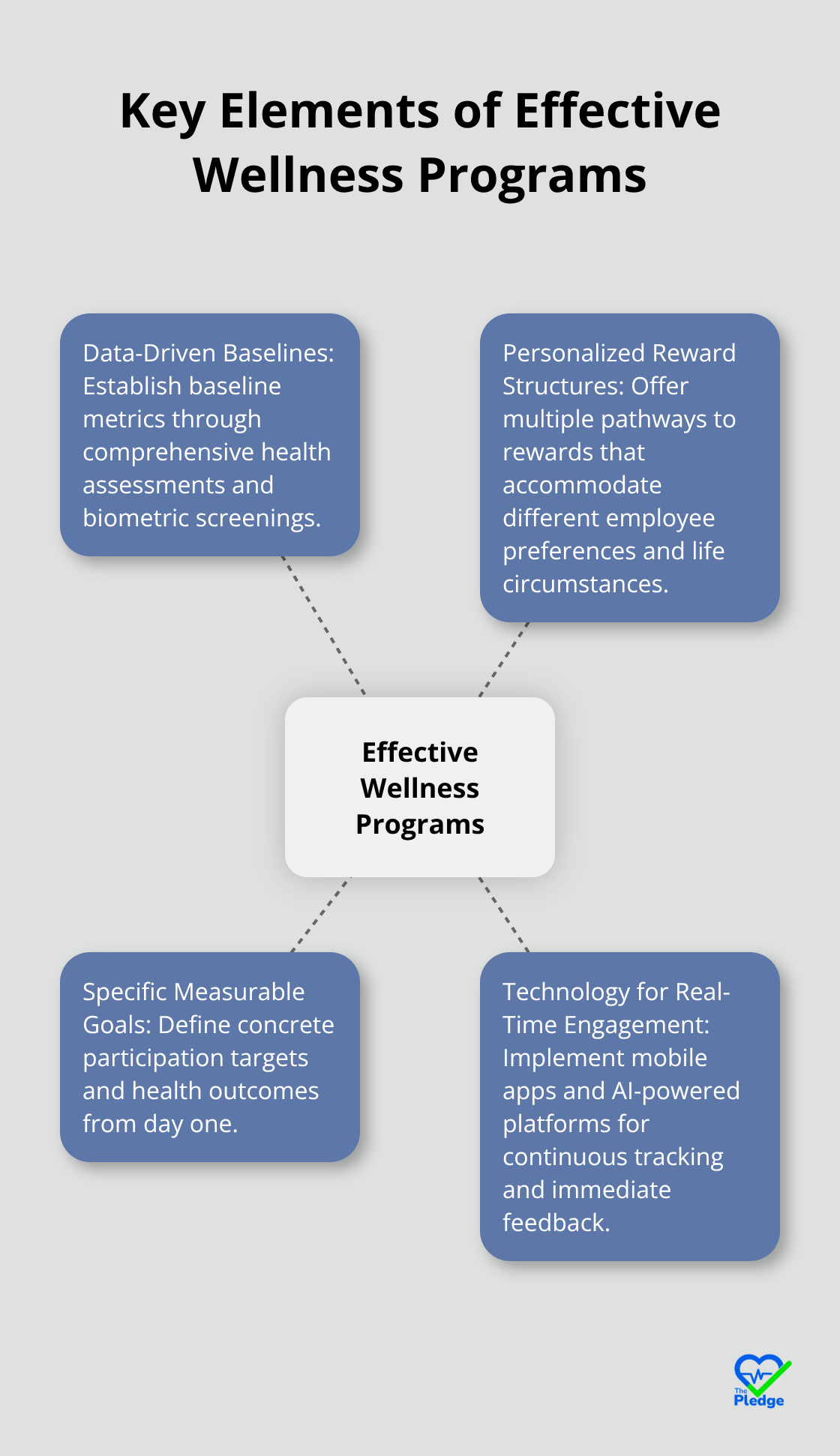
Specific, measurable goals form the foundation of any successful wellness incentive program. The RAND Corporation found that only 20-40% of employees typically participate in workplace wellness programs, which makes clear objectives essential. Define participation targets like 60% completion of health assessments within 90 days, or specific health outcomes such as 15% reduction in high blood pressure cases within six months. Companies that establish concrete metrics from day one see 35% higher engagement rates than those with vague wellness goals.
Start With Data-Driven Baselines
Effective programs begin with comprehensive health assessments that establish baseline metrics for your workforce. Biometric screenings reveal specific health risks across your employee population and allow you to tailor incentives accordingly. Organizations that customize their approach based on actual employee health data report 50% better outcomes than generic programs. Track key indicators like BMI changes, cholesterol levels, and stress scores quarterly. Companies that use this approach typically see measurable improvements within 120 days of program launch.
Design Personalized Reward Structures
One-size-fits-all incentives fail spectacularly in modern workplaces. Gartner research shows that lower participation barriers through personalized approaches dramatically increase engagement. Create multiple pathways to rewards that accommodate different employee preferences and life circumstances. Offer premium reductions for some, additional vacation days for others, and flexible schedules for parents (who often struggle with traditional wellness program timing). The most successful programs provide at least five different incentive options and allow employees to choose rewards that match their personal motivations.
Use Technology for Real-Time Engagement
Modern wellness platforms enable continuous tracking and immediate feedback that maintains momentum throughout the year. Points-based systems where employees accumulate rewards for various activities show 40% higher sustained participation than annual programs. Implement mobile apps that send personalized reminders and track progress automatically. Companies that leverage AI-powered platforms report engagement rates that exceed industry standards because technology eliminates friction and provides instant gratification for healthy behaviors.
These foundational elements create the framework for success, but the real test comes when you measure whether your investment actually pays off through improved health outcomes and reduced costs.
How Do You Prove Your Wellness Program Works
Track Healthcare Metrics That Matter
The most successful wellness programs generate measurable returns within the first 12 months, but only if you track the right metrics from day one. Companies that focus on participation rates alone miss the bigger picture. Harvard Business Review research shows that comprehensive wellness investments can yield 600% ROI when measured correctly.
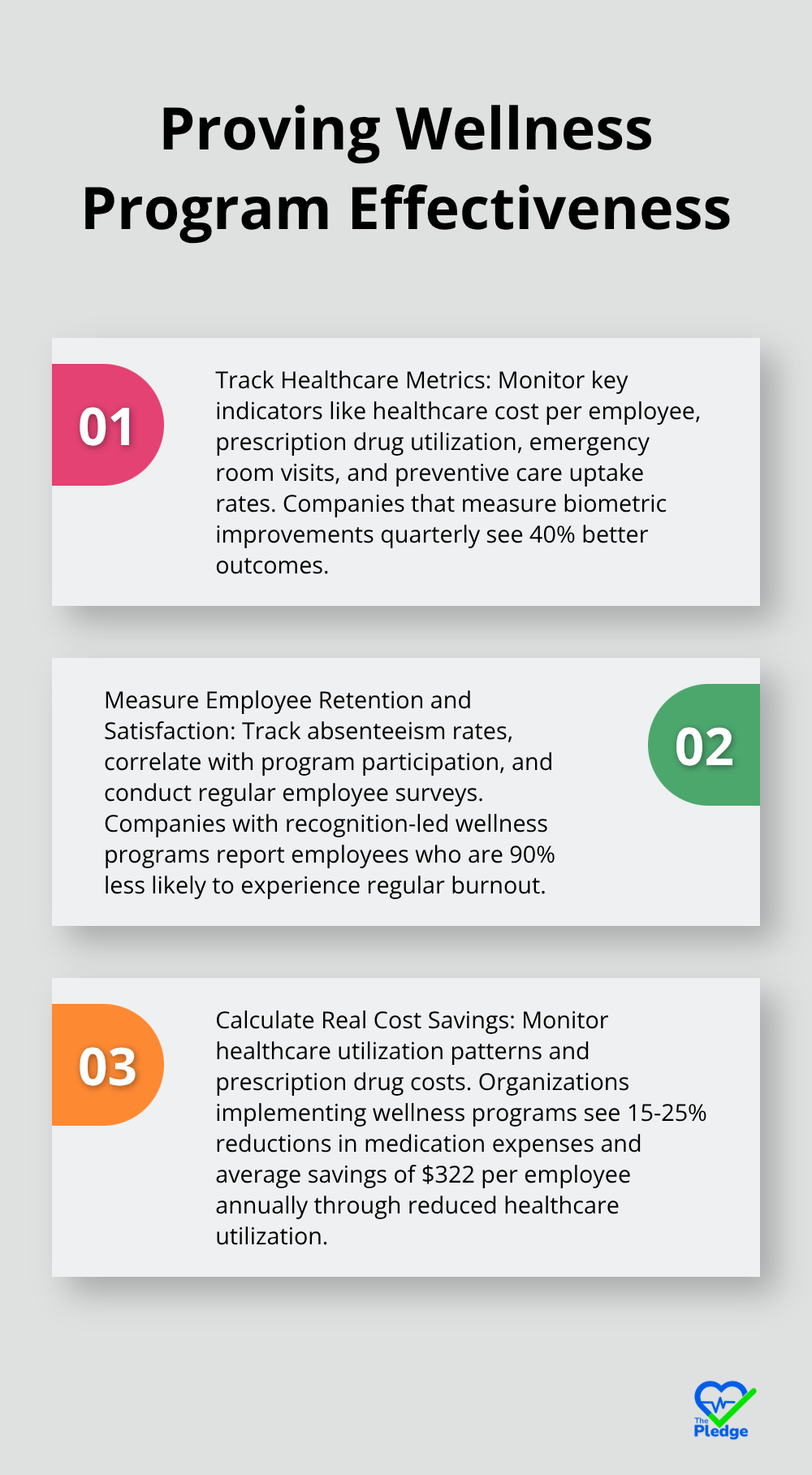
Track healthcare cost per employee monthly rather than annually to spot trends early. Monitor prescription drug utilization changes, emergency room visits, and preventive care uptake rates. The C. Everett Koop Health Project demonstrates that rigorous evaluation correlates directly with improved employee health behaviors and reduced healthcare costs.
Organizations that measure biometric improvements quarterly see 40% better outcomes than those that wait for annual assessments. Focus on specific health indicators like blood pressure reductions, cholesterol improvements, and BMI changes that directly impact insurance costs.
Measure Employee Retention and Satisfaction
Employee retention data tells the real story of program effectiveness. Companies with recognition-led wellness programs report employees who are 90% less likely to experience regular burnout. Voluntary turnover costs amount to 15-20% of payroll budgets annually (which makes retention metrics essential for ROI calculations).
Track absenteeism rates monthly and correlate them with wellness program participation. Organizations that implement comprehensive wellness initiatives see 67% of employees report higher job satisfaction and actively recommend their company to others.
Survey employees quarterly about program satisfaction and perceived value rather than wait for annual reviews. Companies that maintain continuous feedback loops adapt their incentive structures faster and achieve sustained participation rates that exceed industry benchmarks.
Calculate Real Cost Savings
Healthcare utilization patterns reveal program impact more accurately than participation statistics. Monitor emergency room visits, specialist referrals, and preventive care appointments to identify cost reduction opportunities. Companies that track these metrics report average savings of $322 per employee annually through reduced healthcare utilization.
Prescription drug costs provide another clear indicator of program success. Organizations that implement wellness programs see 15-25% reductions in medication expenses as employees adopt healthier lifestyles and require fewer interventions for chronic conditions.
Final Thoughts
Wellness incentives in the workplace produce measurable results when companies implement them strategically. Financial rewards like premium reductions of $30-$40 monthly and HSA contributions up to $600 annually drive participation rates higher than programs without clear monetary benefits. Time-based incentives including additional PTO and flexible schedules address work-life balance needs that affect 71% of employees across all industries.
Success requires data-driven baselines, personalized reward structures, and technology platforms that provide real-time feedback to participants. Companies that track healthcare metrics quarterly see 40% better outcomes than those that conduct annual assessments only. Recognition programs create lasting cultural change, with public acknowledgment making employees 3x more likely to feel they belong at work (and 90% less likely to experience regular burnout).
Organizations ready to implement comprehensive wellness programs need platforms that centralize health data and maintain participant engagement throughout the year. The Pledge provides technology that integrates seamlessly with existing health plans while tracking progress across multiple wellness activities. Start with clear goals, measure consistently, and adapt based on employee feedback to build programs that transform workplace culture and deliver lasting health improvements.