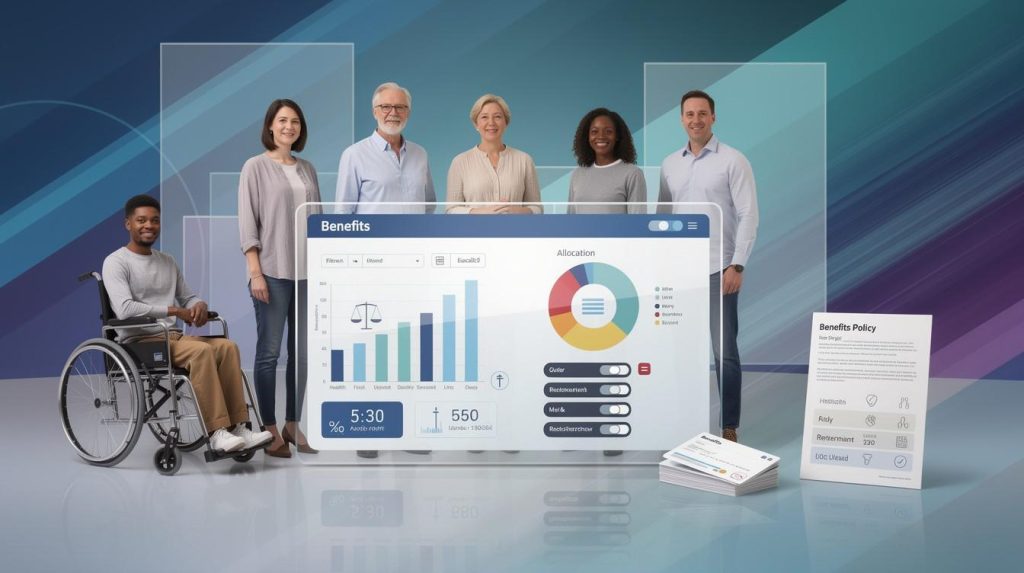
One-size-fits-all benefits packages are costing companies real money in lost productivity and employee turnover. When your workforce is diverse-different ages, family structures, health needs, and life stages-a generic plan leaves people behind.
At The Pledge, we’ve seen firsthand how equitable benefits management transforms both employee satisfaction and your bottom line. The companies winning the talent war aren’t just offering more benefits; they’re offering the right benefits to the right people.
Why Your Current Benefits Plan Isn’t Working
Standard benefits packages treat everyone the same, which means they work well for almost no one. A 28-year-old single employee with no dependents has completely different health priorities than a 52-year-old parent managing chronic conditions. A part-time worker juggling multiple jobs needs different coverage flexibility than a full-time salaried employee. Yet most companies still offer identical plans across their entire workforce, hoping the average will satisfy everyone. It doesn’t.
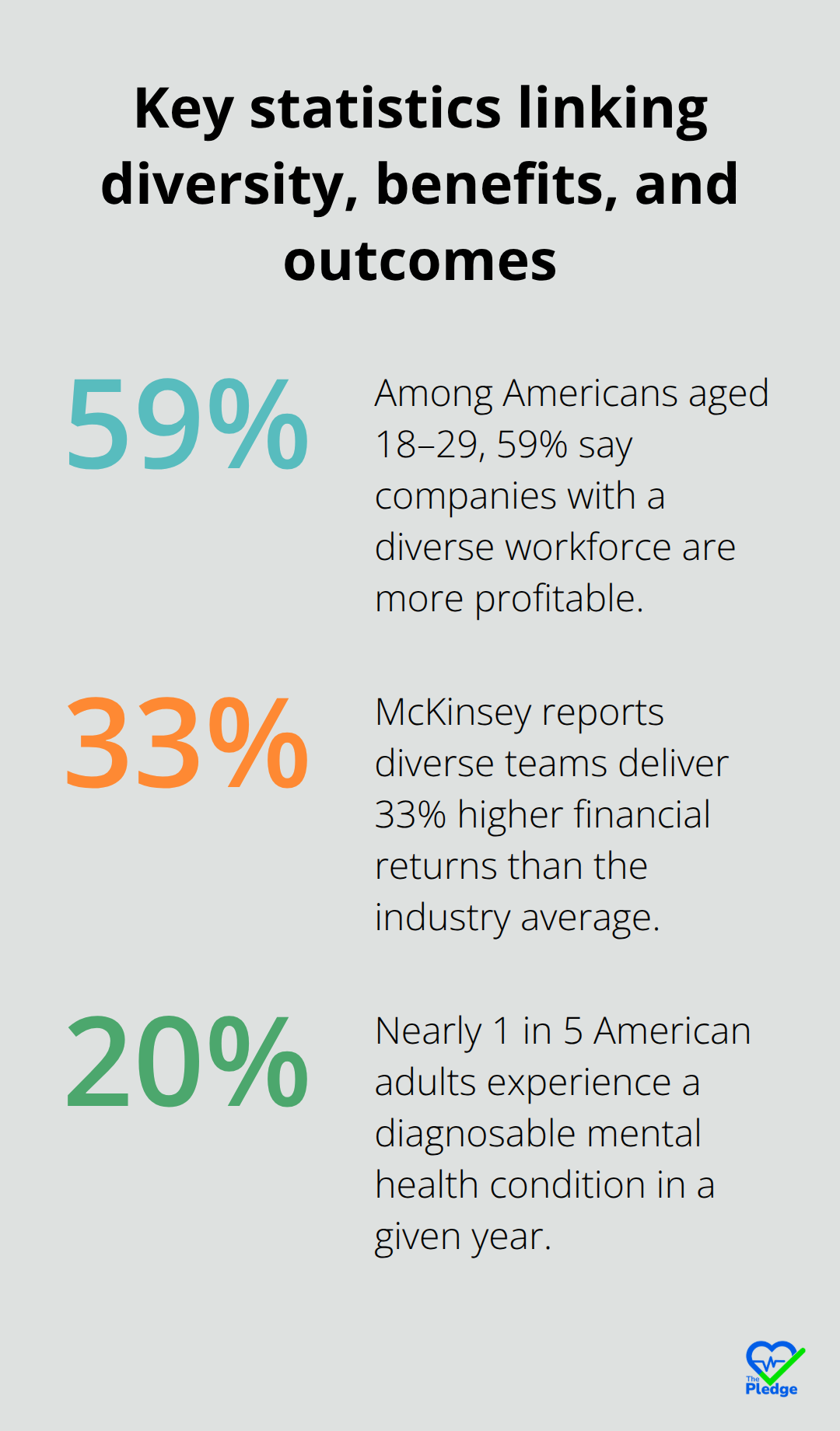
Among Americans aged 18-29, 59% of Americans say companies with a diverse workforce are more profitable and that expectation extends directly to benefits. Younger workers specifically want benefits that reflect their lives, not generic options designed for an imaginary average employee. When your plan doesn’t match your workforce’s actual needs, participation drops. Employees skip enrollment entirely, choose inadequate coverage tiers, or worse, they leave for competitors offering better-aligned benefits.
The Financial Impact of Misaligned Benefits
The cost of this misalignment is staggering. Companies lose productivity when employees stress about uncovered medical expenses, skip preventative care they can’t afford, or struggle with benefits they don’t understand. Turnover becomes expensive quickly-replacing a single employee costs between 50-200% of their annual salary depending on the role. Diverse workforces amplify this problem because the variance in needs is wider. A workforce with single parents, multigenerational households, employees with disabilities, and workers from different cultural backgrounds will have wildly different health requirements. Traditional plans ignore these realities entirely.
Why Generic Benefits Create Unused Coverage
When benefits don’t fit your employees, they don’t use them. Employees with family structures outside the traditional nuclear family often find that standard spousal and dependent coverage excludes domestic partners or non-traditional families entirely. Fertility benefits designed for cisgender couples exclude LGBTQ+ employees pursuing parenthood. Wellness programs that operate only in English exclude multilingual workers. These gaps don’t just frustrate employees-they create measurable financial waste.
Unused benefits represent sunk costs. If your mental health coverage doesn’t include culturally competent therapists or doesn’t offer services in employees’ preferred languages, uptake plummets. Yet nearly 1 in 5 American adults will have a diagnosable mental health condition in any given year, meaning a significant portion of your workforce likely needs these services. The problem isn’t that mental health benefits exist; it’s that they’re often designed without considering who actually needs them and how they prefer to access care.
The Performance Gap Between Equitable and Generic Plans
Companies with equitable benefits design see higher utilization, lower turnover, and measurably better health outcomes. McKinsey research shows that diverse teams deliver 33% higher financial returns than the industry average, and that performance gap widens when benefits support the actual composition of your workforce rather than fighting against it. The shift from one-size-fits-all to personalized benefits requires data, intentional design, and technology that centralizes information so employees actually understand what they have. This is where the real transformation begins-moving from assumptions about your workforce to actual knowledge of their needs.
How to Build Benefits That Actually Match Your Workforce
Start with Real Data, Not Assumptions
Pull your HR data and segment employees by age, family structure, tenure, employment status (full-time versus part-time), and whether they work remotely or on-site. Most companies design benefits based on a fictional average employee, then wonder why participation is low. This isn’t about surveillance; it’s about understanding actual needs. A workforce with 40% part-time employees needs immediate vesting and portable coverage. A workforce with 60% employees under 30 needs different mental health support and student loan assistance options than a workforce skewing older.
Run an anonymous benefits survey asking what employees currently use, what gaps exist, and what they’d add if they could. You’ll find that 19.86% of your workforce likely experiences mental illness in any given year according to Mental Health America data, yet your current mental health coverage might only include providers in one language or exclude culturally competent therapists. The survey reveals this disconnect. McKinsey research shows diverse teams deliver 33% higher financial returns than the industry average, and that performance advantage grows when your benefits actually support the people you employ.
Design Around Life Stages, Not Coverage Tiers
Stop designing around coverage tiers and start designing around life stages and identity groups. A single parent needs robust childcare benefits and flexible scheduling. An employee managing a chronic condition needs low-cost access to specialists and prescription coverage. An LGBTQ+ employee might need gender-affirming care and fertility treatments covered.
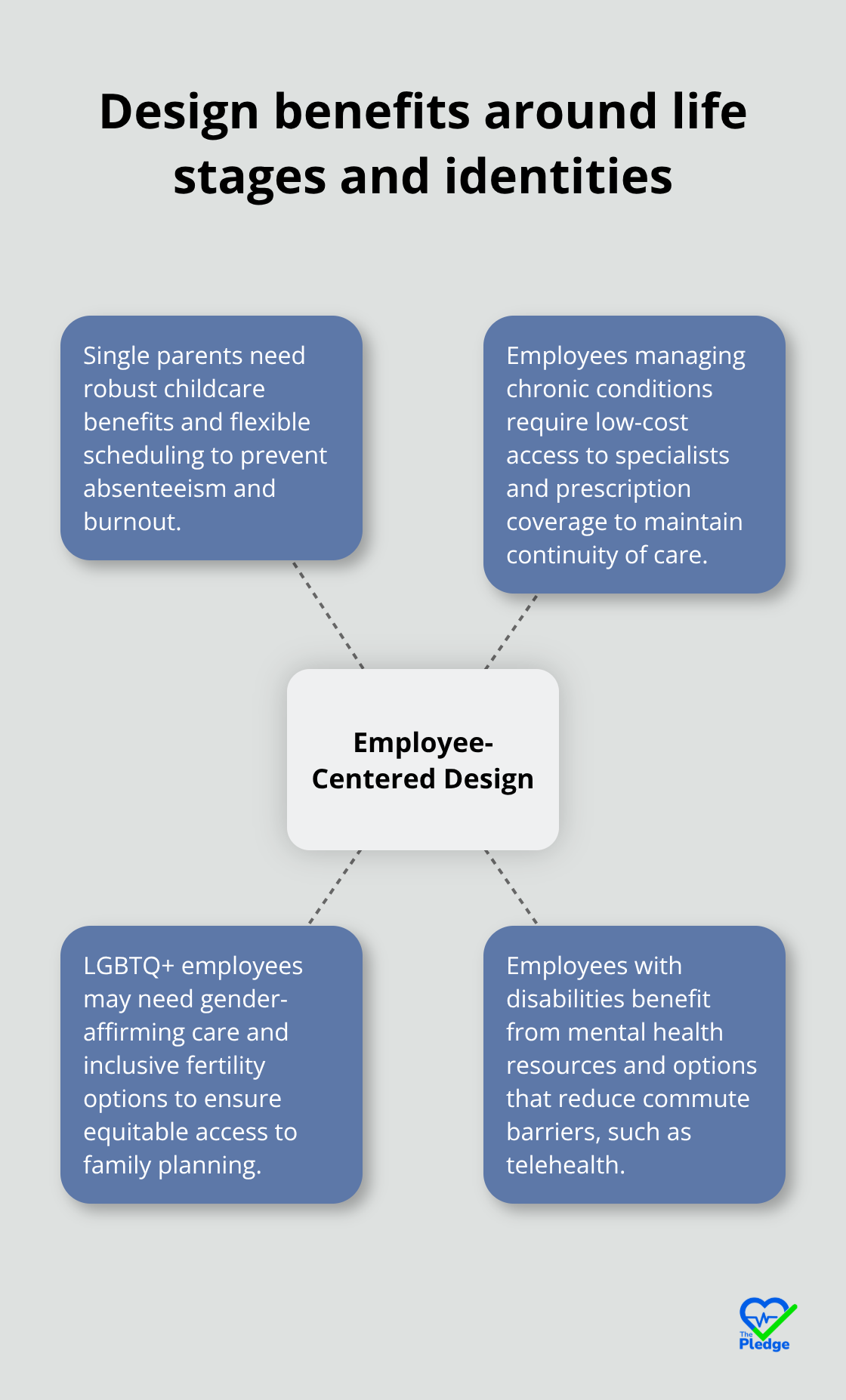
Employees with disabilities need mental health resources that don’t require a commute.
Rather than offering everyone the same five plans, offer flexible coverage that lets employees build what they actually need. Domestic partner coverage should be automatic. Parental leave should cover surrogacy, adoption, and foster care. Religious holidays should be genuinely flexible, not limited to a predetermined list. This requires moving beyond traditional plan architecture, but it’s the only way to stop wasting money on unused coverage.
Centralize Information and Track What Actually Gets Used
Technology makes this manageable at scale. Without a centralized platform, employees navigate scattered information across multiple vendors, miss deadlines, and enroll in plans they don’t understand. A centralized benefits platform integrates health plans, sends personalized reminders about deadlines and available services, and makes it genuinely easy for employees to understand costs and coverage before they enroll. Multilingual interfaces aren’t optional when your workforce is diverse.
Transparent pricing matters too; Gartner found that only about one-third of organizations practice true information transparency, which means most employees have no idea what their benefits actually cost or cover. Push for clear, jargon-free summaries of each plan. Include worked examples showing what an employee would pay for common scenarios like a specialist visit or a mental health session.
Track utilization religiously. If your fertility benefits sit uncovered, you’ll see zero claims from employees using them. If your mental health coverage remains unused, ask why. It’s usually because employees don’t know it exists, don’t trust the quality, or can’t access providers who speak their language or understand their background. Fix those specific problems rather than adding more generic options. A Bentley University study found that regular DEI surveys help identify gaps and signal that employee input matters, guiding equitable benefits design. Collect feedback annually and actually change something based on it. Employees notice when their input disappears into a void.
Move From Feedback to Action
The real test of equitable benefits management isn’t what you offer-it’s what employees actually use and how their health improves. Once you’ve collected data on your workforce and designed flexible coverage options, the next step is measuring whether your changes actually work. This requires tracking not just enrollment numbers, but utilization rates, health outcomes, and employee satisfaction across different demographic groups.
Measuring What Actually Matters
Stop counting enrollment numbers and start measuring utilization. Enrollment tells you how many employees signed up for benefits; utilization tells you whether they actually use them. A 95% enrollment rate means nothing if only 30% of employees visit their covered mental health providers or if fertility benefits sit completely unused.
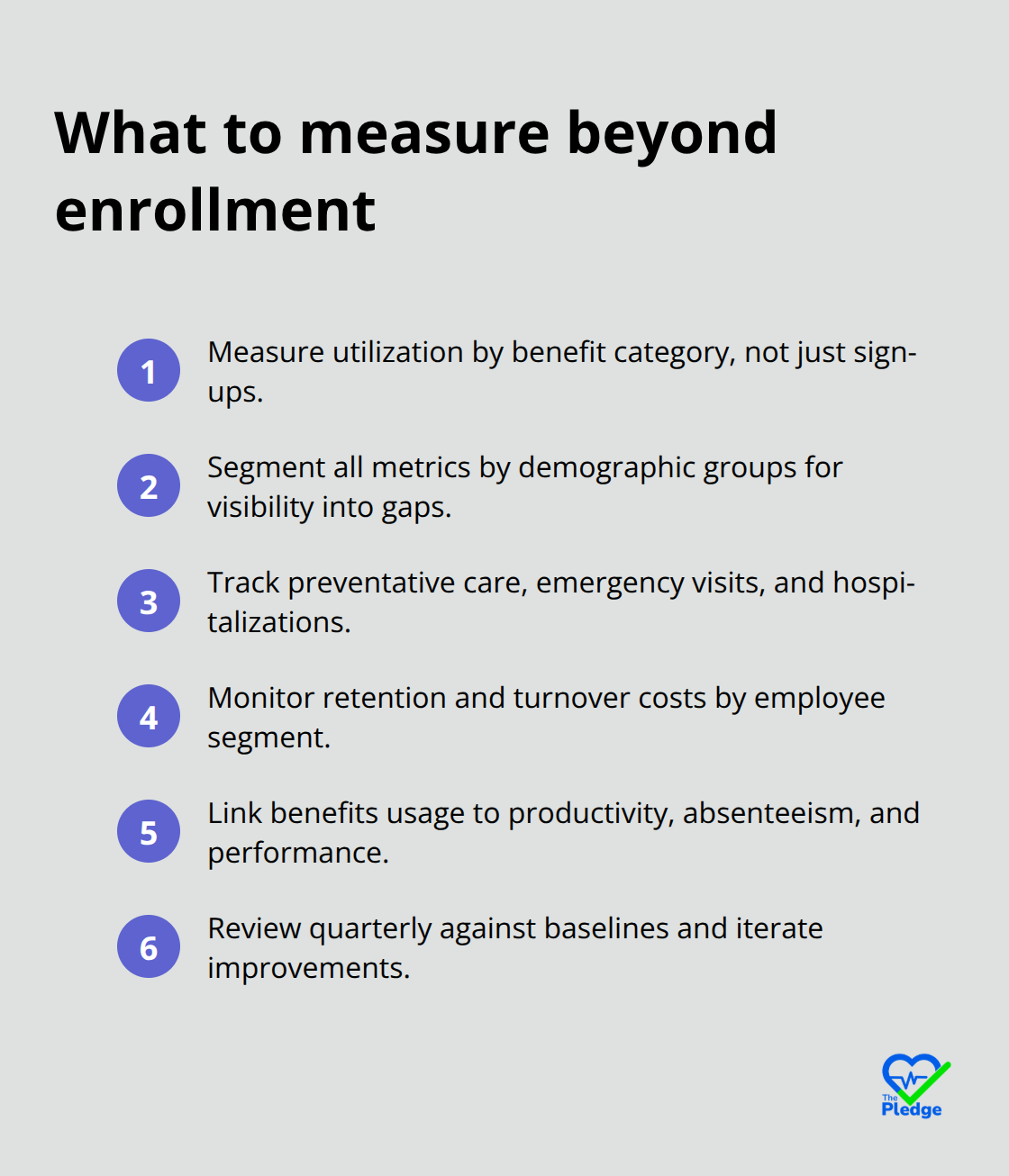
Track which benefits drive real engagement because that metric alone tells you whether your design actually works.
Establish Your Baseline and Expose Gaps
Start by establishing a baseline of current utilization across all major benefit categories. Pull claims data from your health plan administrator and segment it by age group, family structure, employment status, and any other demographic markers you collected during your needs assessment. You’ll immediately see where gaps exist. If zero claims come from your LGBTQ+ employees for gender-affirming care despite offering it, that’s not a coverage problem-it’s a trust problem or an access problem. If your fertility benefits show claims only from certain demographic groups, your plan design is excluding others who need those services.
McKinsey research shows diverse teams deliver 33% higher financial returns than the industry average, and that financial advantage only materializes when your benefits actually support the people you employ. Measuring utilization across demographic groups exposes the disconnect between what you offer and what employees can actually access.
Track Health Outcomes Across Groups
Measure health outcomes separately for different demographic segments, not just company-wide averages. Company-wide metrics hide disparities. Your average mental health utilization might look acceptable at the company level, but break it down by age, gender identity, or race and you’ll likely find massive gaps. Employees from certain backgrounds might avoid mental health services because available providers don’t share their cultural background or speak their language. That’s a design failure, not a participation failure.
Collect data on preventative care utilization, medication adherence, emergency room usage, and hospitalization rates across demographic groups. If certain employee segments show higher hospitalization rates despite having the same coverage, ask why. Often it’s because they lack access to affordable preventative care or specialists they trust. Use this data to iterate your plan design. If your low-income employees show worse health outcomes despite identical coverage to higher earners, the problem isn’t the plan-it’s that cost-sharing or access barriers disproportionately affect them. A non-elective employer contribution that applies to all eligible employees addresses this directly by guaranteeing baseline coverage regardless of ability to contribute.
Bentley University research found that regular DEI surveys help identify gaps and signal that employee input matters, guiding equitable benefits design. Combine quantitative health data with employee feedback to understand not just what’s happening, but why it’s happening. Survey employees quarterly about their benefits experience, asking specific questions about whether they could access the care they needed and whether they felt welcomed by providers. You’re looking for patterns that reveal systemic barriers.
Connect Benefits Changes to Business Outcomes
Most companies track benefits costs and employee satisfaction separately, missing the connection between equitable design and business performance. Start tracking retention rates by demographic group. If your benefits redesign improves retention for part-time employees by 15% while full-time retention stays flat, that tells you your part-time benefits gaps were real and your solution worked. Calculate turnover costs for each demographic segment-replacing a diverse employee often costs more than replacing someone in a majority group because recruitment and onboarding take longer. Well-being varies significantly across gender, race, income, life stage and other demographic segments, and employers should adapt accordingly.
Track productivity indicators tied to specific benefits. Employees using your mental health services or childcare benefits should show different productivity patterns than those who don’t. If absenteeism drops after you add flexible scheduling or unlimited PTO for disability-related needs, quantify that improvement. Gartner found that only about one-third of organizations practice true information transparency, which means most companies can’t actually connect their benefits investments to business outcomes. Change that.
Refine Based on Real Data
Set up quarterly reviews comparing utilization rates, health outcomes, retention, and productivity across demographic groups against your baseline. When you see improvement in one area, investigate what changed. Did utilization increase because you added multilingual support? Did health outcomes improve because you eliminated copays for preventative care? These insights guide your next iteration. Plan for continuous refinement rather than one-time design. Equitable benefits aren’t a finished product; they’re a system that requires ongoing adjustment based on real data about who your employees are and what they actually need.
Final Thoughts
Equitable benefits management transforms how companies compete for talent and retain their workforce. McKinsey research shows diverse teams deliver 33% higher financial returns than the industry average, but only when your benefits actually support the people you employ. The financial case is straightforward: misaligned benefits create higher turnover, lower utilization of expensive coverage, and reduced productivity across your organization.
Three concrete actions drive real change. First, collect actual data about your workforce demographics and health needs instead of designing around assumptions. Second, build flexible coverage that reflects life stages and identity groups rather than forcing everyone into identical plans. Third, measure utilization and health outcomes across demographic segments, then iterate based on what you learn.
Employees who feel their benefits reflect their actual lives show higher engagement, lower absenteeism, and stronger loyalty. The Pledge simplifies benefits management by centralizing health data and sending personalized reminders about available services, making it genuinely easy for employees to understand and use their benefits. The companies winning the talent war offer the right benefits to the right people, backed by data and refined continuously.