

Workplace wellness programs have transformed from simple gym memberships to comprehensive health strategies that support employees’ physical, mental, and emotional well-being. The workplace wellness definition encompasses everything from preventive care and health screenings to stress management and fitness initiatives.
At The Pledge, we’ve seen companies reduce healthcare costs by up to 25% while boosting employee satisfaction through well-designed wellness programs.
What Makes Workplace Wellness Programs Work
Physical Health Foundation
Physical health initiatives anchor successful workplace wellness programs. Companies that provide on-site fitness facilities report 23 percent higher profitability compared to companies with low employee engagement. However, fitness centers alone don’t produce meaningful results. The most effective programs combine ergonomic assessments, nutrition counseling, and smoking cessation support with traditional fitness options.
Programs that address multiple physical health areas see dramatically higher participation rates. Employees respond better when companies offer comprehensive solutions rather than isolated fitness memberships.
Mental Health Support Systems
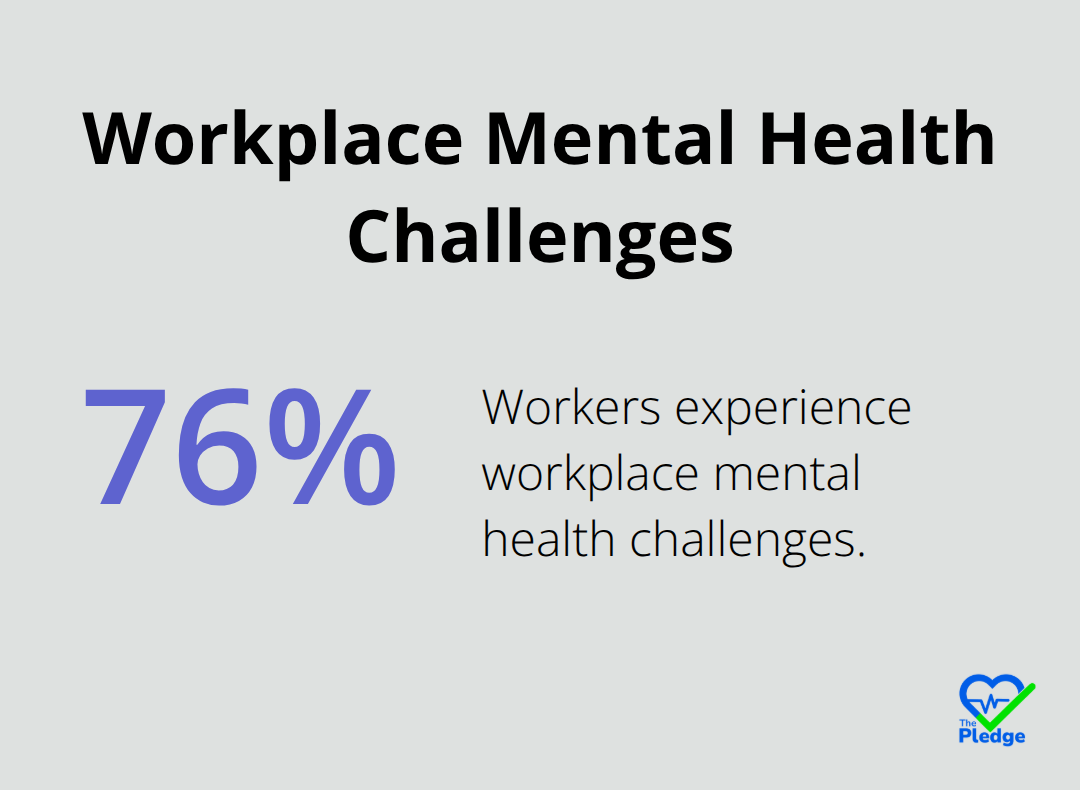
Mental health support has become equally important in modern wellness programs. MindShare Partners’ 2021 report shows that 76% of workers experience workplace mental health challenges. Even more concerning, many workers report that workplace conditions contribute to their mental health symptoms.
Effective programs include employee assistance programs, stress management training, and flexible work arrangements. Companies that address mental health see improved productivity and reduced turnover (particularly among younger employees who prioritize mental wellness benefits).
Preventive Care and Health Screenings
Preventive care completes the wellness program framework. Biometric screenings identify health risks before they become expensive medical issues, while health risk assessments help employees understand their personal risk factors. Companies that invest in comprehensive screening programs see significant returns on their wellness investments.
The success of preventive care depends on convenience and confidentiality. Companies must make screenings easily accessible and provide follow-up coaching to help employees act on their results.
Integration Creates Success
Programs succeed when they address all three fundamental areas together. Companies that implement comprehensive physical health support, mental health resources, and preventive care systems see higher employee participation rates compared to those that focus on single elements. This integrated approach creates a foundation for the specific benefits that drive real business results.
What ROI Do Wellness Programs Actually Deliver
Workplace wellness programs generate measurable financial returns that extend far beyond employee satisfaction surveys. Harvard University’s meta-analysis demonstrates that companies save $3.27 in medical costs and $2.73 in absenteeism costs for every dollar invested in wellness programs. These numbers reflect real business impact, not theoretical projections.
Healthcare Cost Reduction Through Prevention
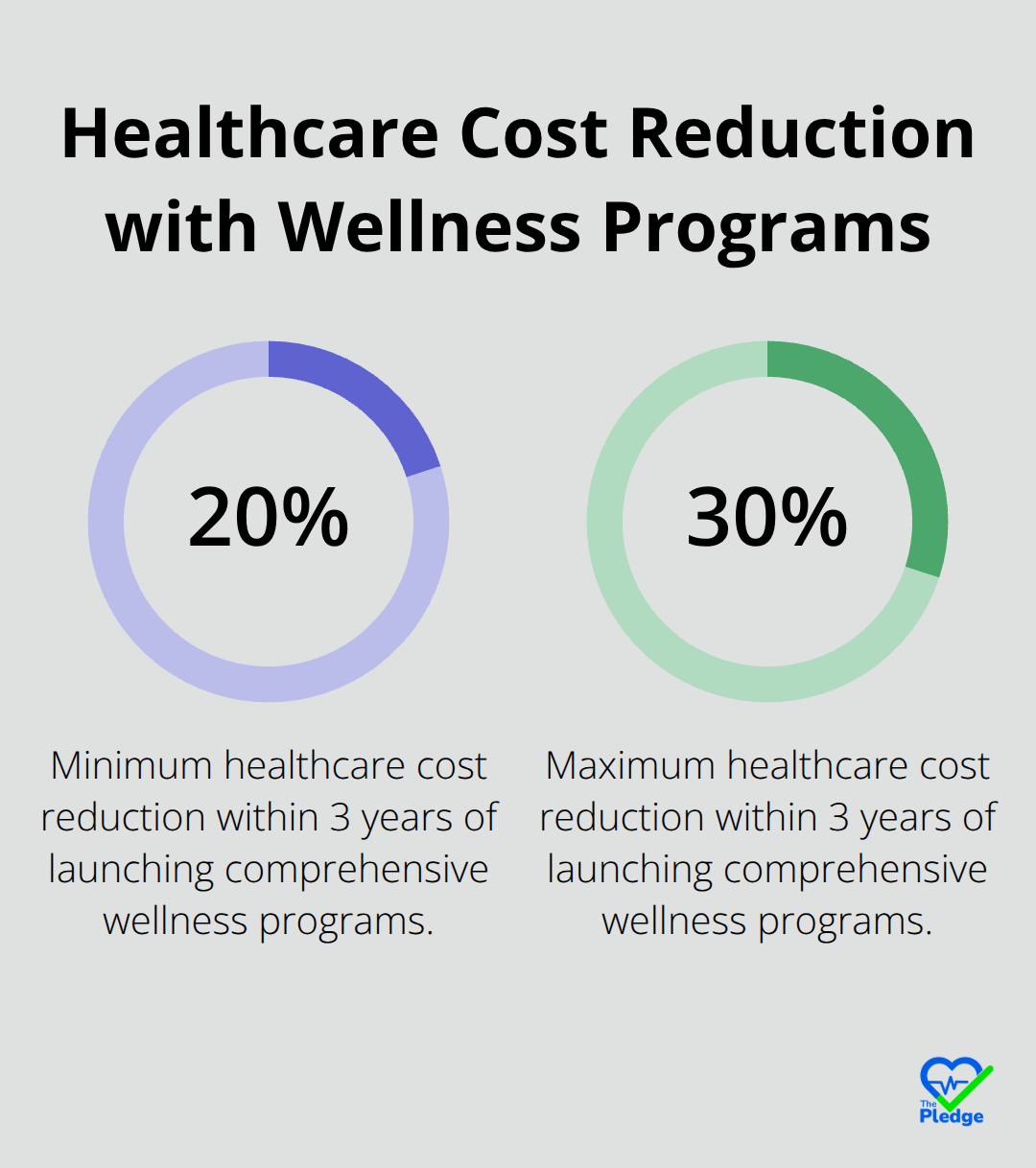
Companies that implement comprehensive wellness programs see healthcare cost reductions of 20-30% within three years of launch. The key lies in preventive interventions that catch health issues early. Biometric screenings identify diabetes risk factors before expensive complications develop, while cessation programs prevent costly cardiovascular treatments down the line. Organizations that combine health screenings with follow-up coaching achieve the highest cost savings because they address identified risks immediately rather than wait for medical crises.
Productivity Gains That Impact Bottom Line Performance
Employee productivity increases measurably when wellness programs address both physical and mental health challenges. Companies with effective wellness programs report 20% higher productivity rates compared to organizations without comprehensive health support. The productivity boost stems from reduced sick days, improved focus during work hours, and higher energy levels throughout the day. Mental health support particularly drives productivity gains, as workers who experience workplace mental health challenges perform significantly better when they receive appropriate support and resources.
Talent Acquisition and Retention Advantages
Wellness programs have become powerful recruitment and retention tools that reduce costs and improve workforce stability. Organizations with comprehensive wellness programs experience 10% higher employee retention rates, which translates to substantial savings on recruitment and training expenses (particularly in competitive industries). The American Psychological Association’s 2022 survey shows that 71% of workers believe their employer is more concerned about mental health, which makes wellness programs essential for attracting top talent in competitive job markets.
These financial benefits create the foundation for successful program implementation, but companies must understand how to assess employee needs and design programs that deliver these measurable returns.
How Do You Build a Wellness Program That Actually Works
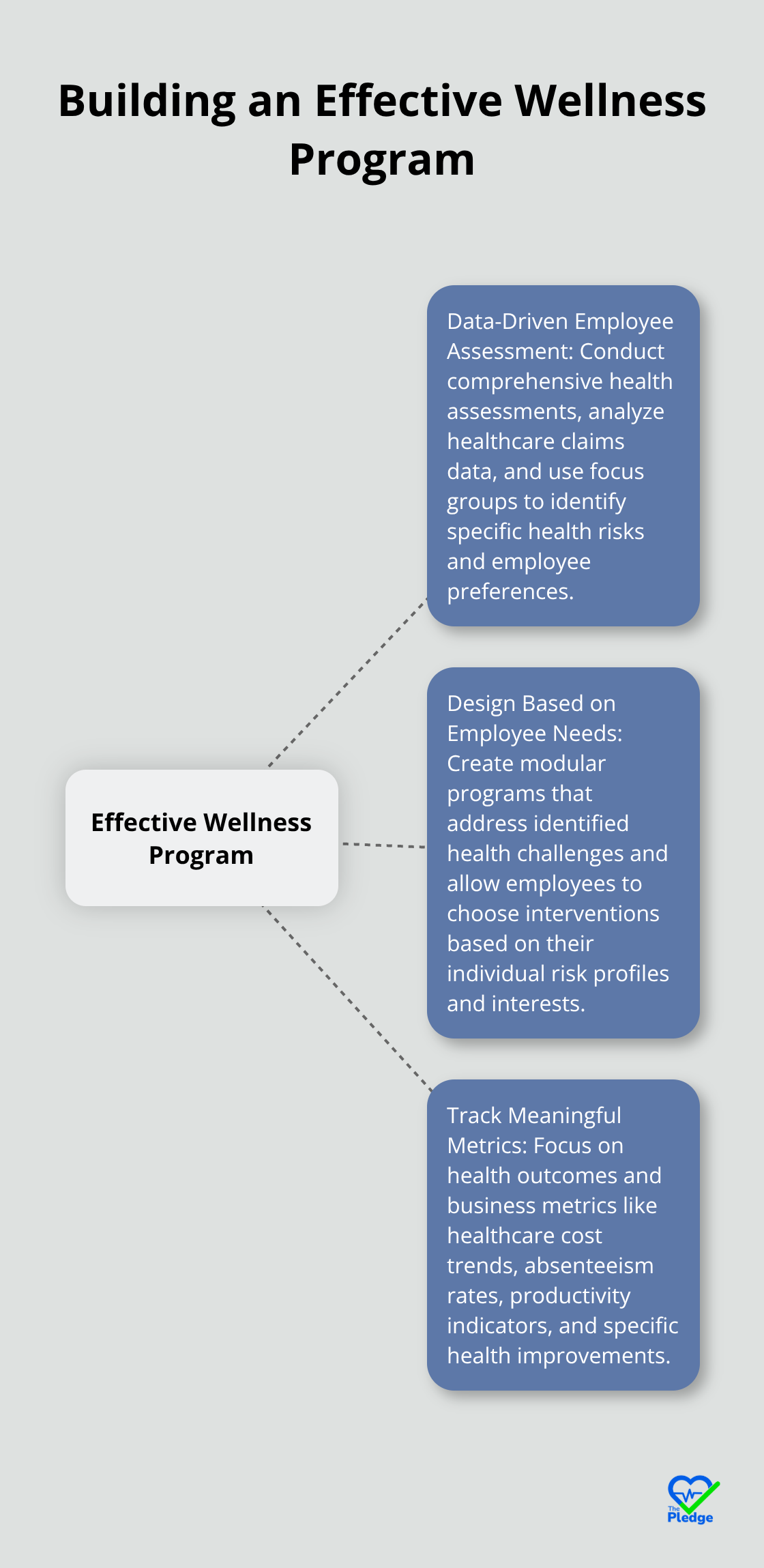
Successful wellness program implementation starts with comprehensive employee health assessments that move beyond basic surveys. Companies that collect detailed biometric data, conduct focus groups across different departments, and analyze existing healthcare claims data create programs with 40% higher participation rates compared to those that use generic approaches. The assessment phase must identify specific health risks within your workforce, preferred communication methods, and barriers to participation such as shift schedules or remote work arrangements.
Start With Data-Driven Employee Assessment
Effective assessment combines quantitative health screenings with qualitative feedback collection. Companies should analyze current healthcare utilization patterns, identify the top five health conditions that drive costs, and survey employees about their wellness priorities through anonymous digital platforms. Programs which target specific identified health risks achieve better outcomes than broad-based initiatives. Assessment data should segment employees by health risk levels, work locations, and demographic factors to create targeted intervention strategies rather than one-size-fits-all approaches.
Design Programs Based on Real Employee Needs
Program design must address the specific health challenges that assessment identifies rather than follow industry templates. Companies with the highest wellness ROI create modular programs that allow employees to choose interventions based on their individual risk profiles and interests. Research shows that 83% of large employers offer wellness activities, but participation remains low because programs don’t match employee preferences. Successful programs integrate with existing benefits, provide multiple options for participation, and include financial incentives that motivate behavior change without barriers.
Track Metrics That Matter for Business Results
Measurement systems must focus on health outcomes and business metrics rather than participation statistics alone. Companies should track healthcare cost trends, absenteeism rates, productivity indicators, and specific health improvements like blood pressure reductions or weight loss maintenance. The most effective programs use real-time data dashboards that allow program adjustments based on employee feedback and outcome trends (particularly for remote workers who need different engagement strategies). Regular pulse surveys, biometric retesting, and claims analysis provide the data needed to optimize program components and demonstrate concrete business value to leadership stakeholders.
Final Thoughts
Workplace wellness programs deliver measurable business results when companies move beyond basic gym memberships to comprehensive health strategies. The workplace wellness definition has evolved to include physical health initiatives, mental health support, and preventive care systems that work together to create healthier, more productive workforces. Companies that implement effective wellness programs see healthcare cost reductions of 20-30%, productivity increases of 20%, and employee retention improvements of 10%.
These financial benefits make wellness programs essential business investments rather than optional employee perks. The future of workplace wellness focuses on personalized health interventions, AI-driven health insights, and integrated digital platforms that simplify employee health management. Organizations that embrace comprehensive wellness strategies position themselves to attract top talent while reducing healthcare costs and improving business performance.
Successful wellness programs require data-driven employee assessments, targeted program design, and continuous measurement of health outcomes and business metrics. The Pledge provides the digital health platform that centralizes employee health data and delivers personalized wellness programs. Companies ready to transform their workplace wellness approach can start by assessing current employee health needs and implementing comprehensive programs that address physical health, mental wellness, and preventive care together (particularly for organizations with diverse workforce needs).