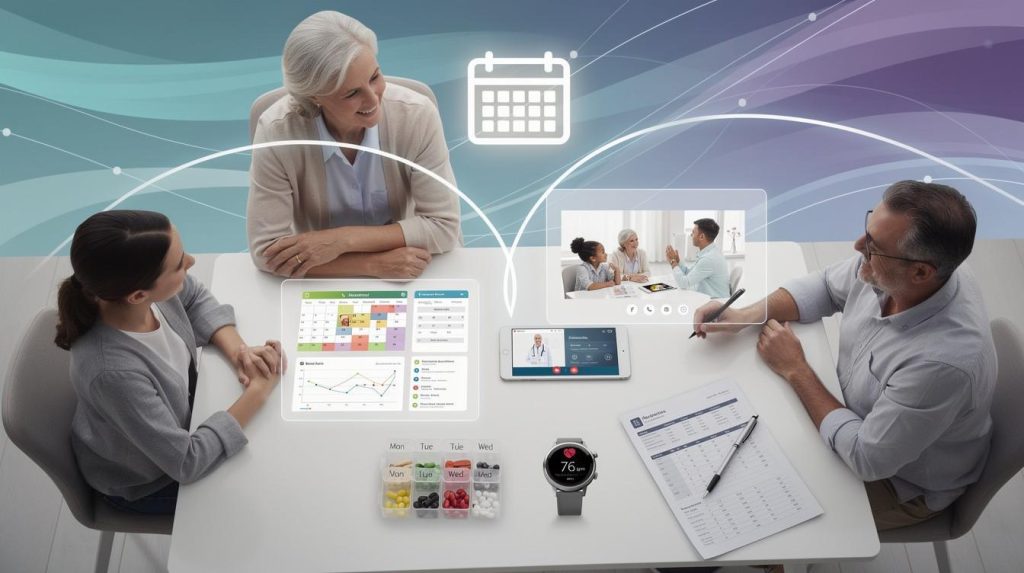
Managing health across multiple generations is messy. Parents juggle their own appointments while tracking their kids’ vaccinations and aging parents’ medications-often across different doctors, hospitals, and insurance plans.
At The Pledge, we’ve seen how family health management tools can transform this chaos into coordination. When health records, appointments, and provider communication live in one place, families catch problems earlier and spend less time on administrative work.
Why Family Management Matters
Approximately 39.8 million caregivers over age 18 in the U.S. manage health for family members, and the unpaid work they adds up to about $257 billion annually. Yet most of these caregivers operate in isolation, managing medications, appointments, and medical history across fragmented systems. When health information scatters across different providers, insurance companies, and family members’ notebooks, critical details vanish. A parent forgets to mention a medication their adult child takes when speaking to a new specialist. A grandchild’s allergy history doesn’t follow them to urgent care. These gaps don’t just create frustration-they directly harm outcomes. Studies show that poor communication between caregivers and healthcare providers increases hospital readmissions, medication errors, and preventable complications.
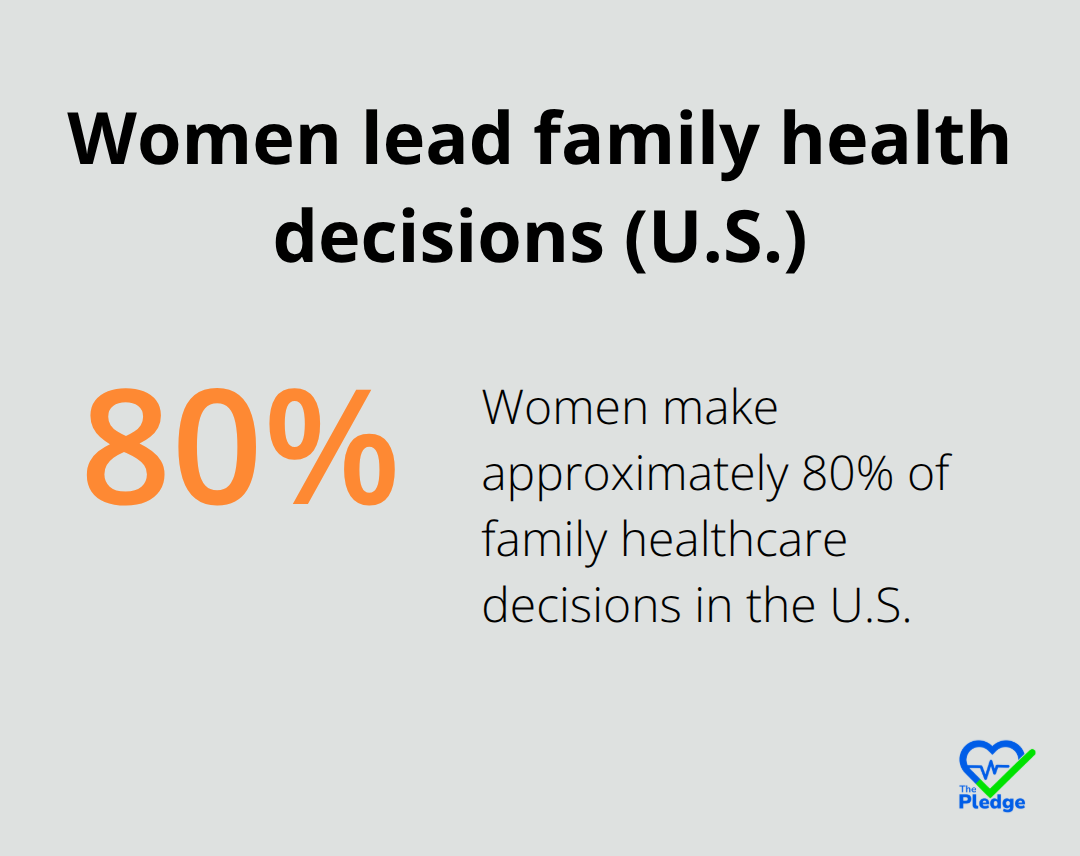
Women make approximately 80% of family healthcare decisions in the U.S., and they’re doing this work without proper tools. Paper calendars, scattered email chains, and phone calls between family members create dangerous inefficiencies that modern families can no longer afford.
The Real Cost of Fragmentation
Healthcare fragmentation hits families hardest during transitions. When someone leaves a hospital for home, the handoff often feels abandoned. Caregivers rarely receive referrals to community supports or clear documentation of what happened during the hospital stay. This creates a high-risk moment where medication errors, missed follow-ups, and confusion about care instructions become likely. A caregiver managing complex tasks like medication administration, wound care, or monitoring multiple chronic conditions often feels unprepared because no healthcare professional has provided concrete guidance. Without centralized records, the same medical history gets reported repeatedly, different doctors order duplicate tests, and families waste time repeating information instead of focusing on actual health management. The financial burden compounds when fragmentation leads to unnecessary emergency room visits, repeated diagnostics, or preventable hospitalizations.
Why Communication Failures Matter Most
Caregiver burden directly correlates with poor health outcomes for both the person receiving care and the person providing it. When caregivers feel unprepared or stressed about coordinating care, they make more mistakes. Depression and distress among caregivers link to abusive or neglectful behavior toward vulnerable loved ones, not from malice but from exhaustion and overwhelm. Research shows that interventions improving caregiver competence and confidence reduce burden and depression while delaying nursing home admission. Caregivers with access to proper care coordination tools, clear communication channels with providers, and organized health information report significantly better mental health and make fewer errors. The ability to share specific health information securely with trusted family members and providers transforms how care actually gets delivered. When a doctor can see that a medication was taken consistently, or when a family member can alert others to a symptom change immediately, care becomes proactive instead of reactive.
What Modern Tools Can Accomplish
Families need solutions that eliminate administrative waste and create a single source of truth for health information. Centralized platforms reduce the time spent repeating information and allow caregivers to focus on what matters-actual health management. Real-time alerts notify family members and providers of important changes, preventing gaps that turn manageable situations into medical emergencies. Secure communication channels between caregivers, family members, and healthcare providers ensure that critical information reaches the right people at the right time.
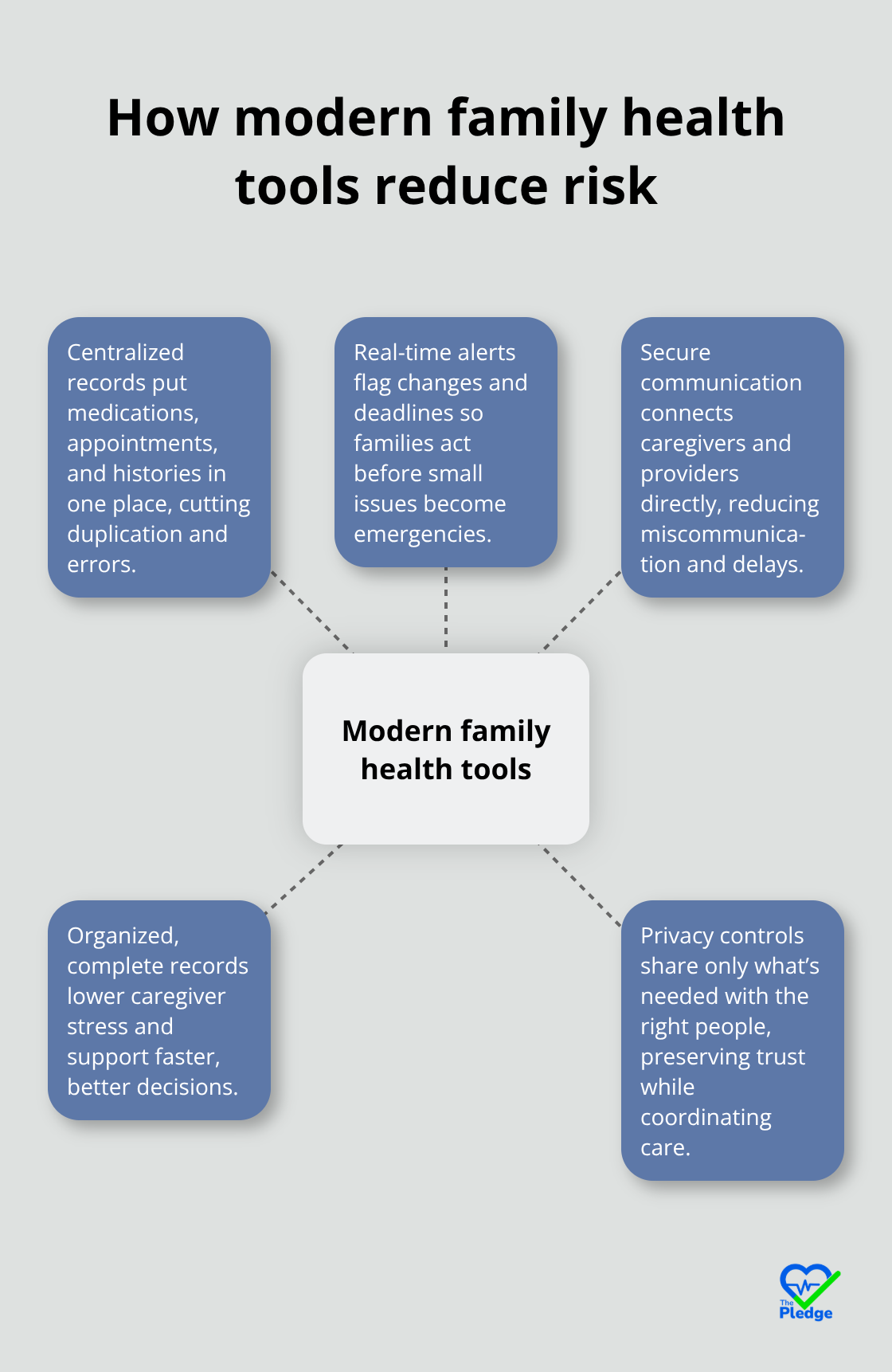
When caregivers feel confident that they have access to complete, organized health records, their stress levels drop and their ability to make sound decisions improves. The next section explores how modern family health management tools work and what features matter most for coordinating care across generations.
What Makes Modern Family Health Tools Actually Work
Eliminating Information Scatter
Modern family health management tools succeed because they solve three critical problems that destroy coordination: scattered information, missed deadlines, and communication breakdowns. When health records live in one place instead of spread across doctor offices, insurance companies, and someone’s notebook, families immediately gain clarity. The practical reality is that a parent managing care for adult children, aging parents, and themselves needs instant access to vaccination records, medication lists, and appointment schedules without calling three different offices. Centralized records mean a caregiver can pull up a complete medication history before a new specialist visit, preventing dangerous drug interactions that occur when providers don’t know what else a patient takes.
According to research from the National Alliance for Caregiving and AARP, unpaid family caregivers manage complex medical tasks including medication administration, wound care, and monitoring of chronic conditions, yet they rarely receive written documentation or clear guidance from healthcare professionals. A single platform that displays all medications, dosages, and refill dates transforms this from guesswork into precision. Families stop wasting administrative time repeating the same medical history to every new provider and instead focus on actual health management.
Real-Time Alerts That Prevent Failures
Real-time alerts prevent the most common caregiver failure points: missed appointments, delayed prescription refills, and unnoticed symptom changes. When a family member logs a fever or a medication interaction occurs, everyone who needs to know gets notified immediately instead of waiting for a phone call that never happens. This shift from information transfer to care coordination is where tools move from nice-to-have to essential infrastructure for families managing multiple generations.
Secure Communication That Changes Everything
Secure communication between family members and healthcare providers transforms the entire dynamic of care coordination. HIPAA allows healthcare providers to share patient information with family members involved in care or payment, and with explicit permission from the patient, which removes the legal barriers that previously forced silence. What matters is that families can now send specific information directly to providers instead of playing telephone through appointment calls.
A parent can notify a child’s pediatrician about behavioral changes, sleep issues, or medication side effects within seconds rather than waiting for a callback. A spouse managing a partner’s chronic disease can alert the care team to patterns they’ve noticed at home that wouldn’t appear in a fifteen-minute office visit. This direct line of communication prevents the dangerous gaps that occur during hospital discharge, when caregivers feel abandoned because they don’t know who to contact with questions about new medications or warning signs.
Privacy Controls That Protect Sensitive Information
The ability to designate who can access what information means a teenager’s mental health records stay private from their younger sibling, while grandparents can view allergy information without accessing sensitive details. Families control exactly which family members and providers see which records, creating trust within the system. This granular control addresses one of the biggest concerns families have about sharing health information: protecting privacy while enabling coordination.
The next section explores how families actually implement these tools across multiple generations and insurance plans, turning coordination from theory into daily practice.
Making Multi-Generational Health Profiles Work
Start With the Primary Caregiver
Setting up health profiles across multiple generations sounds straightforward until you actually do it. The challenge isn’t creating profiles-it’s deciding what information each person can access, how to structure data so a 78-year-old parent can find their medications while a 16-year-old’s mental health records stay private, and integrating insurance information that differs across family members. Start with the primary caregiver creating their own profile first, not the oldest or youngest family member. This person becomes the coordinator who then adds others. The caregiver should input their own insurance information, current medications (even over-the-counter ones), and existing provider relationships before inviting anyone else into the system. This creates a working model that others can follow.
Assign Roles Based on Responsibility
When adding a spouse or adult child, assign them as either a care recipient or a care coordinator depending on their role. A spouse managing shared healthcare decisions should have coordinator access; an adult child living independently might have limited visibility into a parent’s mental health records while maintaining full access to their own. For aging parents, create profiles that show medication schedules, appointment dates, and chronic condition tracking prominently, since these change frequently and require active monitoring. Research from the National Alliance for Caregiving shows that caregivers typically manage medications, wound care, and monitoring of multiple chronic conditions simultaneously, yet they lack clear documentation from providers about what to watch for or how to respond to changes. A well-structured profile system prevents this by making medication refill dates visible weeks in advance, allowing caregivers to coordinate with pharmacies before supplies run out.
Integrate Insurance Information Correctly
Insurance integration requires gathering specific documents from each family member: their insurance card, explanation of benefits statements, and provider network information. Many families mistakenly think they only need one insurance card on file, but deductibles, coverage limits, and out-of-pocket maximums vary significantly between individual and family plans, and between different family members’ plans. Create a separate insurance record for each person, even if they’re on the same family plan, so appointment costs and medication coverage can be accurately predicted.
Track Medications and Preventative Care
For chronic condition management, the system should display medication adherence patterns over time, allowing caregivers to identify when someone consistently misses doses or when a medication refill is overdue. Real-time alerts should notify the caregiver when a prescription is about to expire, not after it has already lapsed and the person misses a dose. For preventative care, use the platform to track preventative care screening that many insurance plans cover at no cost. The Eldercare Locator at 800-677-1116 can help identify local home health services and support options, information that should be documented in the platform alongside medical records so caregivers know exactly what community resources are available when hospital discharge happens.
Monitor Chronic Conditions Proactively
When a family member receives a diagnosis of a chronic condition like diabetes or hypertension, the health platform transforms from a convenience tool into essential infrastructure. It tracks medication compliance, logs blood pressure readings or glucose levels, and alerts providers to patterns that require intervention before they become emergencies.
Final Thoughts
Family health management tools eliminate the administrative burden that consumes hours each week and prevents caregivers from focusing on actual health. When medications, appointments, and provider communication live in one place, families stop repeating information and start making better decisions. The shift from scattered records to centralized coordination directly reduces the stress that drives caregiver depression and burnout, which research links to worse health outcomes for everyone involved.
Families catch problems earlier through real-time alerts and organized health tracking, preventing expensive emergency room visits and hospital readmissions. Medication adherence improves when refill reminders arrive before supplies run out. Preventative care screenings get scheduled and completed instead of forgotten, and over months and years, this proactive approach reduces unnecessary healthcare spending while improving quality of life across generations.
We at The Pledge built our platform specifically to address these coordination challenges by centralizing your health data, sending personalized reminders, and facilitating secure sharing with family members and providers. The Family Share feature keeps loved ones informed without overwhelming them with unnecessary details, while privacy controls protect sensitive information. Simplify your family’s health management today and stop managing health the way your parents did.
![[Guide] Incentives That Drive Preventive Health Participation](https://thepledge.app/wp-content/uploads/emplibot/Guide_-Incentives-That-Drive-Preventive-Health-Participation_1783650286-300x168.jpeg)