
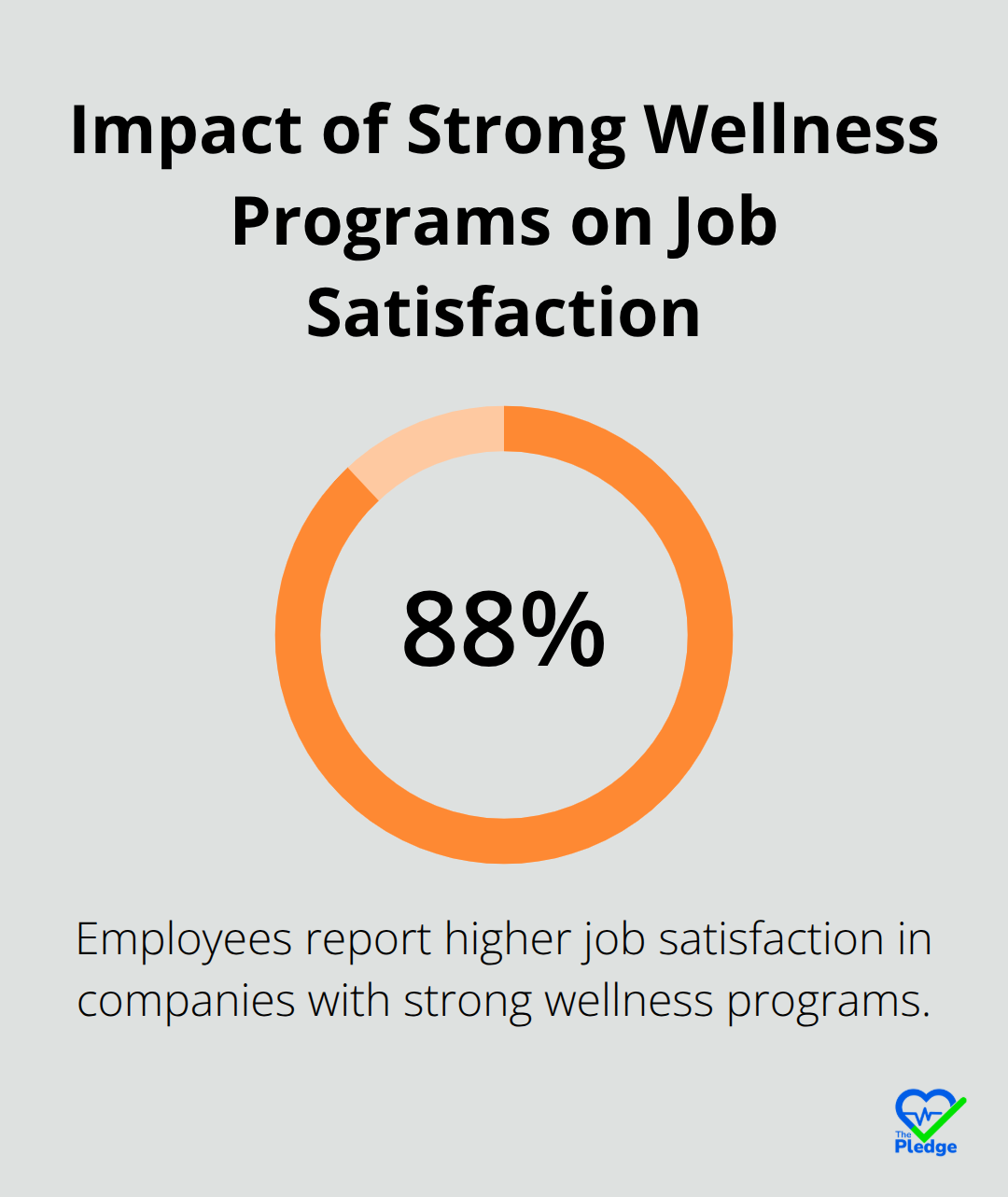
Employee wellness programs have become a game-changer for companies looking to boost morale and retain talent. Research shows that 88% of employees at companies with strong wellness programs report higher job satisfaction.
At The Pledge, we’ve analyzed the top employee wellness programs that deliver real results. The most effective initiatives combine physical health support, mental wellness resources, and flexible work arrangements to create lasting positive change.
Which Wellness Programs Actually Work
Physical Health Programs That Deliver Results
Physical wellness programs create the strongest measurable impact on employee morale. Companies that offer on-site fitness centers see improved job satisfaction according to workplace research. Sheetz operates free “Shwellness Centers” that provide employees access to fitness trainers and health professionals during work hours. This approach removes common barriers like time constraints and gym membership costs.
Biometric screenings conducted during shifts (like those at The Breakers hotel) make preventive care accessible without requiring employees to take personal time off. These programs work because they address health issues before they become serious problems, reducing both stress and healthcare costs for everyone involved.
Mental Health Support That Creates Real Change
Mental health programs require immediate access to be effective. EY maintains a 24-hour counseling hotline that employees have used for over 40 years. Headversity focuses on workforce resilience through continuous learning opportunities rather than one-time workshops. Companies that implement comprehensive mental health support see improvements in employee morale, with 60% of workers reporting excellent work-life balance though 77% still experience burnout.
The key lies in providing multiple access points – apps, hotlines, and in-person counseling – rather than limiting support to single channels. Employees need options that fit their comfort level and schedule constraints.
Financial Wellness Programs That Reduce Daily Stress
Financial stress directly impacts workplace performance and morale. Experian’s Sharesave Plan allows employees to purchase company stock at discounted rates, building long-term financial security while increasing company loyalty. Abenity addresses immediate financial pressure through extensive discount networks that reduce daily living costs.
Companies that offer financial wellness programs see reduced absenteeism rates because employees spend less time dealing with financial emergencies during work hours. These programs work best when they combine immediate relief through discounts with long-term wealth building through investment opportunities.
The success of these individual program types depends heavily on how companies measure their effectiveness and adjust based on real employee feedback and participation data. Successful wellness programs adapt to each organization’s unique needs through close collaboration with wellness experts.
How Do You Know If Your Wellness Program Works
Wellness programs fail when companies rely on participation rates instead of meaningful outcomes. Companies with effective wellness programs show positive return on investment through healthcare cost-savings and productivity improvements according to workplace research, but this only happens when organizations measure the right indicators. The most successful programs track employee satisfaction scores monthly rather than annually, monitor voluntary turnover rates by department, and analyze productivity metrics alongside absenteeism patterns.
Track Employee Satisfaction Changes Monthly
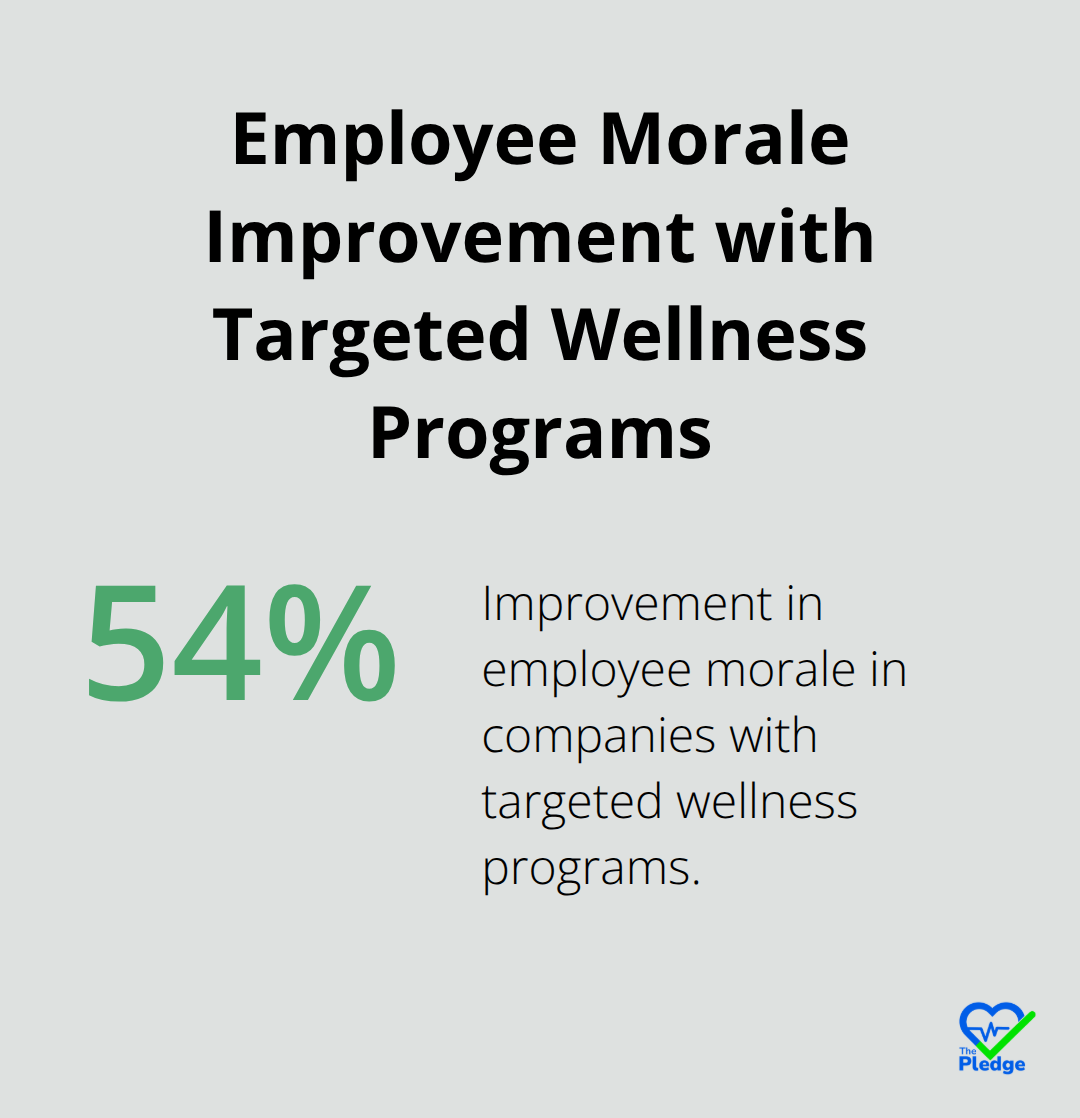
Employee satisfaction surveys must happen monthly to capture real program impact. Companies that survey annually miss the connection between wellness initiatives and morale shifts. Effective organizations ask specific questions about stress levels, work-life balance satisfaction, and program usefulness rather than generic happiness ratings. Employee morale improved by 54% in companies with targeted wellness programs, but only when measured consistently. Track satisfaction scores by program participation level to identify which engaging employee wellness programs drive the strongest results.
Monitor Retention and Productivity Together
Retention rates tell only half the story without productivity data. Companies with comprehensive wellness programs see reduced absenteeism rates according to workplace studies, but the real value comes from output quality during attendance. Track project completion rates, customer satisfaction scores, and revenue per employee alongside traditional HR metrics. Organizations that combine these measurements identify which wellness programs create engaged employees versus those who simply show up.
Calculate Return on Investment Accurately
Each dollar invested in wellness programs provides positive ROI through healthcare cost-savings and productivity improvements, but gains often exceed initial calculations when programs address specific employee needs. Companies achieve the highest ROI when they track healthcare cost reductions alongside performance improvements. Calculate total program costs including staff time, technology platforms, and vendor fees against measurable benefits like reduced sick days and increased output per employee.
The data you collect through these measurement strategies becomes the foundation for program improvements and leadership presentations that secure continued investment.
How Do You Build a Wellness Program That Actually Gets Used
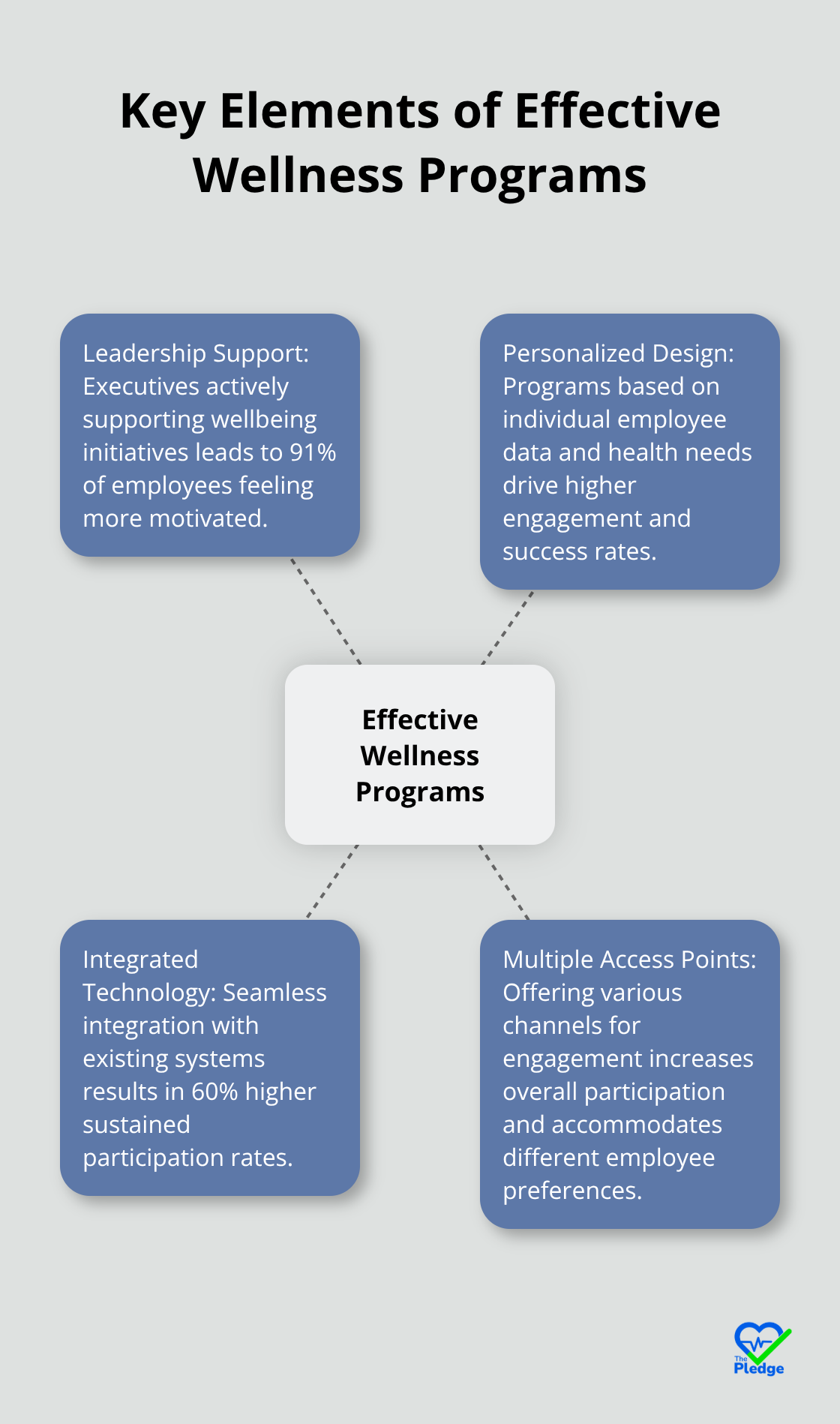
Leadership support determines program success more than budget size or vendor selection. Ninety-one percent of employees feel more motivated when executives actively support wellbeing initiatives (according to the American Psychological Association), but most leaders focus on cost reduction rather than engagement outcomes. Present wellness programs as productivity investments rather than employee perks. Synchrony achieved higher participation rates through personalized wellness coaching because leadership positioned the program as professional development rather than healthcare benefits.
Show executives specific ROI projections based on reduced absenteeism costs – each dollar invested returns $5.82 according to Indiana State Department of Health data. Companies that secure executive champions see 40% higher participation rates than those with passive leadership support.
Design Programs Around Individual Employee Data
Generic wellness programs fail because they ignore individual health needs and work schedules. The most effective programs collect employee health data through biometric screenings and create personalized action plans rather than offer identical benefits to everyone. Adobe’s Welcome Back program succeeds because it addresses specific transition needs for employees who return from extended leave rather than applies standard reintegration processes.
Carta’s mandatory minimum 15-day vacation policy works because it targets burnout prevention specifically rather than general work-life balance. Use employee surveys to identify the top three health concerns in your organization, then build targeted interventions around those specific issues rather than implement comprehensive programs that dilute resources.
Choose Technology That Integrates With Existing Systems
Wellness program technology must connect seamlessly with payroll systems and existing HR platforms to drive adoption. Employees abandon programs that require separate logins or duplicate data entry across multiple systems. Woliba achieves higher engagement through gamification features that connect directly to company communication tools rather than operate as standalone applications.
The most successful implementations use mobile-responsive platforms that sync with wearable devices and provide real-time health tracking without manual input requirements. Companies that choose integrated technology solutions see 60% higher sustained participation rates compared to those that use disconnected wellness apps.
Create Multiple Access Points for Different Employee Preferences
Employees engage with wellness programs through different channels based on their comfort levels and schedules. Some prefer mobile apps for quick health tracking, while others need in-person support for complex health issues. Companies that offer multiple access points see higher overall participation rates than those that limit employees to single program formats.
The most effective programs combine digital platforms with human support options, allowing employees to choose their preferred interaction method while maintaining consistent program messaging across all channels.
Final Thoughts
The top employee wellness programs that boost morale combine physical health initiatives, mental wellness support, and financial education with flexible work arrangements. Companies that implement comprehensive programs see 54% improvement in employee morale and achieve 6:1 ROI through reduced healthcare costs and increased productivity. Physical wellness programs work best when they remove barriers like time constraints and costs, while mental health support requires multiple access points including 24-hour hotlines and mobile apps.
Success depends on monthly satisfaction tracking, leadership support, and personalized program design. Companies that measure retention alongside productivity data identify which initiatives create genuine engagement versus simple attendance. Financial wellness programs reduce daily stress through discount networks and investment opportunities (like Experian’s discounted stock purchase plans).
Organizations ready to implement or improve their wellness programs should start with employee health surveys to identify top concerns and secure executive champions who position wellness as productivity investment. Choose technology platforms that integrate with existing HR systems to maximize adoption rates. The Pledge offers AI-powered health management that centralizes employee wellness data through personalized health programs and real-time tracking capabilities.