

Workplace wellness trends are transforming how companies approach employee health and productivity. Organizations now invest heavily in comprehensive programs that address both physical and mental wellbeing.
At The Pledge, we track these developments closely as businesses shift toward data-driven wellness strategies. The results speak for themselves: companies with robust wellness programs see 25% lower healthcare costs and 40% reduced turnover rates.
What Wellness Programs Actually Work
Mental health support has become the top priority for employers who plan wellness investments in 2024, according to recent industry data. Companies that implement comprehensive stress management programs report 48% lower daily stress levels among engaged employees compared to those without proper support systems. The most effective approaches combine manager training in emotional intelligence with accessible mental health resources. Organizations like Johnson & Johnson have seen 30% reductions in healthcare costs after they integrated mindfulness programs with traditional employee assistance programs.
Flexible Work Models Drive Health Outcomes
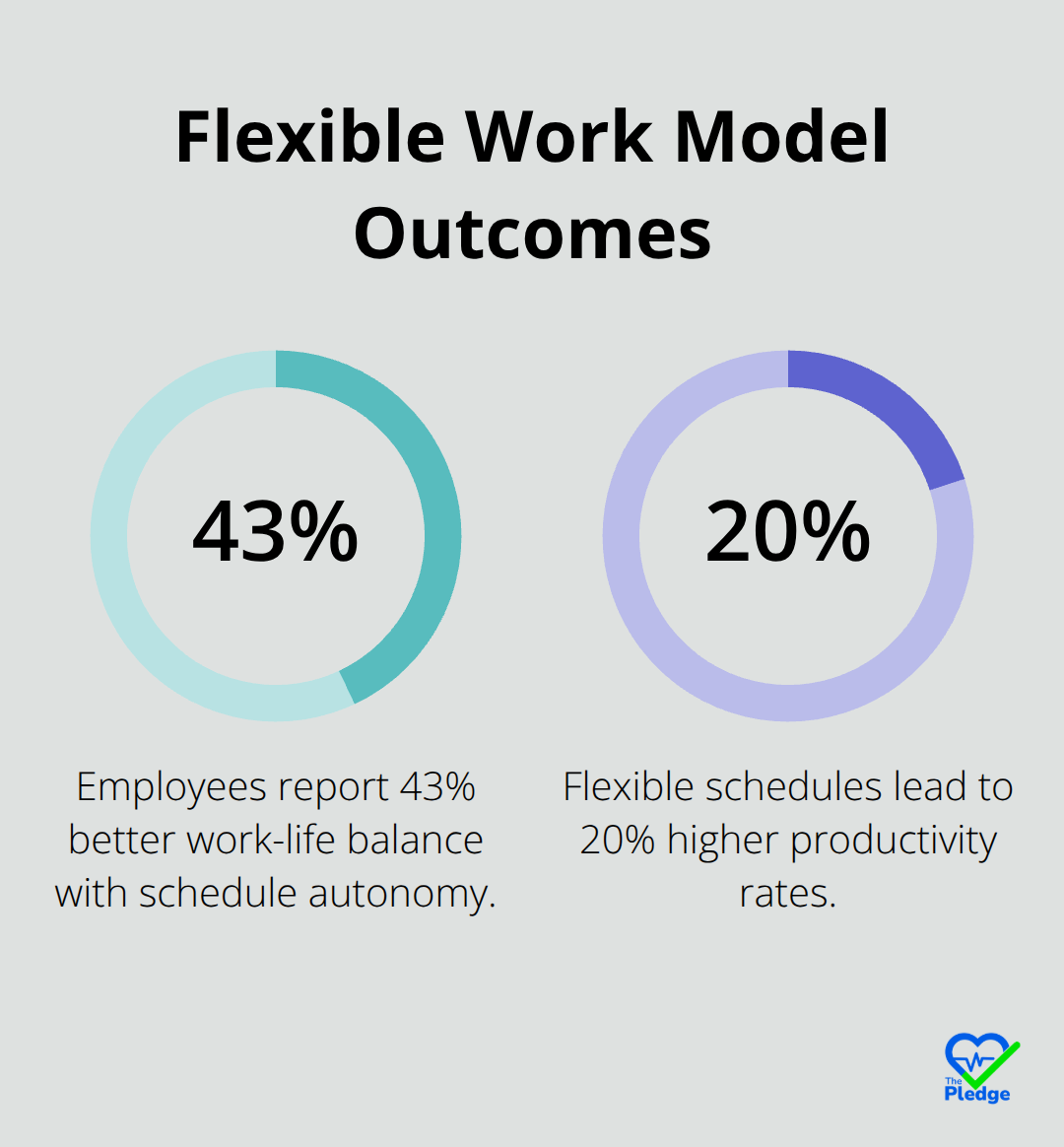
The shift to hybrid work arrangements has produced measurable wellness benefits, with employees who report 43% better work-life balance when companies give them schedule autonomy. Companies that offer flexible schedules see 20% higher productivity rates and significantly lower burnout incidents.
The key lies in how organizations set clear boundaries between work and personal time. France’s Right to Disconnect laws demonstrate how legal frameworks can support employee recovery, while Japan’s introduction of four-day workweeks for public sector employees in 2025 reflects the recognition that shorter work periods boost both mental and physical health.
Personalized Health Programs Replace One-Size-Fits-All Approaches
Generic wellness programs fail consistently. Forward-thinking companies now use health risk assessments and biometric data to create individualized health plans, with investment in these personalized approaches that doubled from 7% to 15% in 2024. Maximalist optimizers (who represent 25% of wellness consumers) demand science-backed solutions that address their specific health profiles. Companies that focus on weight management initiatives report 40% better engagement rates when programs address individual risk factors rather than broad population health metrics.
Technology Powers Wellness Program Success
Digital health platforms now integrate wearable devices and AI-powered analytics to track employee health metrics in real-time. The corporate wellness market was valued at $53.0 billion in 2022 and is projected to reach $74.9 billion by 2030, driven largely by technological advances. Companies that combine traditional wellness programs with digital solutions see 66% higher participation rates in stress management tools. Telemedicine services have become standard offerings, with 65% of organizations planning increased investment in these accessible healthcare options throughout 2024.
These wellness program innovations set the foundation for understanding how technology transforms modern workplace health initiatives.
How AI and Wearables Transform Employee Health
AI-powered health platforms analyze employee health data to predict risks before they become costly medical claims. Companies that use these predictive analytics systems report significant reductions in preventable conditions according to recent healthcare studies. The most effective platforms integrate biometric data with behavioral patterns to identify employees at risk for chronic diseases like diabetes and heart conditions.
Amazon’s comprehensive health platform for its 750,000 employees uses machine learning algorithms to send personalized intervention recommendations. This approach results in 28% higher participation rates in preventive care programs. Organizations that combine AI insights with targeted coaching programs see 45% improvements in employee health outcomes within the first year of implementation.
Real-Time Health Monitoring Creates Continuous Feedback
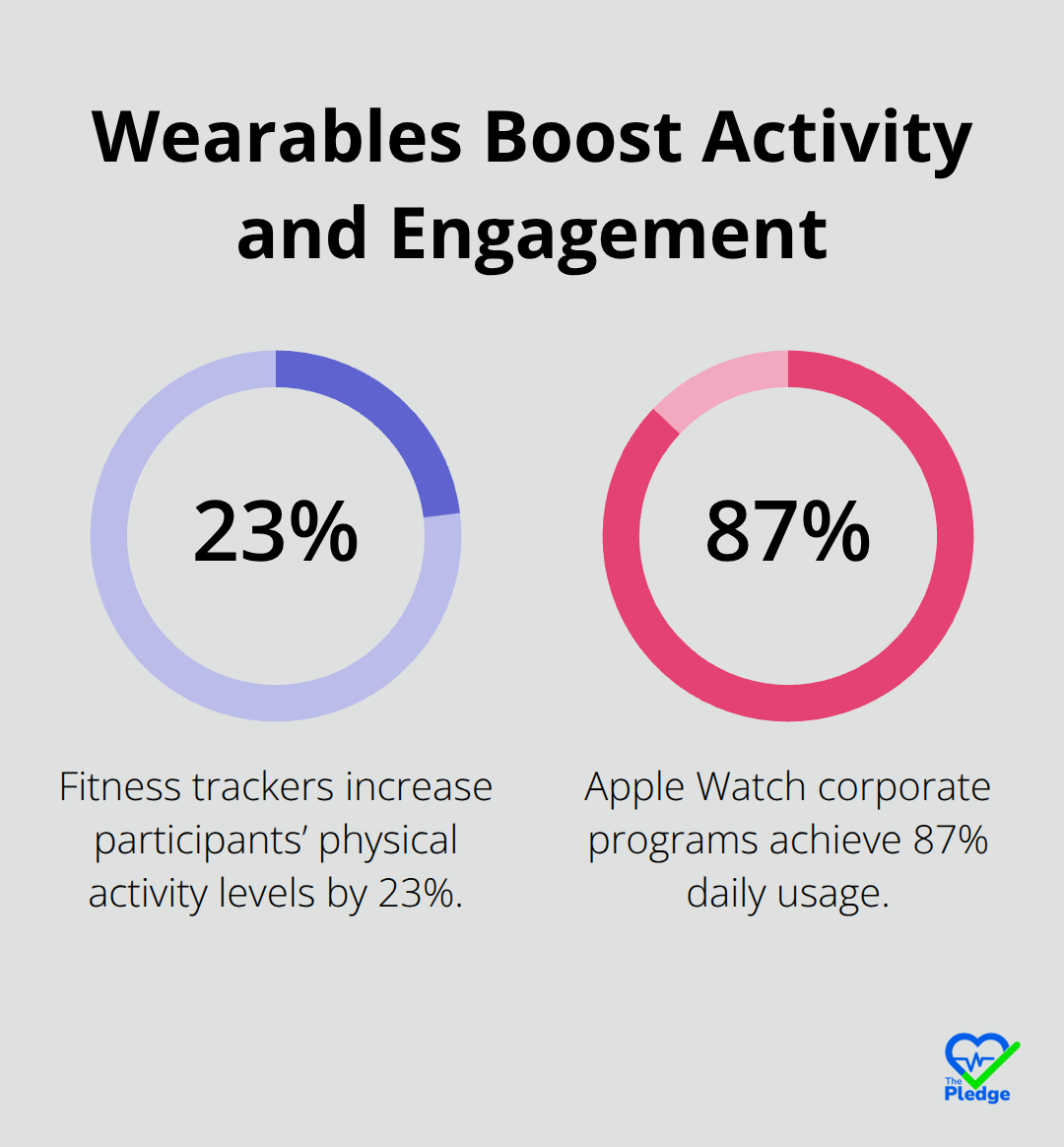
Wearable device integration creates continuous health feedback loops that traditional annual health screenings cannot match. Companies that provide fitness trackers report 23% increases in physical activity levels among participants, with Apple Watch corporate programs showing the strongest engagement rates at 87% daily usage.
The key lies in how organizations connect wearable data directly to health benefits and incentive programs. Fitbit corporate wellness programs demonstrate how step challenges and heart rate monitoring translate into measurable health improvements. Participants show 15% reductions in healthcare claims costs compared to non-participants.
Virtual Care Platforms Revolutionize Access
Virtual care platforms have revolutionized access to medical professionals, with organizations increasingly offering telehealth services as standard benefits. These digital consultations reduce time away from work by 40% compared to traditional doctor visits while maintaining equivalent care quality for routine health issues.
Telehealth adoption accelerated dramatically during 2020-2022, but sustained usage rates (now at 38x pre-pandemic levels) prove that employees value convenient healthcare access. Companies report that virtual consultations handle 70% of routine medical questions without requiring in-person visits.
These technological advances in health monitoring and virtual care set the stage for understanding how organizations measure the true impact of their wellness investments.
How Do You Prove Wellness Programs Actually Work
Organizations need specific metrics that connect directly to business outcomes, not feel-good surveys that hide real performance gaps. Companies that track the right data points see measurable returns within 12 months, while those who rely on participation rates alone waste significant resources on ineffective initiatives.
Employee Engagement Drives Real Performance Numbers
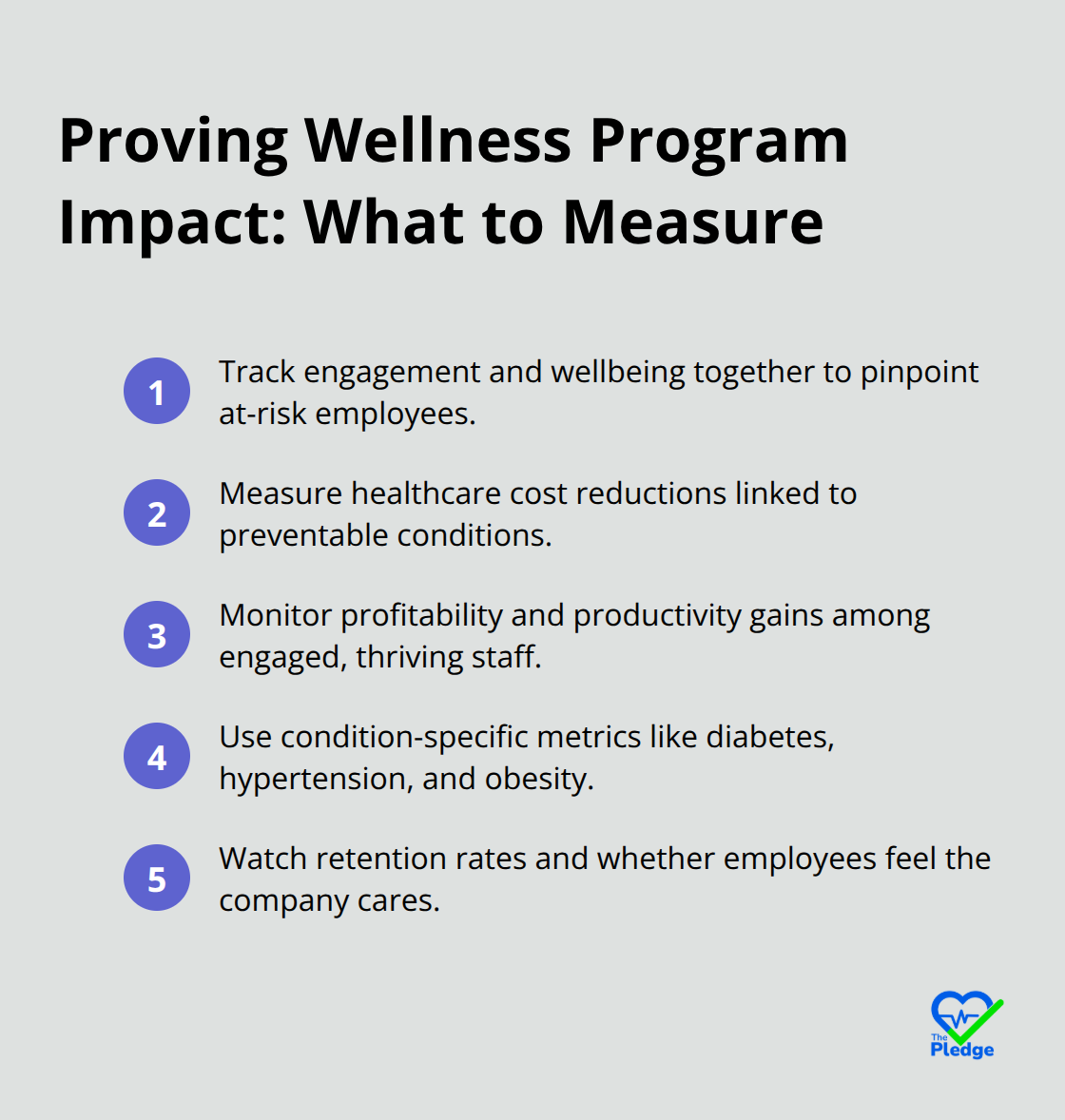
The Gallup Net Thriving metric reveals that engaged employees who are not thriving report higher burnout and daily stress compared to those who are thriving. Companies that measure both engagement and wellbeing simultaneously identify the employees most at risk for costly turnover.
Organizations that use comprehensive tracking systems report that employees with high engagement and strong wellbeing show 23% higher profitability and 18% higher productivity than their counterparts who struggle. The key metric to track is the percentage of employees who are both engaged and thriving (as this combination predicts the strongest business outcomes).
Healthcare Cost Reductions Provide Clear ROI
Preventable conditions account for at least 75% of healthcare spending, which makes cost reduction the most straightforward way to measure wellness program success. Organizations that implement targeted interventions for high-risk employees see average healthcare cost reductions of 25% within two years.
Companies that use health risk assessments to identify at-risk individuals report $3.27 in healthcare savings for every dollar invested in prevention programs. The most effective measurement approach tracks specific conditions like diabetes, hypertension, and obesity rather than general wellness metrics, as these conditions drive the majority of healthcare costs.
Retention Rates Reveal Program Effectiveness
Companies with comprehensive wellness programs experience 10% higher retention rates and reduce turnover costs by an average of $322 billion globally according to recent burnout studies. The strongest predictor of retention is whether employees believe their organization cares about their overall wellbeing (with only 1 in 4 U.S. employees currently feeling this support).
Organizations that track wellbeing alongside traditional HR metrics identify retention risks months before employees actually leave, which allows for targeted interventions that save recruiting and training costs.
Final Thoughts
Workplace wellness trends have evolved from basic fitness programs to comprehensive health ecosystems that deliver measurable business results. Organizations that invest in mental health support, flexible work arrangements, and personalized health programs see 25% lower healthcare costs and 40% reduced turnover rates. The most successful companies combine AI-powered analytics with wearable technology to create continuous health monitoring systems.
These platforms identify at-risk employees before costly medical claims occur and generate $3.27 in healthcare savings for every dollar invested in prevention programs. The data proves that wellness programs work when organizations track the right metrics. Companies that measure both employee engagement and wellbeing simultaneously achieve 23% higher profitability compared to those who use traditional approaches (which focus solely on participation rates).
Organizations ready to implement effective wellness strategies should focus on personalized interventions, continuous health monitoring, and comprehensive measurement systems that connect directly to business outcomes. The Pledge combines technology with preventative care models to improve health outcomes while reducing costs for both employees and employers. Forward-thinking companies now recognize that integrated platforms provide the foundation for sustainable wellness programs that drive real results.