
Employee wellness programs have become a $15.6 billion industry, yet 70% of companies struggle to prove their value. The impact of employee wellness programs remains unclear without proper measurement systems.
At The Pledge, we see organizations investing heavily in wellness initiatives while lacking the data to justify these expenses. This guide shows you exactly how to track meaningful metrics and demonstrate real business results from your wellness investments.
What Metrics Actually Matter for Wellness Programs
The most successful wellness programs track three critical areas that directly impact your bottom line. These measurement categories separate effective initiatives from wasteful spending and provide concrete evidence of program value.
Health Outcomes Show Real Impact
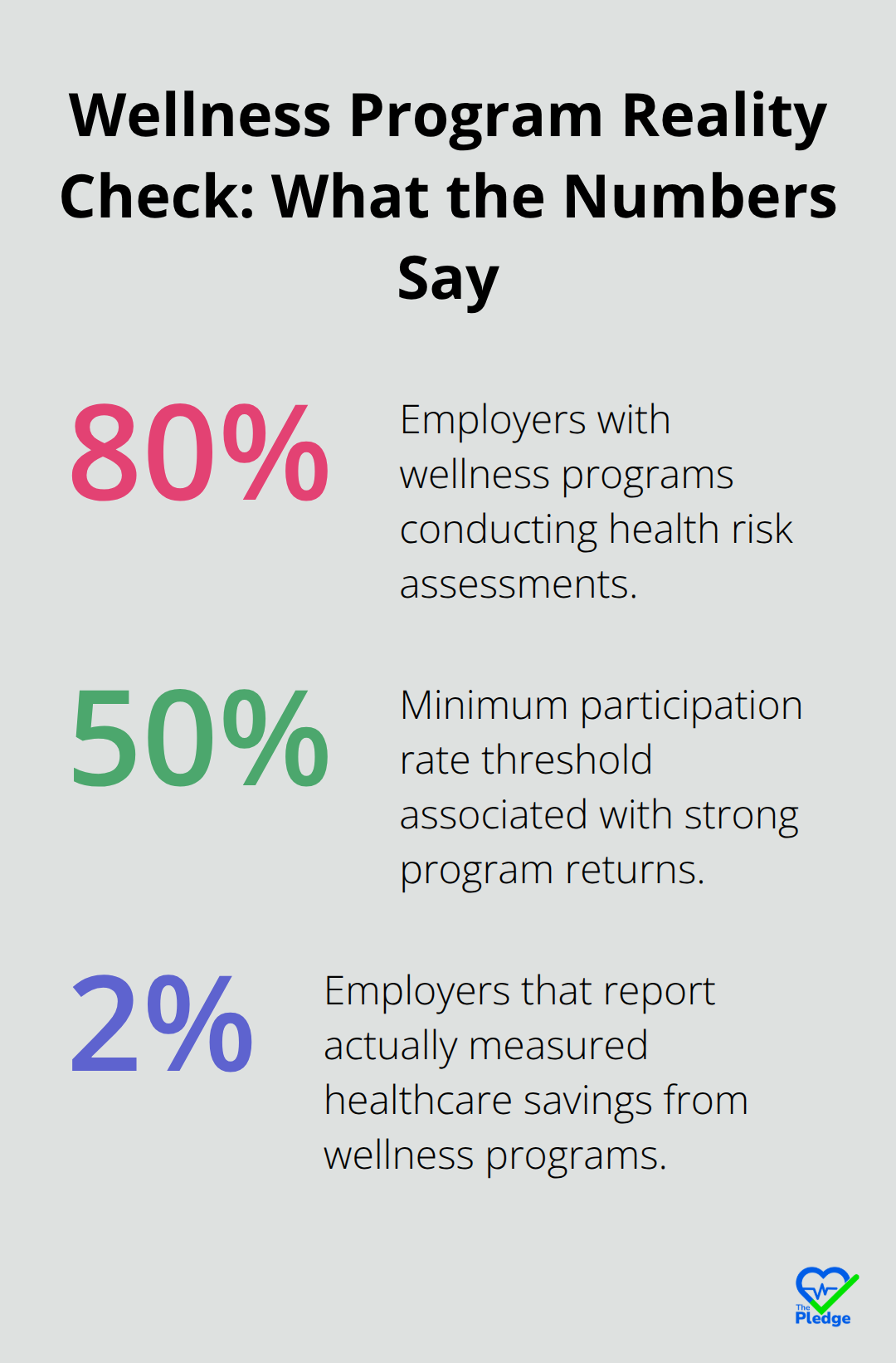
Health outcomes provide the foundation through biometric data like blood pressure, cholesterol levels, and BMI measurements. A RAND Employer Survey found that 80% of employers with wellness programs conduct health risk assessments, yet tracking improvements over time separates effective programs from wasteful spending.
Weight control programs show measurable results with participants losing an average of 0.9 pounds annually. Smoking cessation interventions demonstrate clear quit rates compared to control groups. These tangible health improvements translate directly into reduced healthcare claims and lower insurance premiums.
Participation Rates Drive Program Success
Employee engagement metrics determine program success more than any other factor. Companies that achieve 50% participation rates or higher see substantial returns, while programs below this threshold require immediate redesign.
Financial incentives work effectively (with employers using them reporting significantly higher participation than those without incentives). Smoking cessation programs command the highest incentive averages at $682 per participant, while general wellness participation averages $203. Track participation across different program components because fitness challenges consistently outperform stress management and financial wellness initiatives.
ROI Analysis Proves Business Value
Healthcare cost reduction provides the most compelling business case for wellness programs. Johnson & Johnson case studies show returns that range from $1.88 to $3.92 for every dollar invested, while effective programs generally deliver $1.50 to $2.75 ROI.
CIPROMS demonstrated concrete savings and reduced absenteeism costs from $144.03 to $84.95 per participant between 2013 and 2015 (saving $8,362 total). Track both direct healthcare cost reductions and indirect savings from decreased absenteeism. Most employers express confidence that wellness programs reduce healthcare costs, though only 2% report actual measured savings.
This measurement gap highlights why proper data collection methods become essential for program validation.
How Do You Actually Collect Wellness Data
The difference between successful wellness programs and failed initiatives lies in data collection methods. Companies that rely on guesswork waste millions, while organizations that use systematic data collection prove concrete ROI and drive meaningful health improvements.
Health Risk Assessments Drive Program Direction
Health Risk Assessments represent the most effective starting point for wellness data collection. The RAND Employer Survey documents wellness program composition and national patterns of program uptake among employers, yet most fail to use this data strategically. Smart companies collect baseline biometric screenings that measure blood pressure, cholesterol levels, BMI, and smoking status before program launch.
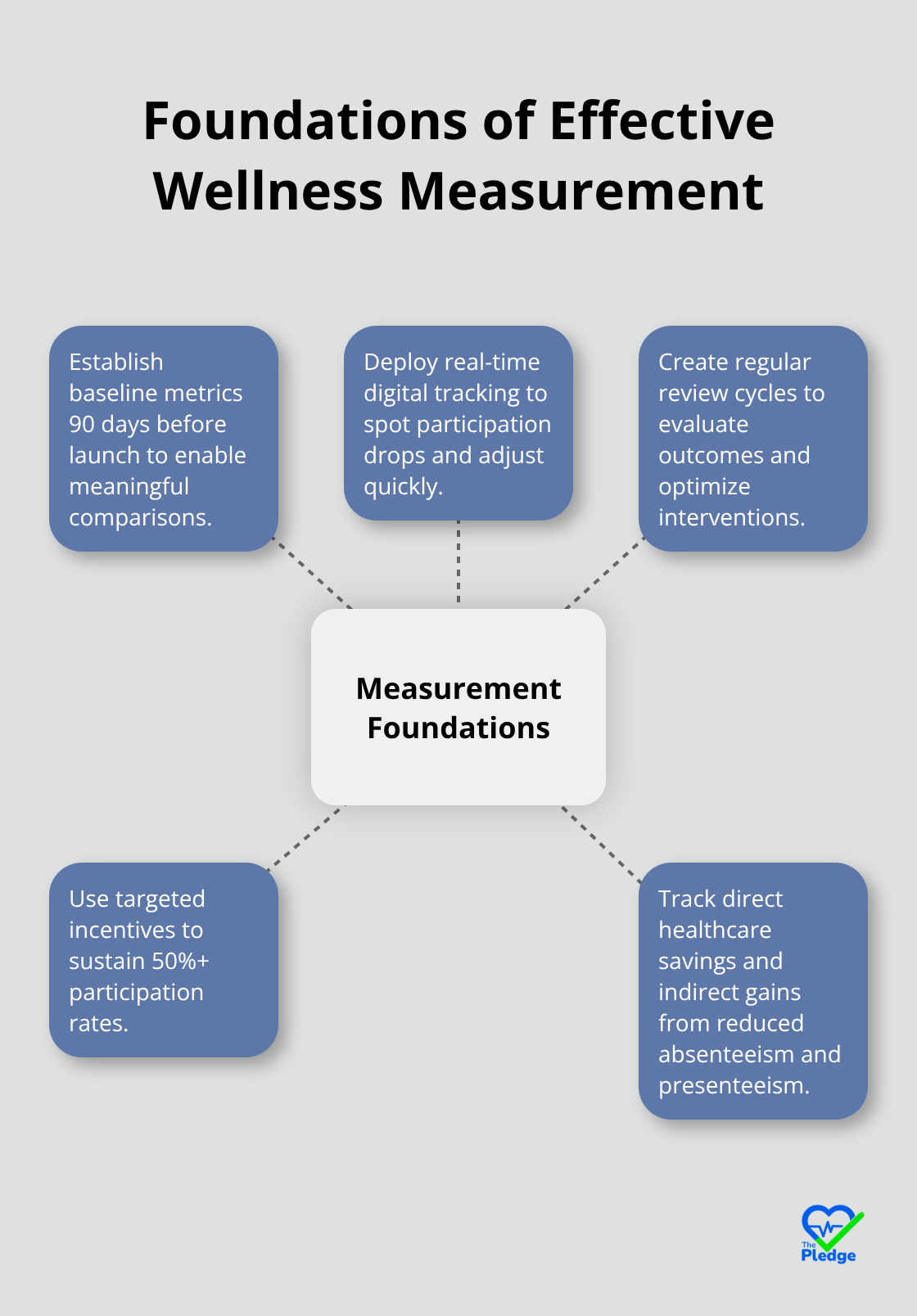
Track these same metrics quarterly to identify trends and adjust interventions accordingly. Successful programs incentivize HRA completion through premium reductions or cash rewards (with participation rates that jump significantly when financial incentives average $203 per employee). Schedule biometric screenings during work hours and provide immediate results to boost participation beyond the critical 50% threshold.
Employee Feedback Systems Reveal Program Gaps
Pulse surveys and exit interviews provide insights that biometric data cannot capture. Deploy monthly wellness surveys that ask specific questions about program satisfaction, barriers to participation, and preferred wellness activities. Track employee engagement scores before and after wellness program implementation to measure cultural shifts.
Focus groups identify why certain programs fail while others succeed. Companies that achieve high wellness engagement rates conduct quarterly feedback sessions and adjust programming based on employee input. Digital feedback platforms allow anonymous reporting about wellness program effectiveness and reveal participation obstacles that traditional surveys miss.
Healthcare Claims Analysis Proves Financial Impact
Healthcare claims data and absenteeism tracking provide the financial justification executives demand. Analyze claims data quarterly to identify cost trends in categories like emergency room visits, prescription medications, and chronic disease management. CIPROMS reduced absenteeism costs from $144.03 to $84.95 per participant through systematic tracking of sick days and hourly wage impacts.
Track both direct healthcare cost reductions and indirect savings from decreased presenteeism. Compare healthcare utilization patterns between program participants and non-participants to demonstrate program effectiveness. Most companies collect this data but fail to analyze it systematically (missing opportunities to prove ROI and secure continued funding).
These data collection methods provide the foundation for effective measurement, but raw data means nothing without proper analysis and reporting systems that turn information into actionable insights.
How Do You Set Up Effective Measurement Systems
Effective wellness program measurement requires three non-negotiable foundations that separate successful initiatives from expensive failures. Companies that skip baseline establishment face challenges with program effectiveness, while organizations that implement systematic measurement protocols can achieve positive returns on investment that executives demand.
Establish Baseline Data Before Program Launch
Start measurement 90 days before program implementation to capture accurate baseline health metrics. Document current healthcare costs per employee, average sick days taken monthly, and participation rates in existing health benefits. Research shows that companies collecting comprehensive baseline data can improve their wellness program outcomes significantly.
Track biometric measurements including blood pressure, cholesterol levels, BMI, and smoking status for all willing participants. Record current employee satisfaction scores and engagement levels through pulse surveys. Companies that establish detailed baselines identify program improvements within six months, while organizations without baselines struggle to prove ROI even after three years of operation.
Deploy Real-Time Data Collection Technology
Digital wellness platforms provide immediate feedback that paper-based systems cannot match. Real-time data collection allows program administrators to identify participation drops within 48 hours and adjust interventions immediately. Technology platforms track biometric improvements, log physical activity, monitor program engagement, and measure health risk assessment completion rates automatically.
Companies that use digital tracking systems report higher sustained participation compared to manual tracking methods. Integration with existing HR systems eliminates duplicate data entry and provides comprehensive employee wellness dashboards.
Create Regular Review and Analysis Cycles
Schedule monthly data reviews to identify trends and quarterly comprehensive analysis sessions to measure program effectiveness against established goals. Weekly participation monitoring catches engagement drops before they become permanent program abandonment (with successful companies responding to participation declines within 72 hours).
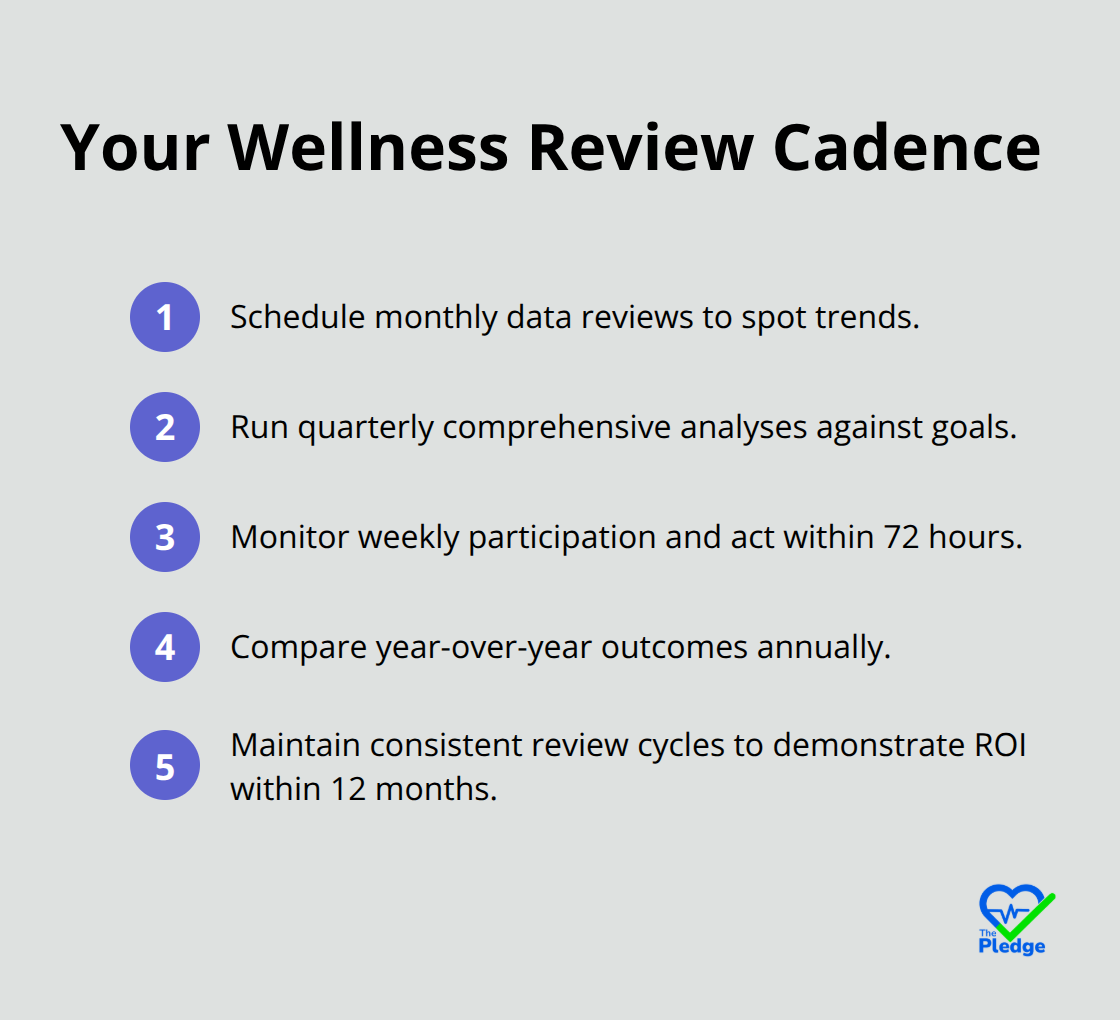
Annual comprehensive reviews compare year-over-year health outcomes, healthcare cost changes, and employee satisfaction improvements. Companies that maintain consistent review cycles demonstrate measurable ROI within 12 months, while organizations that review data sporadically fail to optimize program performance or justify continued investment.
Final Thoughts
Companies that track the impact of employee wellness programs through systematic data collection prove concrete business value while organizations that rely on assumptions waste millions in wellness investments. Digital platforms provide real-time tracking capabilities that paper systems cannot match, with successful programs achieving ROI between $1.50 and $3.92 per dollar invested. Monthly data reviews and quarterly comprehensive analyses identify trends and optimize program performance within the first year.
Successful measurement starts with baseline data collection 90 days before program launch and maintains 50% participation thresholds through strategic incentives. Organizations that implement comprehensive measurement systems demonstrate measurable health improvements and cost savings within 12 months (while companies without proper tracking struggle to justify continued investment). The data shows clear patterns across industries and company sizes.
Effective wellness programs require technology that centralizes health data and provides actionable insights for program administrators. The Pledge transforms wellness measurement through AI-powered technology that integrates seamlessly with existing health plans and delivers industry-leading engagement rates. Our platform helps employers achieve measurable returns through data-driven wellness programs that demonstrate real business impact.