

Employee wellness programs have become a business priority, with companies investing $13.6 billion annually in these initiatives. Poor workplace health costs U.S. employers $530 billion each year through reduced productivity and increased healthcare expenses.
At The Pledge, we see organizations struggling with how to improve wellness in the workplace effectively. The right strategies can reduce absenteeism by 27% and boost productivity by 11%.
What Does the Data Reveal About Workplace Wellness
The Numbers Behind Employee Health
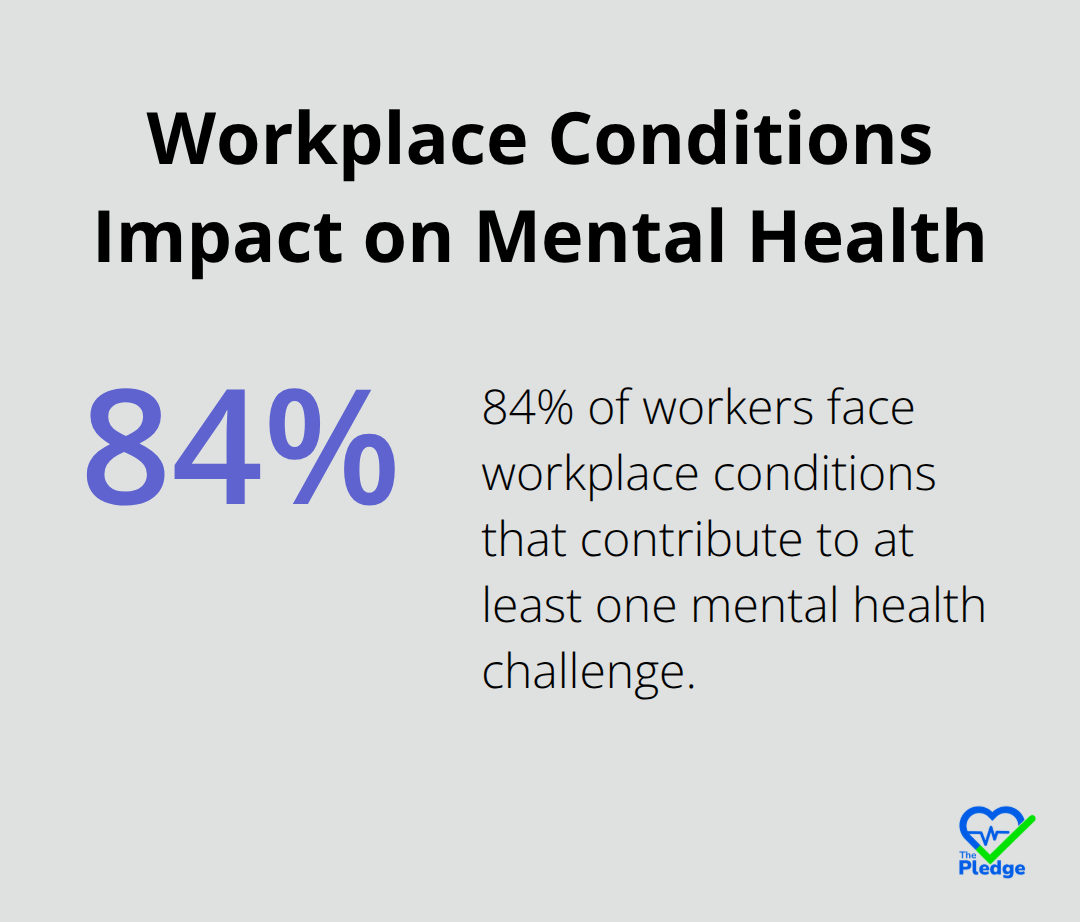
The workplace wellness landscape presents alarming statistics that demand immediate attention. The U.S. Department of Health and Human Services reports that 84% of workers face workplace conditions that contribute to at least one mental health challenge. Mental Health America found that 75% of U.S. employees experience significant stress that affects their sleep patterns, while more than half of American workers report burnout that directly impacts job satisfaction and performance.
The financial implications are staggering. Organizations with poor employee wellbeing lose up to $1 trillion annually due to turnover (U.S. Department of Labor’s Bureau of Labor Statistics). Poor workplace wellness costs employers $322 billion globally from turnover and lost productivity combined. The financial burden of voluntary turnover due to burnout alone ranges from 15% to 20% of annual payroll budgets.
The Productivity Crisis
Poor workplace wellness creates a domino effect on organizational performance. Companies that lack recognition systems face employees who are 13 times more likely to suffer from negative wellbeing. Employees who feel unappreciated or unsupported are 48% more likely to experience burnout, with diverse employees facing 126% higher rates of severe burnout due to additional workplace stressors and microaggressions.
The productivity impact extends beyond individual performance. Organizations with wellness programs see 67% of employees express greater job satisfaction and increased likelihood to recommend their workplace to others. Companies with recognition-led wellness programs report employees who are 90% less likely to experience frequent burnout.
Return on Investment Reality
The financial returns on workplace wellness programs justify the investment. Companies that implement wellness initiatives experience 27% reduction in absenteeism and 11% productivity increases. Nearly 9 in 10 employees consider wellness programs when they evaluate potential employers, with over half of Gen Z and millennial workers rating these programs as important or extremely important in their job search.
However, participation remains a challenge. Employee participation in wellness programs typically ranges from 20% to 40% (RAND Corporation data). Organizations that invest in comprehensive wellness programs with strong leadership support see significantly higher engagement rates and measurable health improvements, including documented cases of 10-point drops in diastolic and 20-point drops in systolic blood pressure among participants.
These statistics paint a clear picture of both the challenges and opportunities that lie ahead. The question becomes: what specific strategies can organizations implement to transform these concerning trends into positive outcomes for their workforce?
What Strategies Actually Work for Employee Wellbeing
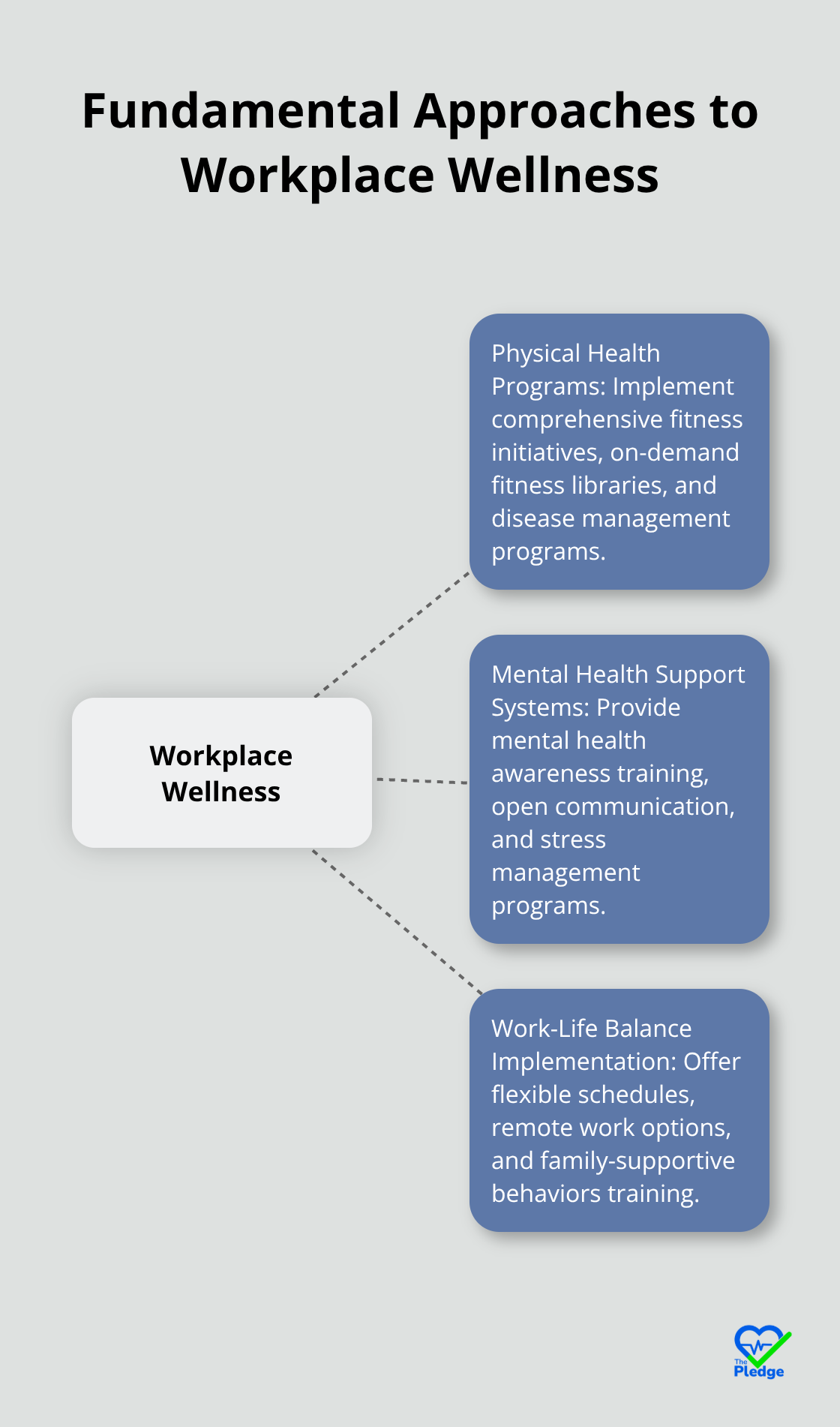
The most effective workplace wellness programs combine three fundamental approaches that address the complete spectrum of employee health needs. Organizations that implement comprehensive fitness initiatives see dramatic improvements in both participation and health outcomes.
Rural Wisconsin Health Cooperative achieved 90% participation rates among its 60 employees through on-site medical screenings, flexible fitness programs, and personalized health coaching. Lincoln Industries documented measurable health improvements after three years, with 10-point drops in diastolic and 20-point drops in systolic blood pressure among participants.
Physical Health Programs That Drive Engagement
Successful physical wellness initiatives extend far beyond basic gym memberships. Companies that implement on-demand fitness libraries allow employees to select workouts that match their individual fitness levels and preferences, which results in sustained participation rates. Disease management initiatives prove particularly effective, with nutrition counseling and lifestyle coaching that help employees manage chronic conditions proactively. Low-cost alternatives like walking meetings, desk yoga, and preventive health screenings provide substantial benefits without significant budget increases. Workshops that focus on nutrition and healthy cooking improve dietary habits while they foster team connections among colleagues.
Mental Health Support Systems
Mental health support requires systematic approaches rather than one-time initiatives. The American Psychological Association found that 71% of workers believe their employers prioritize mental health more than in previous years, which creates opportunities for targeted interventions. Organizations that implement mental health awareness training for managers see improved support for employees who struggle with psychological challenges. Open communication about mental health reduces workplace stigma and creates supportive environments where employees feel safe when they seek help. Stress management programs, combined with access to counseling services, address the 65% of workers who characterize work as a significant source of stress.
Work-Life Balance Implementation
Flexible schedules and remote work options produce measurable wellness improvements. Employees with flexible schedule options experience increased job satisfaction by 62% and decreased likelihood of job stress by 20%. Training managers in family-supportive behaviors decreases employee cardiovascular risk while it improves job performance. Employees with autonomy over their work schedules report better mental health, lower rates of heart disease, and increased job satisfaction. Companies that offer paid time off for mental health days and accommodate personal obligations create stronger work-life integration that reduces burnout rates significantly.
While these traditional strategies form the foundation of effective wellness programs, modern technology opens new possibilities for personalized and scalable wellness solutions that can transform how organizations approach employee health.
How Technology Transforms Workplace Wellness
Digital health platforms revolutionize workplace wellness through personalized, scalable solutions that traditional programs cannot match. Modern organizations implement comprehensive digital ecosystems that integrate mobile health apps, wearable technology, and AI-powered analytics to create seamless wellness experiences. These platforms achieve engagement rates through real-time data integration and personalized health dashboards that track everything from sleep patterns to nutrition goals.
Mobile Apps Drive Daily Health Habits
Mobile health applications transform sporadic wellness activities into consistent daily routines. Employees use apps that provide customizable fitness programs, nutrition tracking, and mental health resources directly on their smartphones. Companies report 60% higher participation rates when wellness programs include mobile components compared to traditional offerings.
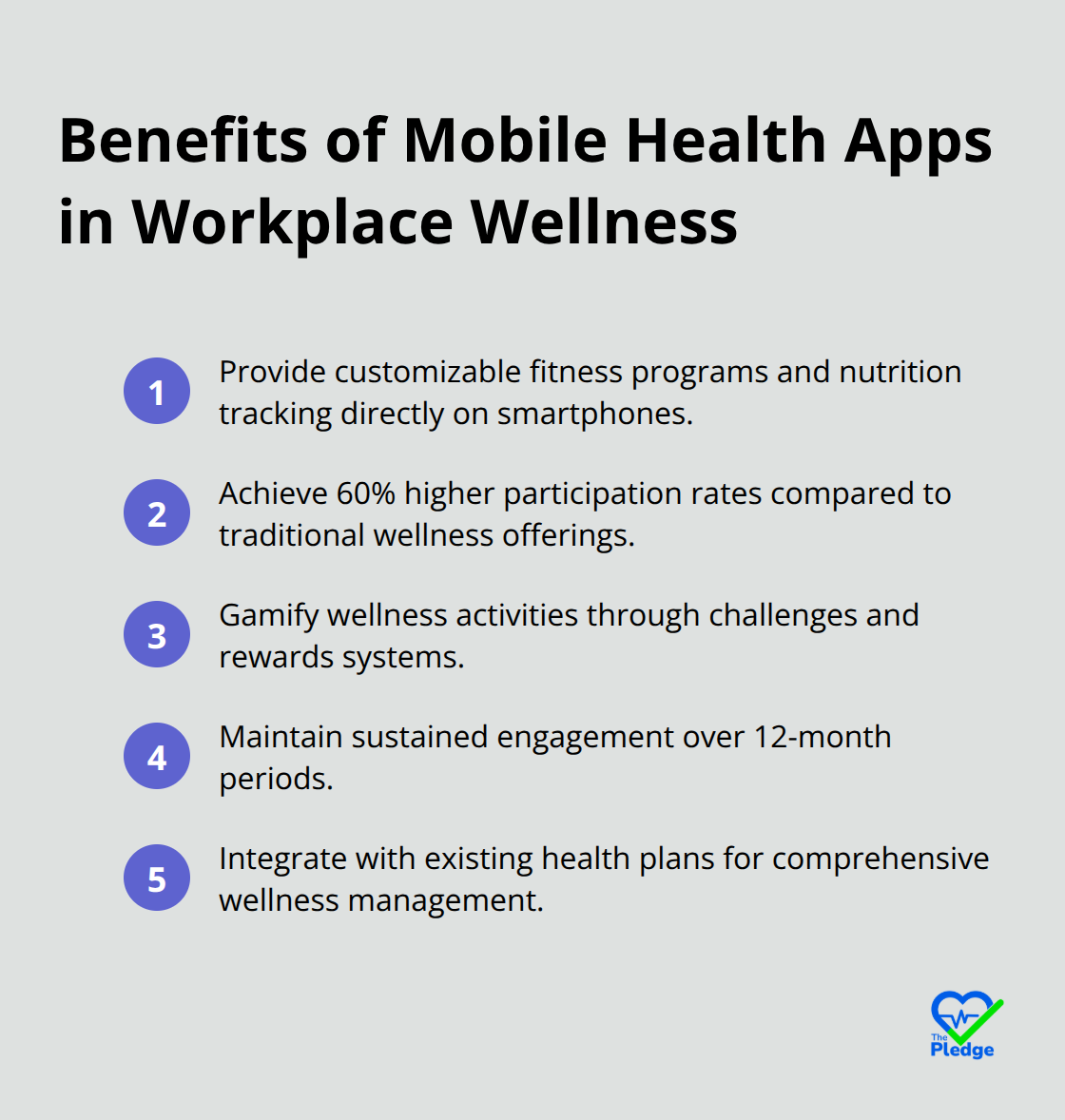
Apps that gamify wellness activities through challenges and rewards systems maintain sustained engagement over 12-month periods. The key lies in selecting platforms that integrate with existing health plans and provide real-time feedback on progress toward personalized health goals.
Wearable Technology Provides Actionable Data
Wearable devices generate continuous health data that enables proactive wellness interventions. Fitness trackers, smartwatches, and health monitors collect metrics on heart rate variability, sleep quality, and daily activity levels. Organizations that implement wearable technology programs see improvements in employee physical activity through monitoring insights and reductions in stress-related health issues. The most effective programs combine wearable data with personalized coaching recommendations and allow employees to share progress with healthcare providers. Companies achieve maximum value when wearable programs include family participation options (extending wellness benefits beyond individual employees).
AI Creates Personalized Wellness Experiences
Artificial intelligence transforms generic wellness programs into highly personalized health experiences. AI-powered platforms analyze individual health data, work patterns, and lifestyle factors to deliver customized wellness recommendations. These systems send targeted reminders for preventive screenings, suggest optimal workout times based on calendar availability, and recommend stress management techniques during high-pressure periods. Organizations that use AI-driven wellness platforms report 35% better health outcomes compared to standard programs. The technology enables predictive analytics that identify employees at risk for chronic conditions and proactively suggests interventions that prevent costly health complications (reducing long-term healthcare expenses).
Final Thoughts
Successful workplace wellness programs require strategic implementation that addresses physical health, mental wellbeing, and work-life balance simultaneously. Organizations that combine traditional wellness initiatives with modern technology solutions achieve participation rates of 90% and measurable health improvements within three years. The data proves that companies that invest in comprehensive wellness programs see 27% reduction in absenteeism, 11% productivity increases, and 67% higher employee satisfaction rates.
These programs generate substantial returns through reduced healthcare costs and decreased turnover expenses (which can reach 20% of annual payroll budgets). Success requires tracking both quantitative metrics like blood pressure improvements and qualitative indicators such as employee engagement scores. Long-term benefits extend beyond individual health outcomes to include stronger workplace culture, improved retention rates, and enhanced organizational reputation that attracts top talent.
Organizations ready to learn how to improve wellness in the workplace should start with leadership commitment, employee needs assessments, and phased program implementation. Technology platforms that integrate health data, provide personalized recommendations, and facilitate family participation create sustainable wellness ecosystems. We at The Pledge help organizations transform their wellness initiatives through our comprehensive health management platform that centralizes medical information and delivers personalized wellness programs.