
Most employees can’t name half their benefits. At The Pledge, we’ve seen firsthand how poor benefits communication strategies leave money on the table and employees confused about what they actually have access to.
When benefits information gets lost in jargon or scattered across different platforms, people stop paying attention. The result is lower utilization rates and wasted investments in coverage nobody understands.
Why Your Benefits Communication Is Failing
Fragmentation Across Platforms Creates Confusion
Employees at most organizations encounter benefits information in fragments. An email about open enrollment arrives, followed by a PDF brochure nobody reads, then a link to a benefits portal that requires a password reset. Meanwhile, HR fields the same questions repeatedly: What’s my deductible? Do I have dental coverage? How do I use my FSA? This fragmentation isn’t accidental-it stems from benefits departments bolting communication onto systems designed decades ago, without considering how actual employees consume information.
Jargon Overwhelms Employees
The data confirms the problem is widespread. Forrester Consulting found that 71% of employees underutilize their benefits despite their employers investing heavily in coverage. A 2024 Korean study analyzing over 25,000 employees revealed that when information overload exceeds reasonable limits, engagement drops significantly and burnout rises. The culprit isn’t the benefits themselves; it’s how they’re communicated. When employees face jargon-heavy explanations of deductibles, coinsurance, and out-of-pocket maximums, they stop trying to understand. When the same information appears in five different places with slightly different wording, confusion becomes inevitable.
Organizations Waste Significant Investment
Organizations spend 30% of total compensation on benefits but communicate them as an afterthought, expecting employees to navigate complexity alone. The result is predictable-people stick with default options, miss preventive care benefits, and never access specialized services because they didn’t know these existed. Organizations that break this cycle by implementing benefits communication strategies year-round engagement, not a compliance checkbox, report higher utilization rates and measurably better health outcomes.
The Path Forward Requires Strategic Shifts
Fragmented, jargon-filled messaging doesn’t just reduce engagement-it actively wastes the investment your organization made in comprehensive coverage. The solution demands a fundamental shift in how benefits departments approach communication. Rather than treating it as a one-time event during open enrollment, successful organizations build year-round strategies that meet employees where they are. This means simplifying language, choosing the right channels, and personalizing messages to match individual needs and life stages. The next section explores the specific strategies that transform benefits communication from a source of frustration into a tool that drives real engagement and utilization.
How to Make Benefits Clear Without the Jargon
Simplify Language to Match How Employees Actually Think
The shift from confusion to clarity starts with language. Benefits mean nothing if employees can’t understand them. Replace terms like coinsurance, out-of-pocket maximum, and deductible with plain English: what you pay before insurance kicks in, the most you’ll spend yearly, and what portion of costs you share. The U.S. Department of Labor benchmark suggests trying for a fifth-grade reading level in all materials. This isn’t dumbing down content-it’s respecting that employees are busy and stressed, not benefits specialists.
When bswift analyzed employee engagement patterns, they found that simplified messaging paired with personalized digital tools increased benefits utilization significantly. Start by auditing every piece of communication your organization produces. If a sentence requires rereading, rewrite it. Test materials with actual employees outside HR before launch. Ask them what they understood and what confused them. This feedback loop catches jargon before it reaches thousands of people.
Meet Employees on Their Preferred Channels
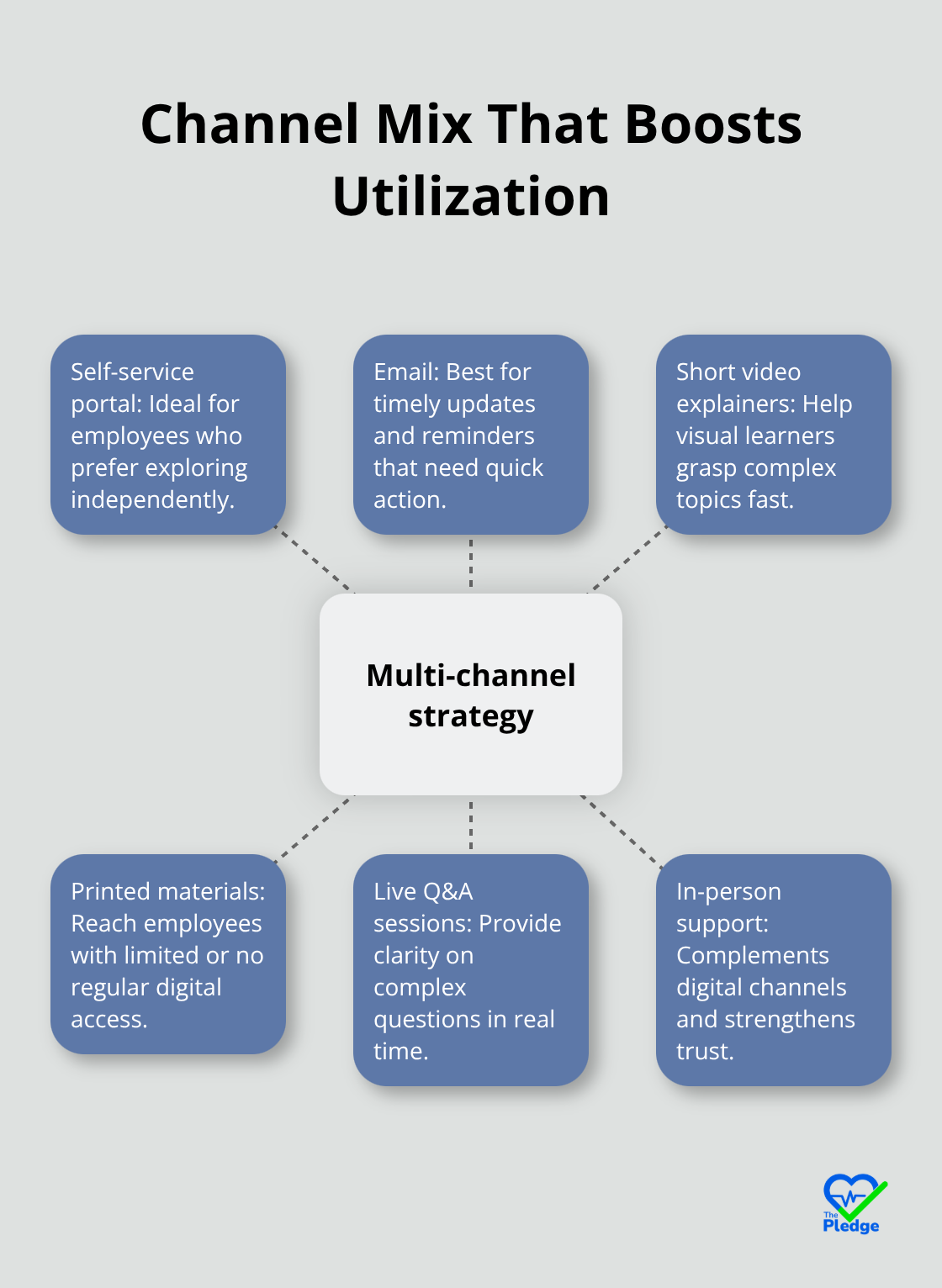
Reaching employees where they actually are means abandoning the assumption that one channel works for everyone. Forrester Consulting research shows that mature companies balancing digital platforms with in-person support report the highest utilization and retention. Your communication strategy should include a self-service benefits portal for employees who prefer exploring independently, email for time-sensitive updates, short video explainers for visual learners, printed materials for those without regular digital access, and live Q&A sessions for complex questions.
Segment your audience by generation and role. Gen Z employees want mobile-first access and quick answers; Gen X and Millennials use multiple channels; older workers often prefer email and printed guides.
Time Communications Around Life Moments, Not Just Open Enrollment
Schedule communications around actual decision moments-January for wellness benefits, mid-year for retirement planning reminders, September for upcoming cost deadlines-rather than flooding inboxes during open enrollment. This pacing prevents the information overload that research shows directly increases burnout and reduces engagement. Personalization at scale matters more than volume. One targeted message about maternity benefits to employees in that life stage outperforms generic messages to everyone. When you align communication with the moments that matter most to each employee, utilization rates climb and confusion drops. The next section explores how to measure whether these strategies actually work and adjust your approach based on what the data reveals.
Measuring and Improving Benefits Utilization
The gap between what organizations think employees understand and what they actually grasp is massive. Many HR teams assume that because they sent an email about benefits, employees now know what they have. Data tells a different story. Forrester Consulting found that benefits impact employee experience and retention, yet 71% report employees underutilize benefits. This disconnect reveals the real problem: organizations rarely measure whether their communication strategies actually landed.
Start tracking concrete metrics instead of guessing. Monitor email open rates, portal login frequency, and enrollment completion times. More importantly, measure actual benefit utilization by comparing claims data before and after you implement new communication strategies. If you launched a simplified benefits guide in March and dental claims jumped 15% by June, that’s proof your strategy worked. If nothing changed, your messaging missed the mark regardless of how well-intentioned it was.
Track Metrics That Reveal What Actually Works
The Korean study analyzing 25,000 employees revealed that recognition programs correlate with engagement at a 0.394 coefficient, the strongest relationship in the data. This matters for benefits communication because it means employees respond to clear acknowledgment of what they’re choosing. Monitor which specific benefits generate the most questions during your Q&A sessions, then focus your next round of communication on demystifying those exact items. If 40% of questions involve HSA contribution limits, create a targeted explainer video. If maternity benefits generate confusion, build a personalized journey for employees in that life stage.
Engagement metrics like video completion rates and FAQ click-throughs reveal what actually resonates. A video on retirement planning that achieves a 2% completion rate is failing; one that hits 45% completion is working. The Korean study also found that fairness in reward distribution positively affects engagement at a 0.123 coefficient, meaning transparent communication about how benefits work builds trust. When employees understand the logic behind your benefits structure, they engage more deeply.
Gather Feedback at Strategic Moments
Survey employees at three specific moments: immediately after open enrollment, six months later, and before the next enrollment period. Ask what confused them, what helped them decide, and what they still don’t understand. Use a simple scale for rating understanding: I understand this completely, somewhat, or not at all. Identify the benefits with the lowest understanding scores and rebuild your messaging for those items. Track absenteeism and healthcare claims tied to specific benefits. If your wellness program generates zero engagement but mental health resources see heavy use, allocate more communication effort toward mental health.
Respond to Patterns in Your Data
Organizations that measure quarterly see patterns emerge. One company discovered that employees over 55 preferred phone calls to benefits advisors while younger employees wanted self-service portals. Splitting communication strategy by age group and preference increased utilization across both segments. Another organization found that 60% of enrollment mistakes happened at one specific step in their portal, so they redesigned that single screen and error rates dropped 40%. These aren’t theoretical improvements; they’re the result of watching data and responding.
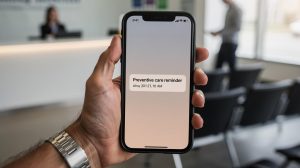
Align your communication calendar to these findings. If data shows employees miss preventive care deadlines in October, send reminders in August. If retirement questions spike in March, launch retirement education in February. Organizations that treat benefits communication as a continuous improvement cycle (not an annual event) see measurable gains in both utilization and employee satisfaction. Measure, adjust, measure again-this rhythm transforms communication from a compliance task into a strategic driver of health outcomes.
Final Thoughts
Clear benefits communication strategies deliver measurable results that organizations can track and improve. When employees understand their benefits, they use them-and when they use them, health outcomes improve and preventable conditions get caught earlier. Forrester Consulting research shows that mature companies prioritizing clear communication report higher retention and lower absenteeism, while the Korean study of 25,000 employees found that transparent, fair communication directly correlates with engagement.
Start your improvement without overhauling everything at once. Audit your current materials for jargon and simplify the worst offenders, add one new communication channel that reaches employees you’re currently missing, then measure what changes. Track utilization rates before and after your improvements, survey employees about what confused them, and adjust based on what the data reveals.
We at The Pledge understand that clear health communication transforms outcomes. Our platform centralizes health data and sends personalized reminders, helping employees navigate their benefits and care options with confidence-integrate seamlessly with existing health plans to simplify the complexity that frustrates both employees and HR teams. Start measuring your current communication effectiveness today, then build from there.