

Employee wellness programs have evolved far beyond basic gym memberships. Companies now invest in comprehensive health and wellness initiatives in the workplace that directly impact their bottom line.
At The Pledge, we’ve seen organizations reduce healthcare costs by up to 28% through strategic wellness investments. The most successful programs combine technology, personalized support, and measurable outcomes to create lasting change.
What Wellness Programs Actually Work
Companies that implement comprehensive wellness programs see dramatic results, but only when they move beyond surface-level initiatives. Organizations with on-site fitness centers report improved employee health outcomes. Johnson & Johnson’s wellness program provided annual savings of $225 per employee, equating to $8.55 million in annual savings. The key lies in programs that address physical movement, mental health, and nutrition simultaneously rather than treating these as separate initiatives.
Physical Movement Beyond the Gym
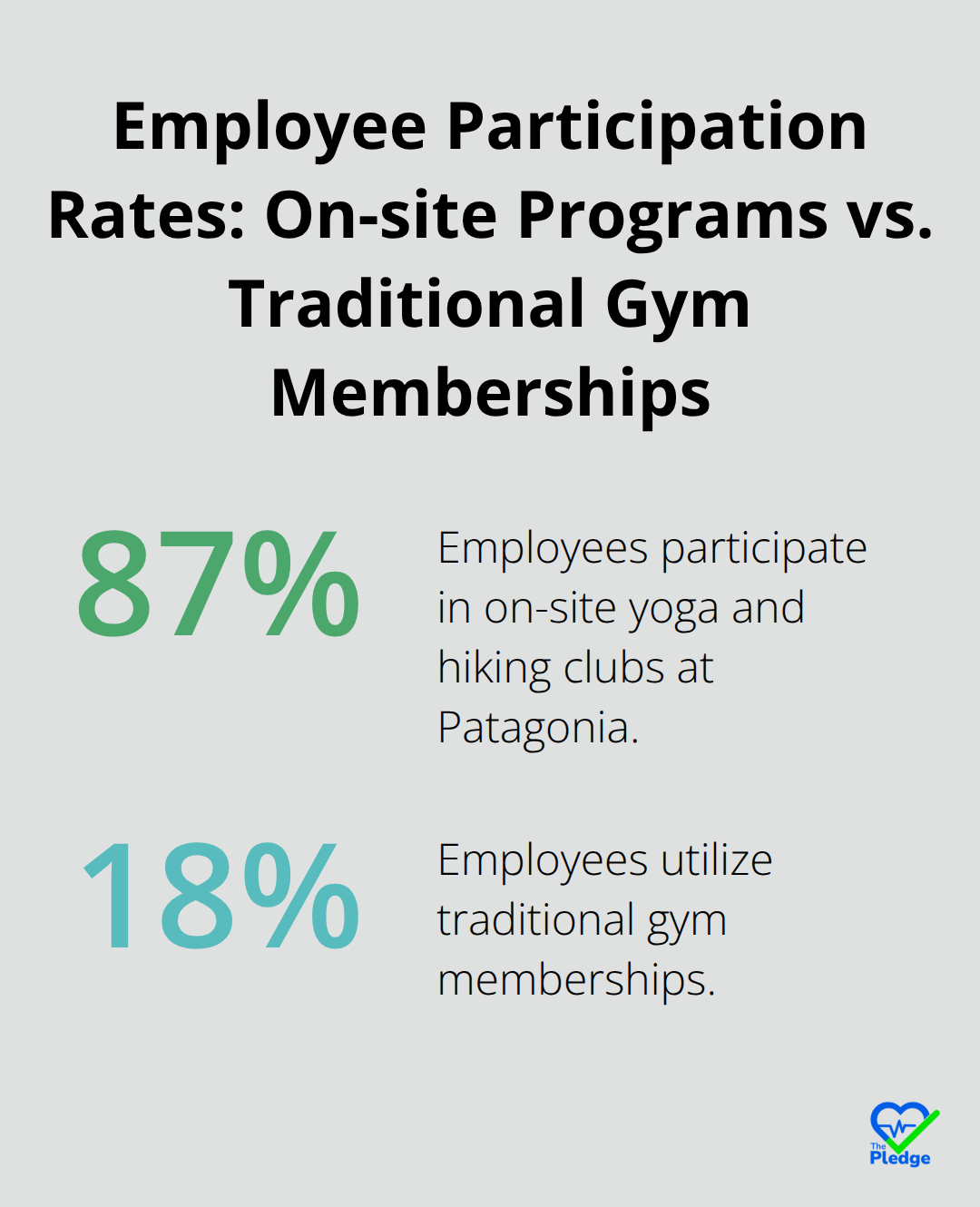
Smart companies abandon expensive gym equipment that sits unused. Instead, they implement walking meetings, standing desk policies, and micro-movement breaks every two hours. Google’s data shows employees who participate in walking meetings report 23% higher creativity scores. Salesforce installed treadmill desks and saw 15% productivity increases among users. The most effective approach combines structured fitness opportunities with movement integration throughout the workday. Companies like Patagonia offer on-site yoga and hiking clubs, achieving 87% employee participation rates (compared to traditional gym membership utilization of just 18%).
Mental Health Support That Delivers
Generic employee assistance programs fail because they react rather than prevent. Companies that achieve real mental health outcomes implement manager training programs, with Unilever reporting 40% reduction in stress-related sick days after training 2,000 managers in mental health awareness. Stress management programs work best when they include mindfulness training, flexible work arrangements, and regular mental health check-ins. Microsoft’s four-day work week pilot in Japan resulted in 40% productivity gains and significant stress reduction. The most successful programs combine digital mental health apps with in-person counseling, creating multiple touchpoints for employee support.
Nutrition Programs That Change Behavior
Free snacks don’t constitute a nutrition program. Companies that see real results implement comprehensive nutritional coaching with measurable outcomes. Aetna’s on-site nutritionist program reduced healthcare costs by $3,000 per participating employee annually. Effective nutrition initiatives include healthy meal delivery services, on-site nutritional counseling, and elimination of processed foods from workplace cafeterias. Companies like Whole Foods provide employees with personalized nutrition plans based on biometric screenings, achieving 78% participation rates and 12% average weight loss among participants.
These foundational wellness programs create the groundwork for more sophisticated health solutions. Modern technology now amplifies these traditional approaches through data-driven insights and personalized interventions.
Technology-Driven Employee Health Solutions
Wearable Device Integration and Fitness Tracking
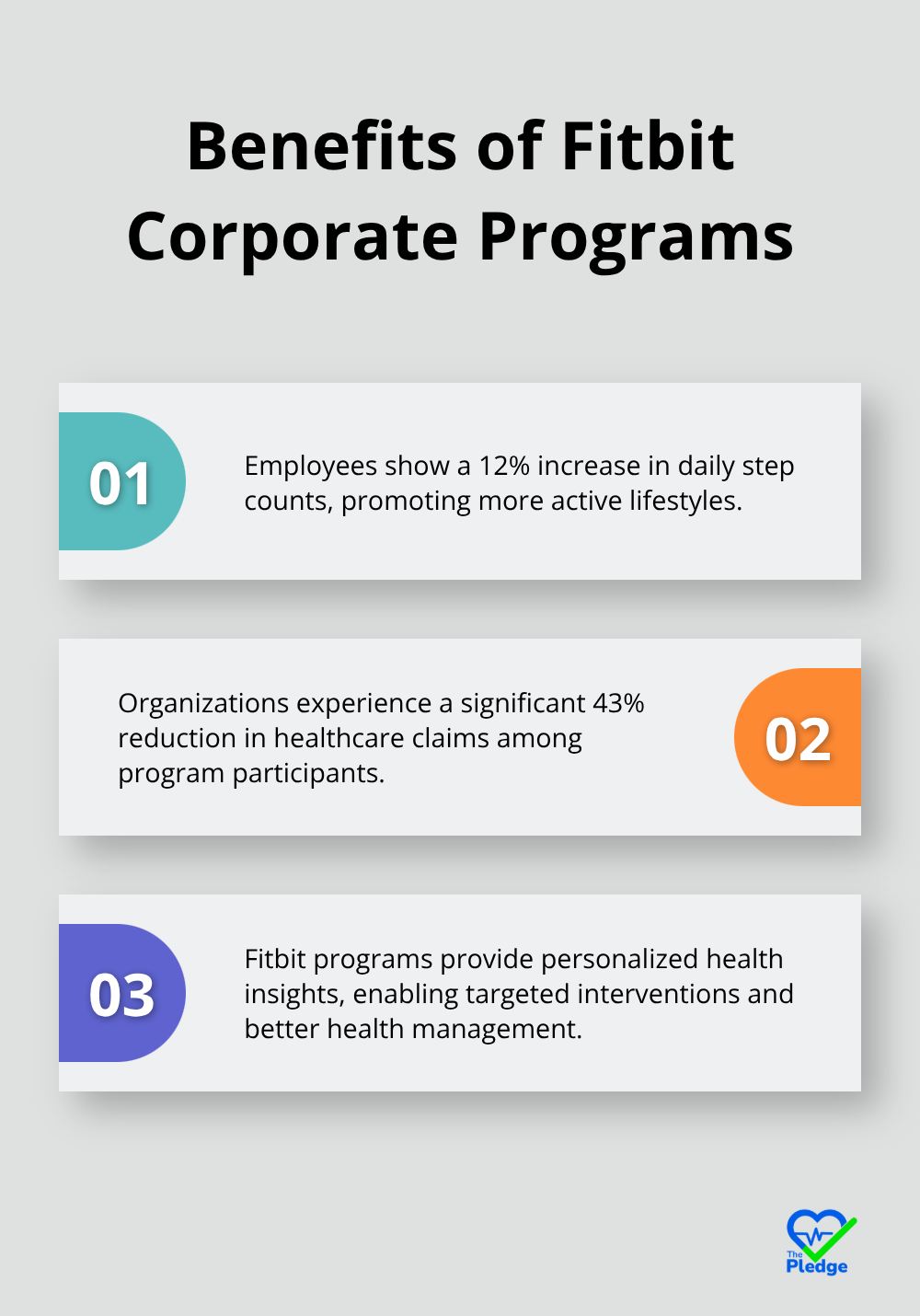
Wearable devices deliver personalized health insights that traditional programs cannot match. Companies now track real-time data that drives meaningful behavior change, with Fitbit corporate programs showing 12% increases in daily step counts and 43% reductions in healthcare claims among participants. IBM integrates fitness trackers with their wellness platforms and achieves 85% employee participation rates (compared to 23% for standard wellness programs). The most effective implementations combine multiple data sources including sleep patterns, heart rate variability, and activity levels to create comprehensive health profiles that guide targeted interventions.
AI-Powered Health Risk Assessments
AI transforms reactive healthcare into predictive wellness management through advanced risk assessment algorithms. Machine learning models excel at diabetes risk prediction by analyzing employee health data patterns. These systems process vast amounts of health information to predict potential issues before they become costly medical problems. Companies that implement AI-powered assessments report earlier intervention rates and significantly lower long-term healthcare expenses.
Digital Health Platforms for Centralized Care Management
Digital health platforms centralize all wellness data and create single dashboards that track biometrics, claims history, and program participation. These comprehensive systems integrate seamlessly with existing health plans and provide real-time updates plus personalized care navigation. Digital health interventions have significant potential to improve safety, efficacy, and quality of care while reducing healthcare costs. The most successful programs combine wearable data, AI risk assessment, and centralized care management into unified employee experiences that increase engagement rates to 4x industry standards.
The real value of these technological solutions becomes clear when organizations measure their return on investment and track meaningful engagement metrics across their workforce.
Measuring ROI and Employee Engagement in Wellness Programs
Wellness programs fail when organizations cannot demonstrate measurable returns on their investments. Companies that track specific metrics see dramatically different outcomes compared to those that rely on employee satisfaction surveys alone. The most successful wellness initiatives focus on three critical measurement areas: healthcare cost reduction, productivity improvements, and sustained employee engagement. Johnson & Johnson’s leaders estimate that wellness programs have cumulatively saved the company $250 million on health care costs over the past decade. Companies must establish baseline measurements before program launch and track monthly changes rather than annual reviews to identify which interventions drive real results.
Healthcare Cost Reduction Analysis
Direct healthcare savings provide the clearest ROI measurement for wellness programs. Organizations should track healthcare claims data, emergency room visits, prescription costs, and preventable hospital admissions. IBM reduced healthcare costs by $3,200 per participating employee annually through their comprehensive wellness platform that combines biometric screenings with targeted interventions. Absenteeism costs American companies $84 billion annually (according to the Centers for Disease Control and Prevention), which makes attendance tracking essential for accurate measurement.
Productivity and Performance Metrics
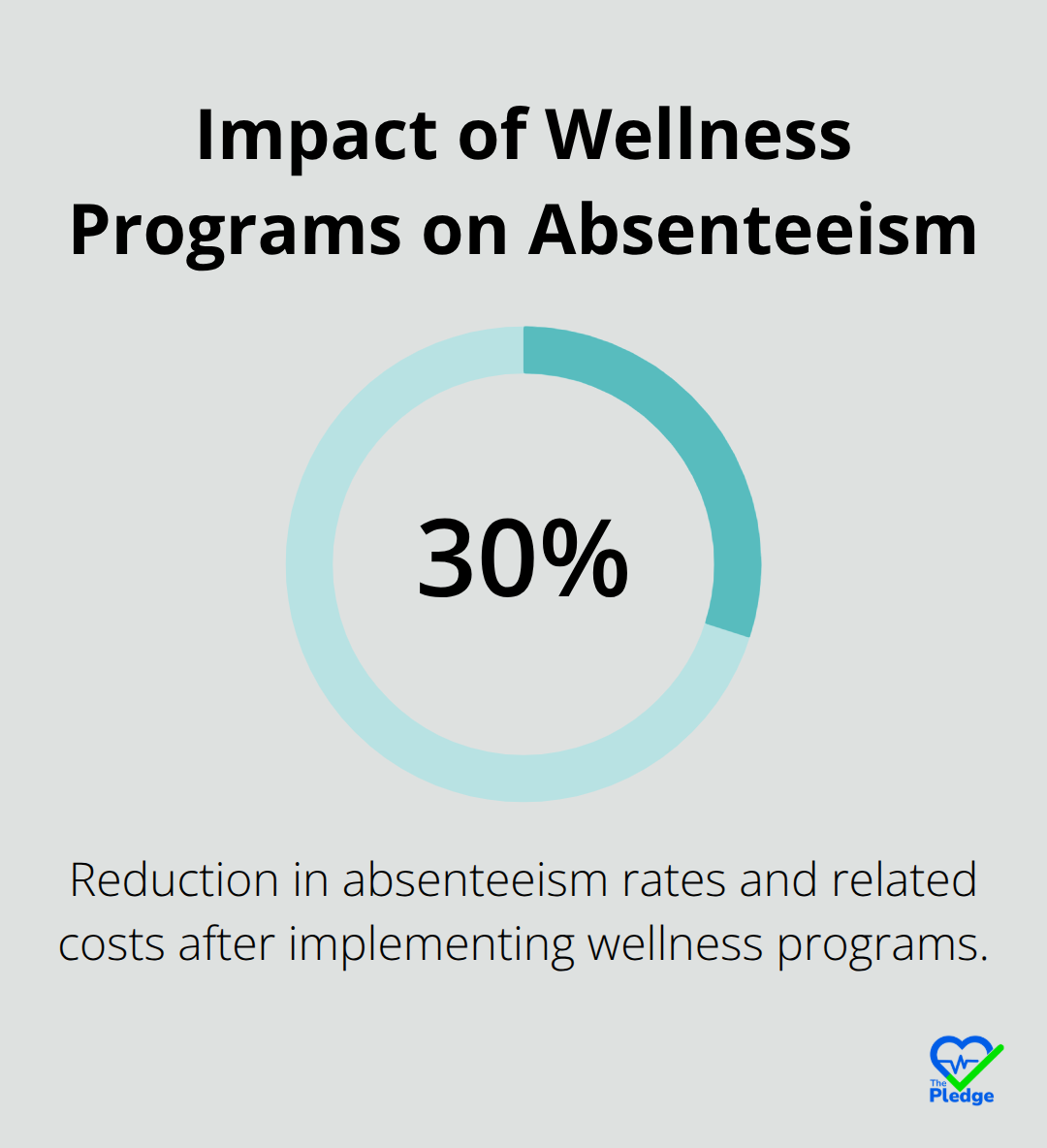
Meta-evaluations of wellness programs show absenteeism rates and related costs drop on the order of 25–30% after implementing wellness efforts. The most accurate measurement approach combines healthcare claims analysis with productivity metrics including project completion rates, customer satisfaction scores, and revenue per employee to capture the full financial impact of wellness investments. Organizations must track specific metrics including both direct cost savings and indirect productivity gains to understand the complete return on their wellness program investments.
Employee Participation and Engagement Tracking
Program participation rates reveal whether wellness initiatives create lasting behavior change or temporary engagement spikes. Successful programs maintain 70% participation rates after the first year, compared to 23% for programs without personalized components. Companies should track daily active users, program completion rates, and repeat participation rather than initial sign-up numbers. Aetna’s wellness program achieved sustained engagement through weekly app usage measurement, biometric improvement rates, and employee referral patterns.
Long-Term Behavior Change Indicators
The strongest predictor of program success involves measuring behavior change sustainability through six-month follow-up assessments and tracking whether employees maintain healthy habits without ongoing incentives. Organizations that achieve lasting results focus on habit formation metrics rather than short-term participation spikes. Companies must measure ROI including both immediate engagement and sustained behavior change to determine which program elements create lasting health improvements and cost savings.
Final Thoughts
The most effective health and wellness initiatives in the workplace combine physical movement programs, comprehensive mental health support, and evidence-based nutrition interventions with advanced technology integration. Organizations that achieve measurable results focus on AI-powered health risk assessments, wearable device integration, and centralized digital health platforms rather than standalone wellness offerings. Companies must establish baseline health metrics and track both immediate engagement and long-term behavior change to demonstrate real value.
Future workplace wellness will center on predictive health analytics, personalized intervention strategies, and seamless integration between employee health data and care management systems. Companies will increasingly rely on real-time biometric monitoring and machine learning algorithms to prevent health issues before they impact productivity and healthcare costs. This shift transforms reactive healthcare into proactive wellness management that delivers measurable financial returns.
Organizations need comprehensive platforms that integrate multiple wellness components into unified employee experiences. Traditional wellness approaches work best when combined with digital health platforms that centralize employee health information and provide personalized care navigation. The Pledge provides this integrated approach through technology that simplifies care navigation while achieving higher engagement rates than industry standards (through seamless health plan integration and real-time health data management).