

Most employers think they know the real cost of unhealthy workplaces. They’re wrong.
At The Pledge, we’ve analyzed the latest workplace wellness statistics that reveal shocking truths about employee health programs. The numbers will change how you view your company’s wellness investment.
These findings expose hidden expenses and surprising benefits that most business leaders never consider.
What Poor Employee Wellness Really Costs Companies
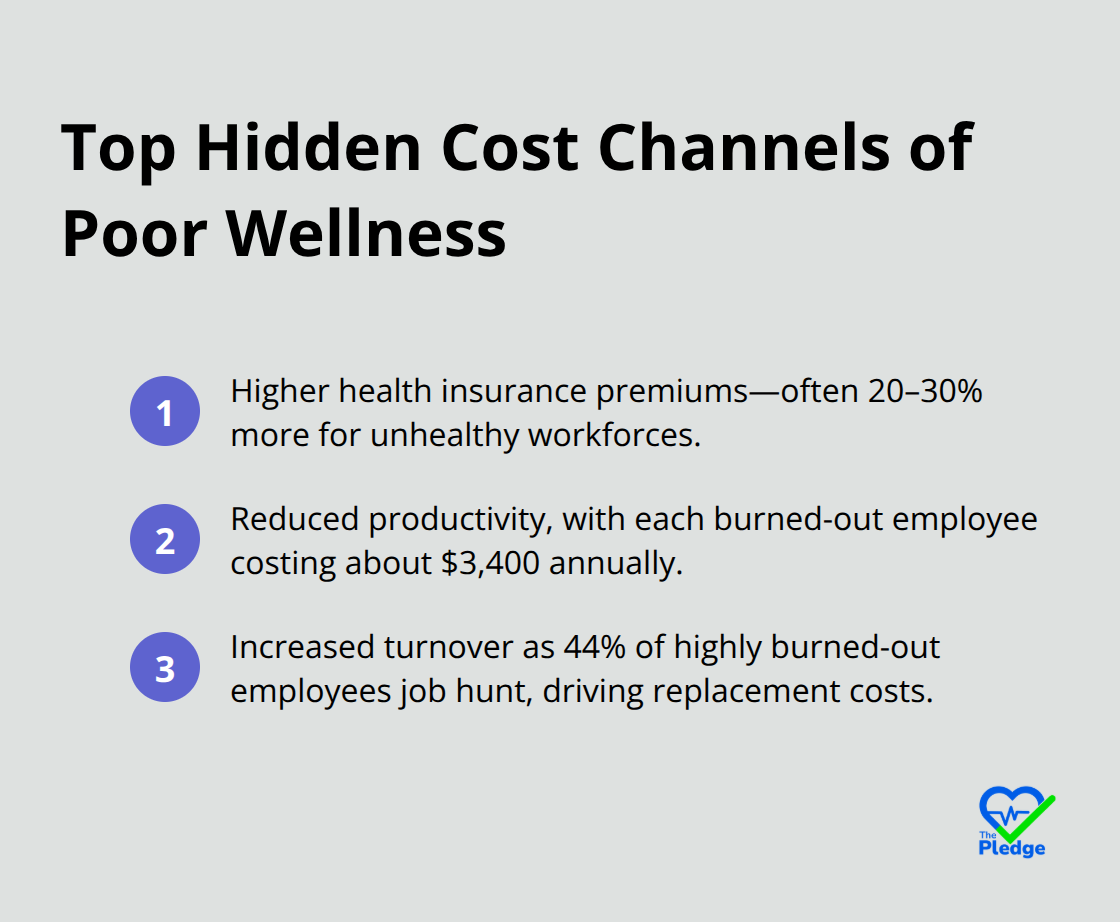
Poor employee wellness drains company budgets through three devastating channels that most executives underestimate. Healthcare costs alone tell a brutal story: companies spend an average of $13,000 per employee annually on health insurance premiums, but businesses with unhealthy workforces pay 20-30% more according to the U.S. Department of Labor. The real shock comes from productivity losses, where each burned-out employee costs employers $3,400 annually in reduced output. When 44% of employees with high burnout actively seek new jobs (as Statista reports), the replacement expenses multiply these hidden costs exponentially.
Healthcare Premium Penalties Hit Harder Than Expected
Insurance companies penalize employers with unhealthy workforces through higher premiums and reduced coverage options. Companies face premium increases of $1,500-$2,500 per employee when their workforce shows high rates of chronic conditions like diabetes, hypertension, and obesity. The Kaiser Family Foundation found that 72% of large firms now require health risk assessments specifically to manage these costs.
Smart employers combat this through preventative wellness programs that demonstrate measurable health improvements to insurers, often securing premium reductions within 12-18 months.
Productivity Losses Create Silent Budget Drains
Sleep problems create substantial economic costs, with an estimated $6.6 billion cost annually in terms of healthcare expenses and loss, while 25% of employees report physical exhaustion after typical workdays. Each disengaged employee reduces team productivity by 15-20%, creating ripple effects across departments. Companies lose an additional $3,000-$5,000 per stressed employee annually through reduced focus, increased errors, and slower task completion (according to multiple workplace studies).
Turnover Expenses Destroy Annual Budgets
Employee replacement costs range from 50-200% of annual salary depending on the role, with burnout alone accounting for 15-20% of payroll budgets annually. Research shows that employee wellness reduces levels of burnout and improves social wellbeing, while companies without proper wellness programs face significant losses. When skilled employees leave due to wellness-related issues, companies face recruitment fees, training costs, and productivity gaps that can take 6-12 months to fill.
These staggering financial losses explain why forward-thinking companies now view wellness programs not as employee perks, but as essential business investments with measurable returns.
Surprising Statistics About Workplace Wellness Program Impact
The financial returns from workplace wellness programs dwarf most business investments, yet 60% of executives still view them as optional employee perks rather than profit drivers. Companies that implement comprehensive wellness programs see significant returns, with J&J’s leaders estimating that wellness programs have cumulatively saved the company $250 million on health care costs over the past decade. The most successful programs generate savings through three measurable channels: reduced healthcare premiums that average $1,200 per employee annually, decreased absenteeism worth $2,400 per employee yearly, and improved productivity valued at $3,000 per employee according to the Society for Human Resource Management.
Return on Investment Numbers That Shock Employers
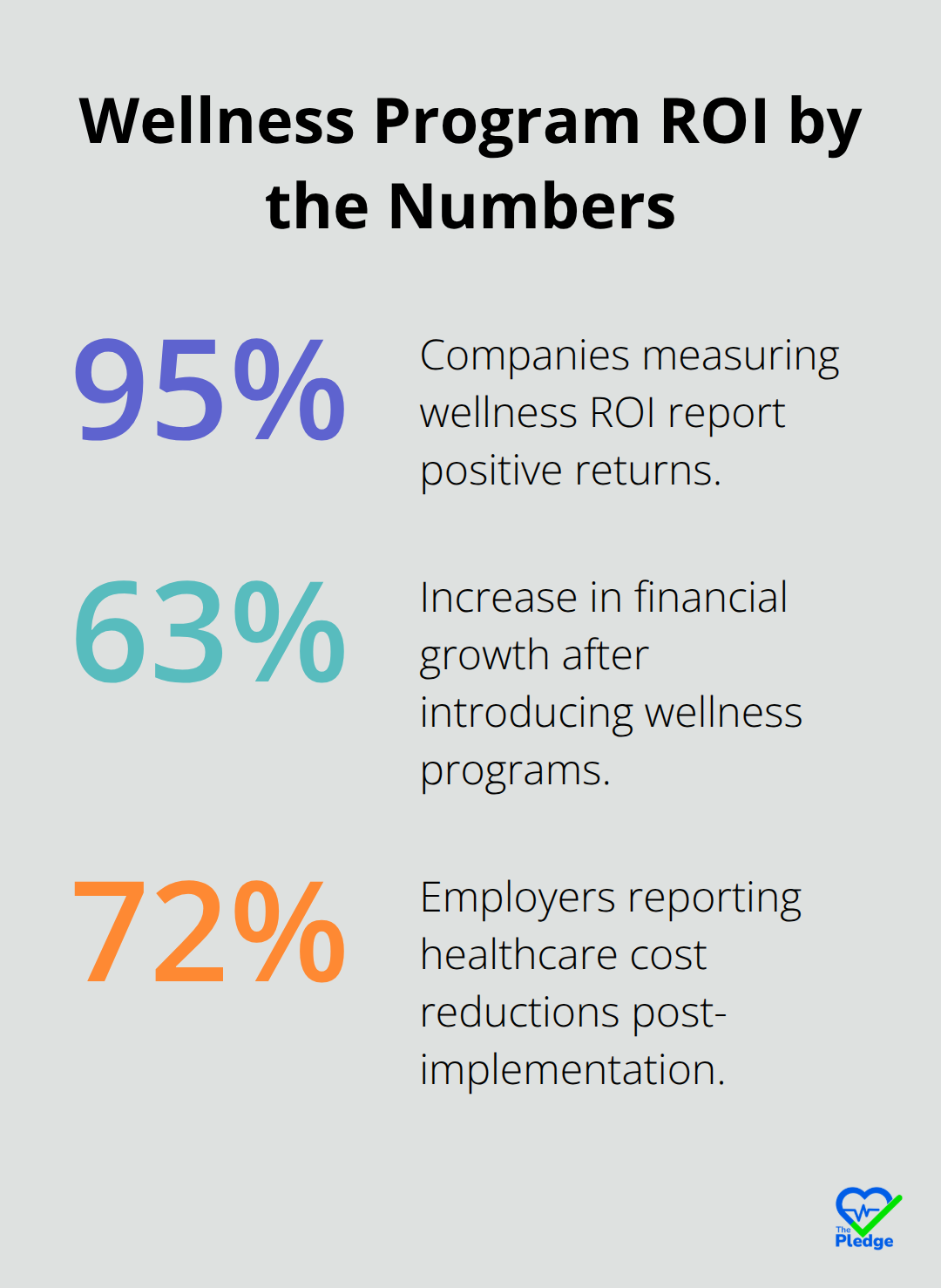
Wellness program ROI statistics reveal numbers that make CFOs recalculate their entire benefits strategy. 95% of companies measuring the ROI of corporate wellness programs see positive returns, up from 90% in 2023. The investment payback timeline surprises most executives: companies can expect returns between $1.50 and $3.00 over 2 to 9 years for every dollar invested. Organizations that introduced wellness programs experienced a 63% increase in financial growth, while 72% of employers saw healthcare cost reductions after program implementation.
Employee Engagement and Retention Improvements
Wellness programs transform employee loyalty metrics in ways that shock most HR departments. Companies with recognition-led wellness initiatives see employees 90% less likely to report frequent burnout, while 67% of workers at organizations with wellness programs actively refer others to join the company. The retention impact creates massive cost savings: when voluntary turnover drops by just 10%, companies save $500,000-$2.5 million annually (depending on workforce size). Organizations that invest in mental health solutions report 91% higher employee satisfaction scores and 50% lower turnover rates among participants.
Unexpected Health Outcome Changes
Workplace wellness programs produce health improvements that rival clinical interventions, with 56% of participants using fewer sick days and 89% reporting higher engagement levels according to Zippia research. Chronic disease management programs show particularly dramatic results: diabetes management initiatives reduce employee healthcare costs by 35% within 18 months, while hypertension programs cut related medical expenses by 40% according to multiple employer studies. Weight management programs supported by 40% of large employers now demonstrate average participant weight loss of 12-15 pounds, directly correlating with reduced insurance claims and improved work performance metrics.
These impressive outcomes raise an important question: what specific wellness features do employees actually want from their employers? Research shows that financial wellness programs can deliver over $1,900 per employee annually in combined productivity gains and healthcare savings.
What Employees Actually Want from Wellness Programs
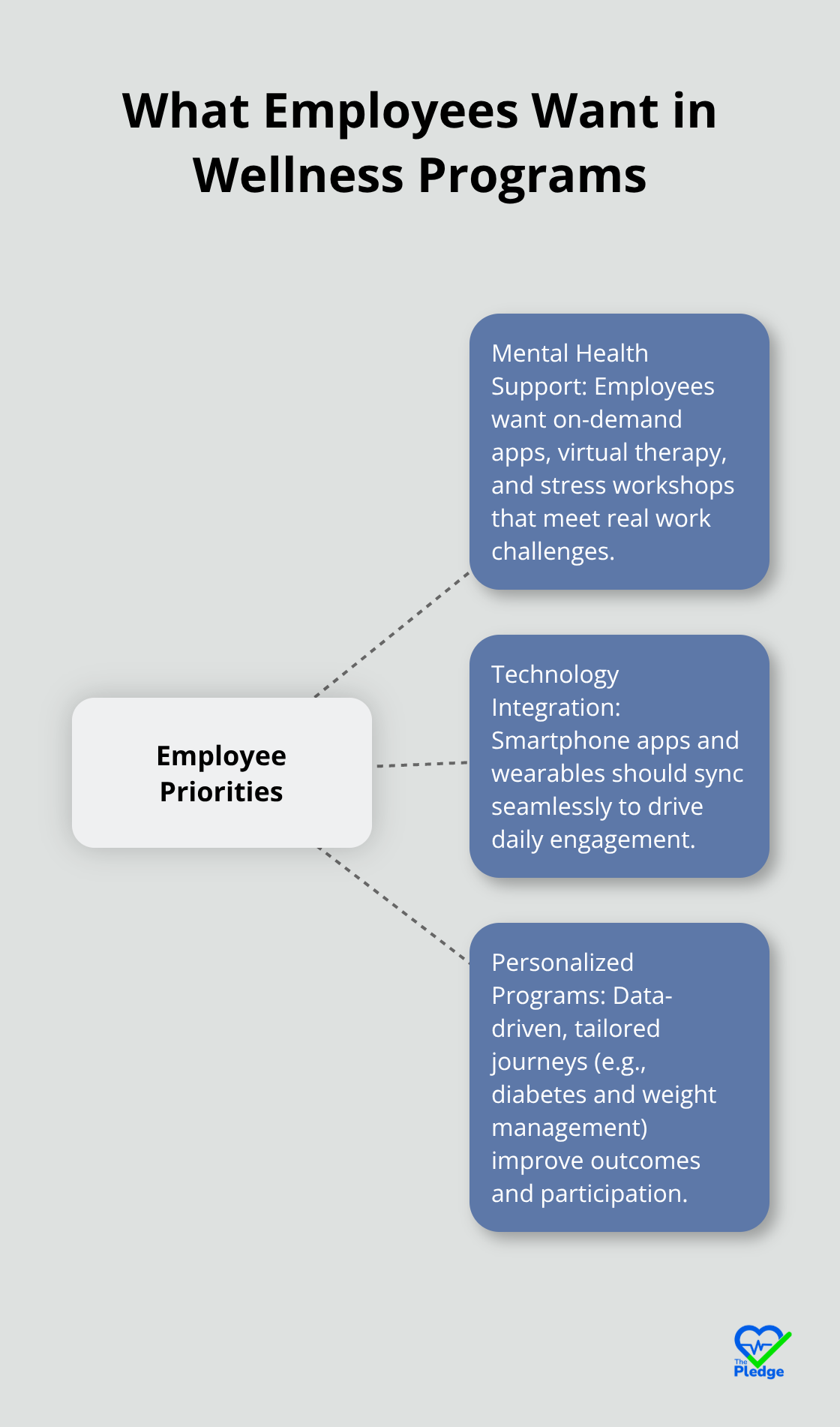
Employee preferences for wellness programs reveal a dramatic disconnect between what companies offer and what workers actually need. Mental health support tops every employee survey, with 91% of workers actively seeking expanded mental health solutions from their employers. The demand isn’t just for basic Employee Assistance Programs that 60% of workers never use, but for mental health apps, on-site counselors, and stress management workshops that connect directly to their daily work challenges. Companies that provide comprehensive mental health benefits see higher employee satisfaction rates compared to organizations that offer only basic health insurance coverage.
Mental Health Support Takes Priority
Workers demand immediate access to mental health resources that address workplace stress and burnout. Traditional Employee Assistance Programs fail because employees can’t access help when they need it most. Modern workers want on-demand mental health apps, virtual therapy sessions, and stress management tools that integrate with their work schedules. Companies that invest in comprehensive mental health solutions report lower turnover rates among participants and higher employee satisfaction scores.
Technology Integration Drives Program Adoption
Modern employees expect wellness programs to match their digital lifestyle, with smartphone apps and wearable device integration as non-negotiable features. Successful wellness platforms now sync with Apple Health, Fitbit, and other personal health devices to create seamless experiences that employees actually use daily. The most effective programs offer real-time feedback through apps similar to BetterUp and Workhuman, which provide instant coaching and recognition features that keep workers engaged. Companies that implement AI-powered wellness platforms report higher engagement rates than traditional programs, with employees spending significant time daily on wellness activities when technology integration works smoothly.
Personalized Programs Create Lasting Results
Generic wellness programs fail because they ignore individual health needs and preferences, while personalized approaches generate measurable results that surprise most employers. Health risk assessments now guide customized wellness journeys, with companies increasingly investing in these personalized tools. The most successful programs use employee health data to create targeted interventions: diabetes management for at-risk workers, weight management programs that many large employers now support, and chronic disease prevention protocols that reduce healthcare costs significantly within 18 months. Smart wellness platforms analyze employee behavior patterns to deliver personalized reminders, goal-setting tools, and reward systems that drive sustained participation rather than short-term engagement spikes.
Final Thoughts
These workplace wellness statistics reveal a fundamental shift in how smart employers approach employee health programs. Companies that view wellness as optional perks lose $322 billion annually to burnout-related turnover and productivity losses, while organizations that invest in comprehensive programs see returns of $1.50-$3.00 for every dollar spent. The data proves that wellness programs drive measurable business results rather than serve as simple employee benefits.
The statistics show employees want personalized, technology-integrated wellness solutions that address mental health as the top priority. Generic programs fail because 60% of workers never use basic Employee Assistance Programs, but companies that offer AI-powered platforms with real-time feedback achieve engagement rates four times higher than industry standards. Modern employees demand wellness technology that syncs with their digital lifestyles and provides immediate access to mental health resources.
We at The Pledge help employers transform these workplace wellness statistics into measurable results through our AI-powered health platform that centralizes employee health data and delivers personalized wellness programs. Smart employers must implement mental health support that goes beyond traditional counseling, integrate wellness technology that matches employee expectations, and create personalized health programs based on individual risk assessments. The future belongs to companies that recognize wellness programs as essential business investments that generate substantial returns on investment.
![[Guide] Incentives That Drive Preventive Health Participation](https://thepledge.app/wp-content/uploads/emplibot/Guide_-Incentives-That-Drive-Preventive-Health-Participation_1783650286-300x168.jpeg)