
Employee health programs have shifted dramatically toward digital solutions. Companies now invest $3.6 billion annually in workplace wellness apps, with 85% of Fortune 500 companies adopting these platforms.
We at The Pledge see firsthand how the right wellness technology can reduce healthcare costs by up to 28% while boosting productivity. The key lies in choosing apps that actually engage employees and deliver measurable results.
What Wellness App Categories Work Best?
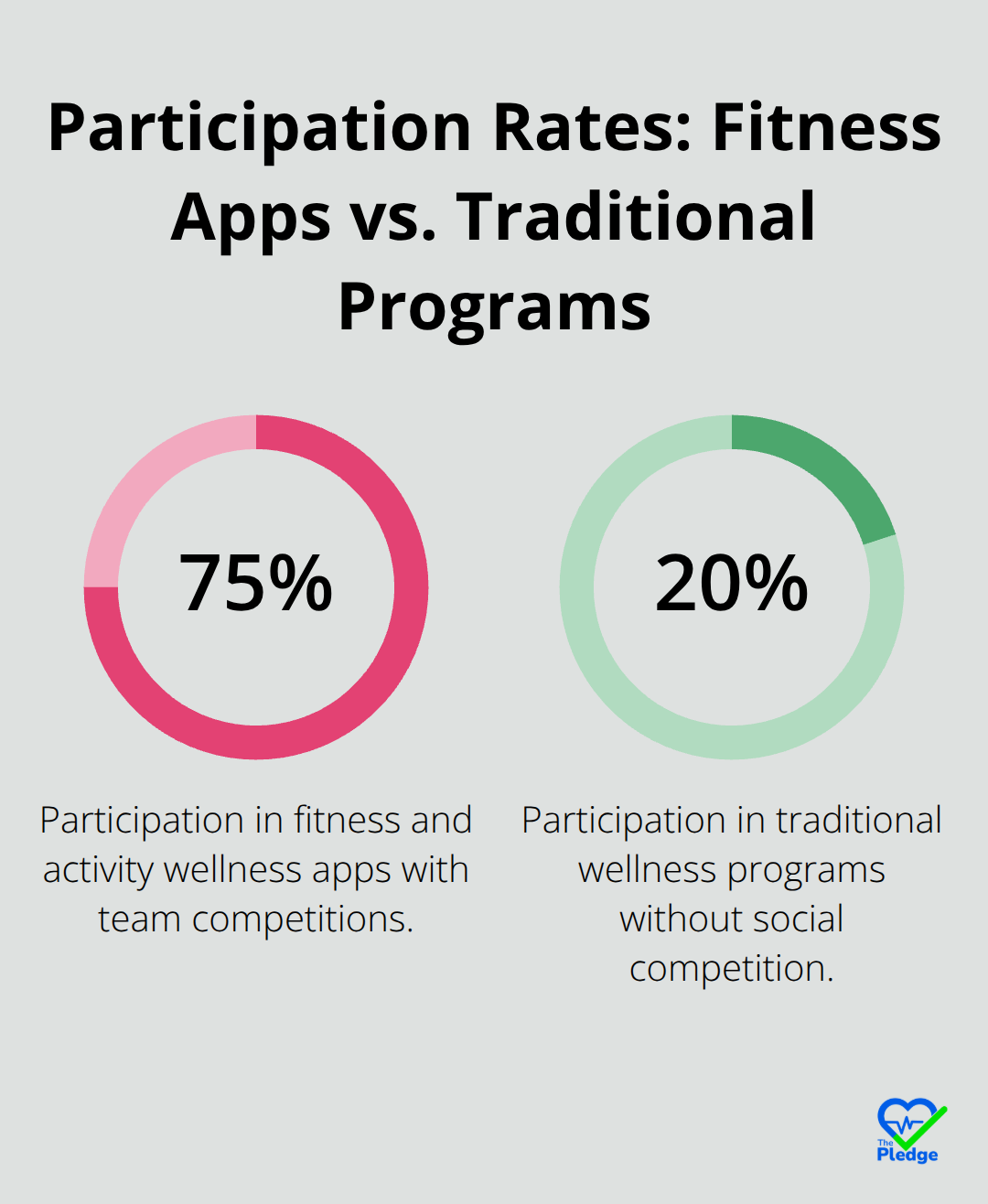
The workplace wellness app market divides into three distinct categories, each targeting different health challenges. Fitness and activity apps dominate the market, driven by platforms like Fitbit Corporate Wellness and Virgin Pulse that connect with wearable devices. These apps track steps, heart rate, and sleep patterns while creating team competitions that boost participation rates to 75% (compared to traditional wellness programs at 20%). Companies using YuMuuv report employees walk an average of 2,000 additional steps daily after implementation.
Mental Health Apps Deliver Strongest ROI
Mental health and stress management apps provide the highest return on investment, with Headspace for Work showing decreased perceived stress with regular use. Platforms like Unmind and Headversity focus on micro-learning modules that teach resilience skills during work hours. Gallup research reveals 44% of employees experience high stress levels, making these apps essential for retention. Organizations using Kona for daily mood check-ins see 25% fewer burnout cases compared to companies without mental health tracking.
Nutrition Apps Face Adoption Challenges
Nutrition and weight management apps struggle with sustained engagement despite strong initial interest. Apps like Noom for Business and WW Corporate Wellness achieve 40% participation in the first month but drop to 15% by month six. The most successful nutrition platforms integrate with company cafeterias and meal delivery services, with Forma allowing employees to spend wellness dollars on healthy meal subscriptions. Companies that combine nutrition apps with biometric screenings see 18% improvements in cholesterol and blood pressure metrics within one year.
Integration Capabilities Determine Success
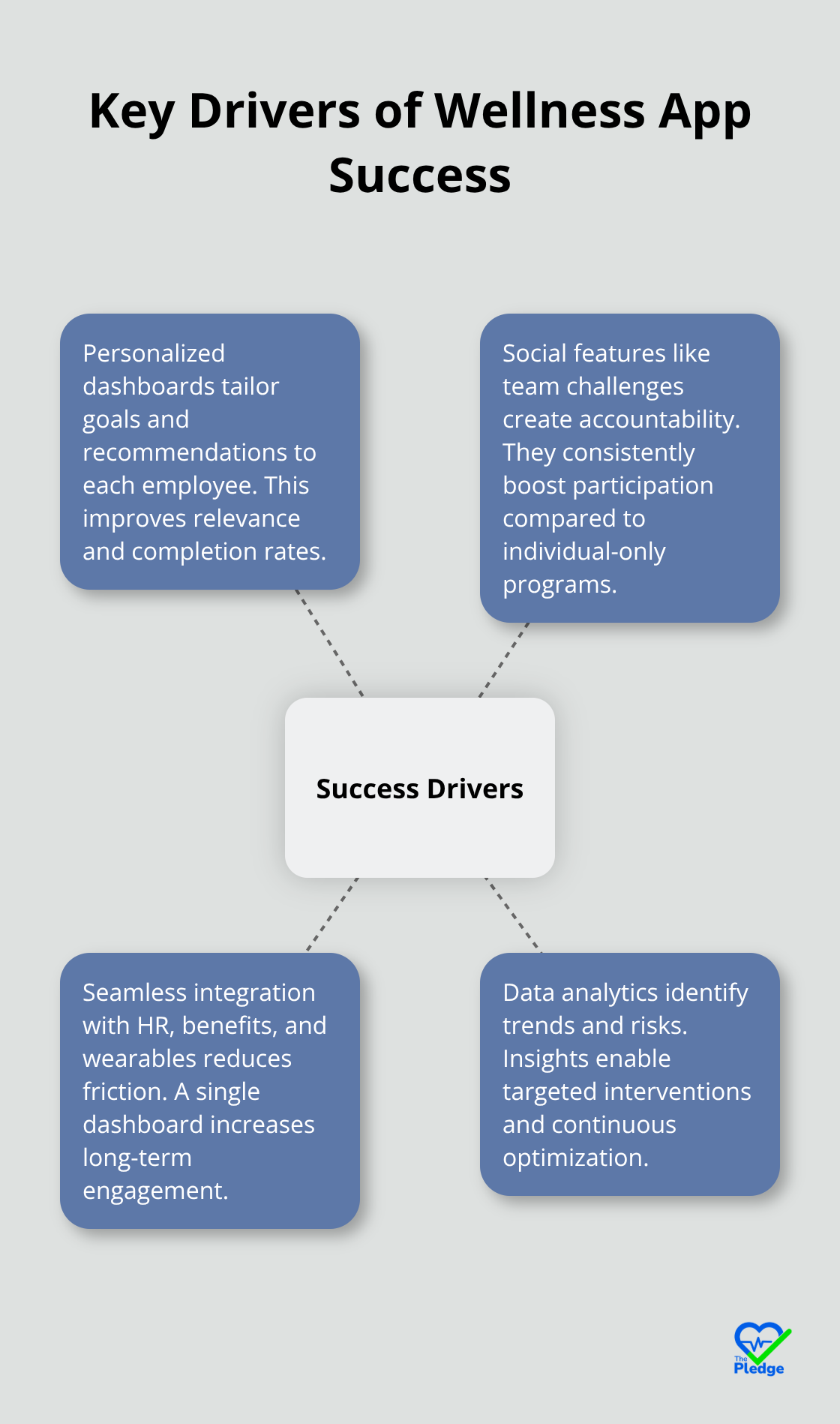
The most effective wellness apps integrate seamlessly with existing HR systems and health benefits platforms. This integration creates a unified experience where employees access all health resources through a single dashboard, significantly improving adoption rates and long-term engagement across all three app categories.
What Features Drive Real Wellness App Success
Personalized health dashboards transform generic wellness programs into targeted health improvement tools. Wellable personalizes wellness recommendations based on assessments of seven wellbeing aspects and achieves higher engagement rates than one-size-fits-all approaches. Effective dashboards display real-time biometric data, medication reminders, and progress toward specific health goals rather than generic step counts. Companies that use Personify Health report that employees with personalized goal-setting features complete wellness challenges 40% more often within 90 days.
Social Features Triple Participation Rates
Team challenges and social connectivity features increase participation rates from 20% to 75% according to Virgin Pulse data. YuMuuv creates workplace competitions around steps, hydration, and sleep tracking that foster healthy peer pressure and accountability. The most successful implementations reward team achievements rather than individual performance, which reduces employee anxiety about personal health data sharing. Organizations that use MoveSpring see sustained engagement when team challenges include meaningful prizes like additional vacation days (rather than generic gift cards).
Seamless Integration Prevents App Abandonment
Wellness apps that integrate directly with existing HR systems and health benefits platforms achieve higher retention rates after six months. Forma allows employees to spend wellness dollars through a single interface connected to payroll systems, which eliminates administrative friction that causes program abandonment. The most effective platforms synchronize with wearable devices, electronic health records, and company calendars to create automated health reminders during optimal times. Companies report 50% better compliance rates when wellness apps connect with existing health screenings and insurance claims data rather than operate as standalone systems.
Data Analytics Drive Program Optimization
Advanced analytics capabilities separate effective wellness platforms from basic tracking apps. Limeade’s intelligent dashboards offer insights into employee burnout and attrition risk (facilitating proactive wellness strategies). Organizations that leverage comprehensive reporting identify health trends across departments and tailor initiatives accordingly.
These data-driven approaches help companies measure program effectiveness and adjust features based on actual employee behavior patterns rather than assumptions about what motivates participation.
How Do You Measure Wellness App Success
Biometric improvements provide the most concrete evidence of wellness app effectiveness, with successful programs showing measurable health changes within 12 months. However, research shows that workplace wellness programs change health beliefs and increase self-reports of having a primary care physician but do not significantly affect clinical outcomes. Weight management apps achieve mixed results, with Noom for Business showing 12% average weight loss for employees who complete six-month programs (though only 23% of users reach this milestone). Organizations implementing wellness programs show varying results in diabetes prevention, with RAND Corporation research documenting composition of wellness programs and national patterns of program uptake.
Participation Rates Predict Long-Term Success
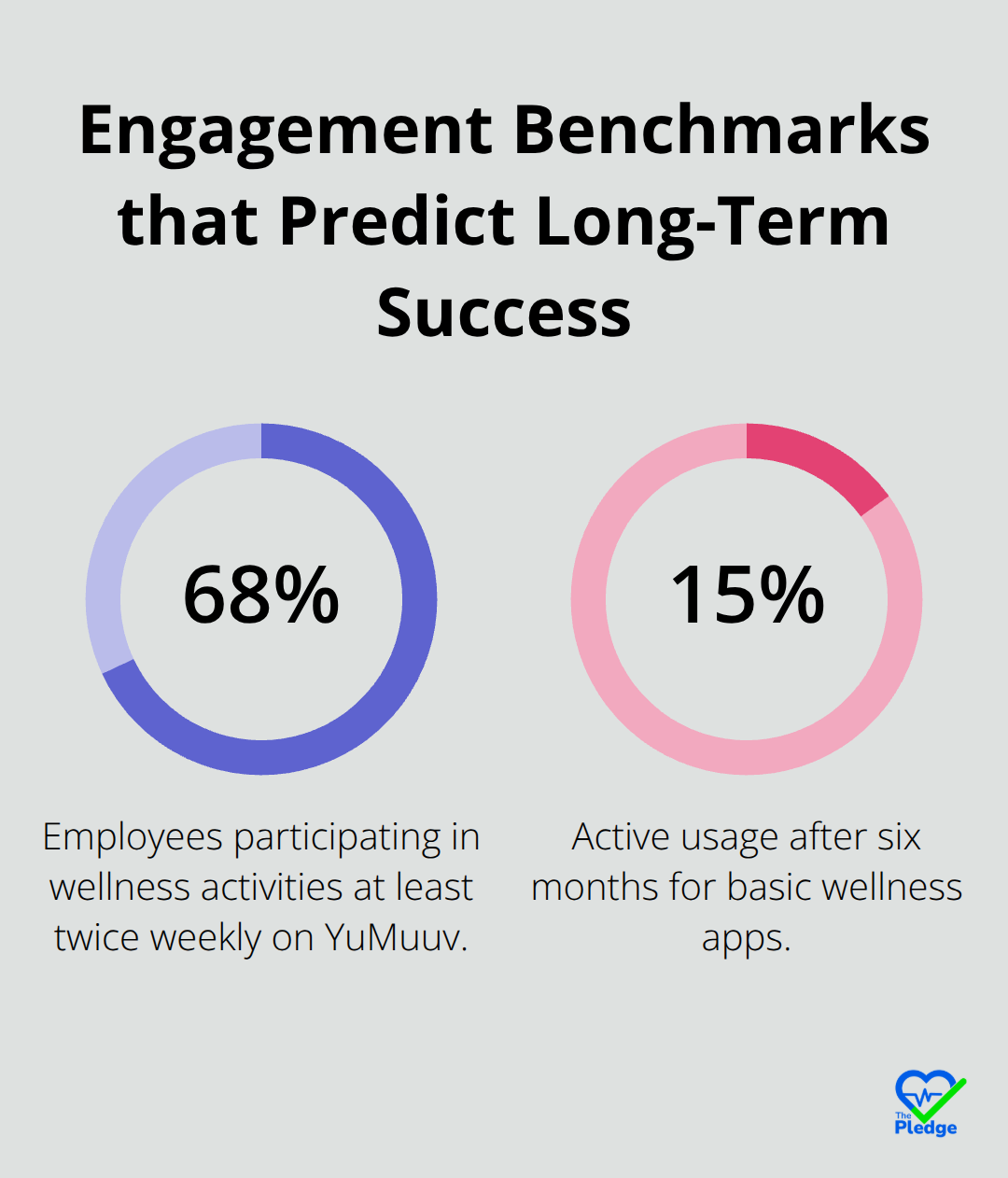
Participation rates separate effective wellness apps from expensive failures, with industry-leading platforms that maintain 60-75% active usage after six months while basic apps drop to 15%. Virgin Pulse achieves sustained participation through team challenges that create social accountability, reporting average daily app usage of 4.2 minutes per employee versus 1.8 minutes for individual-focused platforms. The most successful implementations track weekly active users rather than total downloads, with companies like YuMuuv showing 68% of enrolled employees participate in wellness activities at least twice weekly. Organizations that tie participation to meaningful rewards like additional vacation days see rates 3x higher than programs that offer generic gift cards or merchandise.
ROI Calculation Requires Multiple Metrics
Healthcare cost savings range from $1.50 to $3.20 for every dollar invested in comprehensive wellness apps, with the highest returns from programs that address multiple health factors simultaneously. Companies that use Personify Health report 28% reductions in emergency room visits and 22% decreases in sick days within 18 months of implementation. Productivity gains prove harder to quantify but show consistent patterns, with organizations that track 16% fewer stress-related absences and 19% improvements in employee satisfaction scores. The most accurate ROI calculations include reduced insurance premiums, lower turnover costs, and decreased workers’ compensation claims rather than focus solely on direct healthcare expenses.
Final Thoughts
Workplace wellness apps succeed when they combine fitness tracking, mental health support, and nutrition guidance with personalized dashboards and social features. The data shows clear winners: platforms that integrate with existing HR systems achieve 75% participation rates while standalone apps drop to 15% within six months. Companies that monitor weekly active users rather than total downloads identify program effectiveness early and adjust strategies accordingly.
Success measurement requires tracking biometric improvements, participation rates, and ROI calculations that include healthcare cost savings of $1.50 to $3.20 per dollar invested. Organizations see the highest returns from programs that address multiple health factors simultaneously rather than focus on single metrics. The most accurate calculations include reduced insurance premiums, lower turnover costs, and decreased workers’ compensation claims.
The future of digital wellness solutions centers on AI-powered personalization and seamless integration across health ecosystems. Platforms like The Pledge demonstrate this evolution through centralized health data and real-time updates that drive higher engagement rates. Organizations that invest in comprehensive wellness technology today position themselves for reduced healthcare costs and improved employee satisfaction tomorrow.
![[Guide] Incentives That Drive Preventive Health Participation](https://thepledge.app/wp-content/uploads/emplibot/Guide_-Incentives-That-Drive-Preventive-Health-Participation_1783650286-300x168.jpeg)