
Healthcare navigation anxiety is real. Employees spend hours searching for providers, deciphering coverage details, and worrying about unexpected costs. These barriers drain productivity and harm wellbeing.
At The Pledge, we’ve seen firsthand how the right tools and support transform this experience. This post covers practical strategies to help your workforce navigate healthcare with confidence.
Why Your Employees Struggle to Navigate Healthcare
The Engagement Gap That Costs You Money
Your employees face a stark reality: 53% struggle to understand or navigate their benefits, yet 80% of executives believe engagement with health and wellness benefits matters significantly. This disconnect is not a minor inconvenience-it’s a productivity killer.
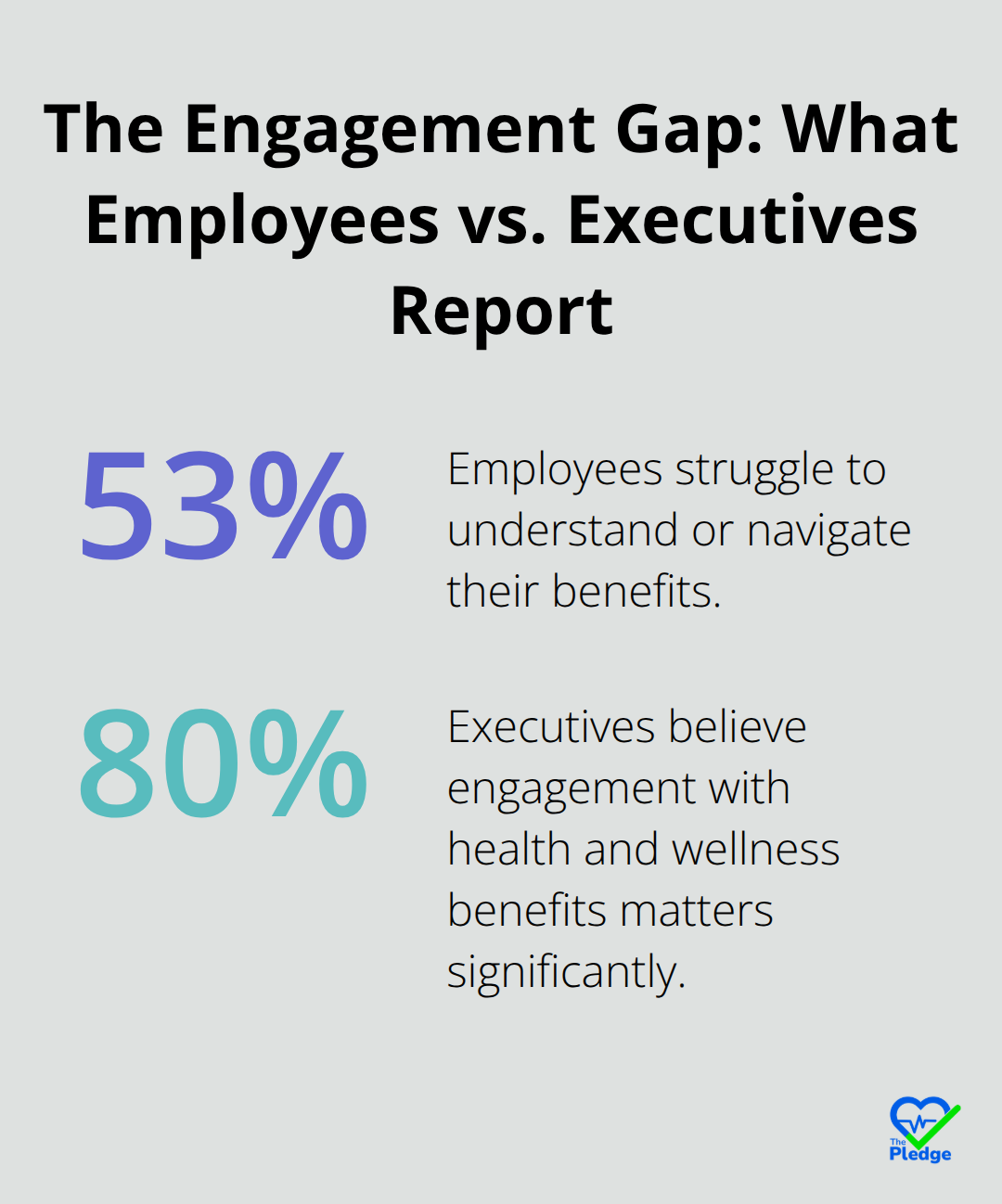
When employees can’t find providers quickly, they delay care. When they don’t understand their coverage, they avoid necessary treatments. When they fear unexpected bills, they skip preventative visits altogether. The root causes include opaque benefits explanations, frequent plan changes, and unclear cost estimates that create navigation anxiety and directly harm your bottom line through increased absenteeism, reduced engagement, and higher turnover.
Three Sources of Healthcare Complexity
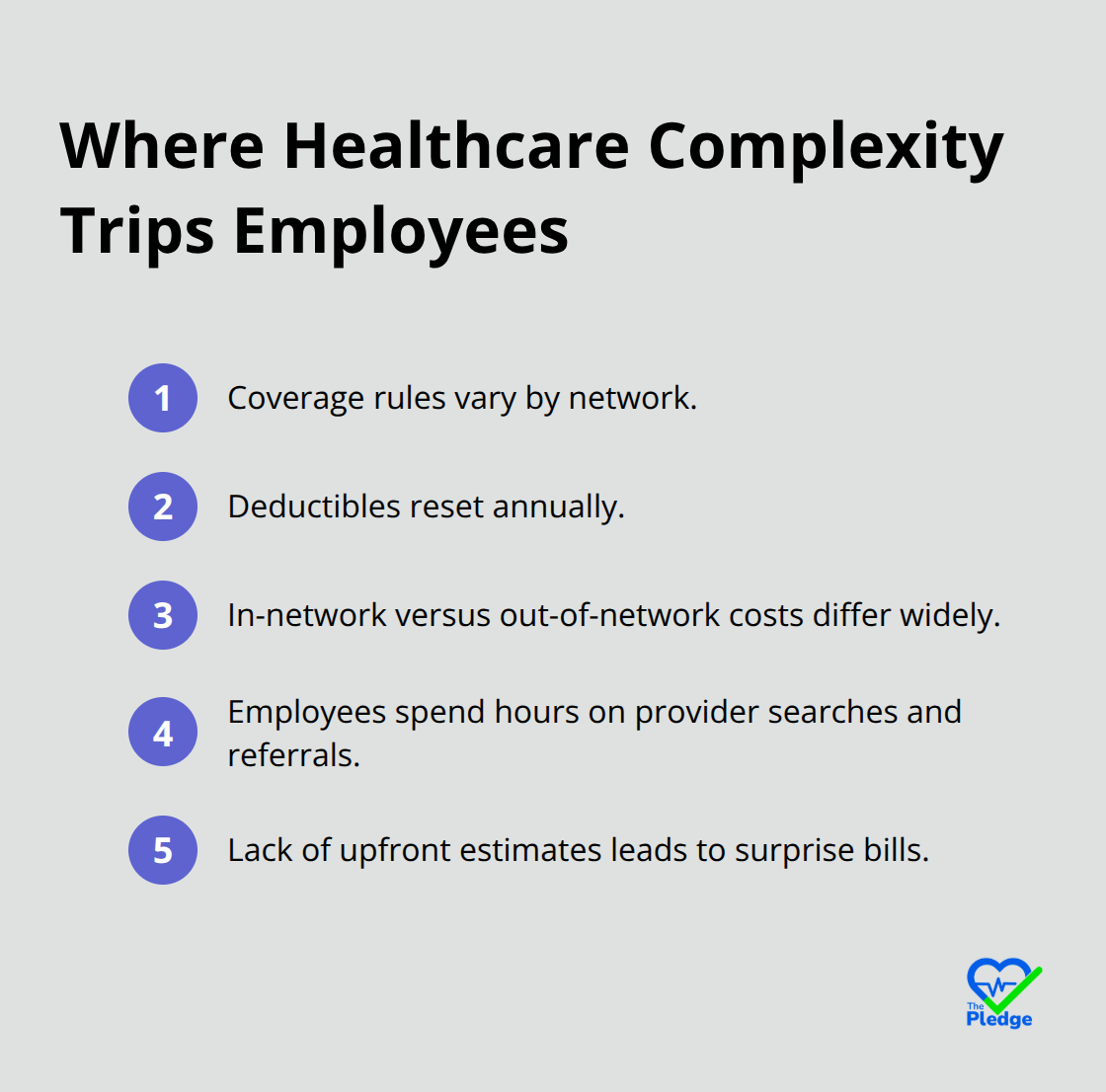
Modern health plans present genuine obstacles that overwhelm your workforce. Coverage rules vary by network, deductibles reset annually, and the difference between in-network and out-of-network costs can mean hundreds of dollars out of pocket. Your employees waste hours searching networks, calling offices to confirm availability, and navigating confusing referral requirements. Without upfront cost estimates, they can’t budget for procedures or compare options, leaving them vulnerable to surprise bills.
The Cost of Opacity
Financial anxiety prevents people from seeking care when they need it most. Clear guidance on when to use urgent care versus primary care versus emergency services reduces high-cost utilization and confusion. Your workforce needs real-time access to this information at the moment they’re making care decisions-not weeks later in an explanation of benefits statement. Cost transparency tools that provide upfront estimates enable employees to choose lower-cost, appropriate care and avoid surprise bills entirely.
What Employees Actually Need
Employees require immediate, actionable information to navigate healthcare confidently. A centralized benefits hub that consolidates plan rules, networks, and costs reduces the time they spend researching care significantly. Mobile and web-enabled benefits platforms with in-network search, appointment booking, and real-time coverage data improve satisfaction and utilization. Price transparency combined with trained support transforms how your workforce approaches healthcare decisions. The right platform removes friction at every step-from finding providers to understanding costs to scheduling appointments. This foundation of clarity and accessibility sets the stage for how employers can actively support their employees through practical strategies and tools.
What Centralized Platforms Actually Solve
Real-Time Visibility Into Coverage and Costs
Centralized health platforms eliminate the fragmentation that creates navigation anxiety in the first place. Instead of employees hunting across insurance websites, provider directories, and benefits documents, a single integrated platform consolidates everything they need into one accessible location. Real-time access to benefits and coverage information means employees see exactly what their plan covers before they make care decisions, not after they receive a bill. When an employee opens the platform to schedule a doctor’s visit, they immediately know their deductible status, whether the provider is in-network, and what their out-of-pocket cost will be. This removes the guesswork that currently paralyzes your workforce.
Faster Provider Search and Scheduling
Streamlined provider search and appointment scheduling cut the time employees spend on logistics from hours to minutes. Instead of calling multiple offices to confirm availability, employees see real-time scheduling directly in the platform. Transparent pricing and cost estimation tools let employees compare costs across providers before booking care, enabling them to make financially informed decisions. Price transparency tools that provide upfront cost estimates enable employees to choose lower-cost, appropriate care and avoid surprise bills entirely. The combination of these three capabilities transforms healthcare from an anxiety-inducing maze into a straightforward process your employees can navigate confidently.
How Employee Behavior Shifts With Transparency
When employees have transparent access to costs and coverage, their behavior changes dramatically. They stop delaying care because they fear unexpected bills. They stop calling in sick because they can’t navigate the healthcare system. They schedule preventative visits because the platform makes it easy and removes financial uncertainty. A centralized platform also reduces administrative burden on your HR team by consolidating benefits education and support into a single resource. Employees no longer submit repetitive questions about coverage because the platform answers them instantly. This shift from reactive support to proactive self-service means your team can focus on strategic wellness initiatives rather than fielding basic benefits questions. The platform becomes the single source of truth for your entire workforce, eliminating confusion caused by outdated materials or inconsistent explanations from different staff members.
Your employees now have the foundation they need to navigate healthcare confidently. The next step is ensuring they actually know how to use these tools and understand the benefits available to them.
How to Make Your Platform Stick With Employees
Launch Your Platform Like a Product, Not an Afterthought
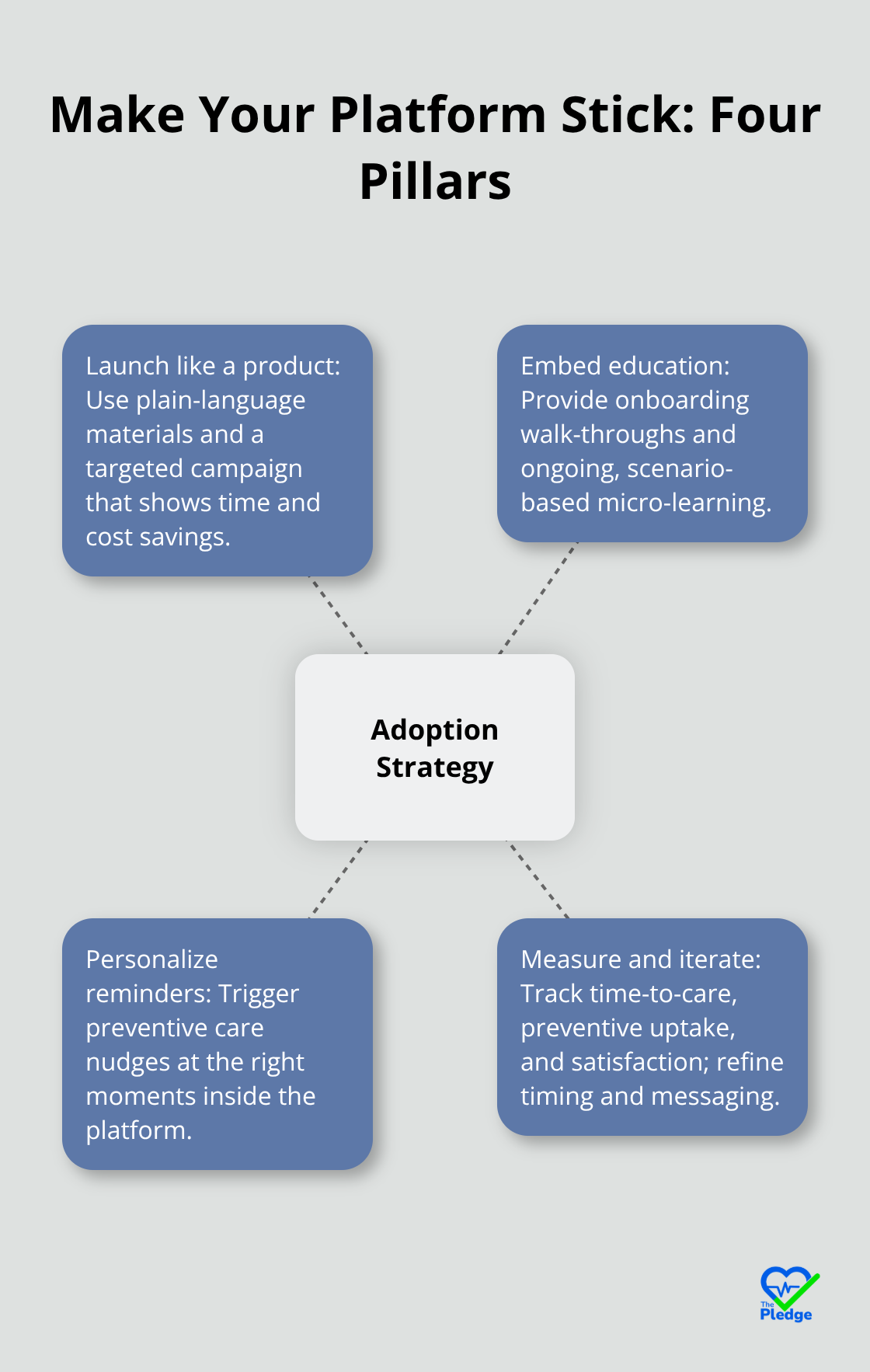
Having the right platform means nothing if your workforce doesn’t know it exists or how to use it. Most employers launch a benefits portal and assume employees will figure it out. They won’t. Plain-language benefits materials and clear explanations dramatically improve understanding and enrollment accuracy. Treat platform adoption like a product launch instead of a routine open enrollment task. Create a launch campaign that shows employees exactly what problems the platform solves for them personally. Instead of generic messaging about centralized health information, show them how the platform saves time. One employee schedules a doctor’s visit in two minutes instead of spending thirty minutes calling offices. Another avoids a surprise $400 bill because the platform showed the out-of-pocket cost upfront. These specific examples drive adoption far more effectively than abstract benefits messaging.
Embed Education Into Your Onboarding Process
Dedicate time during onboarding for new hires to walk through the platform with live support available. Research from the Society for Human Resource Management shows that benefits navigation sessions during onboarding reduce early confusion and errors significantly. Your HR team should host regular benefits overview events beyond the annual open enrollment period, using multiple channels to reach in-office, remote, and off-site workers equally. Make education ongoing and micro-targeted rather than a single annual presentation. Short, focused learning modules that address specific health scenarios work better than comprehensive benefits guides. If an employee is expecting a baby, send them a module about maternity care navigation. If they’re managing diabetes, provide guidance on preventative screenings and specialist coordination. This tailored approach increases relevance and engagement dramatically compared to one-size-fits-all content.
Send Personalized Reminders at the Right Moment
The second critical piece is personalizing health reminders and preventative care prompts directly within the platform itself. Generic reminders about annual checkups get ignored. Specific reminders tied to an employee’s actual health status, age, and family history create behavior change. A reminder that says “You’re due for a mammogram based on your age and health history-schedule now” performs far better than a generic wellness message. Research on trained patient navigators demonstrates that proactive support reduces delays in care and improves continuity. Your platform should send reminders at moments when employees are most likely to act, not when it’s convenient for your HR calendar. If an employee logs into the platform, that’s the ideal moment to surface relevant preventative care recommendations. Track which reminders actually drive scheduling behavior so you can refine the messaging and timing for maximum impact.
Measure What Matters and Iterate Continuously
Monitor engagement metrics like time-to-care, preventative service uptake, and employee satisfaction to measure success. Collect feedback regularly through surveys or focus groups to understand which communication channels and content formats resonate most with your specific workforce. The organizations seeing the highest platform adoption treat it as a living system that evolves based on actual employee behavior, not as a static tool that launched once and was forgotten.
Your HR team should review engagement data monthly and adjust content, timing, and messaging based on what actually works for your employees.
Final Thoughts
Healthcare navigation anxiety stems from fragmentation, opaque pricing, and lack of support-but these problems have solutions. Centralized platforms eliminate the confusion that paralyzes your workforce, transparent pricing removes financial fear, and personalized reminders drive real behavior change. When employees find providers in minutes, see costs upfront, and receive timely guidance about preventative care, they stop delaying treatment and take control of their health.
The business impact is measurable and substantial. Healthier employees show higher productivity, better morale, stronger retention, and greater loyalty to your organization. When your workforce engages with benefits and understands their coverage, absenteeism drops and engagement rises. These outcomes directly affect your bottom line through reduced turnover costs and increased operational efficiency.
Start by treating platform adoption as a strategic priority rather than a routine task. The Pledge offers a whole health software platform that centralizes medical information, benefits, and real-time health metrics while delivering personalized reminders tailored to each employee. Launch with clear communication, embed education into onboarding, send reminders at moments when employees are most likely to act, and measure engagement continuously to refine what works for your specific workforce.
![[Guide] Incentives That Drive Preventive Health Participation](https://thepledge.app/wp-content/uploads/emplibot/Guide_-Incentives-That-Drive-Preventive-Health-Participation_1783650286-300x168.jpeg)