

Workplace wellness programs cost companies billions annually, yet most organizations struggle to prove their value. Without proper measurement, these investments become budget line items rather than strategic advantages.
We at The Pledge know that measuring workplace wellness ROI requires the right metrics, methods, and tools. This guide shows you exactly how to calculate returns and demonstrate program impact to stakeholders.
Key Metrics for Measuring Workplace Wellness ROI
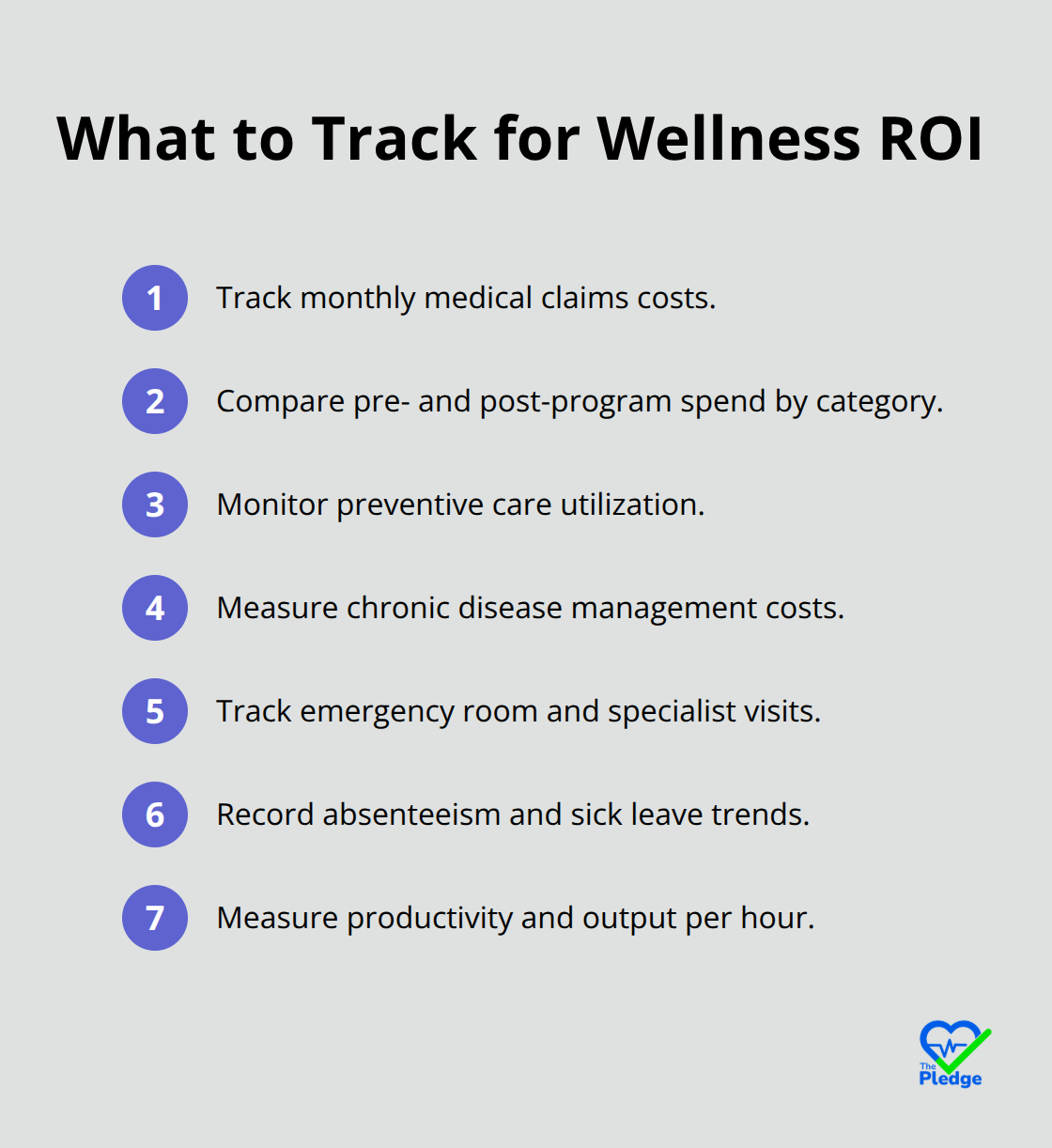
The most reliable way to measure wellness program success starts with healthcare cost reduction data. Medical claims analysis provides the clearest financial picture, with companies typically seeing $462 in annual savings per engaged employee according to Vitality’s 2024 survey. Track your organization’s medical claims costs monthly and compare pre-program and post-program spend across categories like preventive care, chronic disease management, and emergency visits. The RAND Corporation found that comprehensive wellness programs yield $3 to $6 return for every dollar spent, but only when you measure the right data points.
Healthcare Cost Reduction and Medical Claims Data
Focus on specific claim categories rather than total healthcare spend. Monitor prescription drug costs, specialist visits, and hospital admissions separately. Johnson & Johnson reduced employee rates by two-thirds since 1995 and cut high blood pressure cases by more than half, which saved $250 million over a decade. Your claims data should show similar patterns within 18-24 months if programs target the right health issues.
Absenteeism and Sick Leave Tracking
Deloitte research shows absenteeism costs $3,600 per hourly employee and $2,650 per salaried employee annually. Track unscheduled absences, sick leave usage, and short-term disability claims before and after wellness program implementation. Companies that reduce just one unscheduled absence per employee per year create measurable savings. Document patterns by department, age group, and participation levels to identify where wellness investments generate the highest returns.
Employee Productivity and Performance Indicators
Companies prioritizing wellbeing report up to 20% higher productivity overall. Measure performance indicators like project completion rates, quality scores, and employee output per hour worked. Research shows employees generate up to $87 per hour worked under better employee experiences (making productivity gains often more valuable than healthcare cost savings alone). These metrics provide the foundation for calculating your wellness program’s true financial impact through proven methods and formulas.
Methods for Calculating Workplace Wellness ROI
The standard ROI formula for wellness programs is straightforward: ROI = (Savings – Costs) / Costs. Start with direct healthcare cost savings and compare medical claims data from 12 months before program launch to 12-24 months after implementation. Calculate the difference in total healthcare spend, prescription costs, emergency room visits, and specialist consultations. Track monthly medical claims by employee participation level to isolate program impact from general healthcare trends.
Direct Cost Savings Analysis and Healthcare Spend Comparison
Compare pre-program and post-program healthcare costs across specific categories rather than total spend. Focus on preventive care utilization, chronic disease management costs, and high-cost claim frequency. New Vitality analysis found employers reduced claims costs by 4% and achieved ROI of 180% from claims savings on health and wellbeing programs. Document baseline costs during the six months before program launch, then measure quarterly changes in claims data. Weight your analysis by participation rates since non-participants skew overall results downward.
Indirect Benefits Measurement Including Retention and Engagement
Calculate retention savings with actual turnover costs in your organization. Research shows 86% of employees consider jobs that don’t support wellbeing as reasons to leave, which makes retention gains significant. Multiply prevented turnover by your average replacement cost (typically 50-200% of annual salary depending on role level). Add productivity gains with output per hour metrics before and after program implementation.
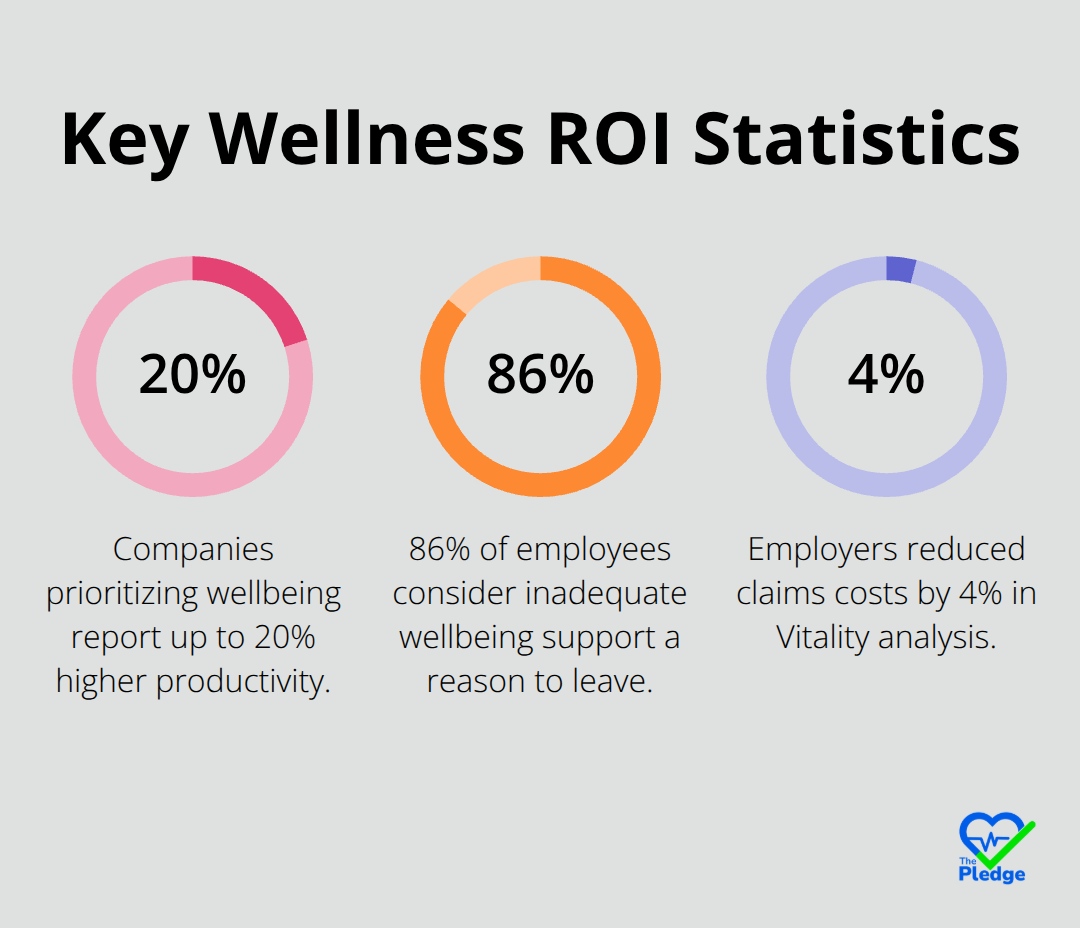
McKinsey estimates $3.7 to $11.7 trillion potential economic value globally from enhanced employee wellbeing, with individual companies that see 20% productivity increases. Include reduced absenteeism costs with Deloitte’s $3,600 per hourly worker and $2,650 per salaried employee annual impact figures.
Time-Based ROI Assessment and Long-Term Impact Analysis
Measure ROI over three distinct timeframes: immediate (6-12 months), medium-term (1-3 years), and long-term (3+ years). Healthcare cost reductions typically appear within 18 months, while productivity and retention benefits emerge faster. Track cumulative savings annually and adjust for program costs that include technology, incentives, and staff time. Long-term data demonstrates how wellness ROI compounds over time when programs address root health issues rather than symptoms.
The success of these calculations depends entirely on the tools and technologies you use to collect, analyze, and report this data accurately.
Tools and Technologies for ROI Measurement
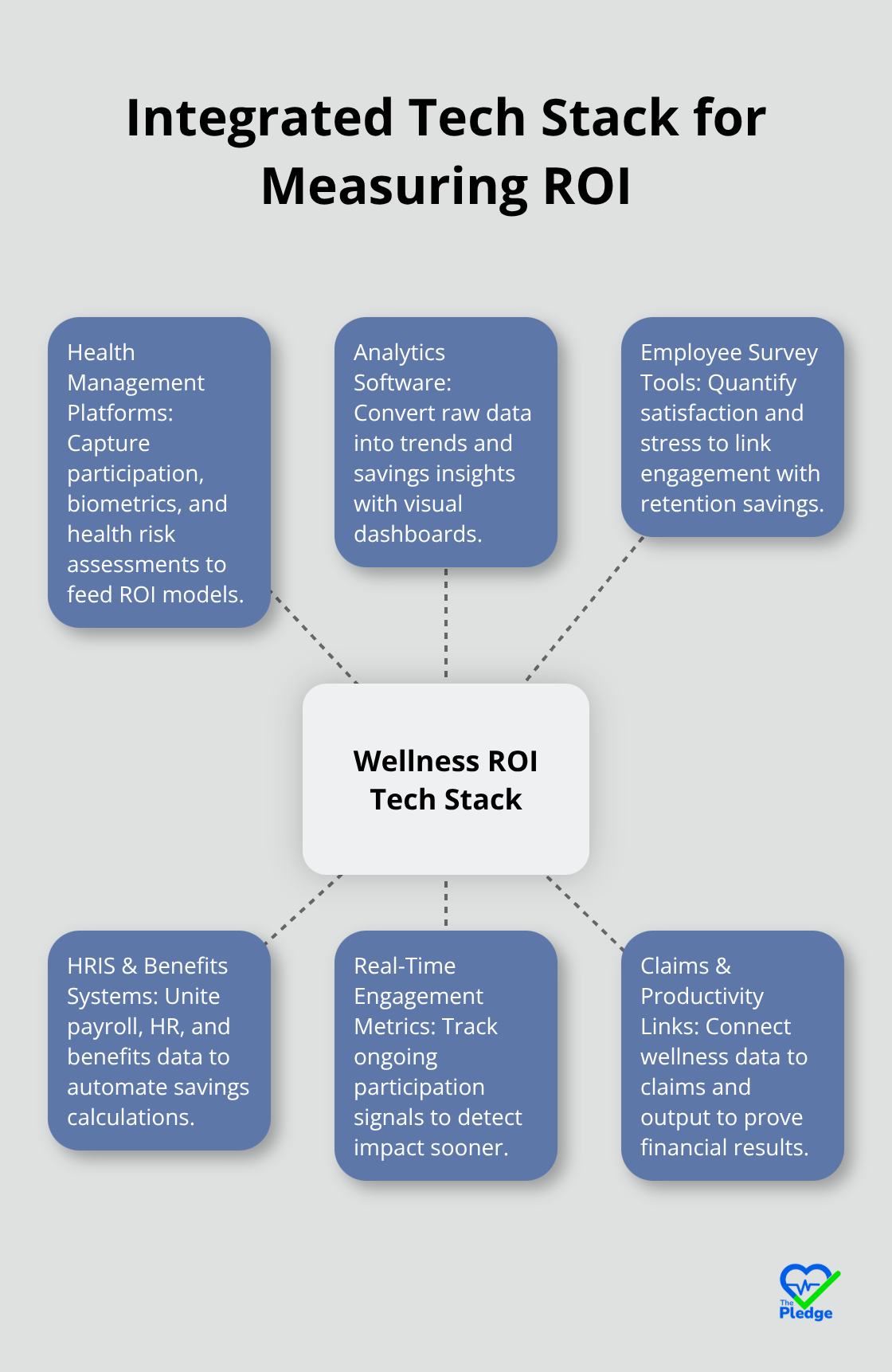
Modern wellness ROI measurement requires three integrated technology categories that connect data streams rather than operate in isolation. Health management platforms like Virgin Pulse, Thrive Global, and Wellhub establish the data foundation with biometric tracking, participation rates, and health risk assessments that feed directly into ROI calculations. These platforms capture real-time engagement metrics and health outcomes data, but their true value emerges from integration capabilities rather than standalone reports.
Health Management Platforms and Data Analytics Software
Health management platforms collect participation data, biometric screenings, and health risk assessments that form the backbone of ROI calculations. Virgin Pulse tracks employee engagement across wellness activities, while Wellhub monitors fitness participation and health outcomes. These platforms excel when they connect wellness participation to claims data and productivity metrics across your entire workforce. Analytics software like Tableau or Microsoft Power BI transforms raw wellness data into actionable insights that reveal cost savings patterns and participation trends.
Employee Survey Tools and Engagement Measurement Systems
Employee survey platforms such as Culture Amp and Glint measure engagement levels and satisfaction scores that translate directly into retention ROI calculations. These tools track wellness program satisfaction, stress levels, and job satisfaction metrics that predict turnover risk. Pulse surveys capture real-time feedback on program effectiveness, while annual engagement surveys measure long-term wellness impact on workplace culture with employees reporting higher job satisfaction in companies with strong wellness programs.
Integration with HR and Benefits Administration Systems
The most effective measurement systems integrate directly with existing HR information systems, payroll platforms, and benefits administration to create unified dashboards. Employee benefits management software exemplifies how tracking tools enhance measurement accuracy when they connect wellness data across multiple systems. Organizations that achieve the highest wellness ROI use integrated technology stacks rather than point solutions, with platforms that automatically calculate savings from reduced absenteeism, lower healthcare claims, and improved productivity metrics without manual data manipulation or complex spreadsheet formulas.
Final Thoughts
Workplace wellness ROI measurement demands consistent data collection, proper baseline establishment, and integrated technology systems that connect health outcomes to financial results. Organizations that track healthcare cost reductions, absenteeism patterns, and productivity metrics over 18-24 month periods generate the most reliable ROI calculations. The biggest mistake companies make involves measurement of total healthcare spend rather than specific claim categories, which obscures program impact and leads to inaccurate conclusions.
Companies must avoid common pitfalls like short measurement periods, incomplete participation tracking, and isolated data systems that prevent comprehensive analysis. Organizations achieve the highest returns when they measure both direct savings from reduced medical claims and indirect benefits from improved retention and productivity. Focus on long-term measurement strategies that capture cumulative wellness program value rather than quarterly snapshots (which often miss the full impact of health interventions).
Strategic success depends on leadership buy-in, employee engagement measurement, and technology platforms that automate data collection across HR systems. The Pledge demonstrates how AI-powered health platforms can centralize wellness data and drive higher engagement rates while supporting employer healthcare cost reduction efforts. Organizations that invest in comprehensive measurement systems and maintain consistent tracking protocols maximize their workplace wellness ROI and demonstrate clear program value to stakeholders.
![[Guide] Incentives That Drive Preventive Health Participation](https://thepledge.app/wp-content/uploads/emplibot/Guide_-Incentives-That-Drive-Preventive-Health-Participation_1783650286-300x168.jpeg)