
Most employees leave benefits on the table. They don’t use mental health support, skip wellness programs, or miss out on financial planning tools-not because they don’t want them, but because they don’t know they exist or can’t figure out how to access them.
At The Pledge, we’ve seen firsthand how poor employer benefits communication creates a gap between what companies offer and what workers actually use. The problem isn’t the benefits themselves. It’s how they’re explained.
Why Employees Skip Benefits They Need
The statistics are stark. In the UK, about 40% of employee benefits go completely unused, and 76% of workers who understand their benefits are happy. Employees also underestimate the value of their benefits by roughly 30%.
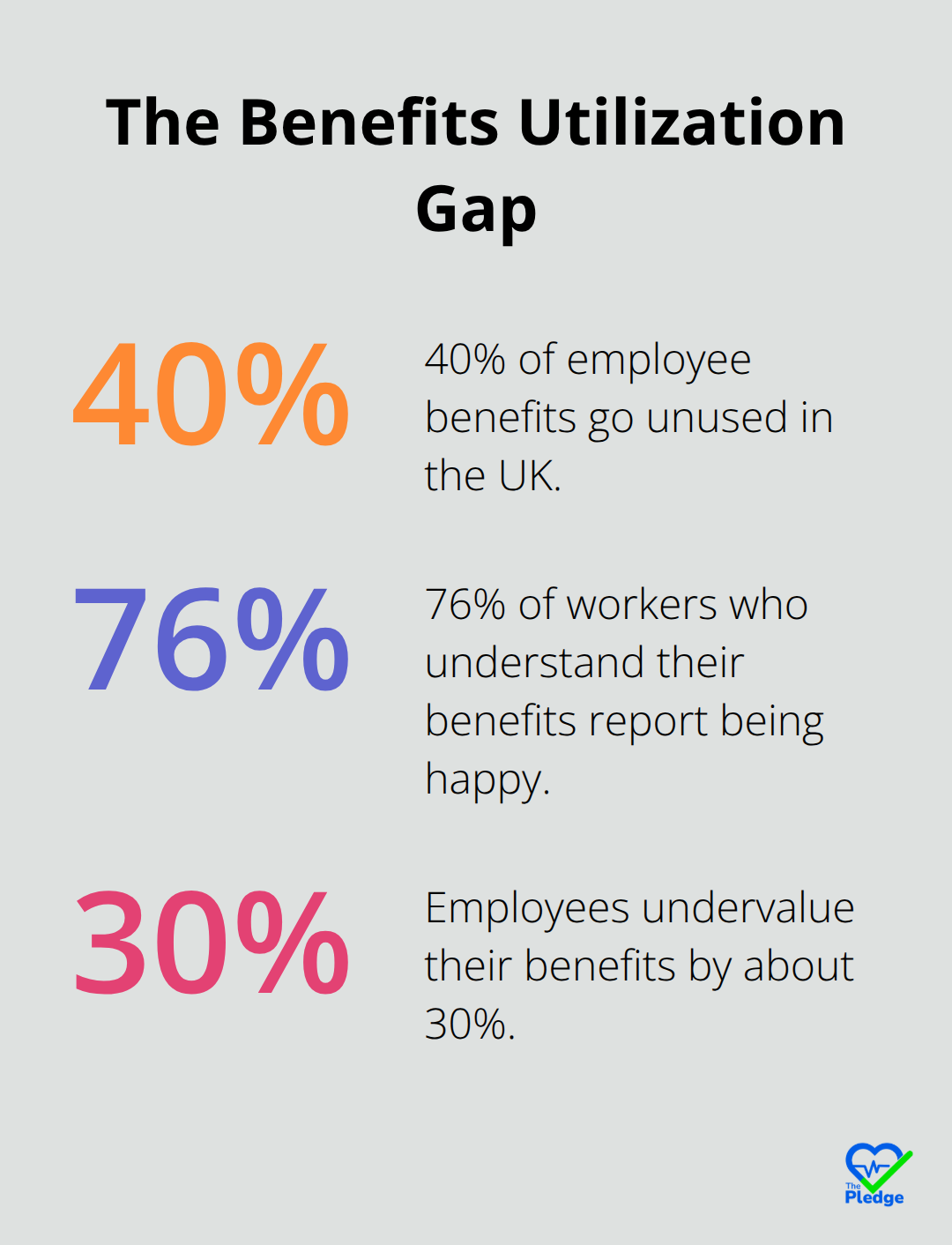
This isn’t a reflection of poor benefit design-it’s a communication failure that costs employers millions in wasted investment and costs employees thousands in missed financial protection and health support.
The awareness gap starts on day one
Most companies communicate benefits once a year during open enrollment, then go silent. A Voya Financial survey found that about 90% of employees select the same benefits plan year after year, which suggests they don’t actively engage with their options or learn about new ones. When benefits only appear during a compressed enrollment window, employees forget what’s available within weeks. Mental health counseling, financial planning tools, wellness programs, and preventative care services sit unused because workers simply don’t remember they exist. The solution isn’t to communicate louder during enrollment-it’s to communicate consistently throughout the year. A Lantern study from 2025 found that 66% of employees want to hear about benefits year-round, yet most organizations treat benefits as a once-annual event.
Jargon and complexity create barriers before access even starts
Employees encounter dense language immediately: deductibles, out-of-pocket maximums, copays, coinsurance, HSAs, FSAs, and coverage tiers. Without plain-language explanations, workers can’t compare plans or understand what they’re actually paying for. Research shows that a basic benefits package explained clearly often outperforms a richer package with poor communication. The fix is ruthless simplification. Instead of healthcare industry terminology, frame benefits around real-life problems: “Your plan covers three mental health sessions per year at no cost” beats “You have three covered outpatient mental health visits annually.” Concrete examples work better than abstract rules. Rather than explaining deductible mechanics, show employees what they’ll actually pay: “If you need a doctor visit that costs 150 pounds, you’ll pay the first 250 pounds of that cost this year, then the plan covers 80%.” Visual comparisons-side-by-side plan charts showing premiums, deductibles, and covered services-help workers make informed choices faster than pages of text.
Multiple platforms and fragmented access defeat even motivated employees
Even when employees understand their benefits, they often can’t find them. Health insurance information lives in one system, wellness programs in another, retirement plans in a third, and financial tools scatter across vendor websites. Employees waste time hunting for login credentials, navigating unfamiliar interfaces, and filling out duplicate forms. Frictionless access means direct links, one-click enrollment, chat support, and minimal steps to get help. When accessing a benefit requires more than three steps (logging into a portal, finding the right section, then filling out a form), utilization drops significantly.
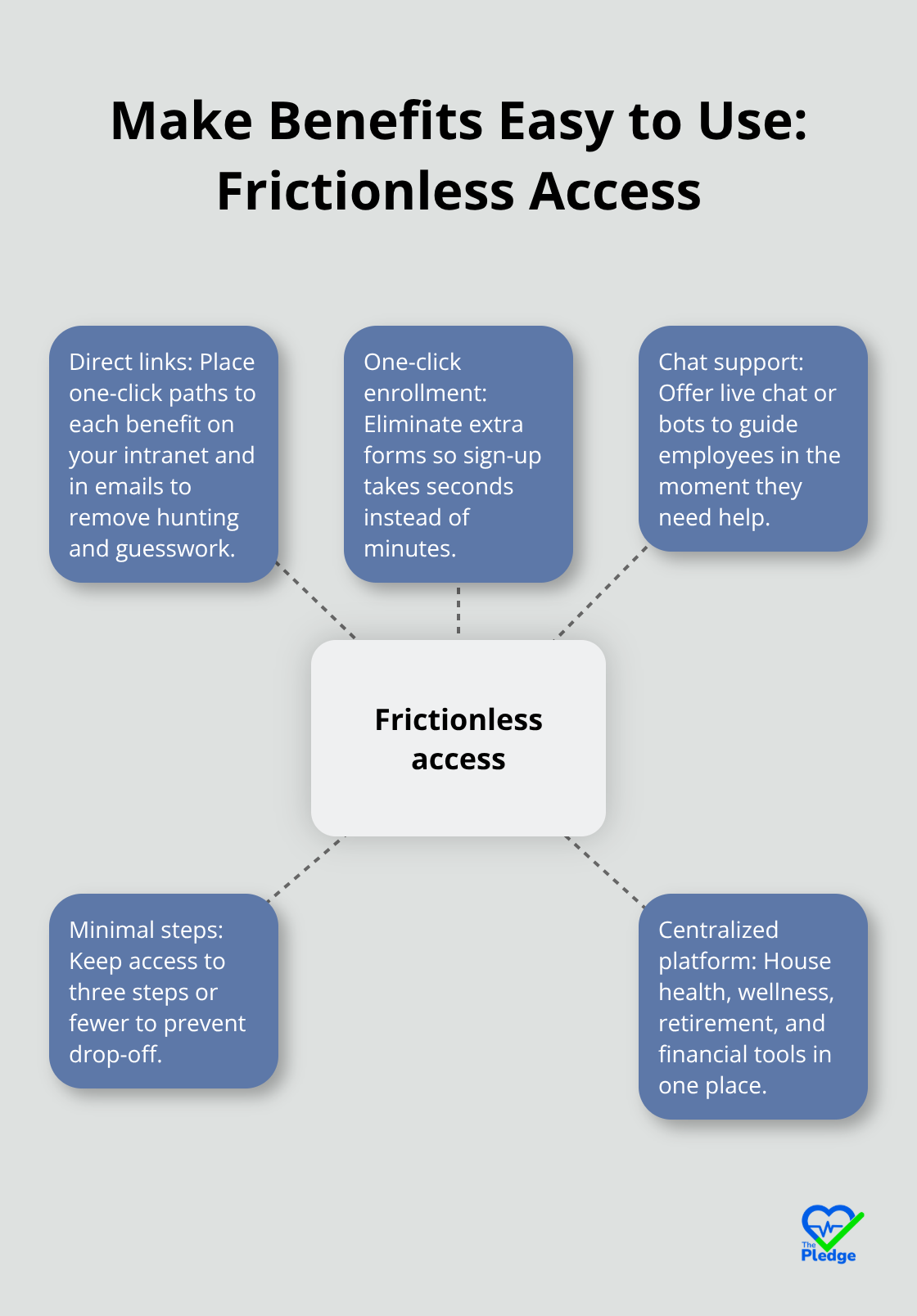
Platforms that centralize benefits information remove friction from the access experience. Employers should audit their current setup: Can employees access a benefit without calling HR or filling out forms? If the answer is no, utilization will suffer regardless of benefit quality.
What comes next: turning awareness into action
Understanding why employees skip benefits sets the stage for what actually works. The next section explores the specific strategies that transform how companies communicate benefits-and how those strategies drive real engagement and utilization across your workforce.
What Actually Works in Benefits Communication
Plain language transforms understanding into action
Plain language isn’t optional-it’s non-negotiable. Organizations that switch from insurance terminology to everyday language experience immediate jumps in utilization. Stop saying out-of-pocket maximum and start saying the most you’ll pay for healthcare this year is 2,000 pounds. Replace coinsurance with you pay 20% after you hit your deductible. Show concrete numbers tied to real scenarios: If you visit a physiotherapist who costs 80 pounds per session and you go four times, here’s exactly what you pay under each plan.
Side-by-side plan comparisons work better than lengthy plan documents because employees can see premiums, deductibles, and covered services at a glance without hunting through pages. Visuals beat text consistently-infographics showing how deductibles and out-of-pocket maximums work outperform written explanations. The fix requires relentless simplification. Explain concepts as if speaking to someone unfamiliar with healthcare entirely. Test your language with actual employees who don’t work in HR or benefits-if they struggle to understand, your materials will fail at scale.
Multi-channel strategies reach employees where they actually work
Communication only works when it reaches people where they actually are. Email alone fails because employees ignore most messages, especially when they arrive in crowded inboxes during non-critical moments. Segment your approach by role, age, and work environment. Shift workers need physical materials at time clocks and break rooms because they may not check email regularly. Remote teams need mobile-friendly formats and Slack or Teams messages for real-time visibility.
Managers must reinforce benefits messaging directly in team conversations because they have daily influence that HR doesn’t. Provide managers with specific talking points and FAQ sheets so they answer questions consistently and confidently. Use multiple formats simultaneously: short videos, infographics, one-page cheat sheets, intranet content, and in-person meetings during team huddles. Physical touchpoints also matter-signs near bathroom doors, snack bins, and time clocks reach employees who might miss digital communications. Some organizations send benefits materials directly to spouses’ home addresses because family members often influence health decisions that employees make.
Timing and lifecycle moments drive engagement far more than annual campaigns
Timing matters enormously-lifecycle-triggered messaging beats annual enrollment blasts. Send information about parental leave benefits when someone takes parental leave, not during October enrollment. Promote mental health support in January and November when seasonal stress peaks, not randomly. Continuous messaging keeps benefits visible and relevant as life circumstances change.
Year-round communication prevents the post-enrollment drop-off that plagues most organizations. When employees hear about benefits only once annually, they forget what’s available within weeks. Sustained messaging throughout the year (especially around moments that matter-starting a family, buying a home, or reaching age 50) ensures employees remember benefits when they actually need them. This approach transforms benefits from a compliance checkbox into a living resource that employees reference repeatedly.
The strategies that work share one common thread: they treat employees as individuals with varying needs, work styles, and life stages rather than a uniform audience receiving identical messages at identical times. Organizations that implement these approaches see measurable improvements in utilization, engagement, and perceived benefit value. The next section examines how to measure whether your communication efforts actually move the needle-and how to adjust your strategy based on what the data reveals.
How to Know Your Benefits Communication Actually Works
Establish a baseline before making changes
Data reveals whether your benefits communication strategy succeeds or fails, yet most organizations never measure it. They launch campaigns, send emails, and hope utilization improves without tracking what actually happens. Start by establishing a baseline with five simple questions: When did you last communicate benefits to employees? Can employees describe their benefits without reading documents? Do you have a Total Reward Statement showing employees their full package value? Is benefits information easy to find in one place? Can employees access a benefit without calling HR or filling out forms? If you answer no to most of these questions, your communication needs an overhaul.
Track utilization and identify communication gaps
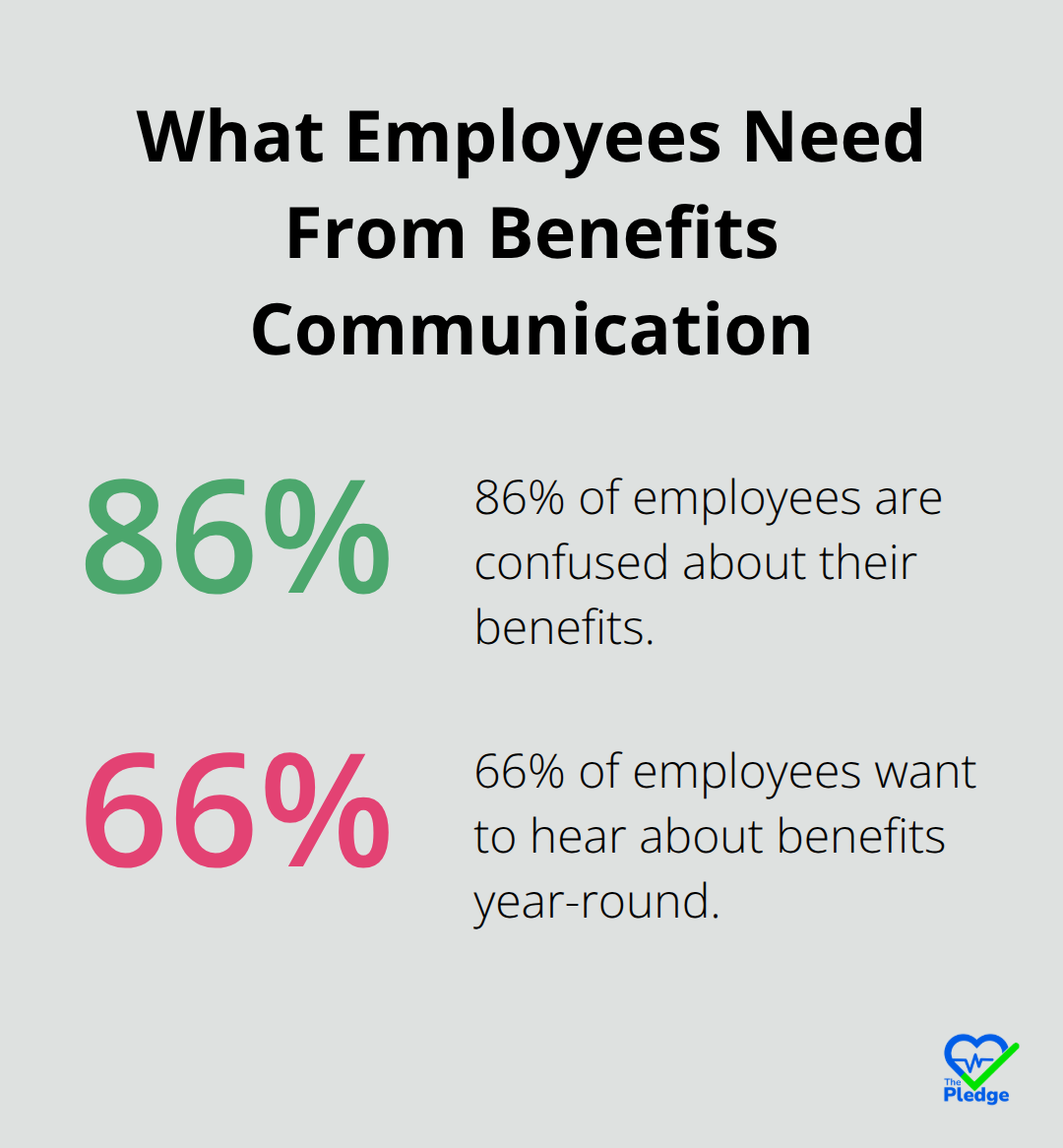
Pull utilization data directly from your health insurance provider, benefits platform, and wellness vendors. A Businessolver study found that 86% of employees are confused about their benefits, yet most employers never ask why. Conduct a brief survey asking employees which benefits they know about, which they use, and which they find too difficult to access. This reveals where communication fails most visibly.
If 40% of employees don’t know mental health support exists, that’s a messaging problem. If 30% know it exists but can’t figure out how to use it, that’s an access problem. These require different solutions. Post-enrollment surveys asking employees what communication formats they prefer reveal whether to invest in videos, infographics, or email. A Lantern study from 2025 found that 66% of employees want to hear about benefits year-round, yet most organizations still treat October as the only communication window.
Measure what actually drives engagement
Track engagement across channels to see what works. Did your Slack message about wellness programs get more clicks than your email? Did physical signage at time clocks reach shift workers better than intranet posts? Measure which life events trigger the highest utilization spikes. If parental leave benefits see a surge when you send targeted messages to employees returning from leave, you’ve found a high-impact moment. Use those moments strategically throughout the year.
Adjust strategy based on data, not assumptions
If utilization of financial planning tools sits at 15% but mental health support reaches 45%, your communication succeeded for mental health. Examine what worked: Was it the timing? The channel? The language? Copy that approach for financial planning. Set specific targets: If 60% of employees currently know about three benefits and you want 80% to know about five benefits within six months, that’s measurable. Track whether you hit it. Adjust messaging, channels, or timing based on what moves the needle. This cycle of measurement and refinement transforms benefits communication from a guessing game into a data-driven function that actually delivers results.
Final Thoughts
Poor employer benefits communication costs companies millions in wasted investment and costs employees thousands in missed financial protection. Awareness gaps persist because benefits only appear once yearly, jargon confuses workers before they even try to access support, and fragmented systems defeat motivated employees. These problems have solutions: simplify language, reach employees across multiple channels, time messages around life events, and measure what actually works.
Start with a baseline assessment by asking five questions: When did you last communicate benefits? Can employees describe what they have without reading documents? Do you show employees their full package value? Is information centralized and easy to find? Can employees access benefits without calling HR? Your answers reveal where to focus first. Segment messages by role, age, and work environment, use plain language consistently, and reinforce key messages through managers who have daily influence.
The Pledge centralizes health data and benefits information, sending personalized reminders and real-time updates that keep employees engaged year-round. Effective employer benefits communication requires consistency, clarity, and a genuine commitment to helping employees understand what you offer.
![[Guide] Incentives That Drive Preventive Health Participation](https://thepledge.app/wp-content/uploads/emplibot/Guide_-Incentives-That-Drive-Preventive-Health-Participation_1783650286-300x168.jpeg)