
Preventive care saves lives and money, yet millions skip routine checkups and screenings. Care avoidance barriers-from insurance gaps to confusing healthcare systems-keep people stuck in reactive treatment cycles.
At The Pledge, we’ve identified the specific obstacles holding back preventive care adoption. This post breaks down what’s blocking progress and how employers, insurers, and technology can remove these barriers for good.
What’s Actually Stopping People From Getting Preventive Care
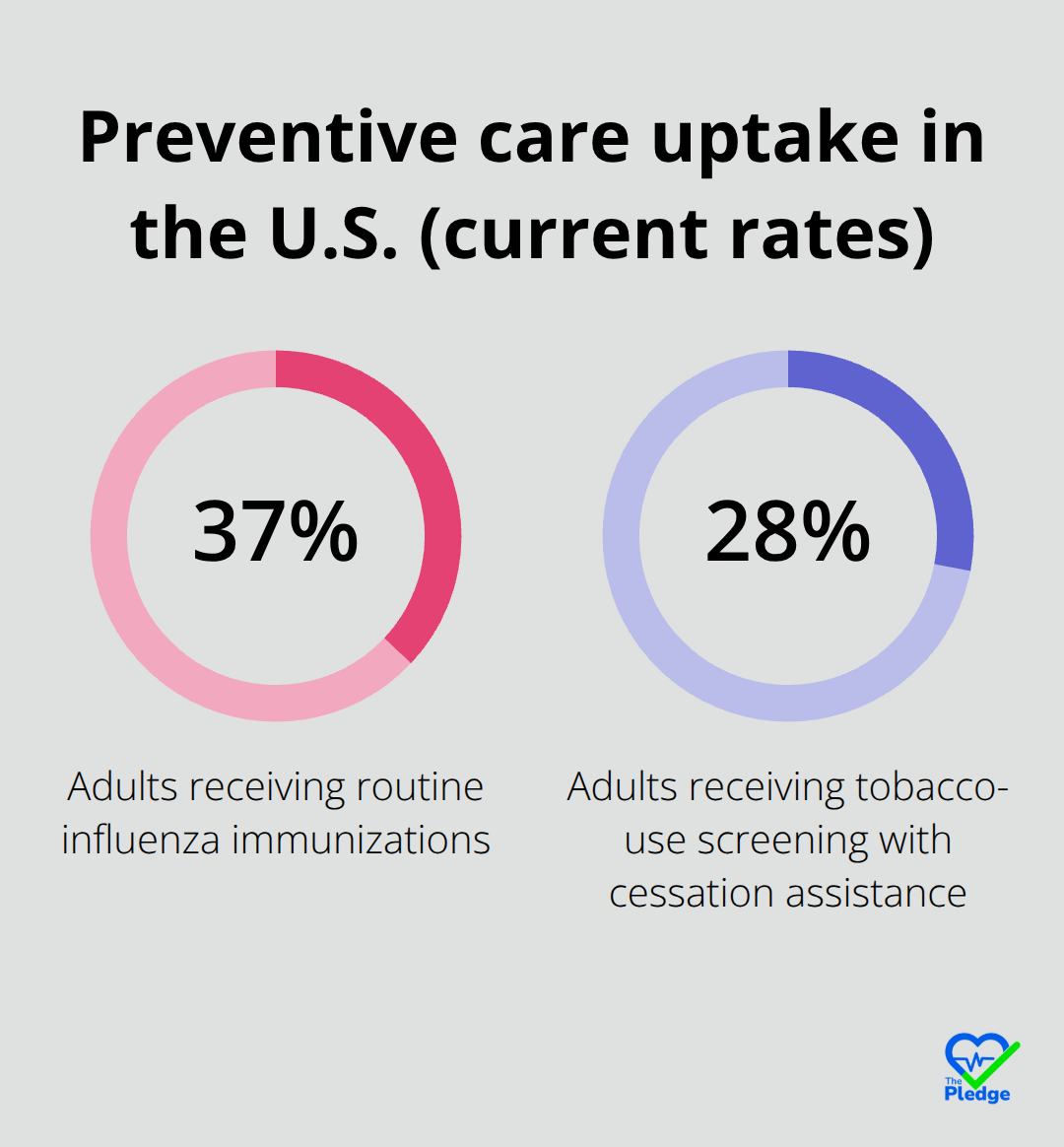
The statistics paint a stark picture. Only 37% of adults receive routine influenza immunizations and just 28% receive tobacco-use screening with cessation assistance, according to CDC data.
Meanwhile, about 40% of U.S. deaths stem from preventable behaviors like smoking, obesity, poor diet, and inactivity. The gap between what prevents disease and what people actually access is enormous, and it’s not because preventive care doesn’t work. It’s because real barriers stand in the way.
The Money Problem Is Worse Than Most Think
Cost remains the primary obstacle, but not in the way many assume. The Affordable Care Act eliminated out-of-pocket costs for many preventive services rated A or B by the U.S. Preventive Services Task Force, yet disparities persist across income levels and insurance status. Uninsured and low-income populations show notably lower screening and vaccination rates. The Kaiser Family Foundation data confirms that insurance status strongly predicts whether adults receive recommended screenings. For those with coverage, gaps still exist. Some preventive services fall outside ACA protections, and many people don’t know what’s actually covered. Even worse, the complexity of understanding what’s free versus what costs money deters people from seeking care altogether. Transportation to appointments, time off work, and childcare costs add hidden expenses that no insurance policy covers. These practical expenses matter more than policy documents.
Awareness and Understanding Are Shockingly Low
Health literacy directly impacts preventive care uptake. People can’t participate in screenings they don’t know they need. According to NIH research, plain language, visual aids, and teach-back methods significantly improve understanding of health recommendations, yet most health systems fail to implement these approaches. Language barriers compound the problem. Non-English-speaking communities face reduced access because interpreter services and translated materials remain inconsistent. Many people also don’t understand their personal risk. Someone with no family history of diabetes or no current symptoms often skips screening, unaware that early detection catches disease before symptoms appear. Historical and ongoing mistrust in healthcare among minority communities further reduces preventive care participation. The National Academies and CDC research shows that engagement with trusted community partners and patient navigators substantially improves uptake, yet most health systems lack these resources. Stigma around certain screenings (particularly sexual health and mental health screenings) keeps people away. Privacy concerns add another layer. People fear that seeking preventive care will lead to diagnoses they’re not ready to face, a psychological barrier that plain information campaigns don’t address.
Fragmented Systems Make Care Navigation Nearly Impossible
Healthcare fragmentation wastes preventive care opportunities. Patients see different providers across different systems, and preventive recommendations don’t follow them. A person might receive a colonoscopy reminder from their gastroenterologist but miss mammography screening because their primary care doctor never coordinated with oncology. Fragmented records mean preventive opportunities fall through cracks. Limited appointment availability and provider time constraints force difficult choices. Primary care providers face workflow barriers, insufficient reminders, and fragmented teams that make delivering recommended preventive services logistically difficult. Rural areas suffer most from provider shortages. The Agency for Healthcare Research and Quality documents that shortages of primary care providers, especially in rural areas, directly hinder delivery of preventive services and follow-up care. The digital divide adds another barrier. Limited access to online scheduling and telehealth prevents people from booking preventive appointments, particularly affecting older adults and low-income populations. Patients must navigate complex systems with no guidance, figure out which services they need, find available providers, schedule appointments, and coordinate across multiple healthcare settings. Most people lack the time or knowledge to manage this alone.
These barriers don’t exist in isolation-they reinforce each other. A person without health literacy struggles to understand coverage gaps. Someone without transportation can’t reach a provider even if they know they need screening. A fragmented system fails to remind patients of services they’re entitled to receive. Breaking preventive care adoption requires solutions that address these interconnected obstacles simultaneously, not piecemeal fixes that ignore the full picture.
What Employers and Insurers Must Do Right Now
Make Preventive Coverage Transparent and Actionable
Employers and health plans control the levers that unlock preventive care adoption, yet most pull them half-heartedly. The disconnect between what coverage exists and what employees understand creates the first major failure point. When the Kaiser Family Foundation examined preventive service utilization, they found that employees simply don’t know what’s covered or available to them. Employers must stop assuming that offering free preventive services is enough. Transparency demands action.
Health plans need to publish clear, plain-language documents listing exactly which screenings, vaccinations, and preventive visits are covered with zero cost-sharing, organized by age and risk profile rather than by medical code. One employer that implemented a simple one-page preventive care guide saw screening completion rates jump 23% within six months. The guide listed the five most important screenings by age group, showed zero cost next to each service, and included direct scheduling links. No jargon. No fine print. This is the baseline expectation, not an innovation.
Fund Community-Based Education That Reaches Employees
Beyond transparency, employers must fund education programs that reach employees where they are. Generic wellness emails fail because they compete with hundreds of other messages. Instead, employers should partner with community health workers and trusted messengers within their workforce to deliver preventive care messaging. Community-based outreach significantly increases screening participation, particularly among populations with historical barriers to care.
An employer with 2,000 employees spending $15,000 annually on a community health worker program targeting underutilized populations typically sees preventive care participation rise by 18-25% within the first year. That investment returns itself through reduced emergency room visits and avoided complications. Trusted messengers from within the workforce carry credibility that external campaigns cannot match.
Deploy Multi-Channel Reminders That Drive Action
Reminder systems work. Cochrane reviews and Community Preventive Services Task Force research consistently show that automated text reminders, email notifications, and electronic health record prompts increase screening completion rates by 10-30% depending on the baseline and population. Yet most employers still rely on annual wellness statements mailed to home addresses, a format that reaches people when they’re least likely to act.
Health plans must deploy multi-channel reminder systems that contact employees when screenings are due, specify which test they need, confirm it’s covered at no cost, and provide a direct scheduling link. The system should escalate reminders for people who miss appointments, recognizing that life circumstances change. Personalization matters far more than frequency.
Eliminate Access Friction With Home-Based Testing and Telehealth
Telehealth and home-based testing options eliminate access barriers that cost nothing to create. Colorectal cancer screening completion increased substantially when employers offered at-home FIT kits mailed directly to employees, removing the transportation and scheduling friction. Employers should demand that their health plans offer home-based options for any preventive test where clinical evidence supports it.
Integrate Data Systems to Eliminate Navigation Burden
Finally, employers must insist on integrated data systems that prevent the fragmentation problem entirely. When a preventive care recommendation lives in one system and the employee’s insurance information lives in another, nothing happens. Centralized platforms that unify health data across providers, insurers, and employers eliminate the navigation burden that currently falls entirely on patients. Employees see one dashboard showing what they’re due for, what’s covered, where to go, and how to schedule. This single change removes the primary friction point that stops people from acting on preventive care recommendations.
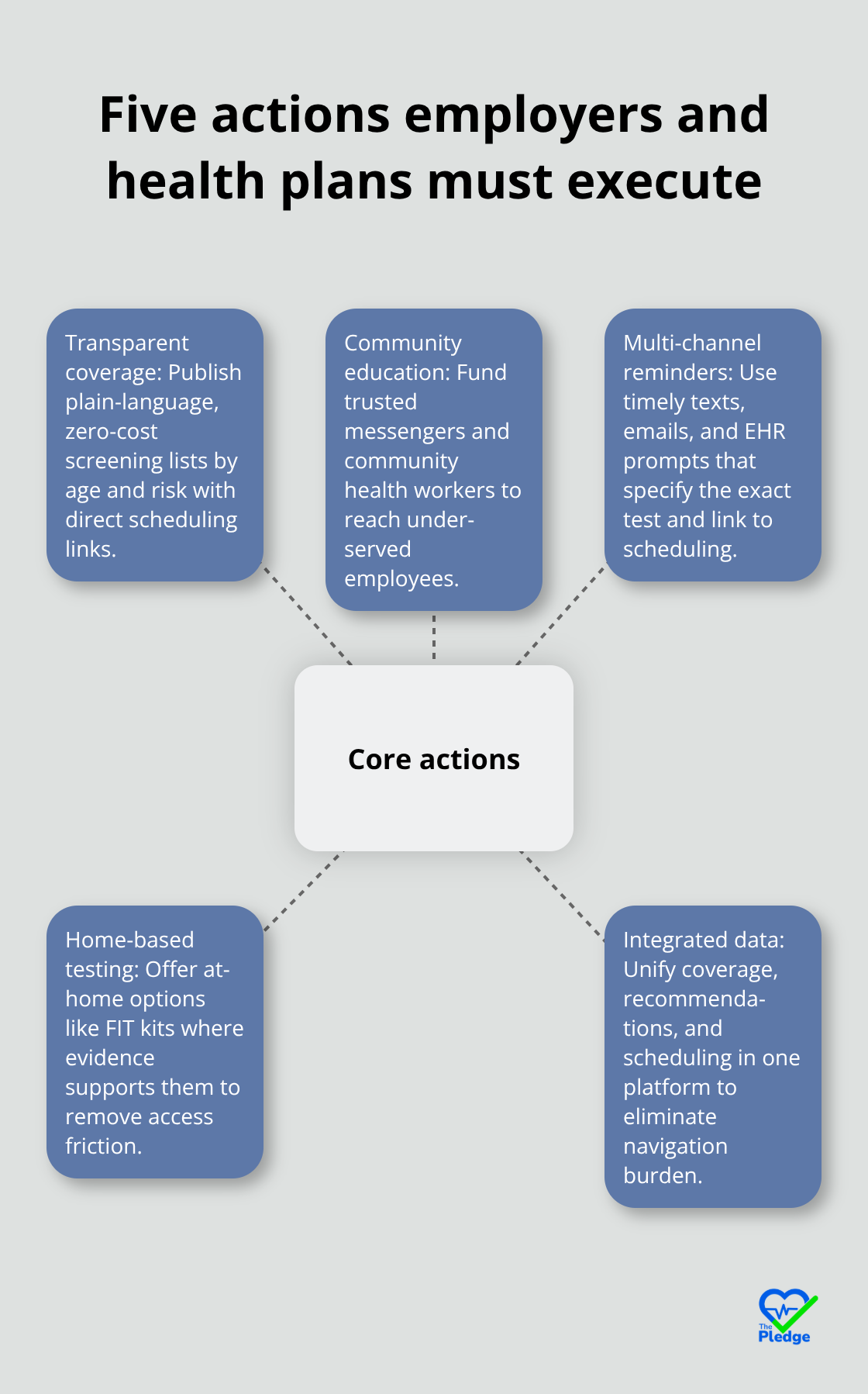
These five actions-transparency, community education, multi-channel reminders, home-based testing, and integrated data-form the foundation of what employers and health plans must execute. Yet removing barriers on the employer side only works if the technology infrastructure supports seamless preventive care delivery. Digital health platforms now make this coordination possible at scale, transforming how preventive care reaches the people who need it most.
How Digital Platforms Transform Preventive Care From Possibility to Reality
Digital health platforms solve the coordination problem that employers and health plans cannot fix alone. Fragmented systems, missing data, and absent reminders create the friction that stops preventive care from happening. A centralized platform eliminates these obstacles by tracking what each person needs, when they need it, and delivering that information exactly when action becomes possible. Organizations deploying integrated digital platforms see preventive care completion rates increase by 18-35% within the first year. This matters because preventive care adoption directly correlates with lower emergency room utilization and fewer hospitalizations. The National Institutes of Health research confirms that people who receive preventive screenings and follow-up care experience 20-30% fewer preventable complications than those who skip these services. Digital platforms make this outcome achievable for entire populations, not just motivated individuals.
Data Integration Stops Preventive Care From Falling Through Cracks
The fundamental problem digital platforms solve is data isolation. A patient’s preventive care needs exist in one system, their insurance coverage in another, their provider’s schedule in a third. No single person knows what screenings they’re overdue for, whether their insurance covers them, or how to schedule them. Digital platforms centralize this information into one place where employees see exactly what they need and can act immediately. When a preventive care recommendation appears in an employee’s dashboard alongside confirmation that it’s covered at no cost and a direct link to schedule, completion rates jump.
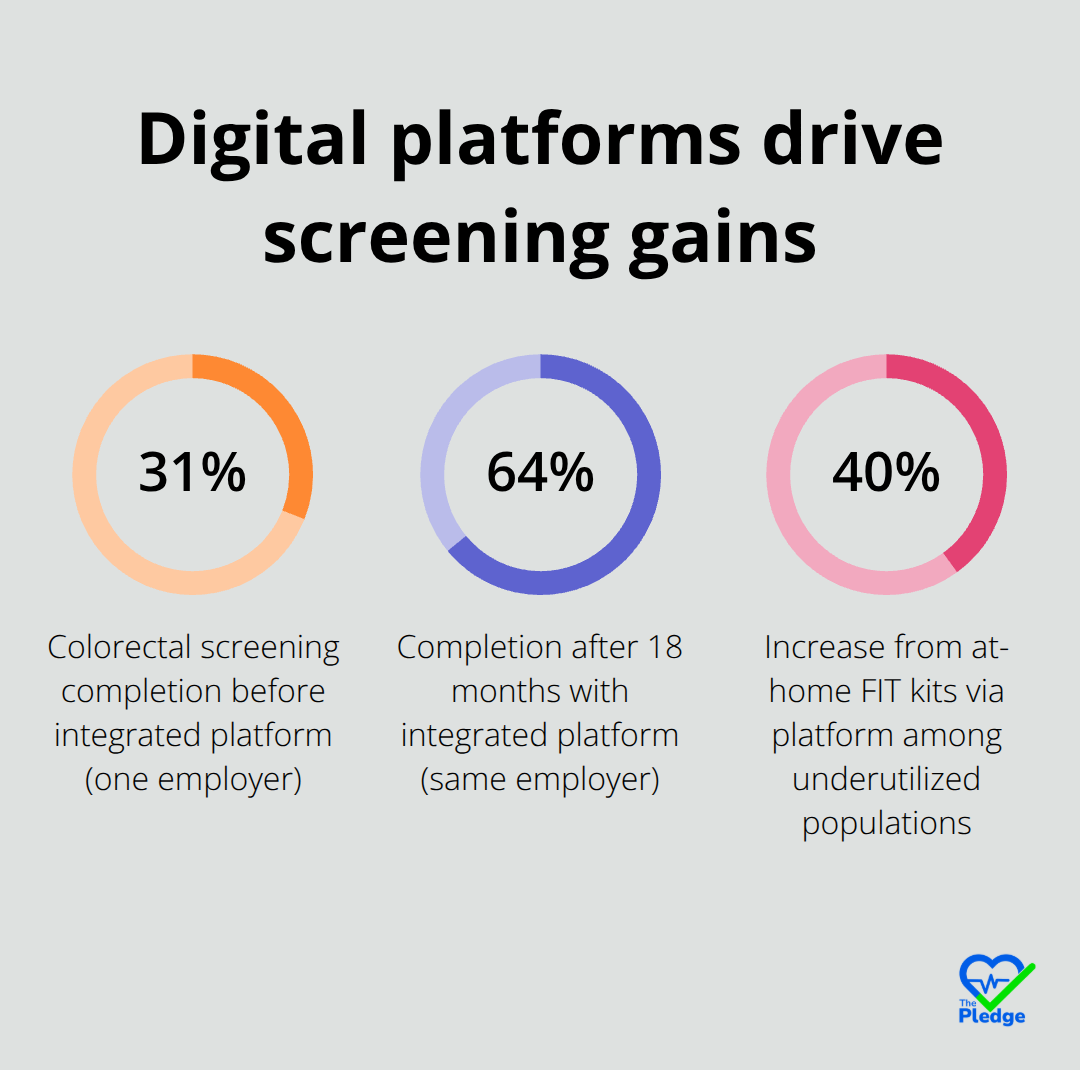
One employer using an integrated platform saw colorectal cancer screening completion rise from 31% to 64% within eighteen months. The platform sent reminders at the right moment, confirmed coverage, and eliminated the need for employees to navigate multiple systems. Automated reminders increase screening completion by 10-30%, but those gains multiply when reminders include coverage confirmation and scheduling links. Digital platforms deliver all three simultaneously.
Personalization Drives Engagement Better Than Generic Messages
Generic preventive care messages fail because they ignore individual circumstances. A 35-year-old woman needs different screenings than a 55-year-old man. Someone with diabetes needs different monitoring than someone without chronic conditions. Digital platforms use health data to send personalized recommendations that match each person’s actual risk profile and age. This targeted approach drives engagement because people see information relevant to their lives. Personalized health messaging increases preventive care uptake by 22-40% compared to generic campaigns. An employee receives a notification stating you are due for blood pressure screening based on your age and health history, not a vague message about preventive care. The platform knows their insurance covers it at zero cost and offers same-day or next-week appointments with nearby providers. Personalization eliminates the cognitive burden of figuring out what applies to you. Digital platforms handle this filtering automatically, delivering only actionable recommendations to each person. Relevance matters more than frequency. One employer reduced preventive care reminders from monthly to quarterly but increased personalization and saw completion rates rise because employees responded to messages that actually applied to them.
Navigation Simplification Removes the Final Barrier
The last barrier digital platforms eliminate is navigation complexity. Even when someone knows they need a screening and their insurance covers it, finding an available provider, confirming the location accepts their insurance, and scheduling the appointment still requires multiple steps across different systems. Digital platforms consolidate this into a single workflow. An employee sees their due screening, taps to find nearby providers, sees which ones are in-network, checks availability, and books an appointment without leaving the platform. This simplification increases completion rates because it removes the final friction point. Digital platforms make this happen automatically. Some platforms also offer home-based testing options for preventive services where clinical evidence supports them, further reducing barriers. Colorectal cancer screening completion increased when employers offered at-home FIT kits through their digital platform. Patients received a kit by mail, completed screening at home, and received results through the same platform. No transportation needed. No time off work. No navigating unfamiliar medical facilities. The result was a 40% increase in screening completion among previously underutilized populations.
Real-World Impact on Health Outcomes and Costs
Preventive care completion directly translates to measurable health improvements. People who access preventive screenings catch disease earlier, when treatment costs less and outcomes improve. A 50% reduction in coronary heart disease mortality occurred due to reduced smoking and better management of high cholesterol, demonstrating what prevention achieves at scale. Vaccination programs have produced more than 90% reductions in morbidity and mortality from diseases like measles, mumps, rubella, and pertussis. Digital platforms accelerate these outcomes by removing the barriers that currently prevent people from accessing these proven interventions. The financial case is equally compelling. Community-based prevention initiatives yield approximately $5 in savings for every $1 invested in interventions addressing obesity, smoking, and other modifiable risks. When digital platforms increase preventive care completion rates by 20-30%, the cost savings compound across entire employee populations. Lower emergency room visits, fewer hospitalizations, and reduced complications from untreated chronic disease create measurable returns that justify the investment in digital health infrastructure.
Final Thoughts
Preventive care adoption fails because interconnected barriers stop people from acting, not because they undervalue their health. Cost gaps, fragmented systems, and low health literacy create care avoidance barriers that reinforce each other. A person without transportation cannot reach a provider even if they know they need screening. Someone without health literacy struggles to understand coverage. A fragmented system fails to remind patients of services they deserve. These obstacles compound, making preventive care feel impossible rather than straightforward.
Removing these barriers produces measurable results. When employers implement transparent coverage, fund community education, deploy multi-channel reminders, and integrate data systems, preventive care completion rates jump 18-35% within the first year. A 50% reduction in coronary heart disease mortality occurred through reduced smoking and better cholesterol management. Vaccination programs produced more than 90% reductions in morbidity and mortality from preventable diseases. These outcomes scale when barriers disappear, and community-based prevention yields approximately $5 in savings for every $1 invested.
Technology-enabled solutions make this coordination possible at scale. Centralized platforms unify health data, send personalized reminders, and eliminate navigation complexity. The Pledge transforms preventive care from possibility to reality by integrating all essential health information into one dashboard where employees see exactly what they need, confirm coverage, and schedule appointments without leaving the platform.