
Healthcare data integration is transforming patient care and medical decision-making. At The Pledge, we’ve seen firsthand how fragmented systems and data silos hinder effective treatment and drive up costs.
This blog post explores the power of streamlined healthcare data integration, its benefits, and the technologies driving this revolution. We’ll also look at how it’s shaping the future of healthcare delivery and improving outcomes for patients worldwide.
Healthcare Data Fragmentation: Breaking Down Silos
The healthcare industry drowns in data yet starves for insights. Most healthcare organizations struggle with fragmented systems and data silos. This fragmentation isn’t just a technical inconvenience-it’s a significant barrier to providing quality care.
The Data Silo Problem
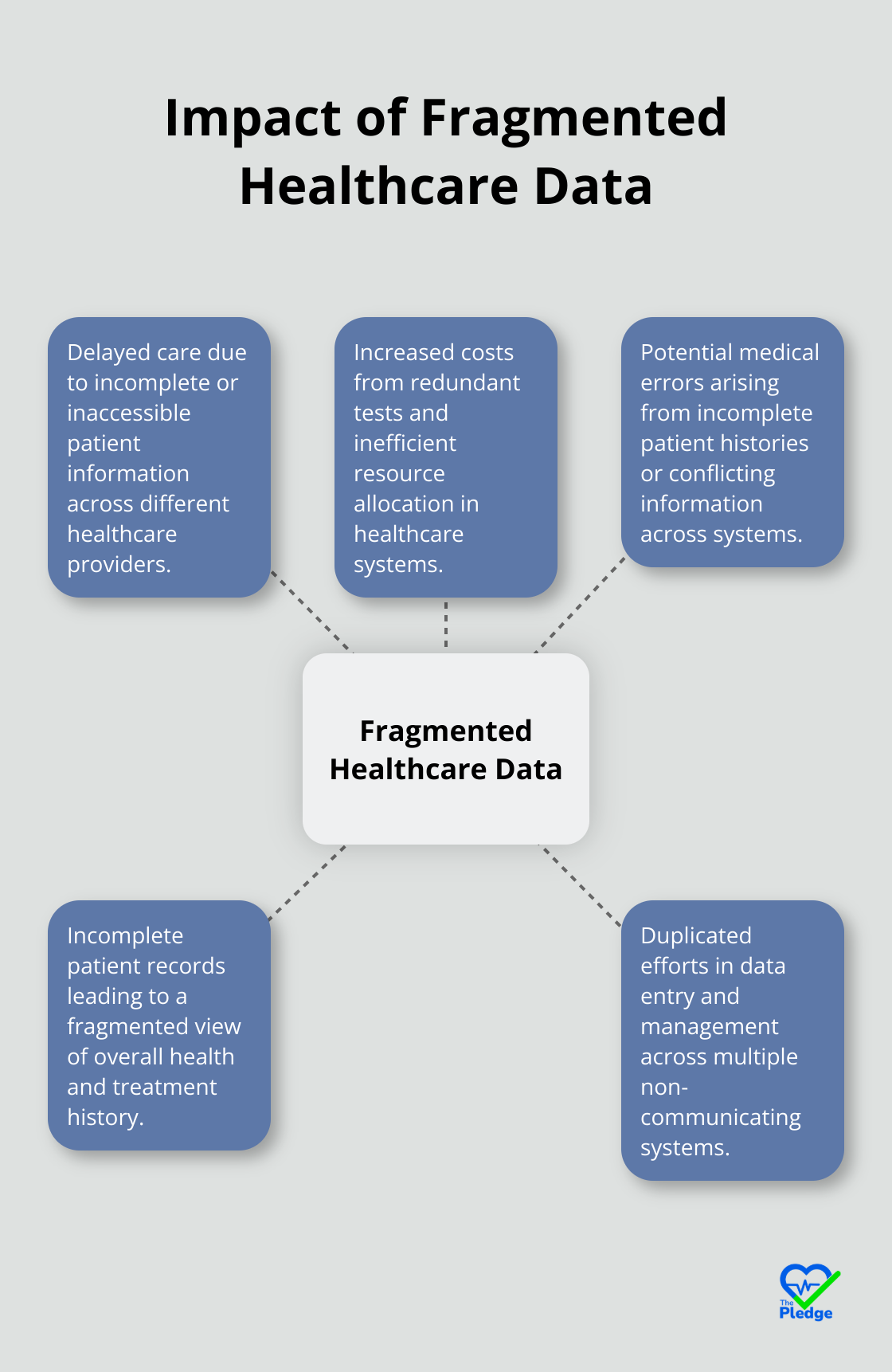
Data silos plague healthcare. Hospitals, clinics, pharmacies, and insurance companies all maintain separate databases. These isolated systems don’t communicate effectively, which leads to incomplete patient records and duplicated efforts.
A study found that in electronic health records (EHRs), standardization and interoperability challenges stem from fragmented data across institutions. This fragmentation creates a fragmented view of patient health, which hinders effective treatment.
Interoperability Challenges
Interoperability (the ability of different information systems to communicate) remains a significant hurdle. Despite efforts to standardize data formats, many legacy systems still can’t “talk” to each other.
The federal government is making efforts to support interoperable, private and secure nationwide health information technology (health IT) systems. This lack of interoperability leads to delays in care, increased costs, and potential medical errors.
Impact on Patient Care
The consequences of fragmented healthcare data are dire. Patients often repeat tests or provide the same information multiple times, which leads to frustration and wasted resources. More critically, incomplete data can lead to misdiagnosis or inappropriate treatment.
The Path Forward
To address these challenges, healthcare organizations must prioritize data integration. This involves:
- Implementing standardized data formats (such as HL7 FHIR)
- Investing in interoperable systems
- Training staff on new technologies
- Developing clear data governance policies
The benefits of integrated healthcare data are substantial. They include improved patient outcomes, reduced costs, and enhanced operational efficiency. As we move towards a more connected healthcare ecosystem, the importance of breaking down data silos becomes increasingly clear.
The next chapter will explore the tangible benefits of streamlined healthcare data integration, showcasing how this technological shift is revolutionizing patient care and medical decision-making.
How Integrated Healthcare Data Benefits Patients and Providers
Streamlined healthcare data integration revolutionizes patient care and provider efficiency. This technological advancement transforms healthcare delivery, offering concrete benefits to all stakeholders.
Faster, More Accurate Diagnoses
Healthcare providers with access to complete medical histories make quicker and more precise diagnoses. A study aimed to improve the ability of health care professionals to diagnose diseases and reduce medical errors. This improvement results from a comprehensive view of a patient’s health (including past treatments, allergies, and genetic predispositions).
Reduced Redundancy, Increased Efficiency
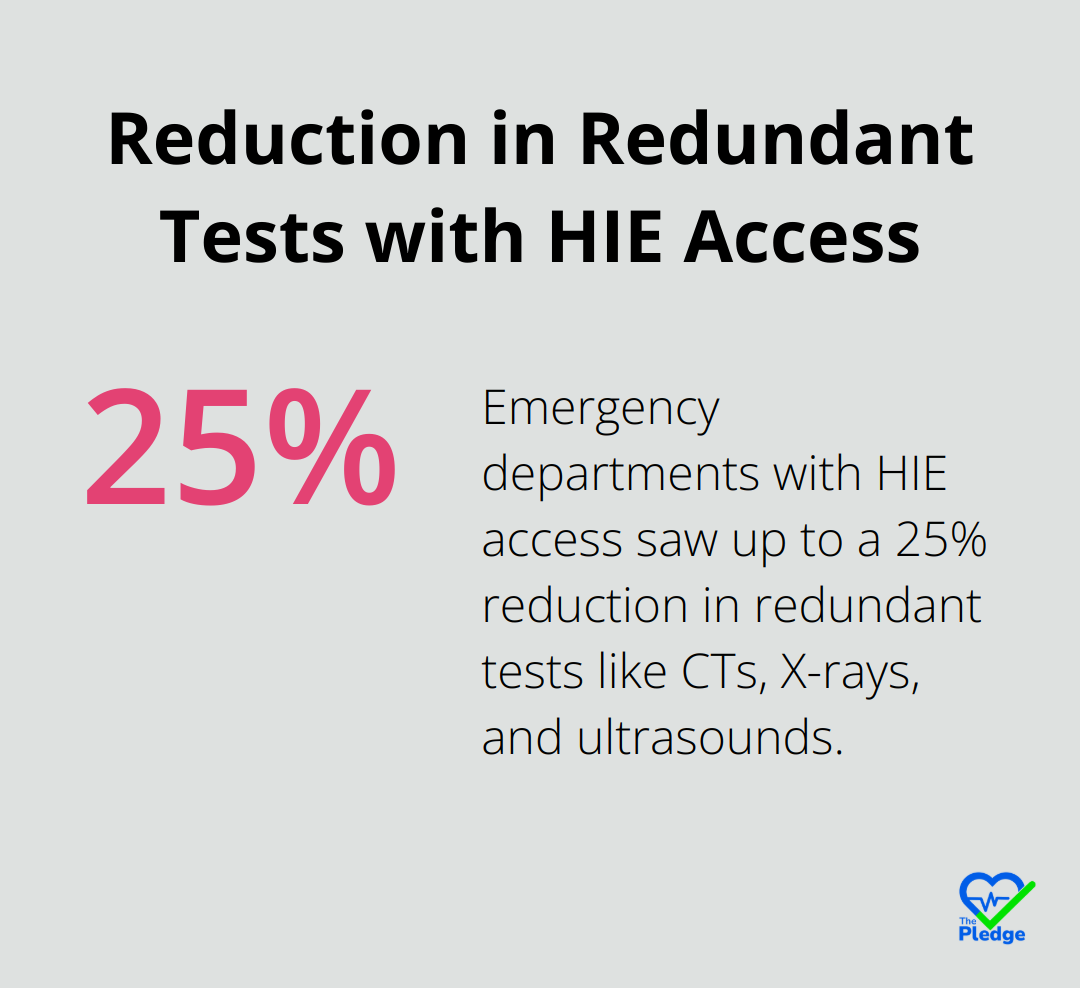
Integrated data systems cut down on duplicate tests and procedures significantly. Emergency departments with HIE access saw 9–25% reductions in CTs, X-rays, and ultrasounds. This saves time and resources and spares patients from unnecessary procedures.
Enhanced Care Coordination
Integrated data makes care coordination seamless. Different specialists can easily access and update a patient’s records, ensuring everyone stays informed. A report by the Office of the National Coordinator for Health Information Technology states that hospitals using integrated systems saw a 20% improvement in care coordination metrics.
Significant Cost Savings
The financial benefits of integrated healthcare data are substantial. A study published in the American Journal of Managed Care found that healthcare organizations implementing comprehensive data integration systems saved an average of $3.5 million annually. These savings stem from reduced administrative costs, fewer medical errors, and more efficient resource allocation.
Patients also benefit financially. With fewer redundant tests and more efficient care, out-of-pocket expenses can decrease significantly.
Improved Patient Engagement and Satisfaction
Easy access to health data increases patient engagement in their care. A survey by the Healthcare Information and Management Systems Society (HIMSS) found that 73% of patients reported higher satisfaction with their care when they had access to a comprehensive, integrated health record.
The next chapter will explore the key technologies driving healthcare data integration, including Electronic Health Records (EHRs), Health Information Exchanges (HIEs), and blockchain for secure data sharing.
What Technologies Drive Healthcare Data Integration?
Healthcare data integration evolves rapidly, shaped by innovative technologies that transform the industry. We at The Pledge have identified key technologies that significantly impact healthcare data integration.
Electronic Health Records (EHRs): The Foundation of Integration
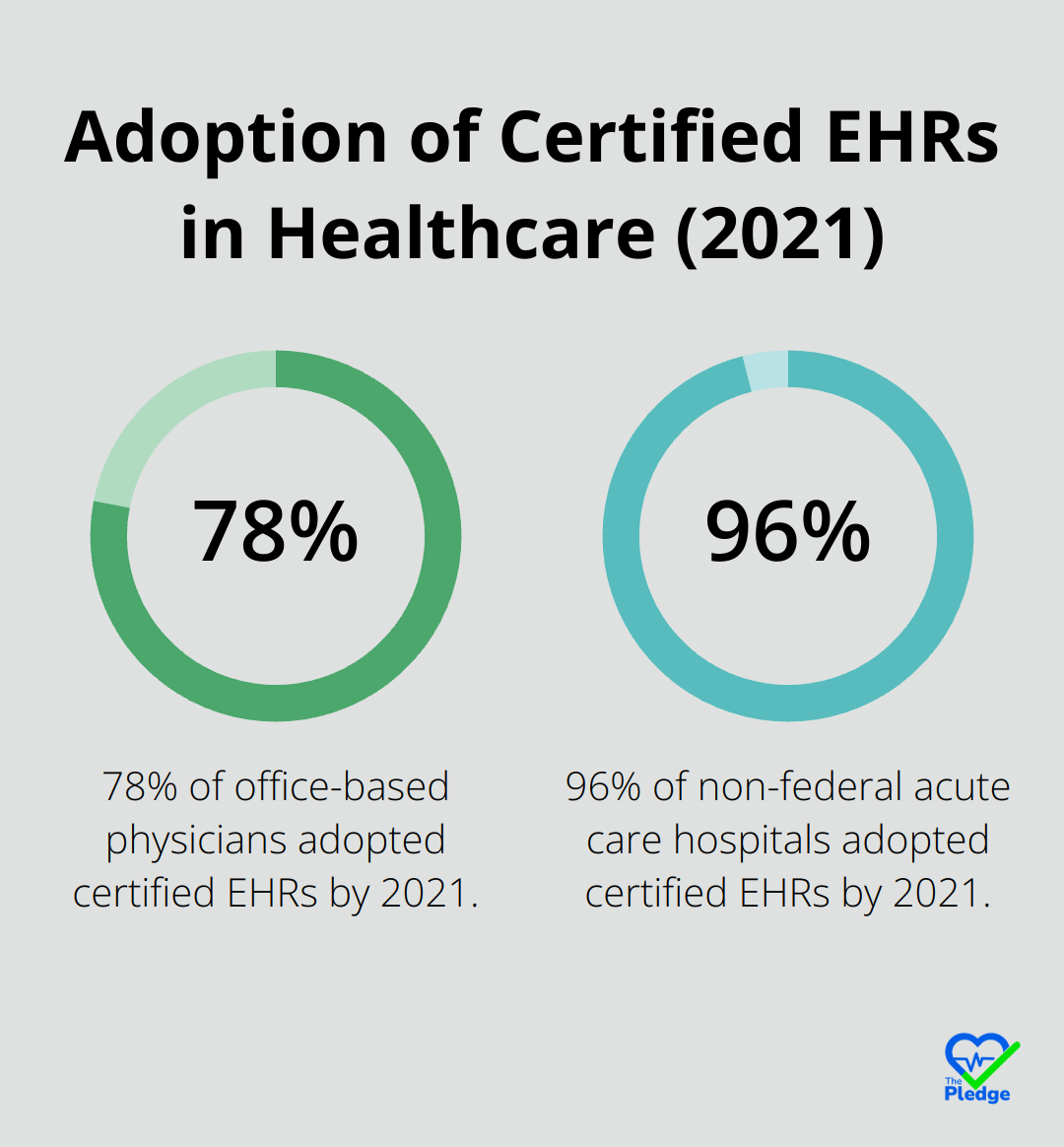
Electronic Health Records (EHRs) form the backbone of healthcare data integration. As of 2021, nearly 4 in 5 office-based physicians (78%) and nearly all non-federal acute care hospitals (96%) adopted a certified EHR. This widespread adoption creates a solid foundation for data sharing and integration.
The real power of EHRs lies in their ability to connect with other systems. Modern EHRs use standardized data formats like HL7 FHIR (Fast Healthcare Interoperability Resources), which allows seamless data exchange between different healthcare systems.
Health Information Exchanges (HIEs): Bridging the Gap
HIEs connect disparate healthcare systems. They act as a central hub, allowing different healthcare providers to securely share patient information. Health Information Exchanges have the potential to improve quality of care, efficiency, and patient safety, as well as facilitate communications among providers.
The Indiana Health Information Exchange stands out as an example, connecting over 100 hospitals and 14,000 practices (demonstrating the scalability and impact of well-implemented HIEs).
APIs: The Connective Tissue of Healthcare IT
Application Programming Interfaces (APIs) revolutionize how healthcare systems communicate. They allow different software applications to interact and share data seamlessly. The adoption of FHIR-based APIs has skyrocketed, with major EHR vendors now offering FHIR API access.
The SMART on FHIR initiative has enabled the development of numerous healthcare apps that can securely access and update patient data across different EHR systems.
Blockchain: Ensuring Data Security and Integrity
Blockchain technology emerges as a powerful tool for secure healthcare data sharing. Its decentralized nature and immutable record-keeping make it ideal for maintaining the integrity of sensitive health information.
Estonia’s healthcare system provides a compelling case study. They have implemented a blockchain-based system to secure over 1 million patient records (ensuring data integrity while allowing authorized access across their national healthcare network).
These technologies play an increasingly vital role as we continue to push the boundaries of healthcare data integration. They improve efficiency and fundamentally change how healthcare is delivered, making it more connected, secure, and patient-centered than ever before.
Final Thoughts
Healthcare data integration transforms modern medical care. It enables faster diagnoses, reduces redundancy, enhances care coordination, and saves costs for providers and patients. The future promises seamless data flow between providers, insurers, and patients, leading to more personalized and preventative care approaches.
The Pledge stands at the forefront of this healthcare revolution. Our digital health platform centralizes health data and leverages AI technology to simplify care navigation and promote preventative care. We integrate with existing health plans, provide real-time updates, and offer tools for inpatient care coordination.
The Pledge’s approach to healthcare data integration sets new industry standards. Our features empower individuals to control their wellness journey. We achieve engagement rates four times the industry standard, demonstrating the power of user-centric, integrated health platforms.