
Employee preventive care programs are no longer a nice-to-have benefit-they’re a business necessity. Companies that invest in prevention see measurable drops in healthcare costs, fewer sick days, and stronger employee retention.
At The Pledge, we’ve seen firsthand how organizations transform their workplace health culture by prioritizing prevention over treatment. This blog post walks you through building programs that actually work, measuring their impact, and making the case to leadership.
Why Preventive Care Actually Saves Money
Healthcare costs drain employer budgets at an alarming rate. Annual premiums for employer-sponsored family health coverage reached $26,993 this year, 6% higher than in 2024. This backwards allocation forces employers to pay for expensive treatments instead of preventing disease in the first place. Diabetes alone costs employers 2.6 times more per employee than managing someone without the condition.
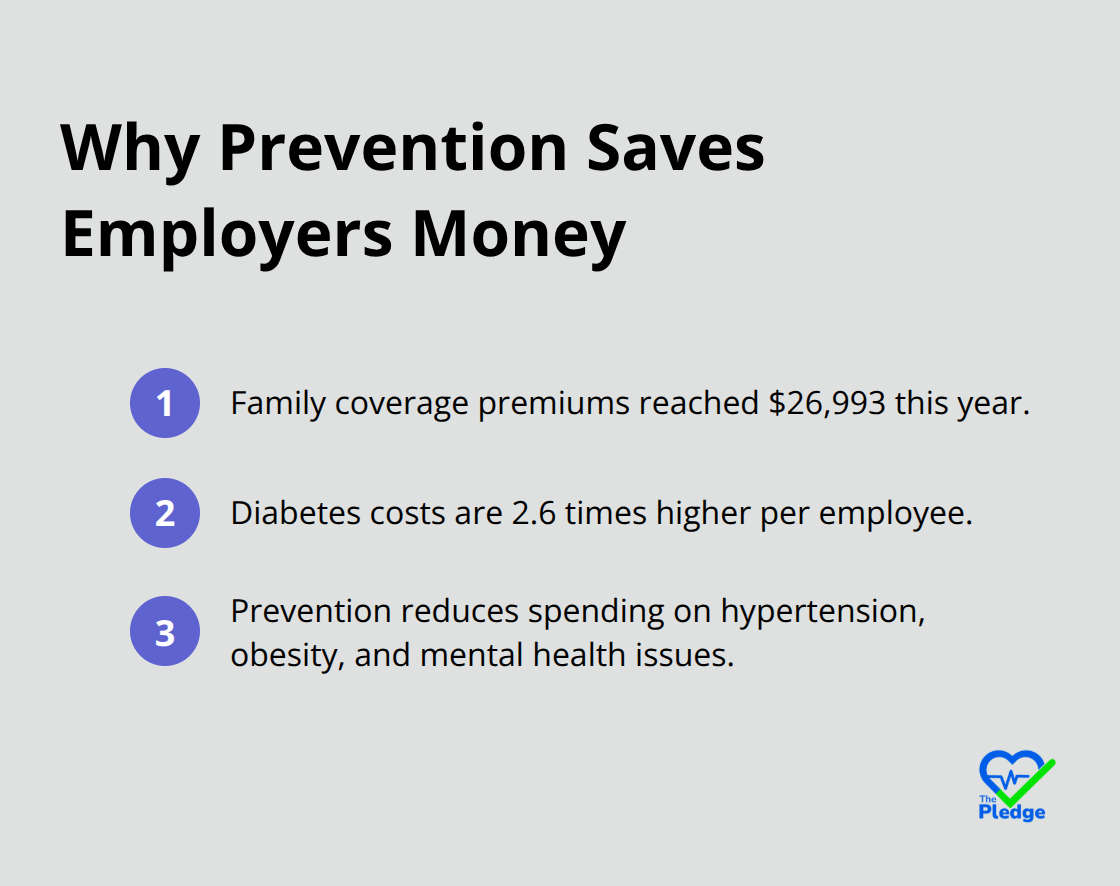
When you add preventable conditions like hypertension, obesity, and mental health issues, the math becomes undeniable: prevention represents the only financially rational choice for leadership.
The Hidden Cost of Delayed Care
Delaying preventive care creates a domino effect of expenses that compounds over time. Kaiser Family Foundation data from 2024 shows about 25% of adults skipped necessary healthcare due to cost, and when employees avoid preventive services, the consequences multiply. Missed dental work, vision care, and doctor visits lead to emergency room visits, hospitalizations, and lost productivity. A single missed blood pressure screening can trigger a stroke that costs $100,000 to $300,000 in immediate care plus months of lost work. Manufacturing companies that fail to invest in preventive programs watch their employees struggle with unmanaged conditions while healthcare claims spike. The National Association of Manufacturers reports that 95% of manufacturing employees are eligible for health insurance, yet most employers don’t use data to identify which conditions actually drive their costs.
Prevention Transforms Productivity and Retention
Absenteeism and presenteeism drain far more value than most employers realize. Employees with unmanaged chronic conditions miss work, show up sick, or work at reduced capacity. A global healthcare worker shortage of at least ten million is expected by 2030, creating massive recruitment and training costs that prevention programs directly address. Early intervention in mental health, screening programs, and lifestyle support reduce both emergency healthcare use and the hidden costs of disengaged workers. Organizations that implement targeted preventive programs see measurable improvements in attendance, focus, and safety performance. Employees who participate in preventive screenings and early intervention programs have lower absenteeism rates, higher retention, and better productivity metrics than those who don’t.
Data-Driven Program Design Matters
Effective preventive programs start with understanding your specific workforce. Claims data often reveal heterogeneous cost drivers across organizations, so programs must match the actual health risks your employees face (not generic industry benchmarks). Employers should analyze their own claims data to identify which conditions are driving costs and which preventive services employees actually skip. This targeted approach allows you to allocate resources where they’ll have the greatest impact. Organizations ready to build programs that stick need to move beyond one-size-fits-all wellness and instead design interventions around the real health gaps in their population.
How to Build a Program Your Workforce Actually Uses
Remove Friction to Drive Participation
Screening and early detection only work if employees show up. The problem most employers face isn’t a lack of good intentions-it’s friction. About 1,200 employers in the U.S. operate onsite clinics specifically because they understand that convenience drives participation. Worksite screenings eliminate travel time and scheduling barriers that stop employees from getting checked. If onsite clinics aren’t feasible, telehealth becomes your second-best option. Removing barriers matters more than the screening itself.
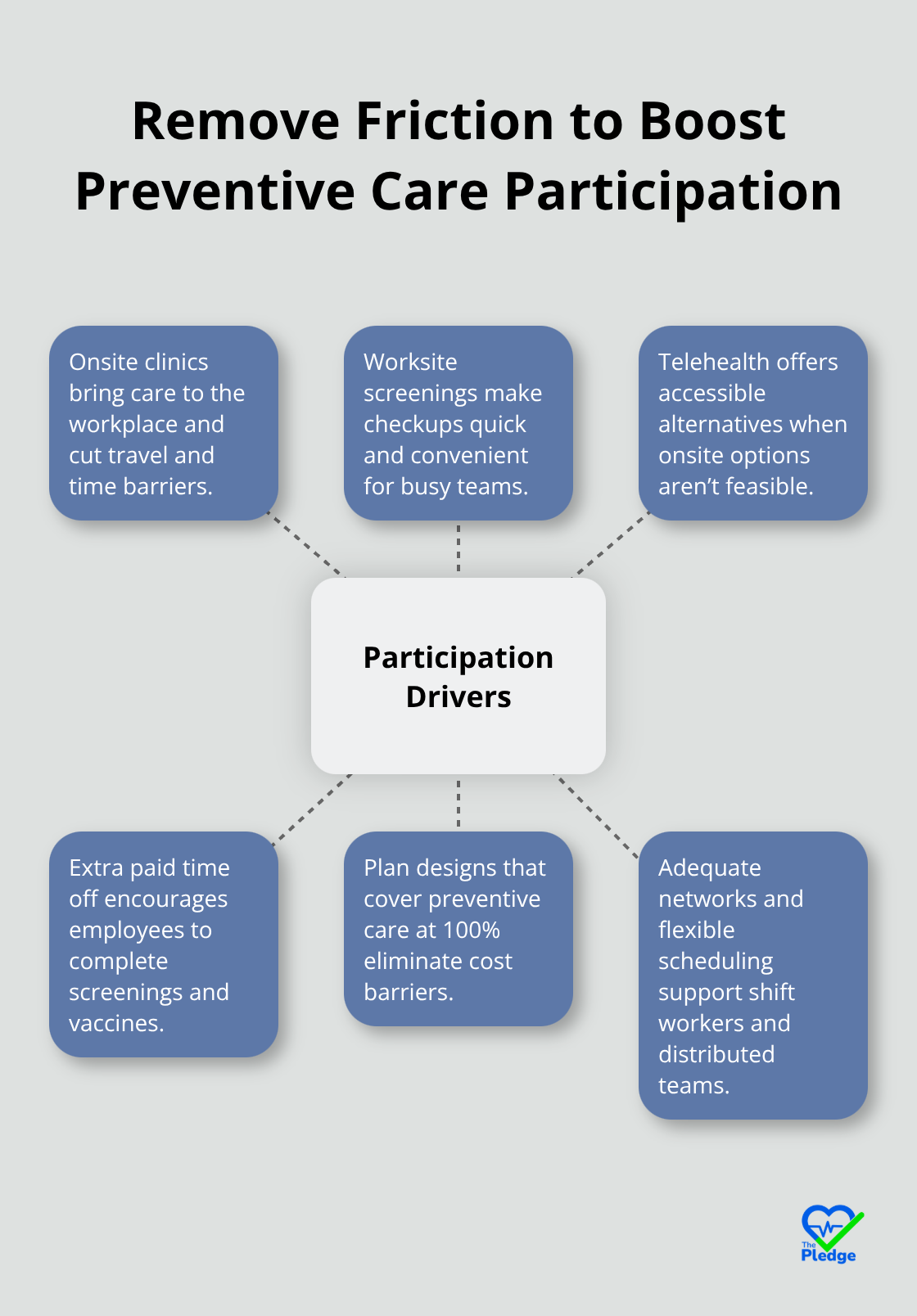
Organizations that offer extra paid time off for screenings, vaccines, and doctor visits see measurable increases in participation compared to those that don’t.
Plan design directly influences behavior. High-deductible health plans paired with health savings accounts work when preventive care is covered at 100% with no deductible or copay. This removes the cost barrier that causes people to skip screenings. Your network matters as well. Plans with enough providers in your employees’ locations and robust telehealth options reduce wait times and make scheduling realistic for shift workers and distributed teams. The U.S. Department of Health and Human Services confirms that preventive care reduces disease risk, disability, and death, but only if people actually access it.
Tailor Programs to Your Actual Workforce
Personalized health assessments separate effective programs from checkbox exercises. Start with your claims data to identify which conditions actually drive your costs and which preventive services your specific workforce skips most often. Kaiser Family Foundation research shows the most commonly delayed services are dental work (35%), vision care (25%), doctor visits (24%), and mental health care (18%). Your workforce may look different. Once you know what your employees are avoiding, design interventions around those gaps.
Financial incentives shift behavior. Lower premiums or bonuses for completing screenings work, but only when paired with access. Education and communication form the foundation. Balance digital outreach with direct personal contact and involve employees in wellness design through focus groups. Track engagement with actual preventive care services, not just app clicks or email opens. Measurement matters-count increases in preventive care claims and program uptake after reminders.
Centralize Information to Eliminate Complexity
Integration with existing health plans removes complexity. Employees shouldn’t navigate multiple systems to understand coverage, schedule screenings, or access results. Centralized platforms that combine benefits information, claims data, and scheduling tools increase participation. Fragmentation stops employees from taking preventive action, so consolidating these touchpoints directly addresses the barriers that prevent people from moving forward. The right platform provides real-time reminders and personalized health dashboards that keep preventive care top-of-mind without adding administrative burden to your team.
Measuring Prevention Works
Focus on Health Outcomes, Not Vanity Metrics
Measuring preventive care success requires tracking the right metrics, not program clicks or screening attendance rates. Most employers measure wellness program engagement, which tells you nothing about whether prevention actually changed health outcomes or reduced costs. The real question is whether employees completed screenings, followed up on findings, and improved their health as a result. Among manufacturing participants on health platforms, 71% engaged with targeted health behaviors including blood pressure management, stress reduction, and physical activity. More importantly, 30% of participants moved from struggling to thriving health status between 2024 and 2025. Financial wellbeing among the same group showed 73% thriving, with 37% moving from struggling to thriving in just one year.
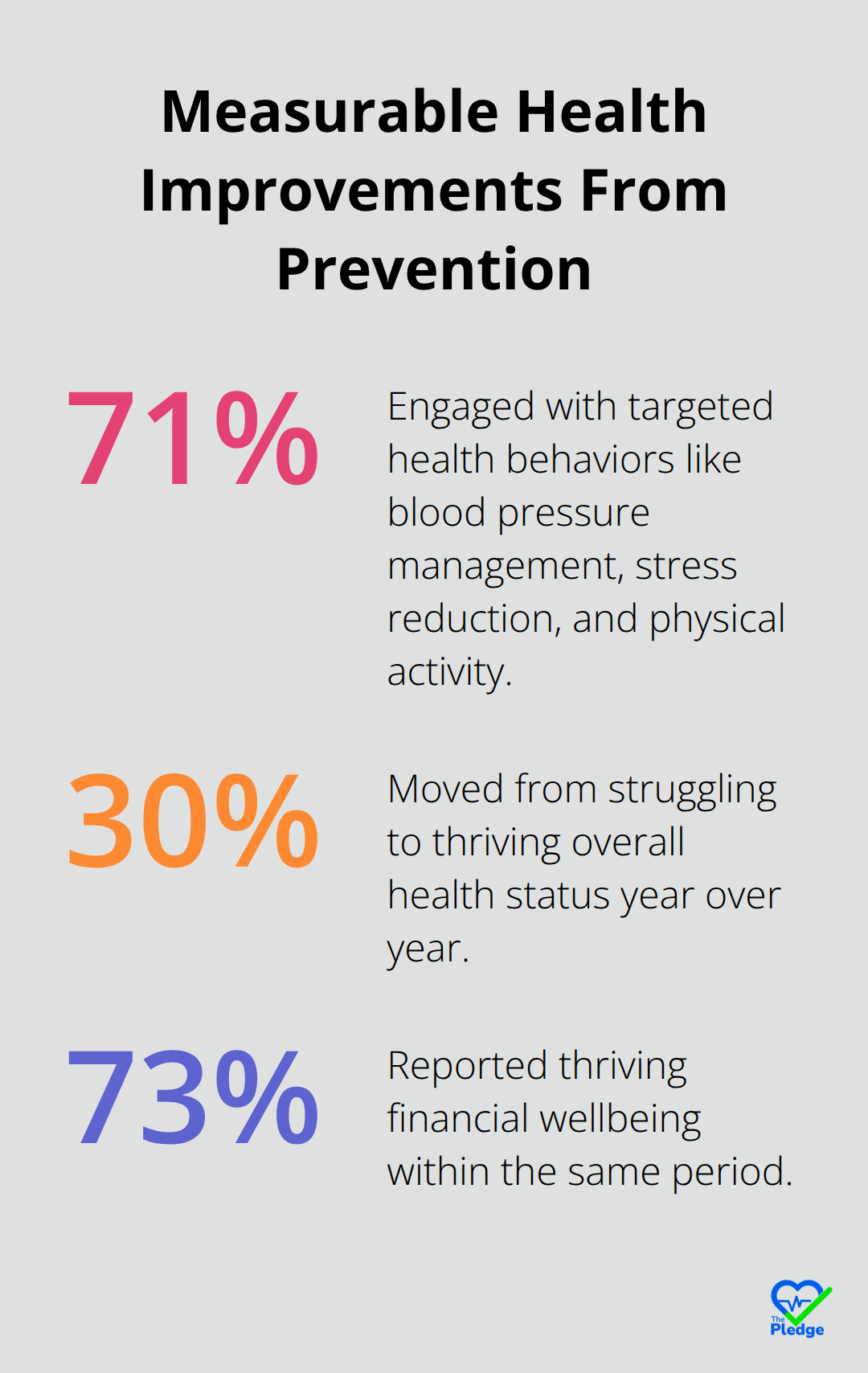
These represent actual health improvements tied to preventive action, not engagement metrics.
Track Three Categories That Predict ROI
First, measure preventive care claim rates before and after program launch. Count the number of employees who complete annual physicals, screenings, vaccinations, and mental health assessments. When KFF data shows 18% of adults delay mental health care due to cost, your job is proving that your program closes that gap. Second, monitor healthcare cost trends in high-risk populations. Diabetes costs employers 2.6 times more per employee than managing non-diabetic populations, so identify employees with pre-diabetes through screening and measure whether intervention reduces progression to full diagnosis. Third, measure engagement with actual preventive services, not program awareness. This means tracking how many employees scheduled follow-up appointments after screenings, filled prescriptions for identified conditions, and participated in condition-specific programs.
A program showing 80% of screened employees with elevated blood pressure attending a hypertension management program generates measurable ROI. One showing 80% of employees clicked an email link about blood pressure does not. The distinction separates programs that transform health from programs that waste budget.
Calculate Cost Savings From Prevention
Cost savings emerge from reduced emergency department visits, fewer hospitalizations, lower medication costs from early intervention, and decreased absenteeism. Manufacturing companies allocate only 2% of their $250 billion annual benefits spend to wellbeing programs, leaving enormous savings on the table. A single prevented hospitalization for unmanaged hypertension saves $5,000 to $15,000 in direct costs plus productivity recovery. When your preventive program catches five cases of early-stage disease per 1,000 employees annually, the math becomes undeniable for leadership approval. These concrete numbers transform prevention from a nice-to-have into a financial imperative that executives understand and fund.
Final Thoughts
Prevention fundamentally shifts how organizations approach employee health and transforms workplace culture in the process. Employees feel valued when their employer invests in stopping disease before it starts rather than managing illness after the fact, and this cultural shift reduces stigma around health conversations while increasing trust in leadership. Manufacturing companies spend $250 billion annually on employee benefits yet allocate only 2% to wellbeing programs, leaving billions in preventable costs on the table that employee preventive care programs can recover.
The financial case for prevention is undeniable and demands immediate action from leadership. A single prevented hospitalization saves $5,000 to $15,000 in direct expenses plus productivity recovery, and when your programs catch early-stage disease, reduce emergency department visits, and lower medication costs through intervention, the impact becomes impossible to ignore. Organizations that implement data-driven prevention see measurable improvements in healthcare costs, absenteeism, and retention within the first year by analyzing claims data to identify cost drivers, removing friction through onsite screenings and telehealth access, and measuring real health outcomes rather than engagement metrics.
Fragmented health information stops employees from taking preventive action, which is why centralized platforms that integrate medical information with benefits and real-time health metrics send personalized reminders that keep preventive care top-of-mind. Prevention isn’t a future initiative-it’s the only financially rational choice for employers ready to transform their workforce health today.