
Employee wellness programs have become a competitive advantage for companies serious about retention and productivity. We at The Pledge have seen firsthand how the best employee wellness programs combine personalized health tracking, mental health support, and measurable fitness outcomes.
The difference between average programs and exceptional ones comes down to implementation. This guide walks you through what top employers are actually doing, how to evaluate solutions, and how to measure real impact on your bottom line.
What Separates Effective Programs From the Rest
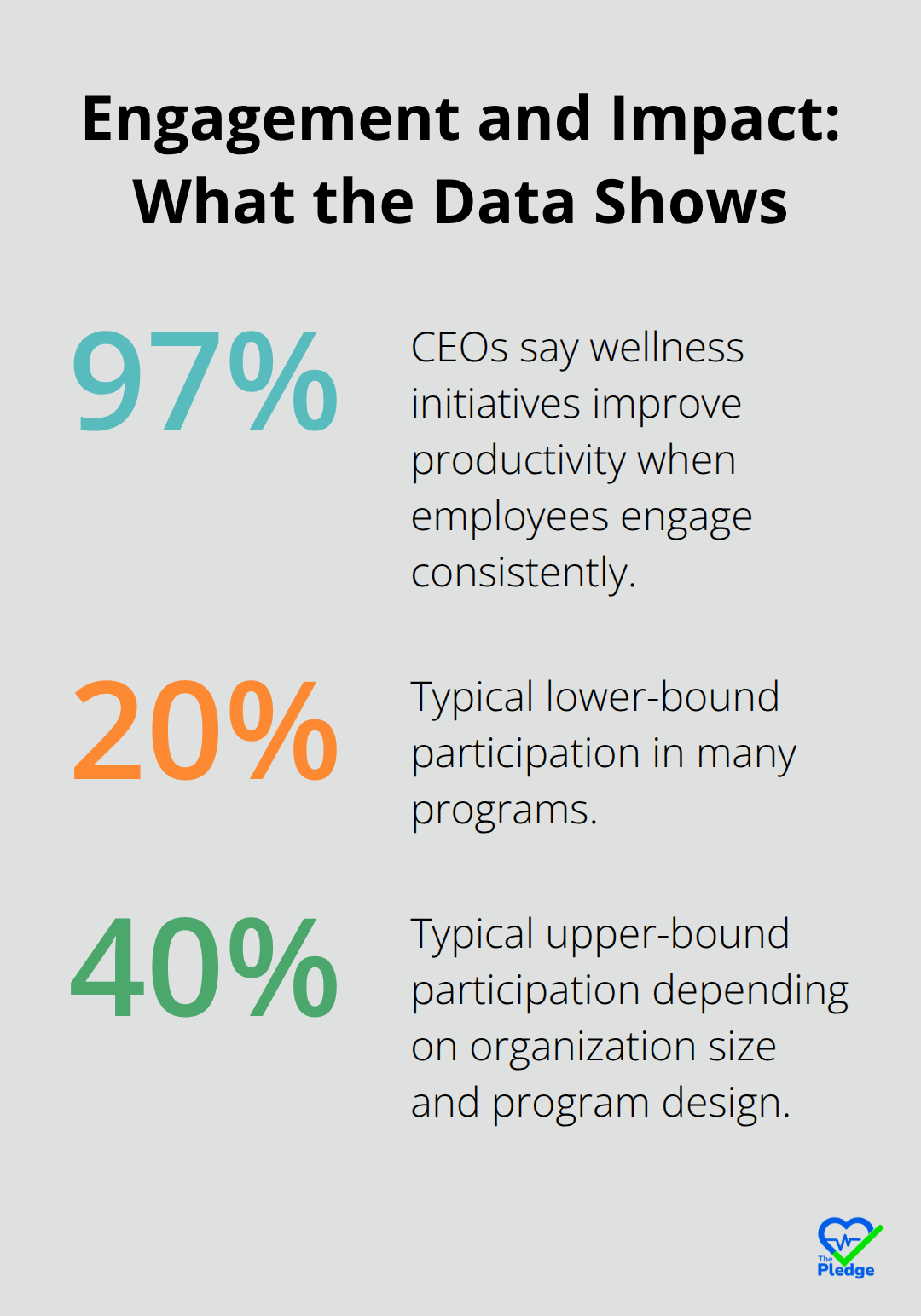
Effective wellness programs share three non-negotiable elements: they track individual health data in ways that matter, they connect seamlessly with existing benefits rather than creating duplicate systems, and they drive real participation through incentives people actually value. The data backs this up. According to the Return on Wellbeing 2025 report, 97% of CEOs say wellness initiatives improve productivity, but only when employees engage consistently. The problem is that most programs sit unused. Participation typically ranges from 20% to 40%, depending on organization size and program design.
This gap between availability and adoption reveals the real issue: programs fail not because they lack features, but because they ignore how employees actually behave.
Personalization Beats One-Size-Fits-All
Generic wellness programs treat all employees as identical, which guarantees low engagement. Top employers instead start by understanding what their workforce actually needs. Synchrony uses one-on-one well-being coaching to create personalized wellness plans tailored to individual circumstances. This approach works because it acknowledges that a 25-year-old engineer has different health priorities than a 55-year-old manager. Employees with five or more check-ins per month saw healthcare costs drop, while non-users experienced a 14% increase. That spread demonstrates the power of frequent, personalized touchpoints. Move beyond annual health screenings and instead create systems that deliver personalized recommendations throughout the year. Real-time engagement platforms that send contextual reminders about preventive care, medication refills, or fitness goals produce measurably better outcomes than static benefit documents.
Integration With Existing Systems Eliminates Friction
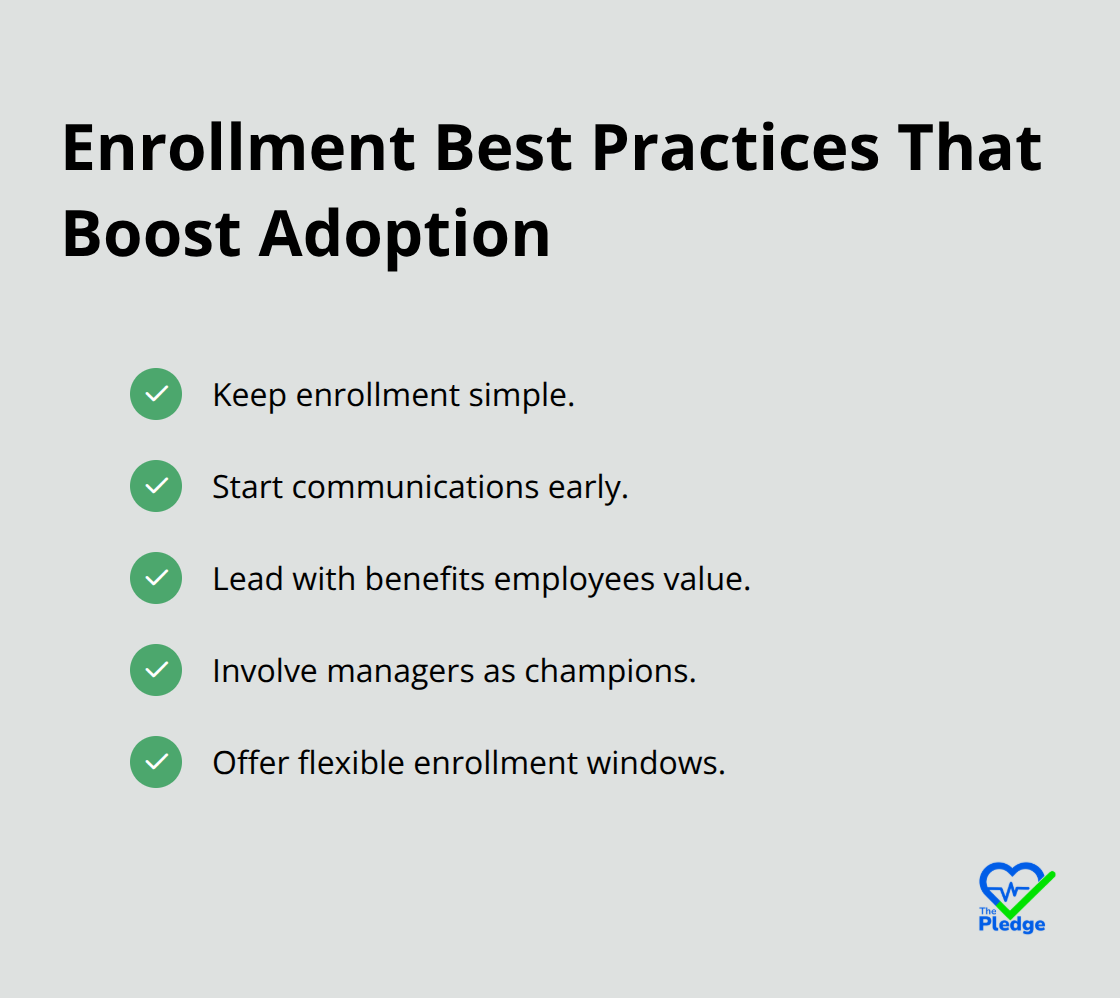
Employees won’t adopt a wellness program that requires logging into five different apps or remembering separate passwords. Integration with existing health plans centralizes health data and provides real-time updates and reminders within a single platform. This matters because adoption barriers are real. Gartner research emphasizes that lowering barriers to entry for wellness programs is critical: clearly explain benefits, reduce stigma, and minimize time and effort required to participate. When EY created a 24/7 hotline and centralized online resources for counseling referrals and childcare support, accessibility became the driver of use. Enrollment best practices also matter. Keep enrollment simple, start communications early, lead with benefits, involve managers as champions, and offer flexible enrollment windows. Financial incentives alone won’t move the needle-about 61% of large employers found incentives to be not effective or only somewhat effective.
Instead, make participation frictionless and recognition visible. First American Financial’s peer and manager recognition platform reinforces well-being through social proof, which drives sustained engagement far better than one-time bonuses.
What Drives Real Adoption
The Return on Wellbeing 2025 report reveals that 61% of employees in organizations with wellness programs say they’re happy at their company, compared with 36% without. This happiness gap doesn’t happen by accident. It results from programs that remove friction and create visible value. Carta enforces a minimum time-off policy (at least 15 days per year) while keeping unlimited PTO and sick leave afterward, signaling that rest matters. Adobe’s Welcome Back program supports employees returning from extended leave with transition plans and potential flexible arrangements to preserve psychological safety. These examples show that adoption rises when programs address real employee concerns-not hypothetical ones.
The next section explores the specific solutions top employers implement to move from theory to measurable results.
Wellness Solutions Top Employers Are Using
Top employers have moved past generic wellness offerings and invested in three specific areas that drive measurable health improvements and cost reduction.
On-Site Preventive Care Removes Access Barriers
The first critical investment is on-site preventive care infrastructure that eliminates friction from accessing basic health services. Sheetz operates Shwellness Centers, providing free on-site medical care, fitness coaching, nutrition advice, group classes, and mental health support with virtual options for remote staff. The Breakers delivers preventive health screenings-mammography, skin cancer checks, and dental exams-directly during shifts, so employees access care without scheduling appointments outside work hours. This approach works because it treats prevention as a service employees can reach without disrupting their workday. Organizations that remove access barriers see participation rates climb significantly, which translates directly to earlier disease detection and lower downstream costs.
Mental Health Support Prevents Costly Turnover
The second critical area is mental health support embedded directly into the workplace. Burnout-driven turnover costs organizations 15% to 20% of payroll annually, making mental health investment essential for financial performance. Top employers pair crisis resources with proactive stress management. EY’s integrated employee assistance and life-management services operate a 24/7 hotline offering counseling referrals, child and elder care resources, and daily-life support. Recognition-led wellness programs cut burnout significantly, with up to 90% fewer employees reporting burnout always or very often. Employees who receive the right amount of recognition show at least a 50% lower likelihood of burnout. This combination of immediate support and ongoing recognition creates environments where employees feel valued and supported.
Fitness and Nutrition Programs Tied to Health Outcomes
The third area is fitness and nutrition programs linked directly to health outcomes rather than participation counts. Wellhub users with five or more check-ins per month saw healthcare costs drop 21% annually after implementation, while non-users experienced a 14% increase, creating a 35% spread in cost performance. This data matters because it proves that frequency of engagement, not program breadth, determines financial impact. Experian connects financial wellness directly to health by offering the Sharesave Plan with discounted company shares plus financial planning, mortgage advice, and debt management. Organizations that measure outcomes in cost reduction and health improvement-not program features or enrollment numbers-build programs that sustain engagement over time.
What Separates Measurement From Guesswork
The pattern across all three areas is identical: effective solutions measure outcomes in cost reduction and health improvement. Programs that track only participation rates miss the real story. Programs that track health metrics and cost trends reveal which interventions actually work. The employers leading this space invest in platforms that centralize health data, send personalized reminders based on individual health profiles, and integrate seamlessly with existing benefits systems. This integration matters because fragmented systems create friction, and friction kills adoption. When employees navigate multiple apps, multiple logins, and disconnected data, engagement collapses. Centralized platforms that pull data from existing health plans and present it in one place remove that friction entirely.
The next section walks you through how to evaluate and implement a wellness platform that delivers these results for your organization.
How to Pick the Right Wellness Platform for Your Organization
Start by mapping your current workforce health landscape before you evaluate any platform. This means moving beyond hunches and actually collecting data on what your employees face. Run a brief health survey that asks about current health concerns, barriers to accessing care, and which benefits they actually use. According to the Return on Wellbeing 2025 report, wellness programs surface the bottom-line returns CEOs hope to see: reduced absenteeism, increased productivity, and higher morale. A manufacturing company with an aging workforce needs different solutions than a tech startup with younger employees. The survey should also ask which benefits employees currently ignore and why. If your team reports that they can’t access childcare resources during work hours, a fitness app won’t solve that problem. This diagnostic phase typically takes two weeks and requires minimal resources-just a short online survey and one follow-up conversation with department heads about patterns they’re seeing.
Evaluate Platforms on Three Success Predictors
Once you understand your workforce needs, evaluate platforms on three criteria that actually predict success. First, demand seamless integration with your existing health plan and benefits system. Wellhub can launch in under 30 days with administrative time of just 15 minutes monthly, which matters because slow rollouts kill momentum. The platform should pull data directly from your current health plan rather than create a separate data silo.
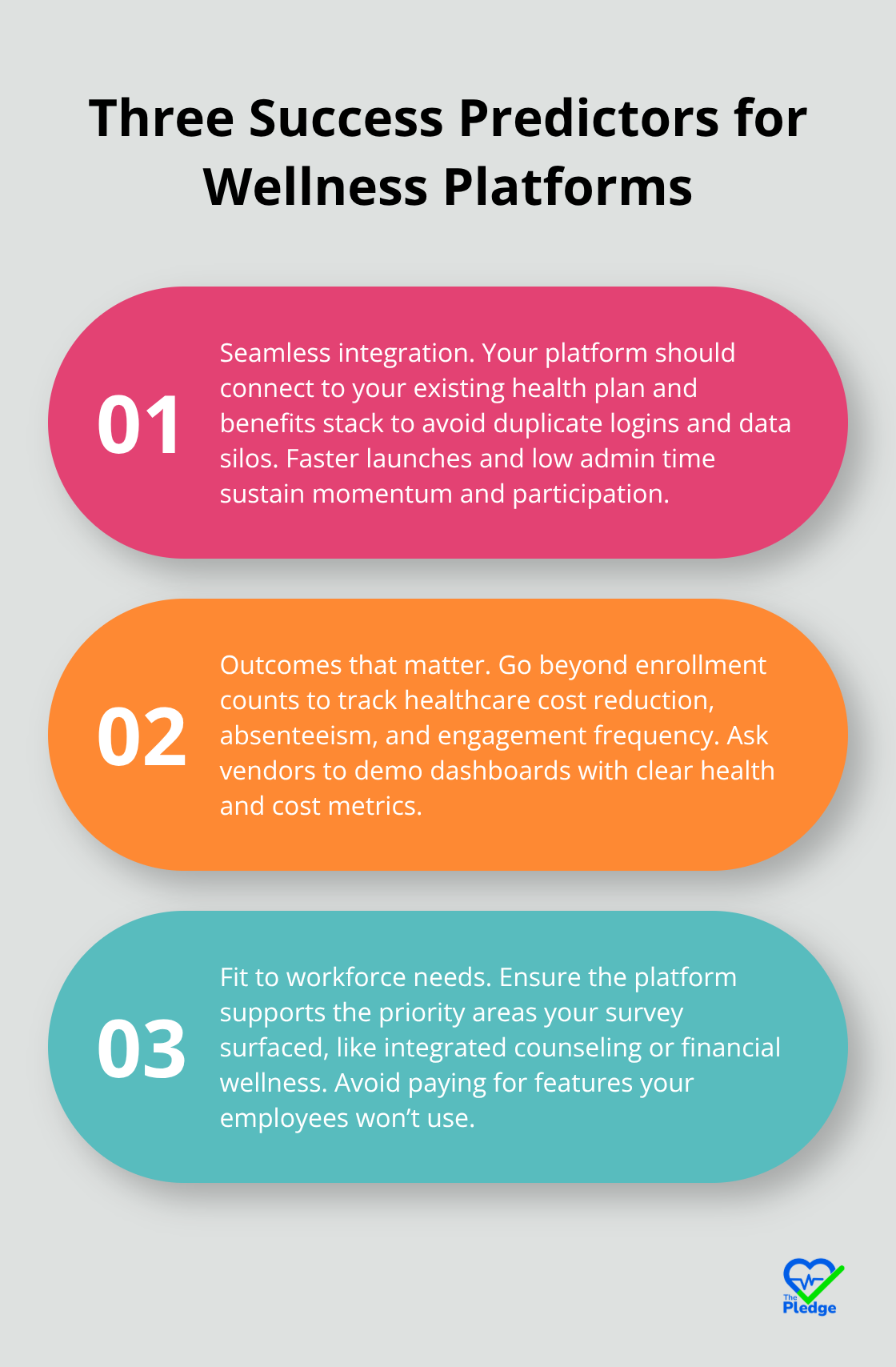
Second, assess whether the platform tracks outcomes that matter to your business-healthcare cost reduction, absenteeism rates, and engagement frequency-not just enrollment numbers. Ask vendors to show you their measurement dashboard and specify exactly which health outcomes and cost metrics they track. Third, verify that the platform supports the specific solutions your workforce needs. If your survey identified mental health as a priority, the platform must include integrated counseling access or crisis support. If financial stress emerged, look for tools that connect financial planning to health outcomes. Avoid platforms that excel at features you don’t need.
Speed Your Launch to Build Momentum
Implementation pace directly affects whether your program gains traction or stalls. Slow rollouts allow skepticism to build and employees to revert to old habits. A Wellhub program can go live in under 30 days, and this matters because faster launches correlate with higher participation. When you announce the program, start communications immediately and lead with the benefits employees actually care about-not the features. Involve your managers as champions during the rollout. Managers who understand the program and actively encourage their teams drive adoption far more effectively than top-down mandates. Offer flexible enrollment windows rather than a single deadline. Some employees need more time to understand the value, and forcing a compressed window creates unnecessary friction. The Wellhub co-payment model with monthly payments starting at $11.99 per month in the US also gives employees flexibility to pause, cancel, or switch anytime, which reduces enrollment hesitation because employees don’t feel locked in.
Track Outcomes That Move Your Business
After launch, measure what actually moves your business forward. But this only happens when you measure the right outcomes. Track healthcare cost changes year-over-year, comparing participants to non-participants. Track absenteeism rates and turnover in participating versus non-participating groups. Track engagement frequency-how many times per month employees actually use the platform. Platforms that achieve high engagement rates through personalized reminders and seamless integration demonstrate that engagement metrics directly correlate with cost outcomes. Set a baseline in month one, then review results quarterly. If engagement sits below 20% after three months, something in your program design isn’t working. The most common culprit is poor integration-employees are logging into multiple systems instead of one. Fix that immediately. If engagement exceeds 30% but healthcare costs aren’t declining, your program may not address the specific health issues that drive your costs. Adjust the program focus on what the data reveals, not what you assumed at the start.
Final Thoughts
Effective employee wellness programs succeed because they address real employee needs with measurable outcomes, not because they offer the most features. The best employee wellness programs share three core characteristics: they integrate seamlessly with existing benefits to eliminate friction, they track health metrics and cost reduction rather than enrollment numbers, and they personalize recommendations based on individual health profiles. When these elements work together, organizations see healthcare costs decline, absenteeism drop, and employee happiness rise from 36% to 61% compared to companies without programs.
The financial case is equally compelling. CEOs report that 78% of wellness programs deliver ROI greater than 50%, with roughly one-third seeing returns above 100%. Productivity gains alone justify the investment, with 97% of CEOs reporting measurable improvements. Burnout-driven turnover costs 15% to 20% of payroll annually, and wellness programs that combine mental health support with recognition cut burnout by up to 90%.
Your next step is to start small and measure relentlessly. Run a brief health survey to understand what your workforce actually needs, then select a platform that integrates with your existing systems and tracks outcomes that matter to your business. We at The Pledge centralize health data and send personalized reminders that drive the engagement frequency required for real cost reduction.





![[Guide] Incentives That Drive Preventive Health Participation](https://thepledge.app/wp-content/uploads/emplibot/Guide_-Incentives-That-Drive-Preventive-Health-Participation_1783650286-300x168.jpeg)