

Employee healthcare costs have reached $13,800 per worker annually, while workplace stress affects 83% of American employees. Companies implementing comprehensive wellness initiatives see 25% reductions in sick leave and $3.27 return for every dollar invested.
At The Pledge, we’ve analyzed the most effective strategies that transform employee wellbeing. The benefits of workplace wellness programs extend far beyond cost savings to create healthier, more productive teams.
What Are Workplace Wellness Programs
Workplace wellness programs represent structured health initiatives that address the complete spectrum of employee wellbeing through preventive care, mental health support, and lifestyle interventions. These programs combine biometric screenings, health risk assessments, fitness challenges, nutrition education, and stress management resources to create comprehensive health ecosystems within organizations. The most effective programs integrate technology platforms that centralize health data, provide personalized recommendations, and track progress across multiple health dimensions.
The Business Case for Wellness Investment
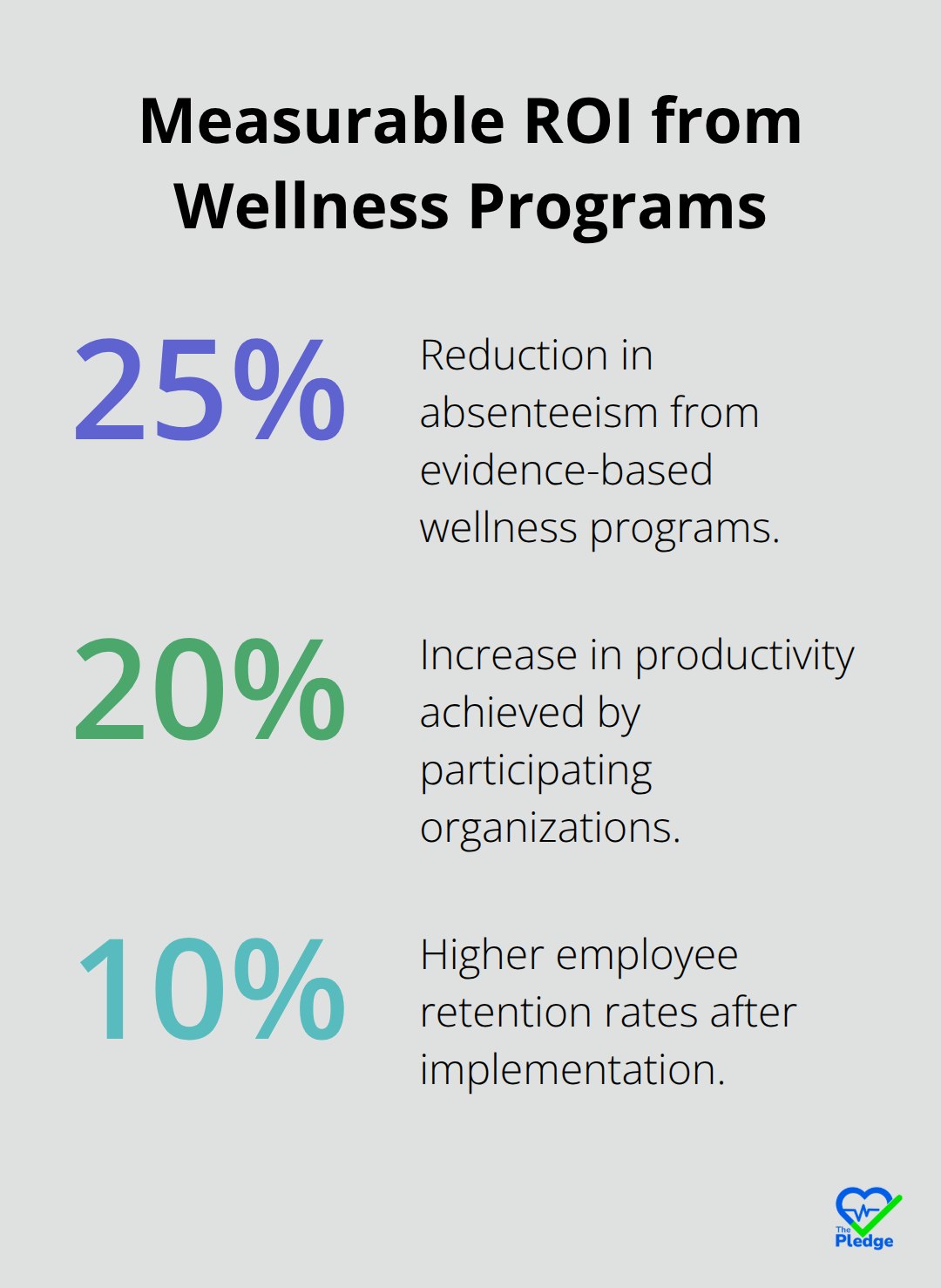
The financial impact of employee health challenges creates compelling business cases for wellness investments. The U.S. Department of Health and Human Services reports that 84% of workers experience workplace-related mental health challenges, while the American Psychological Association identifies emotional exhaustion and inadequate management support as primary burnout drivers. Companies that implement evidence-based wellness programs achieve measurable returns: organizations see 25% reductions in absenteeism, 20% productivity increases, and 10% higher retention rates according to multiple industry studies.
The U.S. Department of Labor estimates that employee turnover costs American businesses $1 trillion annually, which makes wellness programs strategic investments rather than optional benefits. Research from SHRM demonstrates that comprehensive wellness initiatives provide positive returns on investment, while Kaiser Family Foundation data shows these programs now cover over 50 million U.S. workers with revenues that have reached $8 billion since 2010.
Technology-Driven Health Management
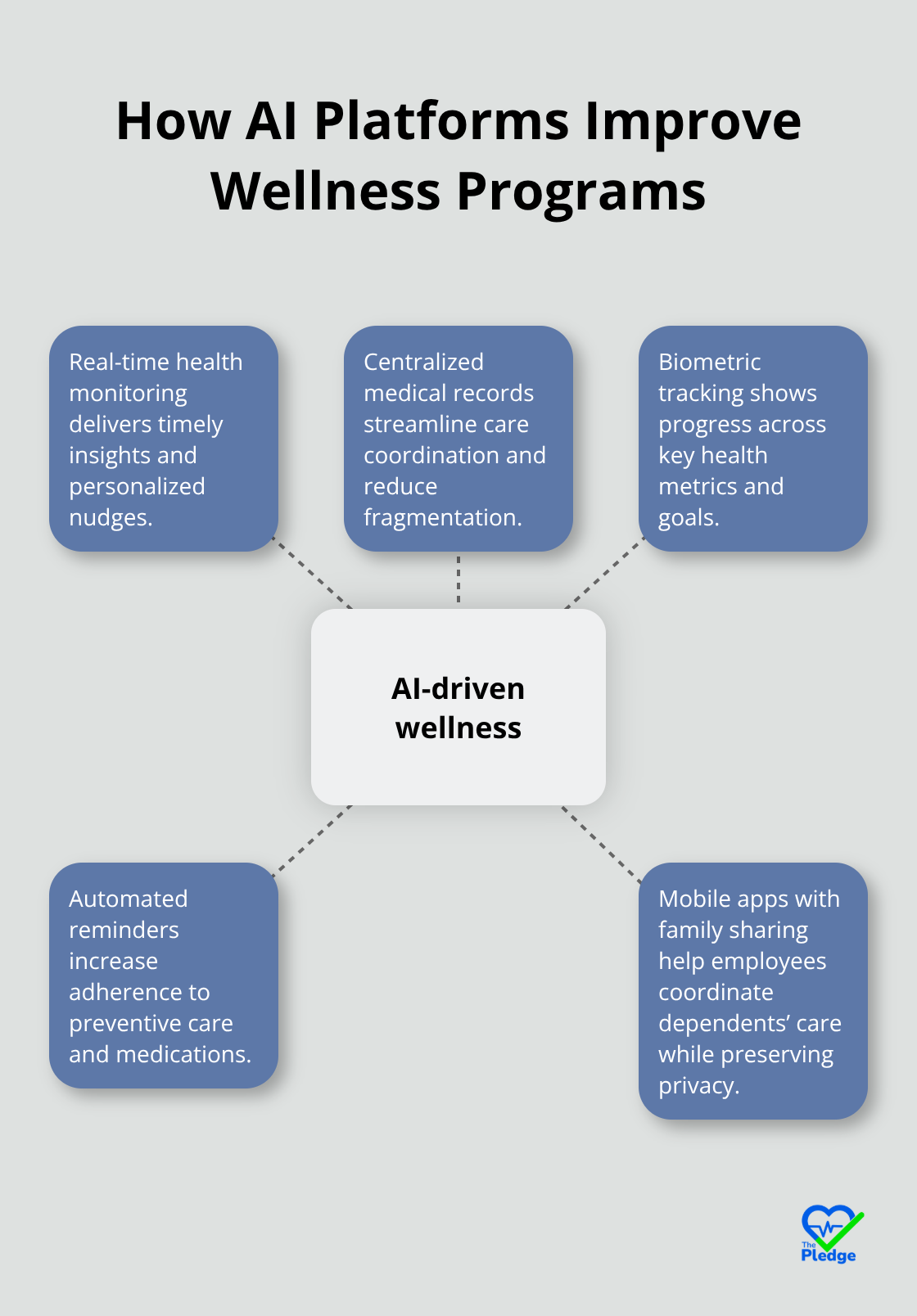
Modern wellness programs leverage AI-powered platforms that integrate with health plans to provide real-time health monitoring and personalized interventions. These systems centralize medical records, track biometric data, and send automated reminders for preventive care appointments and medication adherence. The most successful implementations include mobile applications with family sharing capabilities (which allow employees to coordinate care for dependents while maintaining privacy controls).
Program Effectiveness Metrics
Organizations achieve optimal results when they track specific metrics that include participation rates, health risk reduction, healthcare cost savings, and employee satisfaction scores. Companies with structured recognition systems report employees are 7 times more likely to have meaningful workplace connections, while recognition-led wellness programs reduce burnout reports by up to 90%. However, participation typically ranges from 20-40% according to RAND Corporation research (making engagement strategies essential for program success).
The next step involves understanding how to design these programs for maximum impact and employee participation.
How Do You Build Wellness Programs That Actually Work
Effective wellness program design starts with comprehensive health assessments that collect baseline data through biometric screenings, health risk questionnaires, and lifestyle evaluations. Organizations should partner with certified healthcare providers to conduct annual screenings that measure blood pressure, cholesterol, BMI, and diabetes risk factors. The most successful programs require mandatory participation in initial assessments while they offer financial incentives up to 30% of health insurance premiums (as the Affordable Care Act allows). Companies that implement structured programs see participation rates increase from 27% to over 85% when they combine meaningful incentives with convenient schedules.
Mental Health Integration Changes Everything
Mental health support must be embedded directly into wellness program architecture rather than treated as an add-on service. The U.S. Surgeon General’s Framework for Workplace Mental Health provides a foundation that workplaces can build upon, recommending that organizations integrate cognitive wellness programs, mindfulness training, and stress management resources into daily workflows. Organizations should provide immediate access to mental health professionals through telehealth platforms and employee assistance programs that offer 24/7 crisis support. Companies that prioritize mental health integration report significant improvements in overall employee wellness according to recent workplace studies. The most effective programs include paid mental health days, flexible work arrangements, and manager training on how to recognize burnout symptoms before they escalate.
Technology Platforms Drive Participation
Digital health dashboards that centralize medical records, track biometric progress, and provide personalized health recommendations generate 4x higher engagement rates than traditional wellness programs. These platforms should integrate seamlessly with existing health plans to automatically populate insurance benefits, medication lists, and provider networks while they maintain strict privacy controls. AI-powered systems that send automated reminders for preventive care appointments, medication adherence, and wellness activities increase program participation by 60% compared to manual outreach methods. The most successful implementations include mobile applications with family sharing capabilities that allow employees to coordinate care for dependents while they track collective health goals and achievements.
Program Structure Determines Success
Wellness programs achieve optimal results when they combine multiple intervention strategies rather than focus on single health initiatives. Organizations should establish clear participation requirements, create tiered incentive structures, and develop communication campaigns that highlight program benefits. The most effective programs include fitness challenges, nutrition education, smoking cessation support, and preventive care reminders that work together to address comprehensive health needs. Companies report higher success rates when they customize programs to address specific workforce demographics and health risks identified through initial assessments.
Leadership commitment and employee engagement tactics form the foundation that transforms wellness initiatives from optional benefits into integral parts of company culture.
How Do You Get Leadership and Employees On Board
Leadership commitment starts with presenting concrete financial data that demonstrates wellness program returns on investment. CEOs and executive teams respond to measurable outcomes: organizations that implement comprehensive wellness initiatives achieve $3 saved per $1 spent, while companies with structured recognition systems report employees are 7 times more likely to have meaningful workplace connections according to recent industry research. The most effective approach involves presenting a business case that highlights the $1 trillion annual cost of employee turnover that the U.S. Department of Labor documents, then positions wellness programs as strategic solutions rather than optional benefits.
Executive sponsors must allocate dedicated budgets, assign program ownership to senior leadership, and establish accountability measures that track participation rates and health outcomes. Companies that secure C-suite commitment before program launch achieve 85% participation rates compared to 27% for initiatives without executive backing.
Communication Strategies That Drive Participation
Successful wellness program communication requires multi-channel strategies that reach employees through email campaigns, intranet announcements, manager presentations, and peer testimonials. Organizations should launch programs with company-wide meetings that explain benefits, demonstrate technology platforms, and address privacy concerns that often prevent participation. The most effective campaigns include success stories from early adopters, regular progress updates, and transparent reports on program outcomes.
Companies that implement recognition-led communication strategies reduce burnout reports by up to 90% while they increase employee engagement across all wellness activities. Financial incentives work best when they represent meaningful amounts: the Affordable Care Act allows incentives up to 30% of health insurance premiums (but organizations achieve higher participation with smaller, frequent rewards rather than large annual bonuses).
Performance Metrics That Matter
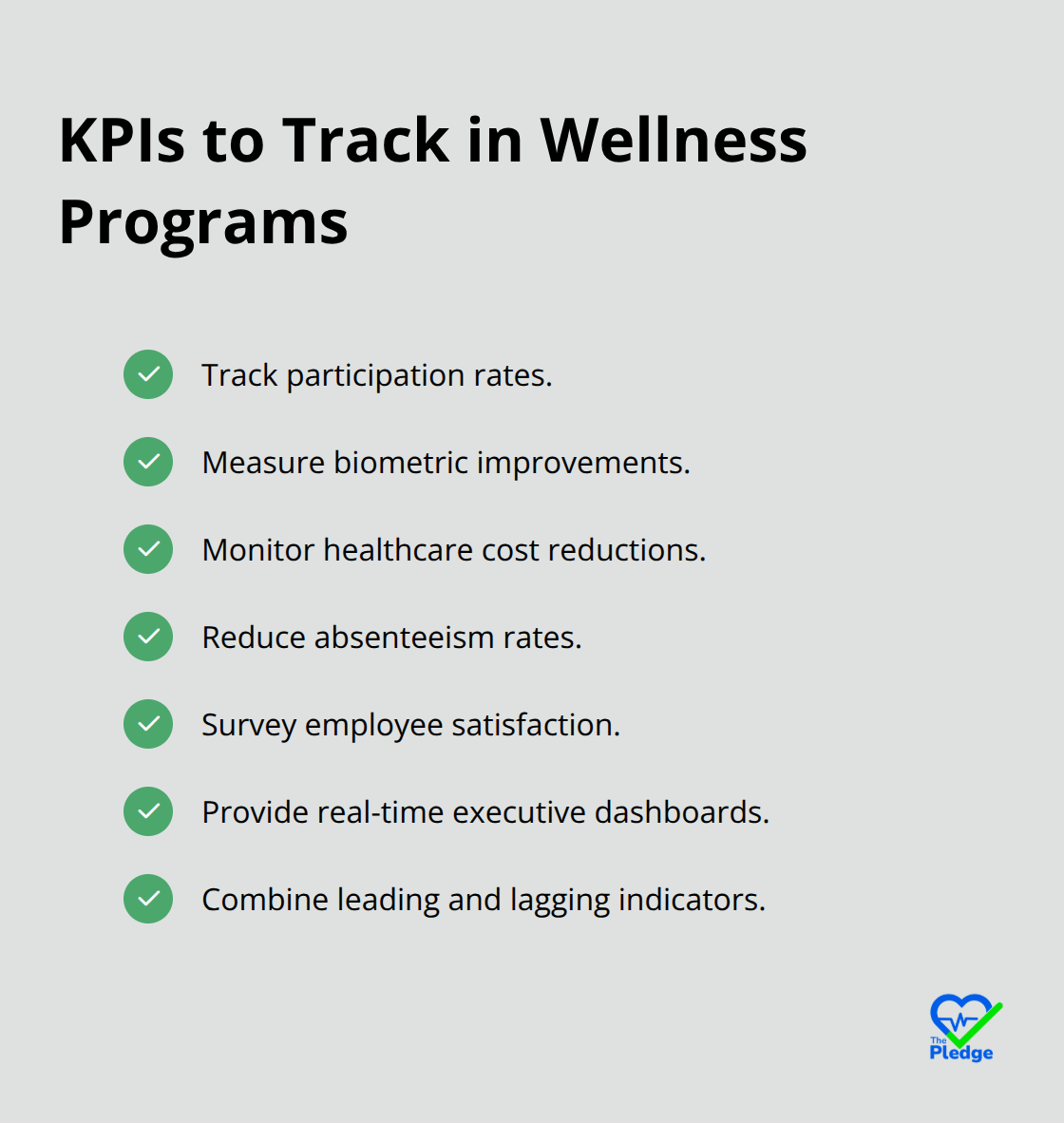
Organizations must track specific key performance indicators that include participation rates, biometric improvements, healthcare cost reductions, absenteeism decreases, and employee satisfaction scores. The most successful programs establish baseline measurements during initial health assessments, then monitor quarterly progress through automated systems. Companies should measure both leading indicators like program engagement and lagging indicators such as insurance claims data to understand program effectiveness.
Research shows that organizations with data-driven wellness programs achieve significant improvements in employee health outcomes which makes measurement systems essential for demonstrating value to leadership and securing continued funding for wellness initiatives. The most effective tracking systems provide real-time dashboards that executives can access to monitor program performance and make data-driven decisions about resource allocation.
Final Thoughts
The benefits of workplace wellness programs extend far beyond immediate cost savings to create lasting organizational transformation. Companies that implement comprehensive wellness initiatives achieve $3.27 return on every dollar invested while they reduce employee turnover costs that currently drain $1 trillion annually from American businesses. These programs address the reality that 84% of workers experience workplace-related mental health challenges and 83% face chronic workplace stress.
Future corporate health solutions will increasingly rely on AI-powered platforms that integrate seamlessly with health plans to provide real-time health data and personalized interventions. Organizations move toward comprehensive approaches that combine biometric screenings, mental health support, and technology-driven engagement strategies to achieve participation rates that exceed 85%. Companies that adopt these integrated systems position themselves to capture significant returns while they build healthier, more productive workforces.
Success requires three essential steps: secure executive commitment with concrete ROI data, implement comprehensive health assessments that establish baseline metrics, and deploy technology platforms that centralize health information. The Pledge provides AI-driven health management that simplifies care navigation for employees and their families (while achieving higher industry engagement rates). Organizations that act now transform their workplace culture and create competitive advantages through strategic wellness investments.