

Employee wellness programs cost companies billions annually, yet most organizations struggle to prove their financial value. Calculating ROI for employee wellness programs requires tracking specific metrics beyond basic participation rates.
At The Pledge, we’ve seen companies achieve 300% returns when they measure the right data points. This guide shows you exactly how to calculate meaningful ROI using proven methods that account for healthcare savings, productivity gains, and retention benefits.
Understanding ROI Metrics for Employee Wellness Programs
Healthcare claims provide the most measurable ROI component for wellness programs. Companies save an average of $1,421 per participant in medical claims when they implement comprehensive wellness initiatives. Johnson & Johnson documented a $250 million reduction in healthcare costs over ten years through their wellness programs and achieved a return of $2.71 for every dollar invested between 2002 and 2008. These savings result from reduced emergency room visits, fewer chronic disease complications, and decreased prescription drug costs.
Direct Healthcare Cost Reductions
Medical claim reductions represent the most tangible financial benefit. Companies track specific health metrics like blood pressure levels, cholesterol readings, and diabetes management indicators. Johnson & Johnson reduced employee smoking rates by two-thirds since 1995, while cutting high blood pressure and physical inactivity rates by more than half. Organizations measure these improvements through biometric screenings and annual health assessments (typically conducted at program launch and yearly intervals).
Productivity Gains from Decreased Absenteeism
Sick days cost employers far more than direct wage replacement. The average employee absence costs companies $3,600 annually when organizations account for productivity loss, temporary staffing, and workflow disruption.
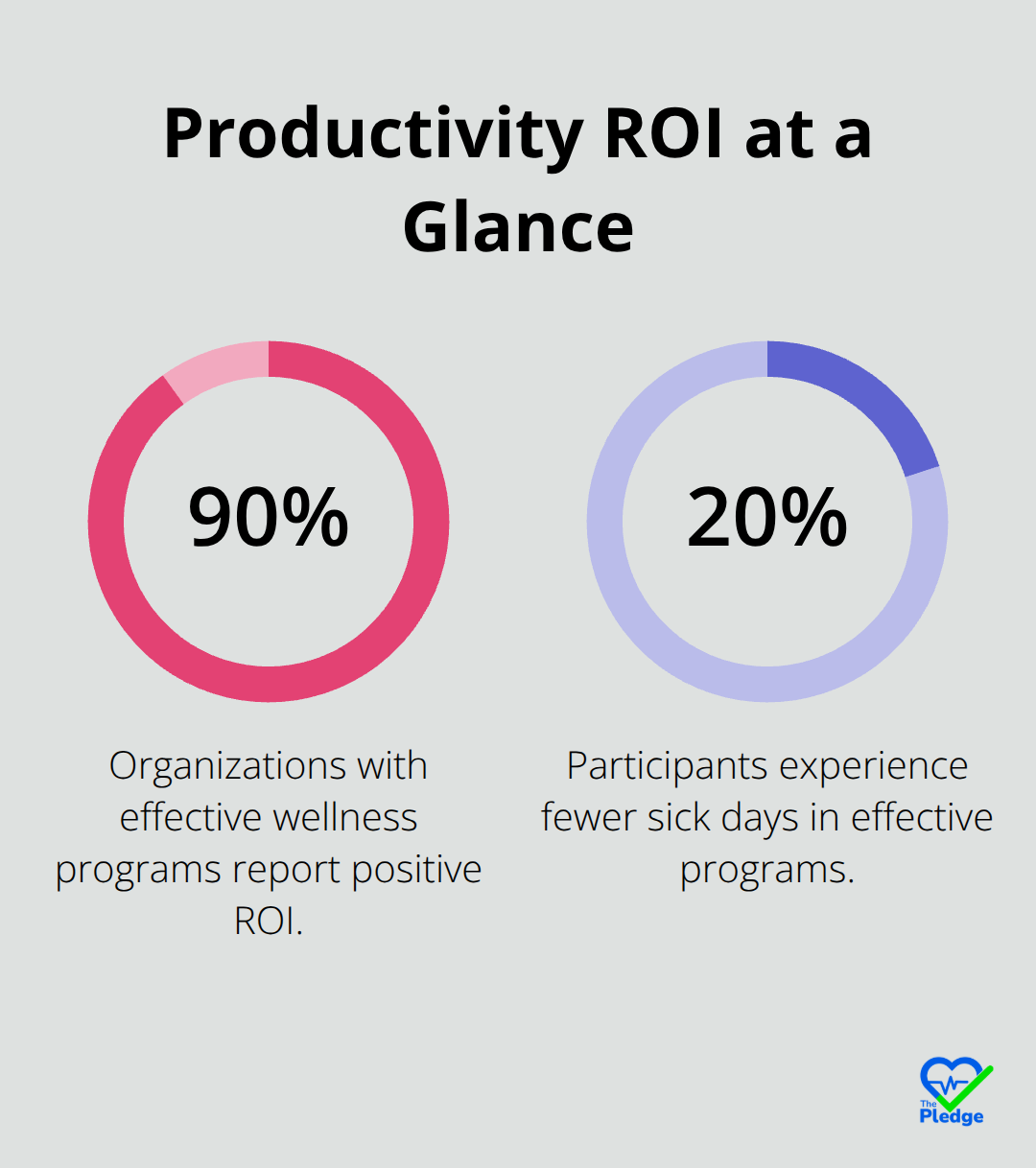
Organizations with effective wellness programs report 90% positive ROI, with healthcare cost reductions of $3.27 for every dollar invested and 20% fewer sick days among participants. Companies that prioritize employee wellness see productivity improvements worth $30 per employee monthly, as documented by the World Health Organization.
Retention Benefits and Reduced Turnover Costs
Employee replacement costs range from 20% to 213% of annual salary according to Bureau of Labor Statistics data. A $50,000 employee costs between $10,000 and $106,500 to replace when companies factor recruitment, training, and productivity ramp-up time. Companies with strong wellness programs report 25% lower turnover rates. The retention impact often generates larger financial returns than healthcare savings, particularly for skilled positions where replacement costs exceed $75,000 per departure.
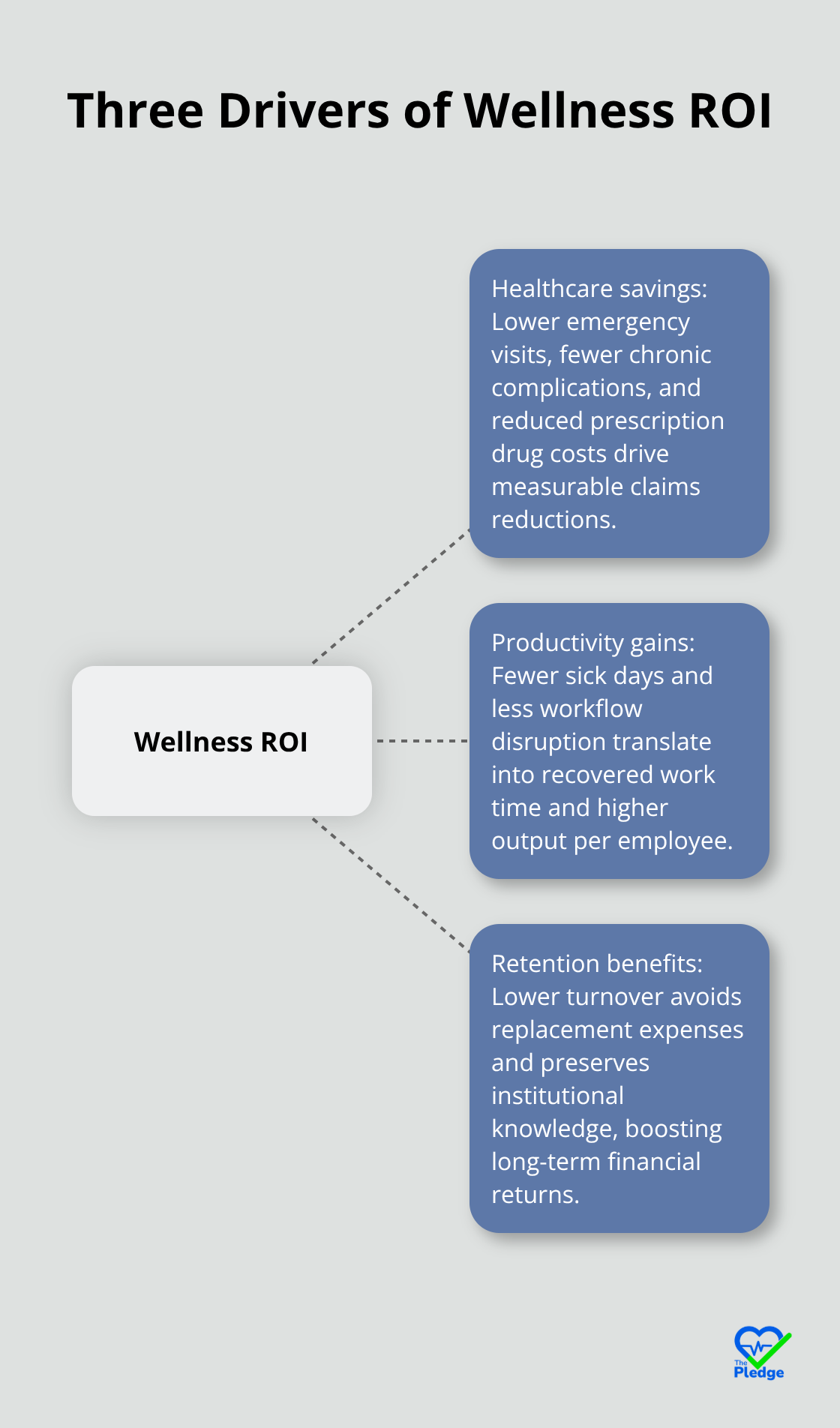
These three core metrics form the foundation for accurate ROI calculations, but proper measurement requires systematic data collection and baseline establishment.
Step-by-Step ROI Calculation Method
Successful ROI calculations start with collecting 12 months of pre-program data across three areas: healthcare claims, absenteeism records, and turnover statistics. Companies need baseline medical costs per employee, average sick days taken monthly, and annual departure rates by department.
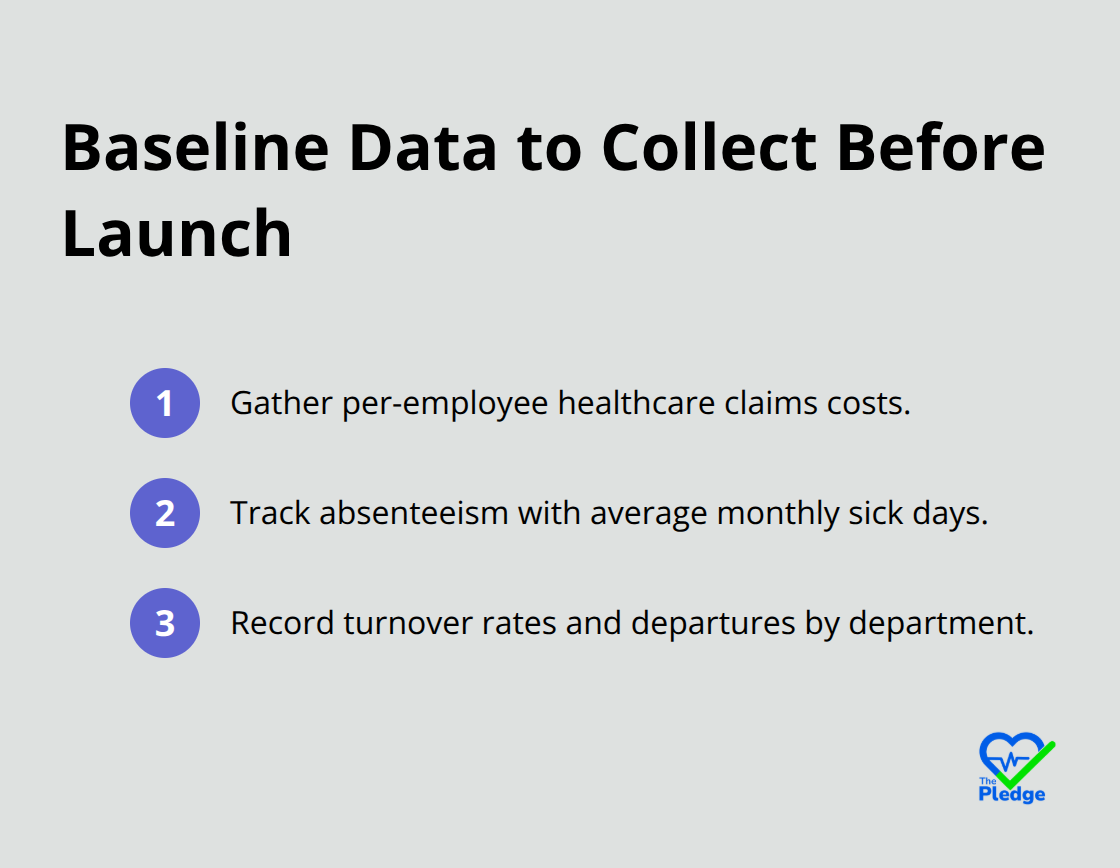
Organizations should gather this data from HR systems, insurance carriers, and payroll platforms before they launch any wellness initiatives.
Establishing Baseline Health and Cost Data
Healthcare baseline data requires specific metrics from insurance carriers. Request per-employee-per-month costs, emergency room visit frequencies, prescription drug expenses, and chronic condition management costs. Track absenteeism through payroll systems and record both planned and unplanned absences separately. Document turnover costs when you calculate recruitment expenses, training investments, and productivity loss during replacement periods.
The Society for Human Resource Management reports average replacement costs at 50% to 60% of annual salary for most positions. The baseline period must represent normal business operations and exclude periods with unusual health events or major workforce changes.
Tracking Program Costs and Implementation Expenses
Organizations must record all wellness program expenses including platform subscriptions, biometric screening costs, incentive payments, and staff time allocated to program management. Implementation costs typically range from $150 to $1,200 per employee annually (depending on program scope). Companies should track both direct costs like software fees and indirect costs such as administrative time spent on program coordination.
Measuring Health Outcomes and Financial Impact
Track identical metrics monthly after program launch to identify trends and calculate returns. Compare healthcare claims data quarterly and measure reductions in emergency visits, prescription costs, and chronic disease complications. Monitor absenteeism rates monthly with focus on unplanned sick days among program participants versus non-participants.
Document retention improvements when you track departure rates and exit interview feedback related to wellness benefits. Companies typically see measurable healthcare savings, while absenteeism and retention improvements often appear within six to 12 months of implementation. However, accurate ROI calculations require careful attention to common measurement errors that can skew results.
Common ROI Calculation Mistakes to Avoid
Most companies sabotage their wellness ROI calculations before they begin to measure results. The biggest error involves focusing exclusively on immediate healthcare cost reductions while organizations ignore cumulative health improvements that compound over multiple years. Organizations expect dramatic savings within six months, but comprehensive wellness programs generate their highest returns between years two and five. Johnson & Johnson’s $250 million healthcare savings accumulated over a decade, not a single fiscal year. Companies that measure only first-year results miss 60% to 70% of total program value according to Harvard Business Review research.
Short-Term Measurement Destroys Accurate ROI Assessment
Wellness programs require 18 to 24 months to show meaningful healthcare cost reductions, yet 73% of companies evaluate ROI within 12 months. Behavioral changes like smoking cessation or weight management need sustained engagement to impact medical claims. Research demonstrates that worksite health and wellness programs can generate significant return on investment when measured appropriately, while those that used annual assessments showed negative or minimal returns. Realistic timeframes account for health improvement cycles and allow chronic condition management benefits to materialize.
Hidden Costs Inflate Program Expenses and Reduce Returns
Organizations consistently underestimate total program costs by 40% to 60% when they exclude administrative overhead, management time, and technology integration expenses. Direct platform fees represent only 30% of actual wellness program costs. Companies must track HR staff hours spent on program coordination, IT support for platform integration, and facility costs for on-site activities (including space rental and equipment). Internal communication expenses, incentive program management, and vendor relationship coordination add substantial hidden costs that distort ROI calculations when ignored.
Incomplete Cost Tracking Creates Misleading Financial Results
Successful ROI measurement requires capturing every program-related expense including biometric screening coordination, health fair organization, and employee time spent in wellness activities. Companies that fail to account for productivity loss during wellness activities overstate their returns by 25% to 35%. Accurate calculations include opportunity costs when employees attend health screenings during work hours, participate in fitness challenges, or complete health assessments. Organizations achieve reliable ROI data when they track both direct program investments and indirect operational impacts on business productivity (such as meeting delays and project timeline adjustments).
Final Thoughts
ROI for employee wellness programs demands systematic data collection, realistic timeframes, and comprehensive cost tracking. Companies that follow these best practices achieve measurable returns that average $2.71 to $3.27 for every dollar invested. The key lies in solid baseline data, complete program expense tracking (including hidden costs), and outcome measurement over 18 to 24 months rather than immediate results.
Organizations typically see initial productivity improvements within six months, healthcare cost reductions emerge between 12 to 18 months, and retention benefits compound over years two through five. Johnson & Johnson’s decade-long success demonstrates that sustained commitment produces the highest returns. Quarterly ROI assessments help companies track progress and adjust programs based on actual performance data.
Companies should expand measurement beyond healthcare costs to include productivity and retention metrics while investing in platforms that centralize health data for better tracking. The Pledge offers AI-powered technology that simplifies care navigation and integrates seamlessly with existing health plans. We help organizations achieve higher engagement rates while providing the comprehensive data needed for accurate ROI calculations.