
Workplace wellness programs have become a business necessity, not just a nice-to-have perk. Companies spend $13,000 per employee annually on healthcare costs, while poor workplace health drives down productivity by up to 35%.
The importance of health and wellness in the workplace directly impacts your bottom line. At The Pledge, we’ve seen organizations transform their culture and financial performance through strategic wellness initiatives.
What’s Really Happening with Workplace Health Today
Healthcare expenses have spiraled out of control, with chronic conditions accounting for 90% of the nation’s $4.9 trillion in annual health care expenditures according to the Centers for Disease Control and Prevention. Mental Health America’s 2024 report reveals that 75% of employees say work stress damages their sleep, jumping to 90% in unhealthy workplaces. Generation Z faces the worst conditions, with 70% reporting unhealthy workplace environments and 63% feeling unsafe to express opinions at work. Only 27% of employees learn about health benefits from their employers, while a mere 17% understand their compensation policies.
The Mental Health Crisis Hits Productivity Hard
The productivity impact is staggering. Research shows a clear relationship between health status and productivity loss, while absenteeism increases by 14-19% without proper wellness programs. Mental Health America’s survey of 75,000 employees shows that psychological safety directly correlates with productivity – employees who feel safe are 87% more likely to advocate for workplace improvements. The correlation between transparent management and employee wellbeing measures 0.778 (a strong statistical relationship), proving that communication failures cost real money.
Healthcare Costs Keep Rising Despite Investment
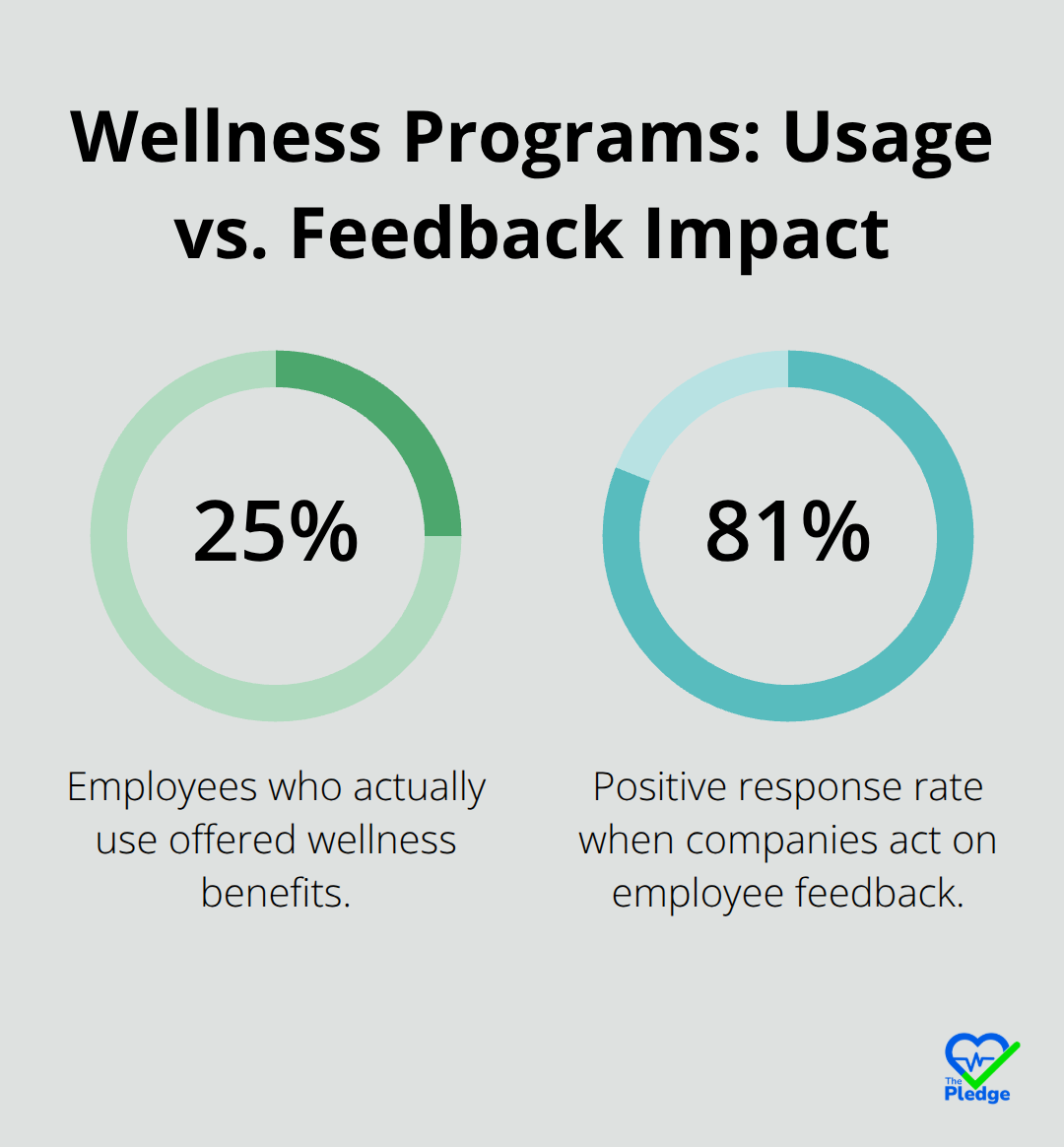
Employers now offer an average of 22 different wellness programs, with some providing over 50 options. Yet only 25% of employees actually use these benefits, creating a massive waste of resources. The problem isn’t lack of programs – it’s poor execution and communication. Companies that act on employee feedback see 81% positive response rates, but most organizations fail to close this loop effectively.
The Communication Gap Widens
This disconnect between program availability and employee engagement reveals a deeper issue. Organizations invest heavily in wellness infrastructure but neglect the foundation that makes programs work: clear communication and strategic implementation. The next step involves examining specific strategies that bridge this gap and create meaningful employee engagement.
What Works in Modern Workplace Wellness
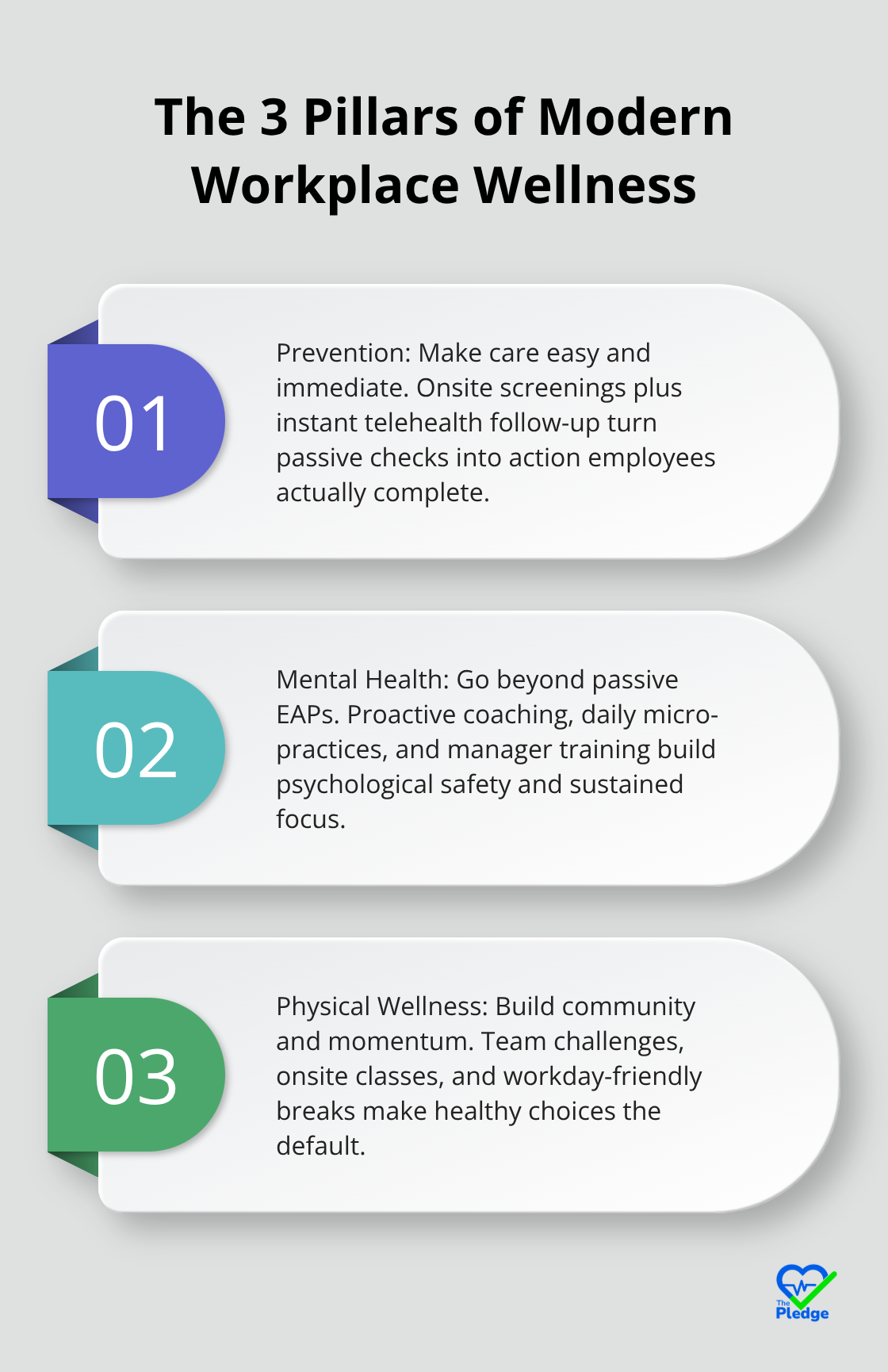
The gap between wellness program investment and employee participation demands a complete strategy overhaul. Organizations must abandon the scattershot approach of offering dozens of disconnected programs and focus on three integrated pillars that actually drive engagement and results.
Prevention Programs That Employees Actually Use
Effective preventative care starts with onsite health screenings that catch issues early and reduce long-term healthcare costs. Companies like Johnson & Johnson report significant healthcare savings from comprehensive screening programs. The key lies in making these screenings convenient and private – onsite facilities eliminate scheduling barriers while addressing the privacy concerns that keep many employees away from traditional wellness programs.
Pair screenings with immediate follow-up through telehealth services, which have seen substantial growth in recent years. This combination creates a seamless prevention pathway that employees actually follow through on. The immediate connection between screening results and actionable next steps transforms passive health checks into active wellness engagement.
Mental Health Support That Goes Beyond EAP
Employee Assistance Programs reach only 3-5% of eligible employees, making them virtually worthless for addressing widespread mental health issues. Replace passive EAP offerings with proactive mental health coaching and daily meditation breaks that improve mood and focus measurably. Companies using meditation platforms see significant reductions in stress-related absences within months of implementation.
Create psychological safety through transparent management practices. Research shows strong correlations between management transparency and employee wellbeing. Train managers specifically on mental health conversations rather than expecting them to figure it out independently. This proactive approach addresses the root causes of workplace stress instead of waiting for crisis intervention.
Physical Wellness Through Competition and Community
Walking challenges and step competitions generate higher participation rates than individual fitness programs, according to workplace wellness research. Corporate sports teams build camaraderie while addressing the sedentary work problem that affects most American workers. Onsite fitness classes and chair massages provide immediate stress relief that employees can experience during their workday, not after hours when they’re already exhausted.
The 20-20-20 rule for screen breaks prevents eye strain while creating natural movement opportunities throughout the day. These activities work because they integrate seamlessly into work schedules rather than competing with personal time. Physical wellness programs succeed when they become part of the work culture, not an addition to it.
These foundational strategies create the framework for employee engagement, but modern workplace wellness programs require sophisticated technology platforms to scale effectively and deliver personalized experiences that meet individual employee needs.
Technology Solutions That Transform Employee Health
Digital health platforms that connect with existing benefits systems achieve higher participation rates than standalone wellness apps. The key lies in platforms that centralize health data rather than create another disconnected tool employees must remember to use. Companies report significant improvements in preventative care adoption when employees access everything through one interface connected to their actual health benefits. This approach eliminates the friction that kills most wellness programs – employees don’t need separate logins, different apps, or complex navigation between systems.
Wearable Integration That Changes Behavior
Wearable device data becomes actionable only when connected to comprehensive health platforms that interpret patterns and trigger interventions. Fitness trackers alone don’t improve health outcomes, but when paired with AI-powered analytics that identify concerning trends and automatically schedule appropriate care, they become powerful prevention tools. The most effective implementations use wearable data to populate personalized health dashboards that connect directly to provider networks and insurance benefits. This creates a complete feedback loop where step counts, heart rate variability, and sleep patterns translate into specific healthcare actions rather than just motivational badges that employees ignore after the initial novelty wears off.
AI Analytics That Predict Health Problems
Artificial intelligence transforms raw health data into predictive insights that prevent costly medical events before they occur. Platforms with AI-powered analytics can identify employees at risk for chronic conditions months before symptoms appear, which enables early interventions that save both money and health outcomes. The most advanced systems analyze patterns across biometric screenings, wearable device data, and healthcare utilization to generate personalized recommendations that employees actually follow. These AI-driven platforms achieve superior results because they move beyond generic wellness advice to deliver specific, timely interventions based on individual risk profiles and real-time health metrics.
Mobile Apps That Employees Actually Use
Mobile health applications succeed when they integrate seamlessly with existing workplace systems rather than operate as isolated tools. The most effective apps centralize health information, benefits access, and care coordination in one platform (eliminating the need for multiple downloads). Apps that connect directly to employer health plans see higher participation rates than generic wellness applications. Features like family sharing capabilities and real-time health reminders drive sustained engagement because they address actual employee needs rather than theoretical wellness goals.
Final Thoughts
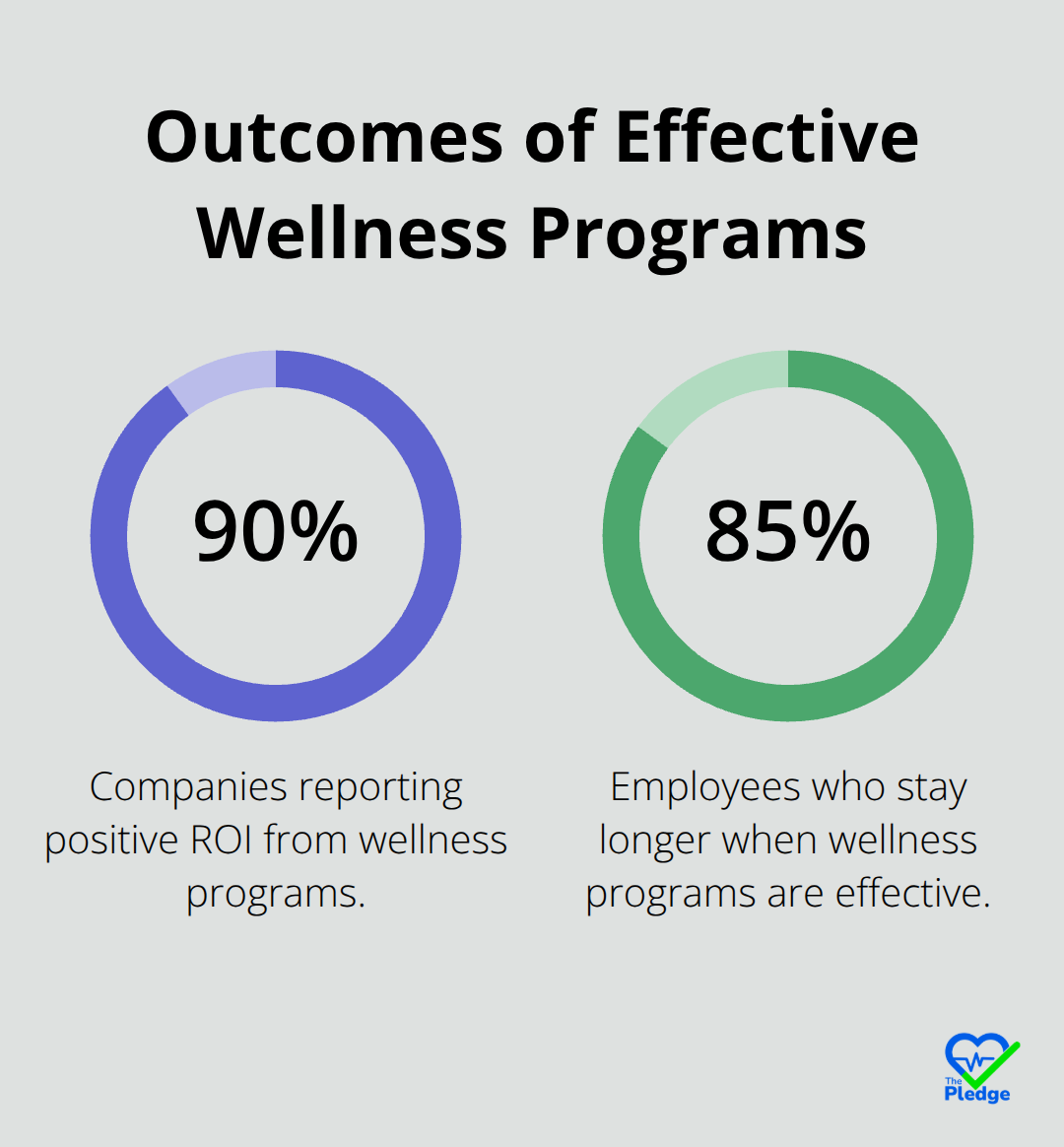
Companies with effective wellness programs report 90% positive ROI, with healthcare cost reductions of $3.27 for every dollar invested. Track absenteeism reduction (14-19% improvement), employee retention rates (85% stay longer), and productivity gains (10-20% increases). Mental Health America’s research shows psychological safety correlates strongly with overall work health scores at 0.792, which makes this a key performance indicator.
Future workplace health technology will center on AI-powered predictive analytics that identify health risks months before symptoms appear. Wearable integration will expand beyond fitness tracking to comprehensive health monitoring, while personalized digital platforms will replace generic wellness apps. The importance of health and wellness in the workplace will drive demand for seamless integration between health benefits, care coordination, and real-time health data.
Start implementation by conducting employee health surveys to identify specific needs rather than assuming universal solutions. Choose technology platforms that integrate with existing benefits systems instead of creating additional complexity. The Pledge offers a comprehensive platform that centralizes health data and benefits access in one solution. Focus on communication transparency, manager training for mental health support, and preventative care initiatives that employees can access during work hours.
![[Guide] Incentives That Drive Preventive Health Participation](https://thepledge.app/wp-content/uploads/emplibot/Guide_-Incentives-That-Drive-Preventive-Health-Participation_1783650286-300x168.jpeg)