

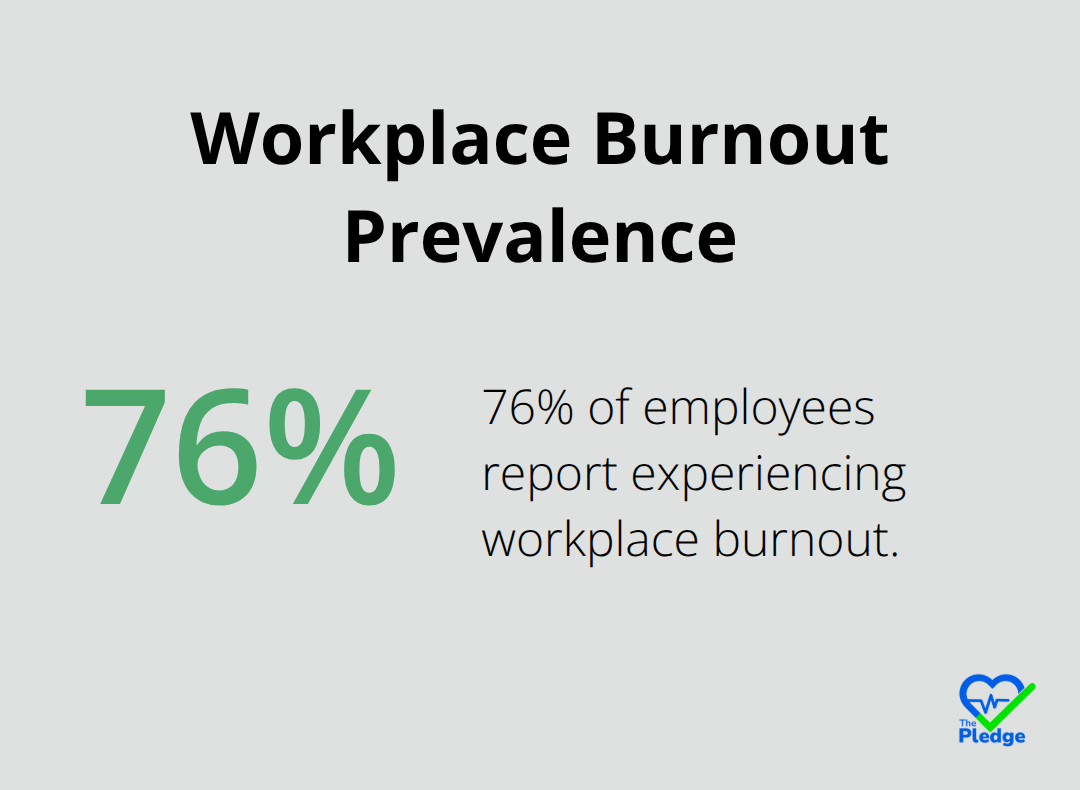
Workplace mental health has reached a breaking point. Recent data shows that 76% of employees report experiencing workplace burnout, while mental health-related absences cost companies $300 billion annually in the United States alone.
At The Pledge, we recognize that the importance of mental wellness in the workplace extends far beyond individual well-being. Smart employers are discovering that mental health investments deliver measurable returns through reduced turnover, higher productivity, and stronger company culture.
What Crisis Are We Really Facing
The workplace mental health statistics reveal a stark reality that demands immediate attention. According to MindShare Partners’ 2021 Mental Health at Work Report, three-quarters of full-time U.S. workers reported experiencing at least one symptom of a mental health condition in the past year. This represents a systemic breakdown that affects millions of workers daily. The American Psychological Association found that more than half of American workers experience burnout, which leads to emotional exhaustion and measurably decreased productivity across entire organizations.
The True Financial Toll
The economic impact extends far beyond what most employers calculate. Poor workplace mental health costs UK employers approximately £51 billion annually according to recent workplace wellness studies. The World Health Organization reports that depression and anxiety alone cause an estimated loss of 12 billion working days each year globally, which costs approximately $1 trillion in lost productivity. These numbers represent real costs that hit company bottom lines through increased healthcare premiums, replacement hiring, and reduced output from disengaged teams.
Productivity Numbers That Demand Action
Happy employees demonstrate 13% higher productivity than their struggling counterparts, yet workplace wellness research shows that only 38% of employees feel comfortable when they access their company’s mental health services. This disconnect costs organizations measurable performance gains. Employees who experience mental health challenges take an average of 18 days off annually due to stress, depression, or anxiety – more than any other medical condition. Meanwhile, 28% of all sick days in the UK stem directly from poor employee mental health, which creates staffing shortages and project delays that ripple through entire business operations.
The Engagement Gap
The data reveals a troubling pattern where organizations invest in mental health resources but fail to achieve meaningful employee participation. Workers report that they want support, yet they hesitate to use available services due to stigma concerns and lack of trust in confidentiality. This creates a costly paradox where companies spend money on underutilized programs while employees continue to suffer in silence, ultimately affecting both individual well-being and organizational performance.
These sobering statistics make one thing clear: traditional approaches to workplace mental health have failed to address the root causes of the crisis. Organizations need comprehensive strategies that go beyond surface-level solutions to create meaningful change.
What ROI Can You Expect From Mental Health Investments
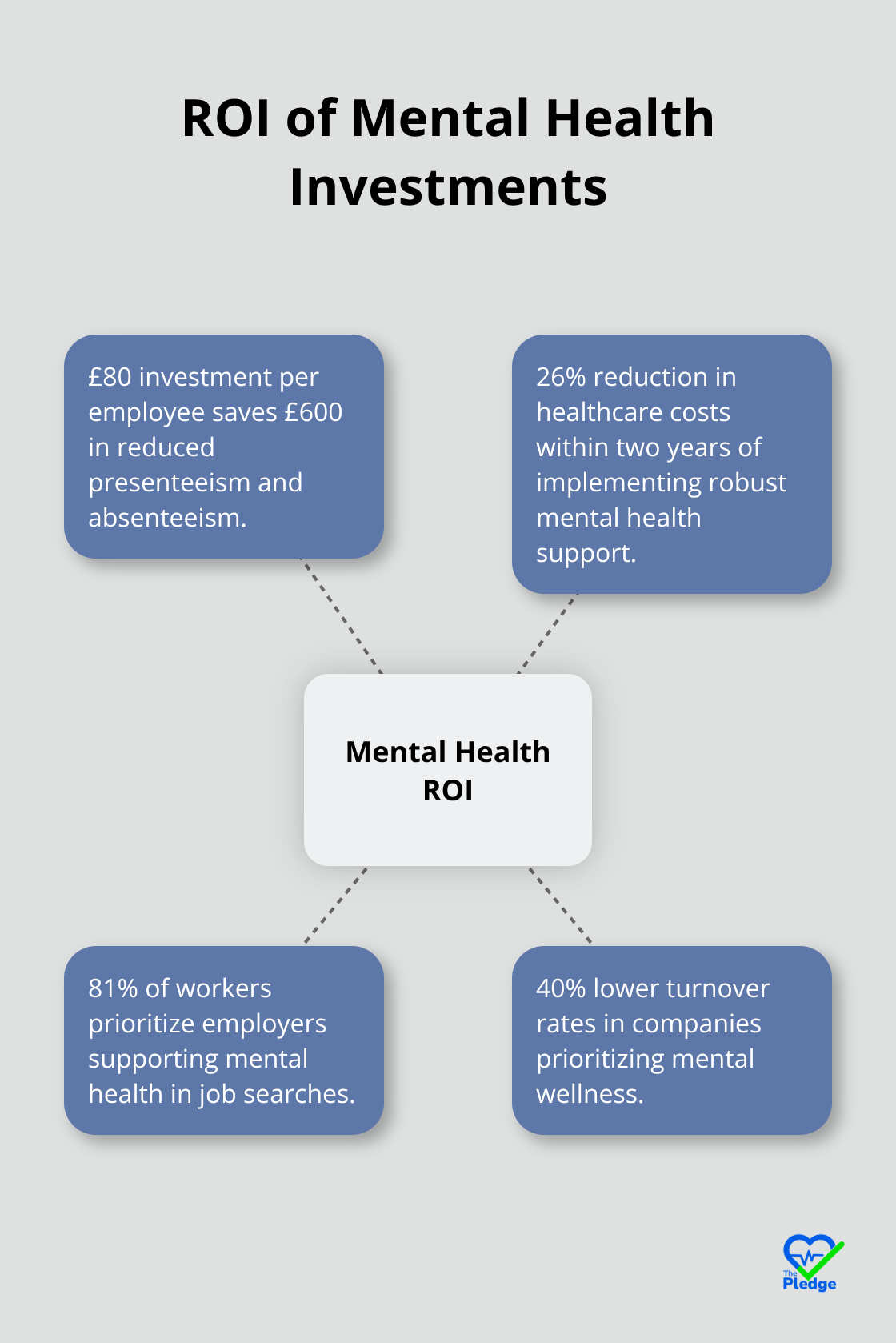
Companies that implement comprehensive mental wellness programs see returns that far exceed initial investments. Workplace mental health initiatives can yield significant returns according to empirical research. Organizations that invest £80 per employee in wellbeing initiatives typically save £600 due to reduced presenteeism and absenteeism. These numbers represent concrete financial benefits that directly impact quarterly earnings and annual budgets.
Healthcare Cost Reductions Drive Bottom-Line Impact
Mental wellness programs slash healthcare expenses through preventative care approaches. Companies with robust mental health support report 26% reductions in healthcare costs within two years of implementation. Johnson & Johnson’s comprehensive wellness program has saved the company $250 million on healthcare costs over the past decade while it improved employee satisfaction scores by 32%. Organizations see immediate decreases in emergency room visits, prescription medication costs, and specialist referrals when employees access mental health resources proactively rather than reactively.
Retention Rates Improve Company Performance
Employee turnover costs companies approximately $15,000 per departed worker when you factor in recruitment, training, and productivity losses. Companies that prioritize mental wellness see 40% lower turnover rates compared to organizations without mental health programs. Unilever trained 4,000 employees as mental health champions and subsequently reduced voluntary turnover by 23% while it increased employee engagement scores by 18%. Workers stay longer at companies where they feel supported, which eliminates constant hiring cycles and maintains institutional knowledge within teams.
Talent Acquisition Becomes Competitive Advantage
Job seekers increasingly prioritize mental health benefits when they evaluate offers. The American Psychological Association found that 81% of workers will prioritize employers that support mental health in future job searches. Companies that advertise comprehensive mental wellness programs receive 35% more qualified applications and fill positions 28% faster than competitors. Organizations with strong mental health reputations attract top talent without increased salary offers (which creates sustainable competitive advantages in tight labor markets).
These financial benefits demonstrate clear value, but successful implementation requires strategic approaches that address specific workplace challenges and employee needs. Companies can increase participation in wellness programs by 40% through strategic communication and engagement tactics.
What Mental Wellness Strategies Actually Work
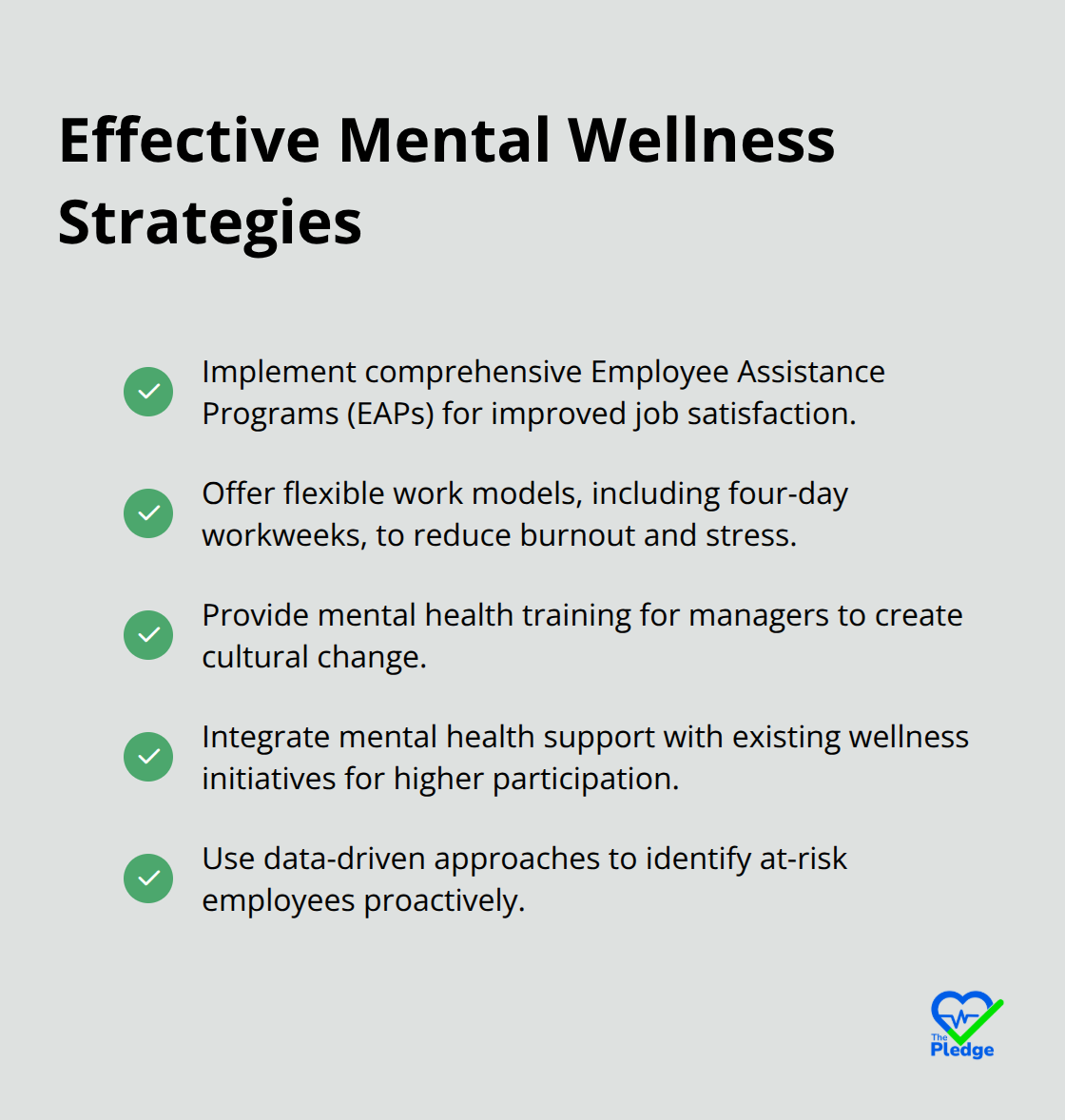
Employee Assistance Programs produce measurable results when companies implement them as strategic tools rather than compliance checkboxes. Organizations that partner with comprehensive EAP providers see improved organizational commitment and job satisfaction according to research showing EAPs are negatively correlated with work stress. Samsung received recognition for its comprehensive employee wellness program that includes 24/7 counseling services and stress management support, which resulted in 31% higher employee satisfaction scores. The key lies in promotion of these services through multiple channels and manager training to recognize when team members need support. Companies should track utilization rates monthly and adjust outreach strategies when participation falls below 15% of the workforce.
Flexible Work Models Drive Engagement
Remote and hybrid work arrangements significantly reduce stress-related health issues when companies implement them with clear boundaries and expectations. Oliver Wyman provides recharge days that require complete workplace disconnection, which decreased employee burnout symptoms by 28% within six months. Four-day workweeks show even stronger results, with companies that report 71% reductions in employee burnout and 39% decreases in stress levels according to recent pilot programs. Flexible schedules work best when managers receive training on output-based performance measurement rather than time-based metrics. Organizations should establish core collaboration hours while they allow individual schedule control outside these periods.
Manager Training Creates Cultural Change
Mental health training for leadership teams produces organization-wide improvements that extend far beyond individual interactions. Unilever trained 4,000 employees as mental health champions and saw 23% reductions in voluntary turnover plus 18% increases in engagement scores. Managers who complete mental health literacy programs identify team members who struggle faster and provide appropriate support resources before situations escalate through workplace interventions designed to strengthen supervisor support. Training should focus on conversation techniques, resource navigation, and legal compliance rather than attempts to turn managers into counselors (companies achieve best results when they mandate annual training refreshers and measure manager effectiveness through employee feedback surveys).
Wellness Program Integration
Companies that integrate mental health support with existing wellness initiatives see participation rates increase by 45% compared to standalone programs. Akamai offers a comprehensive wellness program that includes initiatives for wellness with focus on active lifestyles, proper nutrition, and work-life balance. Organizations achieve maximum impact when they connect physical wellness activities with mental health resources through unified platforms and communication strategies. Workers respond better to personalized wellness programs that address multiple aspects of well-being rather than fragmented services that require separate enrollment processes.
Final Thoughts
The importance of mental wellness in the workplace has evolved from a nice-to-have benefit to a business imperative that drives measurable financial returns. Organizations that invest in comprehensive mental health programs see returns up to 800%, with reduced healthcare costs, lower turnover rates, and improved productivity that create sustainable competitive advantages. Future workplace mental health trends point toward AI-powered personalized wellness platforms, expanded telehealth services, and integrated health management systems that connect physical and mental well-being.
Companies will increasingly adopt data-driven approaches to identify at-risk employees before problems escalate, while remote work flexibility becomes standard practice rather than emergency accommodation. Organizations should start with leadership training, establish Employee Assistance Programs with clear promotion strategies, and create flexible work arrangements that support work-life balance. Success requires measurement of utilization rates, employee feedback collection, and program adjustments based on actual usage patterns rather than assumptions.
We at The Pledge understand that comprehensive health management platforms play a vital role in workplace wellness initiatives. Technology can bridge the gap between available resources and employee engagement when it centralizes health data and provides personalized reminders. This approach creates healthier workplaces that benefit both individuals and organizations (while it reduces the administrative burden on HR teams).