
Companies that define workplace wellness strategically see 28% lower sick leave rates and 26% reduction in healthcare costs, according to Harvard Business Review research.
At The Pledge, we’ve seen organizations struggle with vague wellness initiatives that fail to deliver results. The key lies in creating targeted programs that address your workforce’s specific needs while aligning with business objectives.
What Makes Workplace Wellness Actually Work
Defining Strategic Wellness Programs
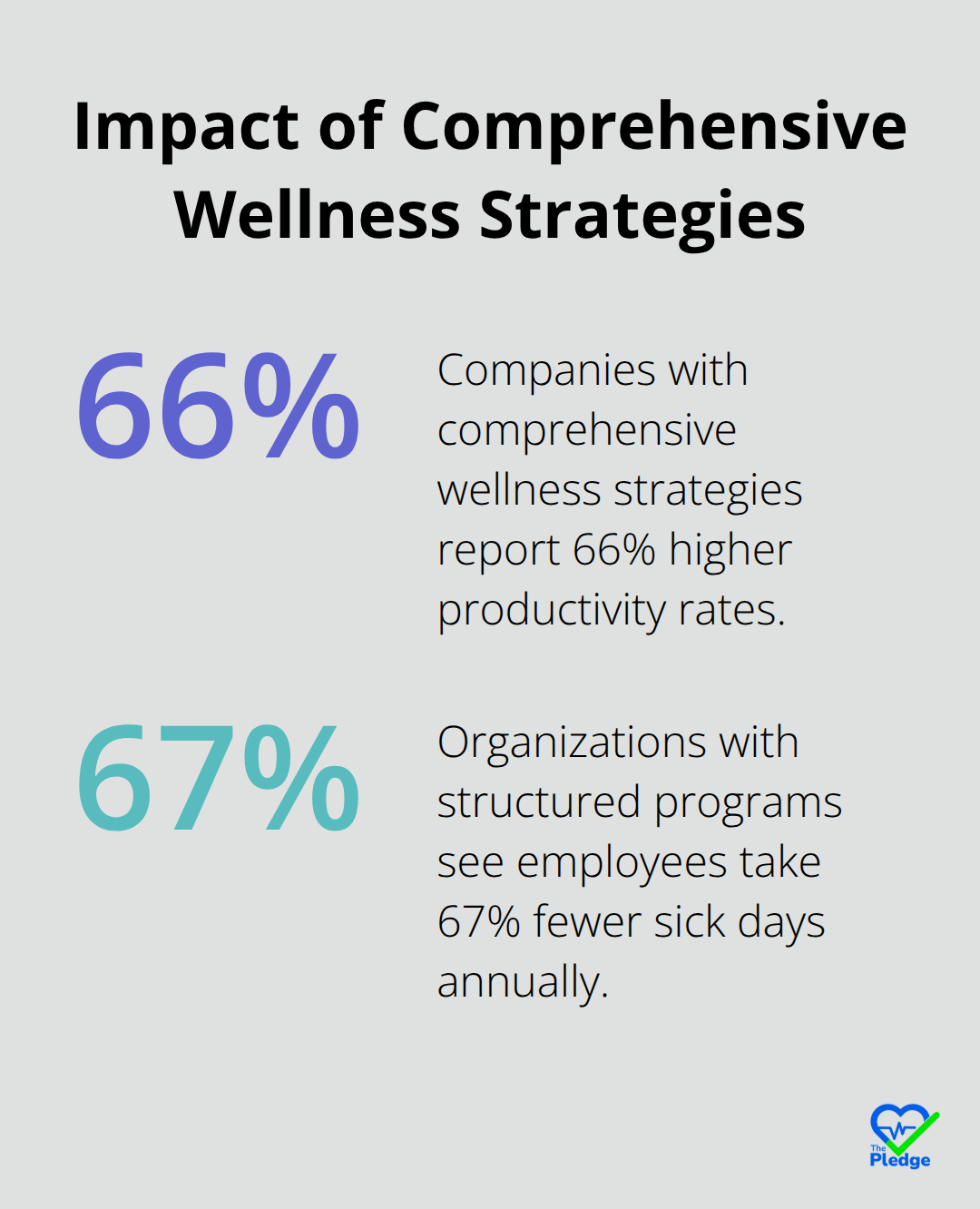
Workplace wellness programs are systematic initiatives that organizations implement to improve employee health outcomes through targeted interventions across physical, mental, and behavioral health support. These programs operate as integrated health ecosystems that connect employees with preventive care resources, fitness opportunities, and mental health services (rather than standalone perks). Companies that implement comprehensive wellness strategies report 66% higher productivity rates according to Gallup research, while organizations with structured programs see employees take 67% fewer sick days annually.
Measuring Financial Returns
The financial impact extends far beyond reduced absenteeism. J&J’s leaders estimate that wellness programs have cumulatively saved the company $250 million on health care costs over the past decade. Mental health components prove particularly valuable, with the World Health Organization finding that every dollar spent on mental health treatment returns $4 in improved health and productivity.
Impact on Employee Retention
Organizations with robust wellness frameworks experience 40% lower turnover rates and save an average of $3,000 per employee annually in replacement costs. The data shows clear correlation between comprehensive health support and workforce stability. Companies that prioritize employee wellbeing achieve 10% higher retention rates, which becomes particularly important in today’s competitive talent market.
Data-Driven Program Design
The key differentiator lies in data-driven program design that addresses specific workforce demographics and health risks rather than one-size-fits-all solutions. Successful programs analyze employee health data, survey responses, and participation patterns to create targeted interventions. This approach leads us to examine the specific components that make wellness programs effective for different organizational needs.
Key Components of Effective Workplace Wellness Programs
Physical Health Initiatives That Drive Results
Physical health initiatives form the foundation of effective workplace wellness, but traditional approaches often fall short of expectations. Smart organizations focus on targeted interventions that address their workforce’s specific health risks, particularly in smaller workplaces with fewer than 20 employees where developing feasible programs presents unique challenges. Companies that implement walking challenges see increased participation rates compared to traditional fitness programs, while on-site biometric screenings identify health risks early and reduce emergency healthcare costs annually.
The most successful physical wellness strategies combine preventive screenings, nutrition education, and activity-based challenges that employees can complete during work hours. Organizations avoid after-hours participation requirements and instead create opportunities for movement throughout the workday (such as walking meetings or desk exercise programs).
Mental Health Support That Delivers ROI
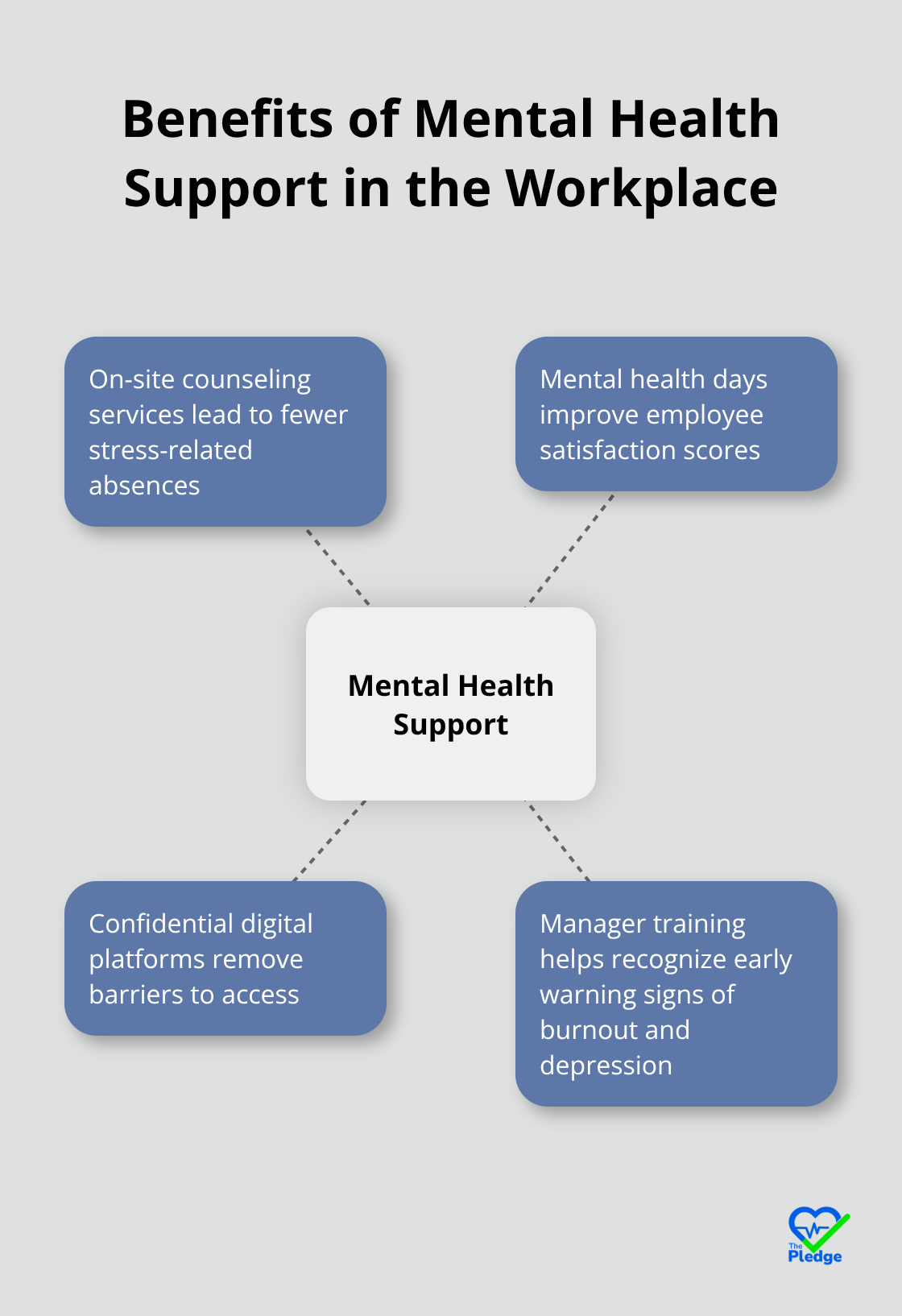
Mental health components generate significant return on investment, with structured Employee Assistance Programs showing measurable benefits for organizations. Research on human capital management demonstrates the importance of measuring antecedents and consequences of effective workplace programs. Organizations that provide on-site counseling services report fewer stress-related absences, while companies that offer mental health days see improvement in employee satisfaction scores.
Success requires removing barriers to access through confidential digital platforms, flexible scheduling for therapy appointments, and manager training programs. These programs help supervisors recognize early warning signs of burnout and depression before they escalate into costly health crises.
Work-Life Balance Policies With Measurable Impact
Flexible scheduling policies drive strong engagement results when organizations implement them strategically rather than universally. Companies that offer compressed work weeks report lower turnover rates, while remote work options reduce stress-related healthcare claims according to workplace wellness research.
The most effective approach combines core collaboration hours with flexible start and end times, unlimited PTO policies that employees actually use, and technology solutions that prevent after-hours email expectations. These policies create new sources of workplace stress when poorly implemented, but generate significant returns when designed thoughtfully.
Organizations that master these three components create the foundation for wellness success, but implementation requires careful planning and strategic resource allocation to maximize impact.
Steps to Develop Your Organization’s Wellness Strategy
Conduct Strategic Health Assessment
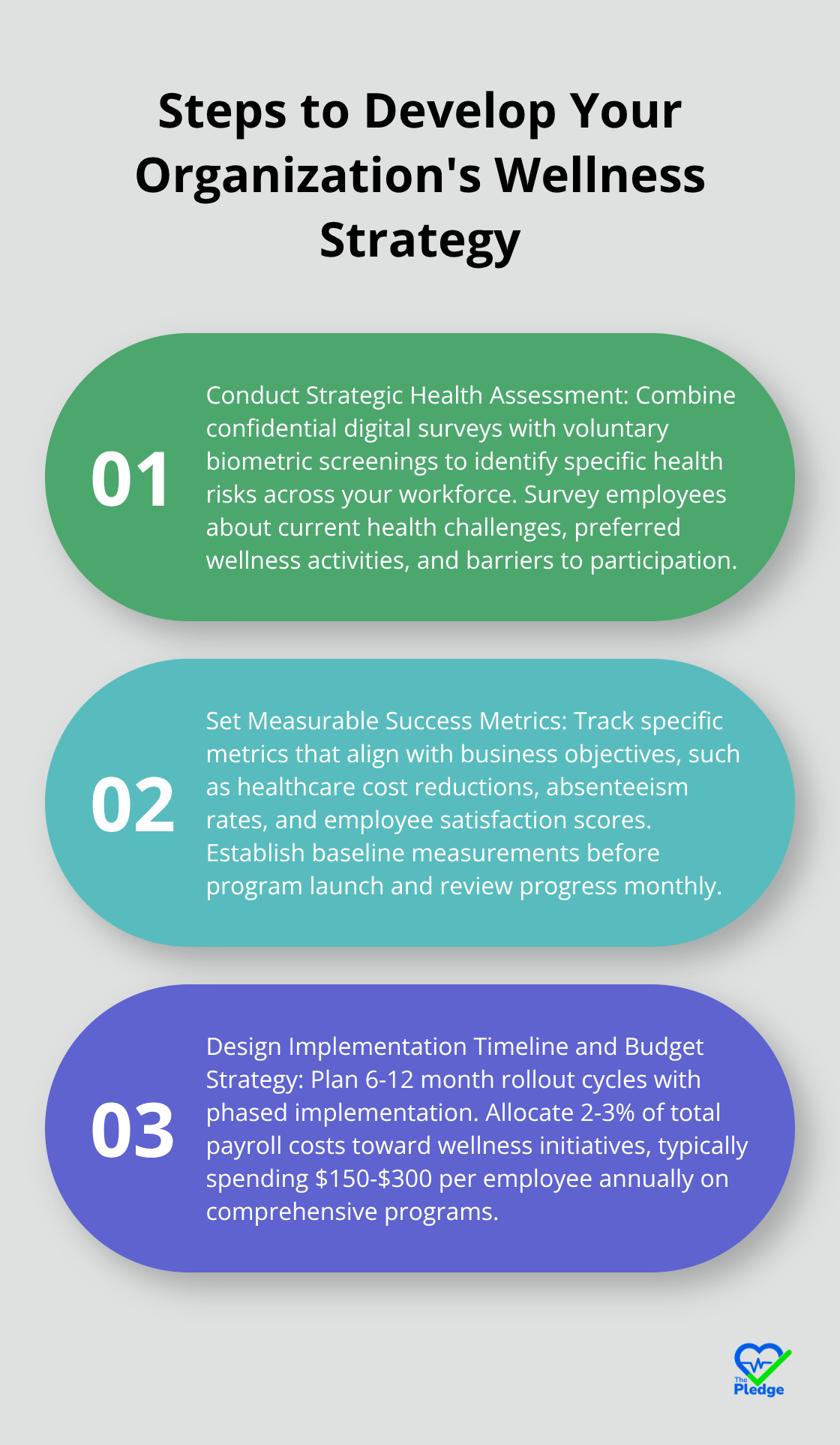
Organizations that conduct comprehensive employee health assessments see 23% higher participation rates in their wellness programs compared to companies that use generic approaches. The most effective assessment strategy combines confidential digital surveys with voluntary biometric screenings to identify specific health risks across your workforce. Companies should survey employees about their current health challenges, preferred wellness activities, and barriers to participation rather than make assumptions about what they need.
Focus assessment questions on concrete health behaviors and workplace stress factors that directly impact productivity. Organizations that analyze employee demographics alongside health data create more targeted interventions. Companies with younger workforces often need mental health support and financial wellness education, while organizations with older employees benefit from chronic disease management programs and preventive screening initiatives.
Set Measurable Success Metrics
Successful wellness programs track specific metrics that align with business objectives rather than vanity numbers like program enrollment. Companies should measure healthcare cost reductions, absenteeism rates, and employee satisfaction scores as primary indicators of program effectiveness. Research from the RAND Corporation shows that organizations that measure both participation rates and health outcomes achieve better long-term results than those that track participation alone.
The most valuable metrics include monthly healthcare claim costs per employee, quarterly stress-related absence days, and annual employee retention rates in high-participation departments. Organizations that define key performance indicators (KPIs) see improved program outcomes according to workplace wellness research. Companies should establish baseline measurements before program launch and review progress monthly rather than wait for annual assessments.
Design Implementation Timeline and Budget Strategy
Effective wellness program implementation requires 6-12 month planning cycles with phased rollouts that prevent overwhelming employees or stretching resources too thin. Organizations should allocate 2-3% of total payroll costs toward wellness initiatives, with successful companies typically spending $150-$300 per employee annually on comprehensive programs.
The most effective budget allocation dedicates 40% to program delivery, 30% to technology platforms (such as health management systems that centralize employee data), 20% to incentives, and 10% to measurement and evaluation activities. Companies that phase their rollout across departments see higher adoption rates than those that launch organization-wide programs simultaneously.
Final Thoughts
Organizations that define workplace wellness strategically create sustainable competitive advantages through improved employee health outcomes and reduced operational costs. The evidence shows that comprehensive wellness programs generate measurable returns when companies focus on targeted interventions rather than generic solutions. Companies achieve these results through systematic approaches that address specific workforce health challenges.
Successful wellness initiatives require three essential elements: data-driven health assessments that identify specific workforce needs, measurable success metrics that align with business objectives, and phased implementation strategies that prevent resource strain. Companies that master these components see 28% lower sick leave rates and achieve significant healthcare cost reductions over time. The long-term benefits extend beyond immediate cost savings to include higher employee retention rates, improved productivity levels, and stronger workplace cultures that attract top talent.
Companies should begin with comprehensive employee health assessments, establish baseline metrics, and develop implementation timelines that span 6-12 months. Organizations that integrate comprehensive health management platforms see enhanced program effectiveness through centralized data tracking and personalized employee engagement tools. These platforms drive participation rates above industry standards while providing the infrastructure needed for long-term wellness program success.
![[Guide] Incentives That Drive Preventive Health Participation](https://thepledge.app/wp-content/uploads/emplibot/Guide_-Incentives-That-Drive-Preventive-Health-Participation_1783650286-300x168.jpeg)