HR teams spend countless hours managing employee health data across disconnected systems. The top digital health tools for HR eliminate this friction by centralizing wellness programs, automating tracking, and freeing your team to focus on strategy.
At The Pledge, we’ve seen firsthand how the right platform transforms how companies approach employee health. When you implement digital health solutions, you’re not just improving administration-you’re directly impacting your bottom line through lower costs and higher engagement.
How Digital Health Tools Centralize Your Health Data
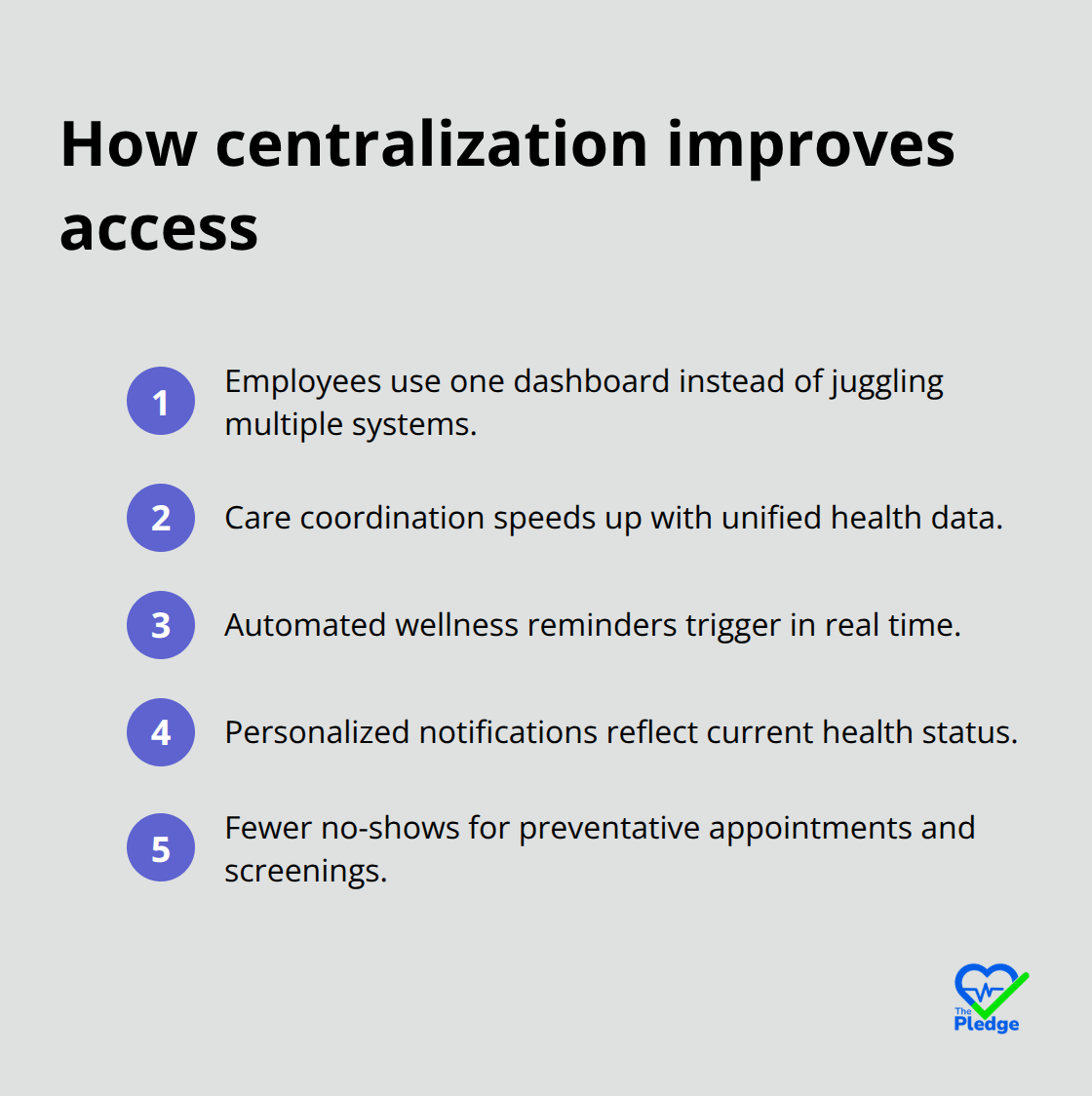
Scattered health information across multiple systems costs your HR team real time and money. When employee health data lives in disconnected portals, spreadsheets, and insurance platforms, your team wastes hours pulling records together just to answer basic questions about coverage, medication history, or upcoming appointments. Digital health platforms solve this by centralizing your health data where all health information flows in real-time.
Centralized platforms eliminate the need for employees to navigate five different systems to understand their care options. This centralization matters because employees with unified health data experience faster care coordination. Real-time data means your HR team can trigger automated wellness reminders without manual intervention, reducing no-shows for preventative appointments and screenings. When health information updates instantly across the platform, employees receive personalized reminders about medication refills, upcoming appointments, or preventative care based on their actual health status, not outdated records.
Automation Cuts Administrative Hours Significantly
Digital health tools eliminate administrative burden through automated wellness tracking, appointment reminders, and benefits enrollment workflows. Instead of your HR team manually sending email reminders about annual physicals or tracking who completed health screenings, the platform automatically sends personalized notifications based on each employee’s health profile and care gaps.
Automation also reduces errors that occur when HR staff manually update health records or wellness participation data. AI-powered systems identify which employees need specific interventions-such as preventative care reminders for those with chronic conditions or family sharing prompts for employees managing dependent health-and deliver those messages at the right time without human intervention. This automation frees your HR team to focus on strategic initiatives like designing better wellness programs or analyzing health outcomes rather than spending time on repetitive administrative tasks.
Engagement Rises When Employees Access Their Data Easily
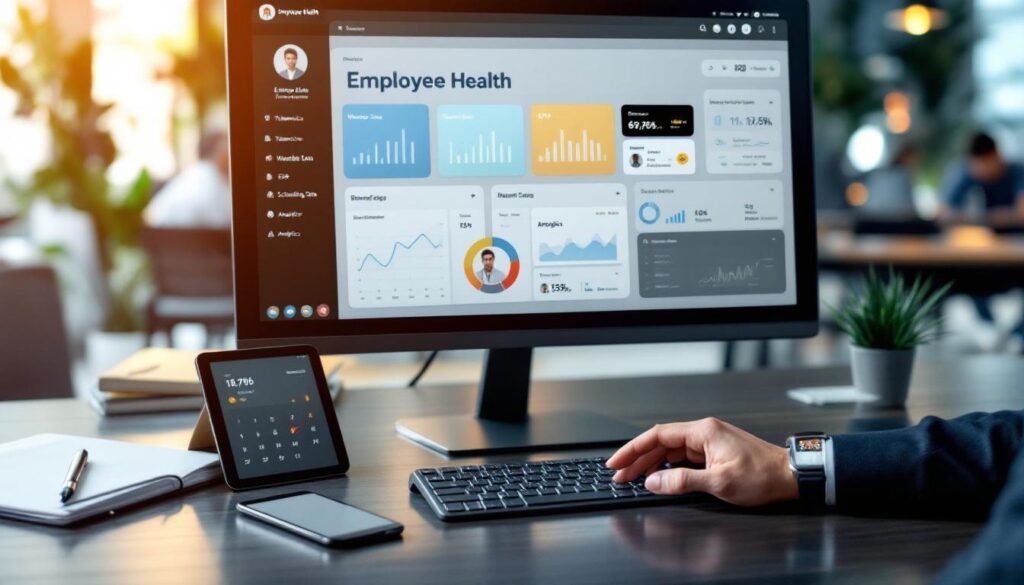
Employees who access their health information through a single dashboard participate more actively in wellness initiatives. When your team removes friction from the health management experience, employees take ownership of their care journeys. The result: higher participation rates in preventative screenings, better medication adherence, and stronger engagement with wellness programs your organization offers.
This centralization and automation foundation sets the stage for the next critical capability-personalization at scale.
What Makes a Digital Health Platform Actually Work
Integration with Existing Health Plans Forms Your Foundation
Integration with existing health plans isn’t optional-it’s the foundation that prevents your team from managing duplicate data entry and manual reconciliation across systems. When a digital health platform connects to your current insurance benefits, employees see one unified view of their coverage, deductibles, and care options instead of hunting through separate portals. This integration also means your HR team stops spending hours reconciling enrollment data between your benefits system and health management tools.
Platforms that achieve seamless connection pull real-time data from your payors and benefits administrators, so coverage changes and plan updates flow automatically into the employee experience without requiring manual updates from your HR staff. This eliminates the gap between what your benefits team knows and what employees actually see when they log in to manage their care.
AI-Powered Personalization Drives Real Behavior Change
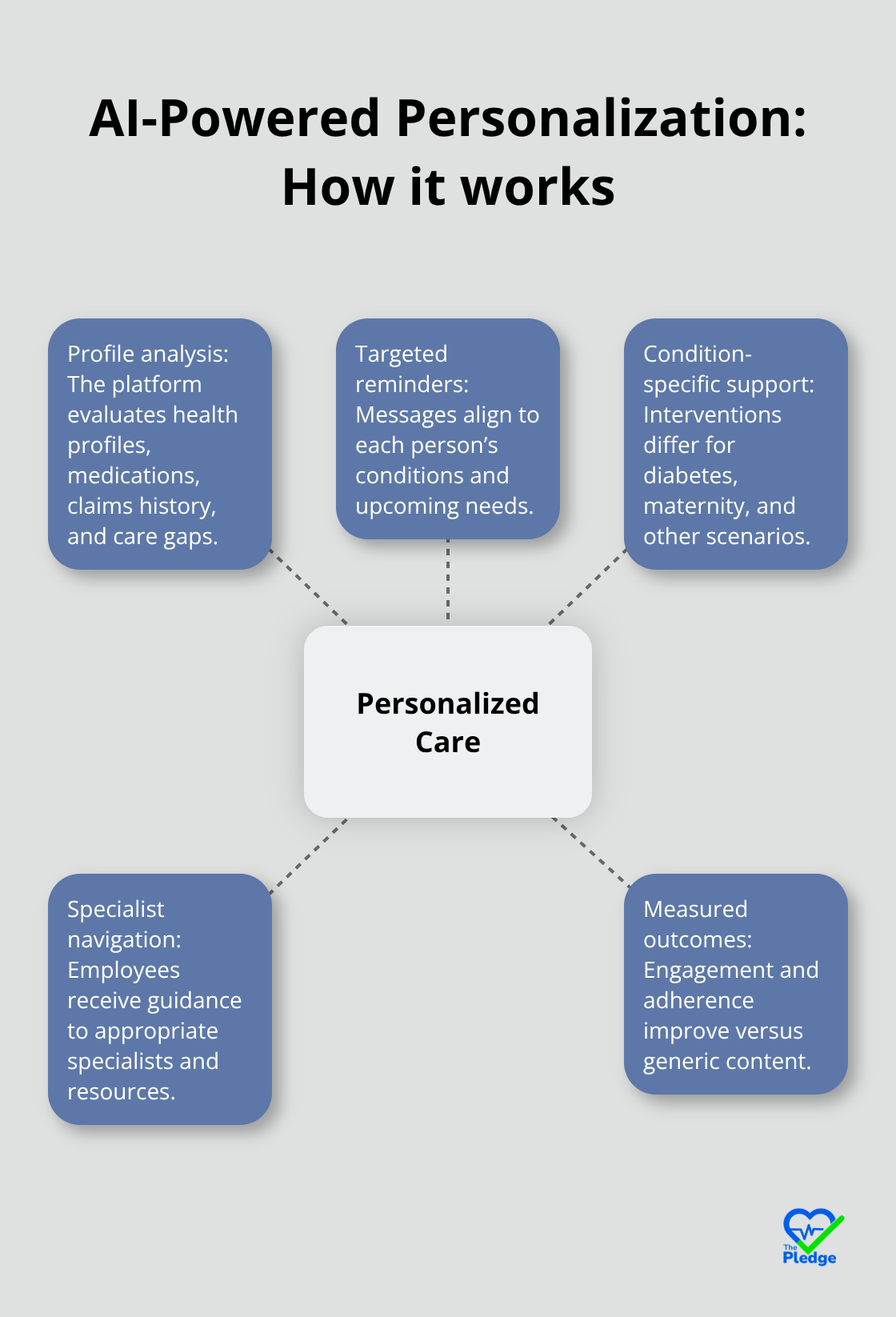
AI-powered personalization and care navigation represent the operational difference between platforms that reduce costs and platforms that actually change behavior. Generic wellness programs fail because they treat all employees the same way-a 25-year-old with no chronic conditions receives the same messages as a 55-year-old managing diabetes. Real personalization means the platform analyzes each employee’s health profile, medications, claims history, and care gaps, then delivers targeted reminders and resources.
An employee with a recent diabetes diagnosis automatically receives medication adherence reminders and links to endocrinology specialists; a pregnant employee gets maternity-specific scheduling and recovery planning tools. This targeted approach drives measurable results-employees who receive personalized care recommendations show higher engagement with preventative services and better medication adherence compared to those receiving generic wellness content.
Family Sharing Expands Engagement Across Households
Family sharing features expand personalization beyond individual employees by allowing them to manage health information for spouses, children, and aging parents within the same platform. This matters because employees managing family health alongside their own health often abandon tools that force them to switch between separate systems. A parent who can view their child’s vaccination schedule, their spouse’s medication refills, and their own preventative care reminders in one dashboard stays engaged with the platform and takes more proactive health steps across their entire household.
When employees coordinate care for multiple family members in a single interface, they develop stronger health management habits that extend beyond themselves. This household-level engagement transforms how families approach preventative care and medication adherence, ultimately reducing emergency visits and hospitalizations across your employee population. The platforms that succeed recognize that modern employees don’t manage health in isolation-they manage it as part of a family unit, and your digital health solution must reflect that reality.
What ROI Should You Expect From Digital Health Tools
Preventative Care Cuts Your Largest Cost Drivers
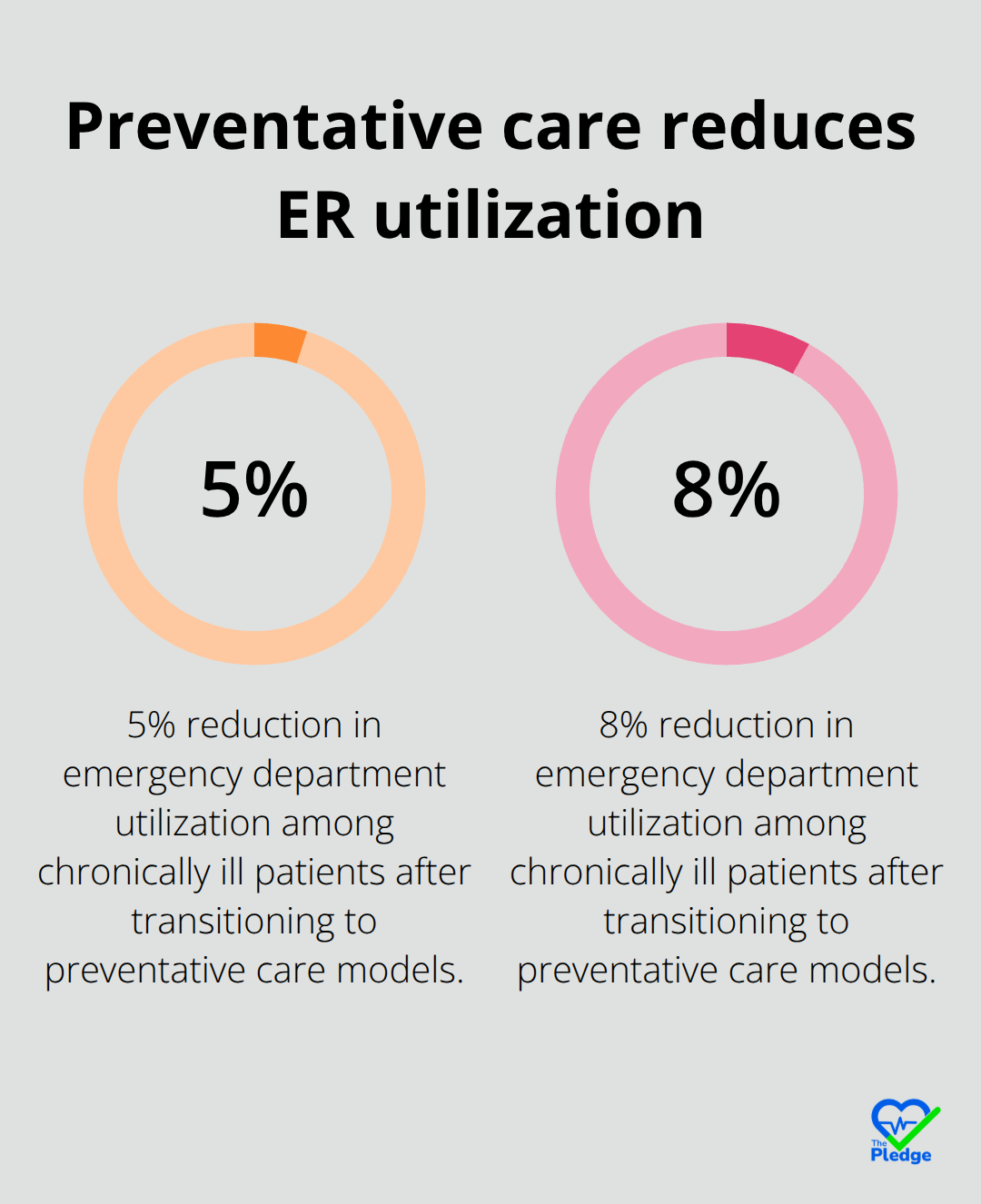
Preventative care reduces emergency room visits and hospitalizations, which represent your largest healthcare cost drivers. When employees catch health issues early through digital health platforms, they avoid costly acute interventions. Among chronically ill patients, transition to preventative care models was associated with 5–8 percent reductions in emergency department utilization, translating directly to lower claims costs for your organization.
Digital health tools identify care gaps automatically-employees with uncontrolled hypertension receive medication adherence reminders, employees due for screenings get scheduled notifications, and those with chronic conditions access specialist coordination features that prevent complications. This sustained engagement compounds your savings over time as preventative interventions accumulate across your workforce.
Real-Time Data Visibility Transforms Health Management
Your HR team stops guessing about employee health status and starts seeing actual data that correlates with performance and costs. Digital health platforms that integrate with your existing benefits systems provide real-time visibility into which employees need specific interventions and which wellness programs actually move the needle. This data-driven approach means your next wellness initiative targets actual gaps in your workforce rather than assumptions about what employees need. When you track which interventions drive the biggest engagement improvements, you double down on what works for your specific population rather than rolling out generic programs that fail to produce results.
Reduced Absenteeism and Presenteeism Drive Productivity Gains
Employees who engage with digital health platforms take fewer sick days because they address health issues before they escalate into time away from work. Beyond absences, presenteeism costs-where employees show up but perform at reduced capacity due to untreated health conditions-drop significantly when your team has real-time visibility into health status and can connect employees with resources. Measurable productivity gains follow from this proactive health management, as employees spend less time managing health crises and more time contributing to your organization’s goals.
Final Thoughts
Digital health tools have moved from nice-to-have to essential infrastructure for modern HR strategy. The top digital health tools for HR centralize employee health data, automate wellness workflows, and personalize care navigation-all of which directly impact both employee outcomes and your organization’s financial performance. When you implement the right solution, you stop managing disconnected systems and start building a health ecosystem where employees engage proactively and your HR team operates strategically.
We at The Pledge built our platform around this reality. Our solution centralizes health data and delivers personalized reminders through AI-driven technology, helping employers achieve measurable results: lower healthcare costs, higher employee engagement, and better health outcomes. Our Family Share feature recognizes that employees manage health as part of a household, not in isolation, and our comprehensive health platform makes this approach work at scale.
Start by assessing your current gaps in health data visibility and employee engagement, then evaluate solutions that address those specific challenges. The platform you select determines whether your organization leads in employee health management or continues managing health reactively. Your next step shapes whether your team captures the full value of digital health investment.
![[Guide] Incentives That Drive Preventive Health Participation](https://thepledge.app/wp-content/uploads/emplibot/Guide_-Incentives-That-Drive-Preventive-Health-Participation_1783650286-300x168.jpeg)