
One-size-fits-all wellness programs fail most employees. Generic health initiatives miss the specific needs that drive real outcomes, which is why we at The Pledge built an AI-powered health platform designed to personalize care at scale.
When machine learning analyzes individual health data and behaviors, companies can finally move beyond guessing what their workforce needs. The result is measurable: reduced hospital readmissions, better medication adherence, and employees who actually engage with their health plans.
What Data Actually Changes Health Outcomes
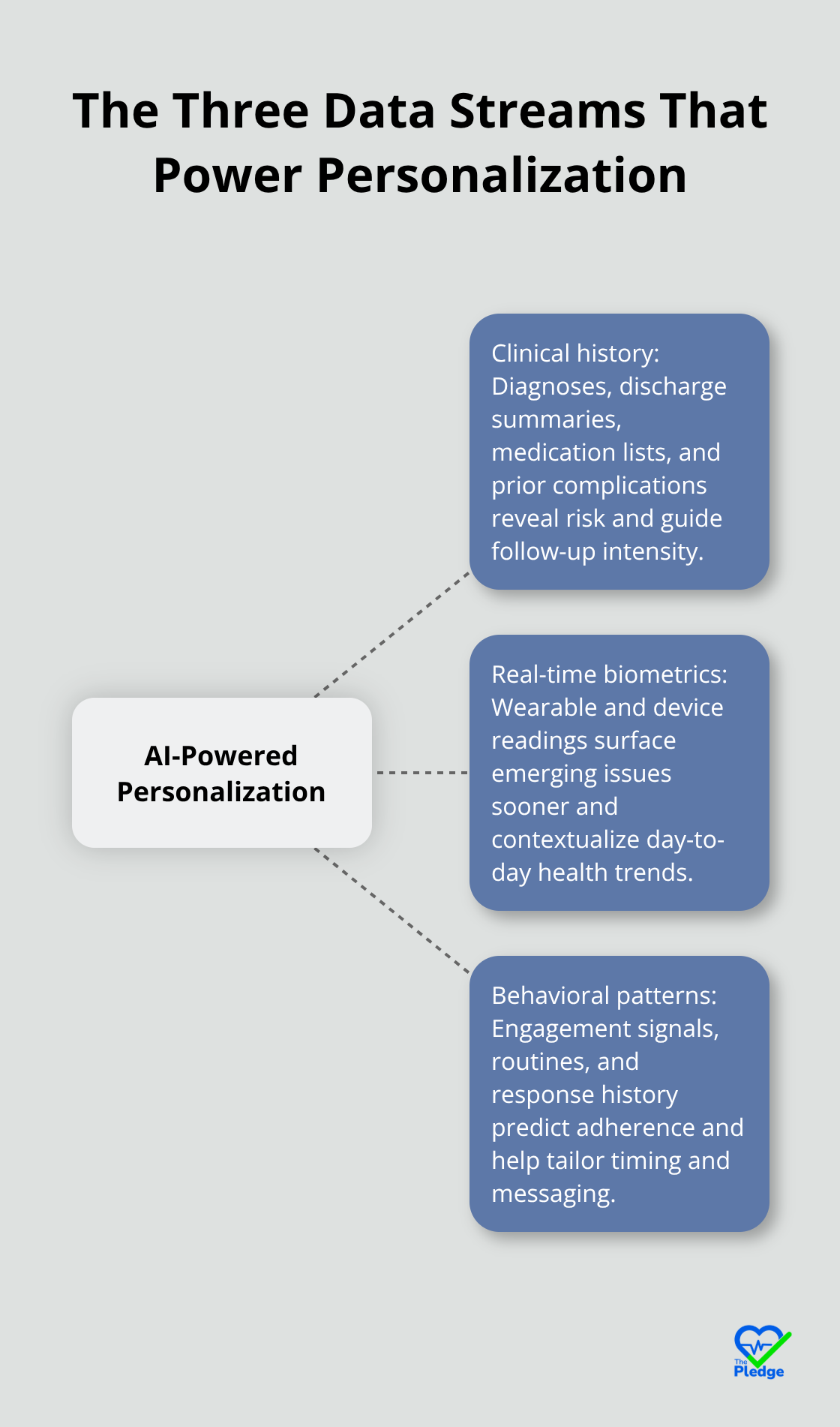
Personalization without the right data is just guessing with extra steps. Real transformation happens when AI connects three specific data streams: clinical history, real-time biometric readings, and behavioral patterns. Machine learning models that analyze these inputs together stop treating employees as generic health profiles and start identifying what actually drives their adherence and outcomes.
Clinical Data Reveals Hidden Risk Patterns
A study from the New England Journal of Medicine found that AI-powered personalization reduced hospital readmissions by 21% compared to standard discharge protocols, but only when the system had access to both pre-hospitalization risk factors and post-discharge behavior data. This matters for your workforce because readmissions cost employers between $4,500 and $18,000 per incident, depending on the condition. The data tells you which employees are sliding toward crisis before they land in the ER. When AI connects discharge summaries, medication lists, and prior complications, it identifies employees who need intensive follow-up rather than standard instructions.
Timing and Context Transform Medication Adherence
Generic medication reminders fail because they ignore why people skip doses. An employee might miss their blood pressure medication because they take it with breakfast but skip breakfast on travel days. Another might forget because the timing conflicts with their work schedule.
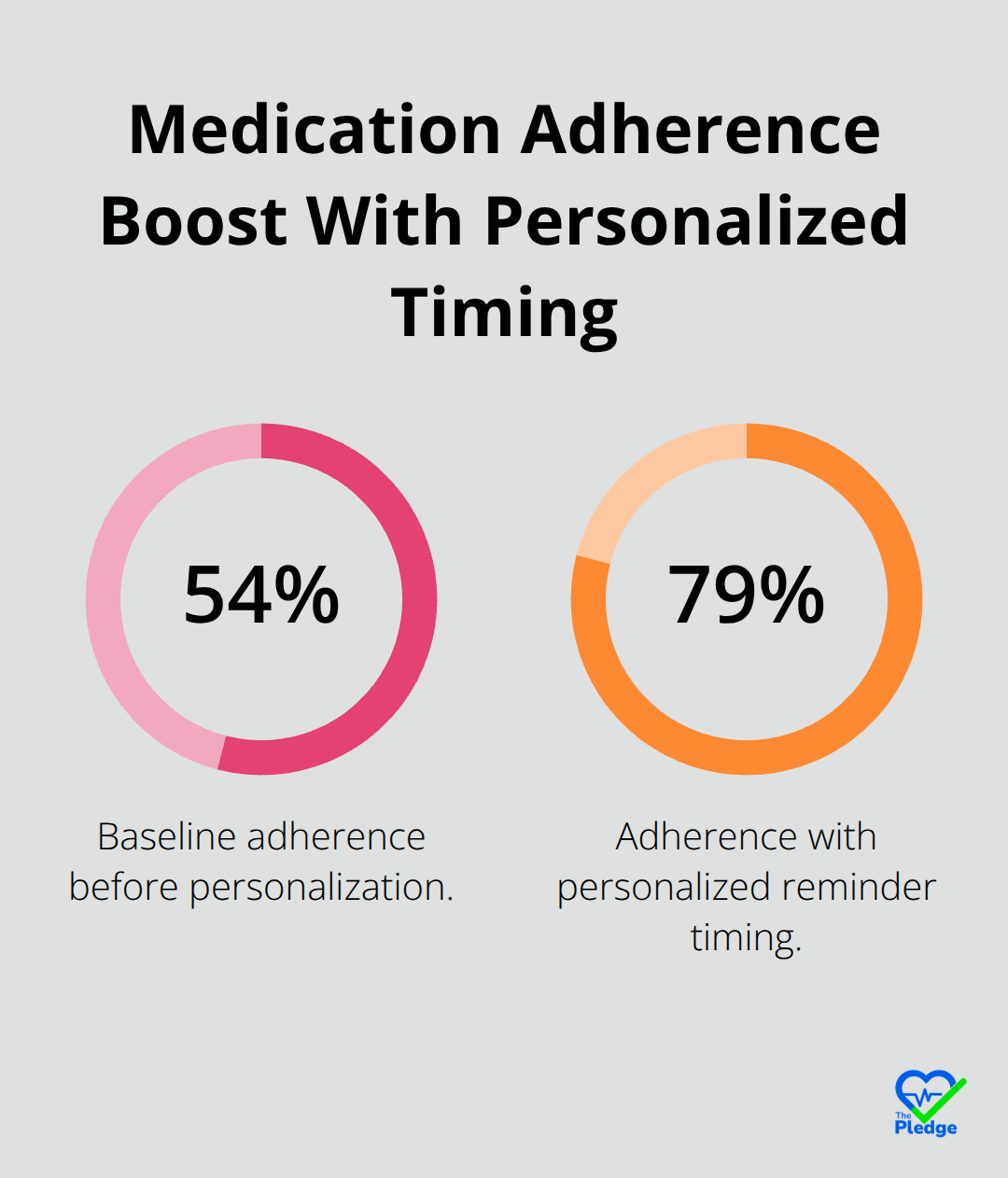
A real-world study showed that personalized reminder timing increased medication adherence from 54% to 79% when the system adapted messages based on individual response history rather than sending identical reminders to everyone.
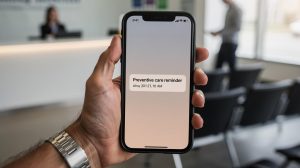
When AI tracks these patterns across thousands of employees, it learns that sending a reminder at 6 PM works for 73% of your workforce, but the remaining 27% needs a different approach entirely. The practical impact: better adherence means fewer complications, fewer emergency visits, and measurably lower claims costs. Employers who implemented truly personalized reminder systems (not the mass-notification approach that most platforms use) reduced blood pressure-related ER visits by 31% within six months.
Behavioral Data Predicts Who Struggles at Home
A one-size-fits-all discharge plan sends every post-surgical employee home with the same instructions. Personalized plans account for comorbidities, social support, transportation access, and health literacy. Machine learning identifies which employees will struggle with post-operative recovery at home and routes them toward more intensive follow-up before they deteriorate. An analysis from JAMA found that AI-driven risk stratification reduced 30-day readmissions by 18% when combined with targeted care coordination, compared to standard protocols.
For employers, this translates to fewer expensive hospital days and better productivity outcomes because employees recover faster and return to work with fewer complications. The data-driven approach also catches the counterintuitive patterns that clinicians miss-like identifying which employees need extra support based on their response to previous care, not just their diagnosis code. These behavioral signals (how someone engages with prior health instructions, whether they complete recommended screenings, their communication patterns with providers) often predict outcomes better than demographics alone.
Moving From Data Collection to Action
The real value emerges when you stop collecting data and start acting on it. Employers that centralize clinical records, biometric readings, and behavioral signals create a foundation for AI systems to recommend the right intervention for the right employee at the right time. This foundation determines whether your next initiative actually moves the needle on readmissions, adherence, and costs-or simply adds another generic program to your benefits package. The question shifts from “Do we have enough data?” to “Are we using what we know to change what happens next?”
From Data to Action: How Personalization Works at Scale
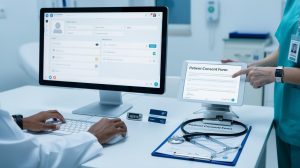
The gap between identifying risk and preventing it widens when you manage thousands of employees. Machine learning identifies which workers will struggle with medication adherence or face readmission risk, but that insight means nothing without systems that act on it automatically. Effective platforms close that gap by automating the entire workflow from risk detection through intervention. When AI flags an employee at high risk for readmission based on their discharge summary and behavioral patterns, the system doesn’t wait for a care coordinator to manually review the case. Instead, it immediately generates a personalized care plan, schedules follow-up appointments, sends targeted reminders at times the employee actually responds to, and alerts the care team if engagement drops.
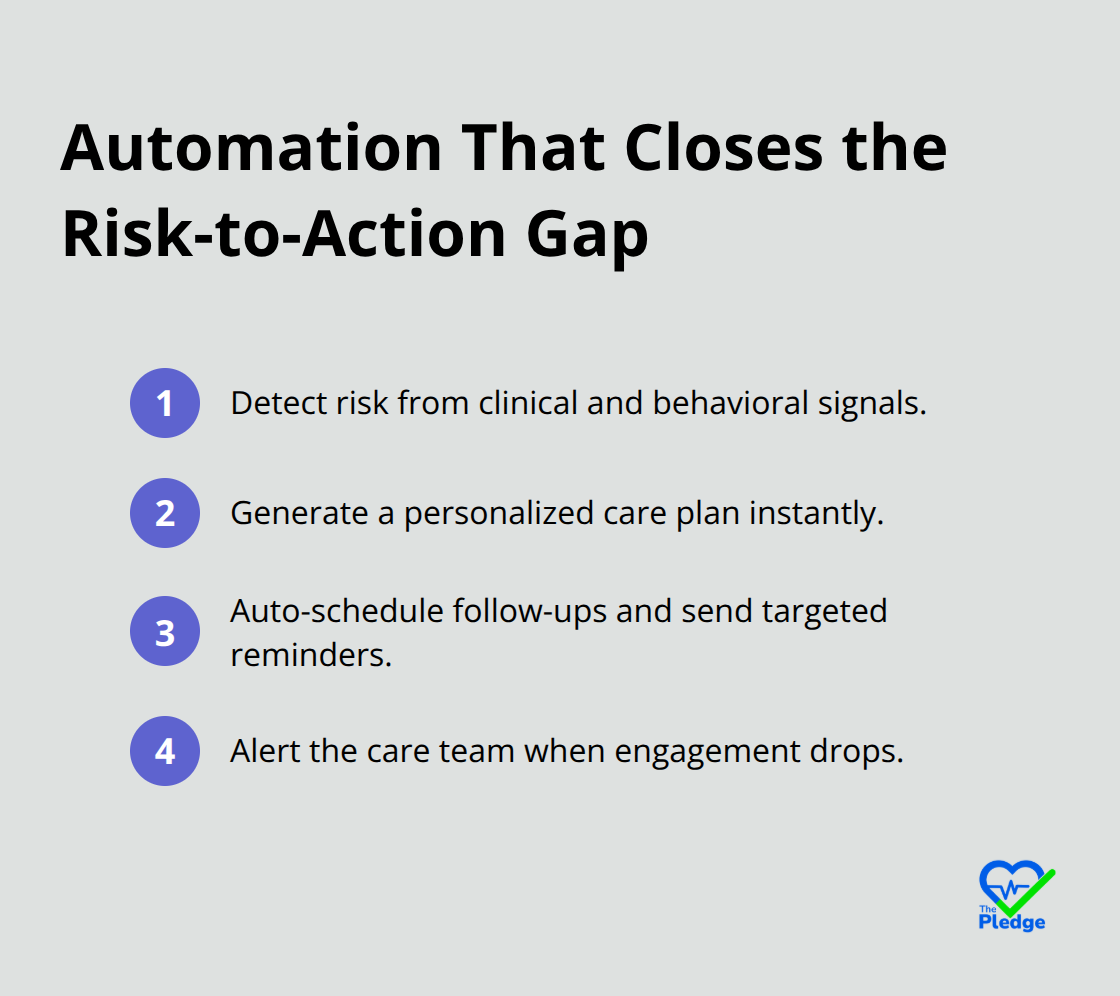
This automation matters because coordinating care for one high-risk employee takes hours of manual work. Coordinating care for 50,000 employees requires systems that operate at machine speed.
Automating Personalized Workflows at Scale
The practical challenge is that every employee’s health journey is genuinely different, which means your platform cannot use identical workflows. An employee managing diabetes plus hypertension needs different touchpoints than someone recovering from surgery. Someone with poor medication adherence needs more frequent reminders and different messaging than someone who consistently takes their medications. Health systems using automated, personalized workflows reduced no-show rates for follow-up appointments through reminders and direct rescheduling options via app rather than requiring a phone call. For employers, that translates to better clinical continuity and fewer missed intervention opportunities.
Centralizing Data to Connect the Full Picture
The second layer of scale is centralizing all the data that makes personalization possible. When clinical records sit in the hospital system, pharmacy data lives in a separate claims database, and biometric readings from wearables stay siloed in a consumer app, no AI system can connect the dots. Centralized data integration means when an employee’s blood pressure readings show a concerning trend, the system connects that signal to their medication adherence, their recent stress levels from behavioral data, and their clinical history to determine whether they need a medication adjustment, a behavioral intervention, or intensified monitoring. Studies from JAMA found that integrated care coordination reduced acute care utilization by 12% when combined with real-time data access, because care teams could see the full picture instead of working with fragmented information.
Moving From Fragmentation to Operational Scale
For large employers, seamless data integration across payors, providers, and employee devices transforms personalization from a pilot program into an operational capability that scales across your entire workforce. The infrastructure that makes this possible-secure data exchange, real-time processing, and automated decision logic-determines whether your personalization efforts actually reach the employees who need them most. This foundation also reveals which interventions work for which populations, allowing your health strategy to evolve based on what your actual workforce responds to rather than what generic best practices suggest. The next challenge is measuring whether these scaled systems actually deliver the business outcomes that justify the investment.
The Numbers That Matter
Personalized health platforms deliver measurable financial returns, but only if you measure the right metrics. Most employers track engagement rates while ignoring the actual healthcare costs that drive your bottom line. Healthcare spending for a typical mid-sized employer grows 5-7% annually, driven primarily by preventable readmissions, emergency room visits, and medication non-adherence. Personalized interventions attack these specific cost drivers directly.
A study from JAMA found that integrated care coordination with real-time data access reduced acute care utilization by 12%, translating to approximately $2,400 per high-risk employee annually. For a company with 5,000 employees where 15% are classified as high-risk, that amounts to $1.8 million in annual savings. The financial case strengthens when you add medication adherence improvements.
How Medication Adherence Drives Real Savings
Research shows that medication non-adherence costs employers between $100 billion and $300 billion annually in avoidable medical spending across the US. When personalized reminder systems increase adherence from 54% to 79%, the impact compounds across your entire workforce. An employee with hypertension who improves adherence avoids an average of one ER visit and one hospitalization every five years, saving $8,000-$15,000 per person.
These numbers reflect actual employer experiences, not theoretical projections. Companies implementing AI-driven personalization at scale report ROI between 2.5:1 and 4:1 within 18 months, meaning every dollar spent on the platform generates $2.50 to $4 in direct healthcare cost reductions.
Productivity Gains Outpace Healthcare Savings
Most employers underestimate the productivity impact of personalized health programs because they focus exclusively on medical claims. Absenteeism costs employers roughly $2,650 per employee annually when accounting for lost output and replacement coverage. Chronic disease management through personalized interventions reduces unscheduled absences according to recent research.
Presenteeism costs even more than absenteeism. Employees working while managing uncontrolled health conditions experience 20-30% productivity loss without missing work entirely. Personalized health platforms that improve disease control and medication adherence reduce presenteeism by addressing the underlying health issues rather than just counting days absent.
An employer investing $8-12 per employee monthly in a personalized health platform typically recovers that investment within 6-8 months through productivity gains alone, then generates additional savings from reduced medical claims.
Engagement Determines Whether ROI Materializes
Traditional wellness programs achieve engagement rates of 12-18% despite significant employer investment. Personalized health platforms achieve 4x industry-standard engagement rates because they deliver interventions employees actually respond to rather than generic programs employees ignore.
The distinction matters because engagement directly predicts whether cost savings materialize. An employee who engages with personalized medication reminders improves adherence and avoids costly complications. An employee who ignores generic wellness program emails generates no benefit regardless of program quality.
High-engagement personalized platforms cost $100-150 per employee annually but generate measurable reductions in readmissions, ER visits, and medication non-adherence that translate to genuine cost savings. Low-engagement programs cost $50-80 per employee annually while delivering minimal outcomes. The calculation becomes straightforward: if 60% of your workforce engages with personalized interventions and improves health outcomes, your per-employee healthcare costs decline. At 12% engagement, you’re simply paying for a platform that most employees never use.
Final Thoughts
Personalization at scale transforms employee health from a cost center into a measurable business advantage. When an AI-powered health platform connects clinical history, real-time biometrics, and behavioral patterns, companies reduce readmissions by 21%, improve medication adherence from 54% to 79%, and cut acute care utilization by 12%. These improvements reflect actual results, not theoretical projections, because the system treats each employee’s health journey as genuinely unique rather than forcing everyone into identical programs.
The business case justifies the investment immediately. A mid-sized employer with 5,000 employees and 15% classified as high-risk generates $1.8 million in annual savings through reduced acute care utilization alone. Add medication adherence improvements and productivity gains, and the ROI reaches 2.5:1 to 4:1 within 18 months. Traditional wellness programs achieve 12-18% engagement while personalized platforms reach 60% or higher because employees respond to interventions designed for their specific needs, not generic programs designed for nobody in particular.
We at The Pledge built an AI-powered health platform that centralizes vital medical information, benefits, and real-time health metrics while sending personalized reminders tailored to how each employee actually responds. Our platform achieves 4x industry-standard engagement rates because it simplifies care navigation rather than adding complexity, integrates seamlessly with existing health plans, and empowers employees to take control of their wellness journey.