
In today’s fragmented healthcare landscape, patient records are often scattered across multiple systems, leading to inefficiencies and potential errors. A unified patient record system offers a solution to this problem, providing a comprehensive view of a patient’s health history.
At The Pledge, we’ve seen firsthand how this approach can transform healthcare delivery, improving patient outcomes and reducing costs. Let’s explore why a unified patient record system is essential for modern healthcare organizations.
Why Fragmented Health Records Harm Patients
The Peril of Incomplete Patient Information
Medical errors are a significant concern in the United States healthcare system. Many of these errors result from incomplete patient information. Healthcare providers who lack a complete picture of a patient’s medical history may make decisions based on partial data, leading to misdiagnoses or inappropriate treatments.
Consider a patient with a history of allergic reactions to certain medications. Without a unified record system, this patient might receive a contraindicated drug if that crucial information isn’t readily available to the prescribing physician. This scenario isn’t hypothetical-it occurs frequently in healthcare settings with fragmented record systems.
The Care Coordination Challenge
Inefficient care coordination is another major issue stemming from fragmented health records. When patients see multiple specialists or receive care from different facilities, their health information often doesn’t follow them seamlessly. This lack of coordination can result in:
- Duplicate tests and procedures
- Conflicting treatment plans
- Missed follow-ups
- Delayed diagnoses
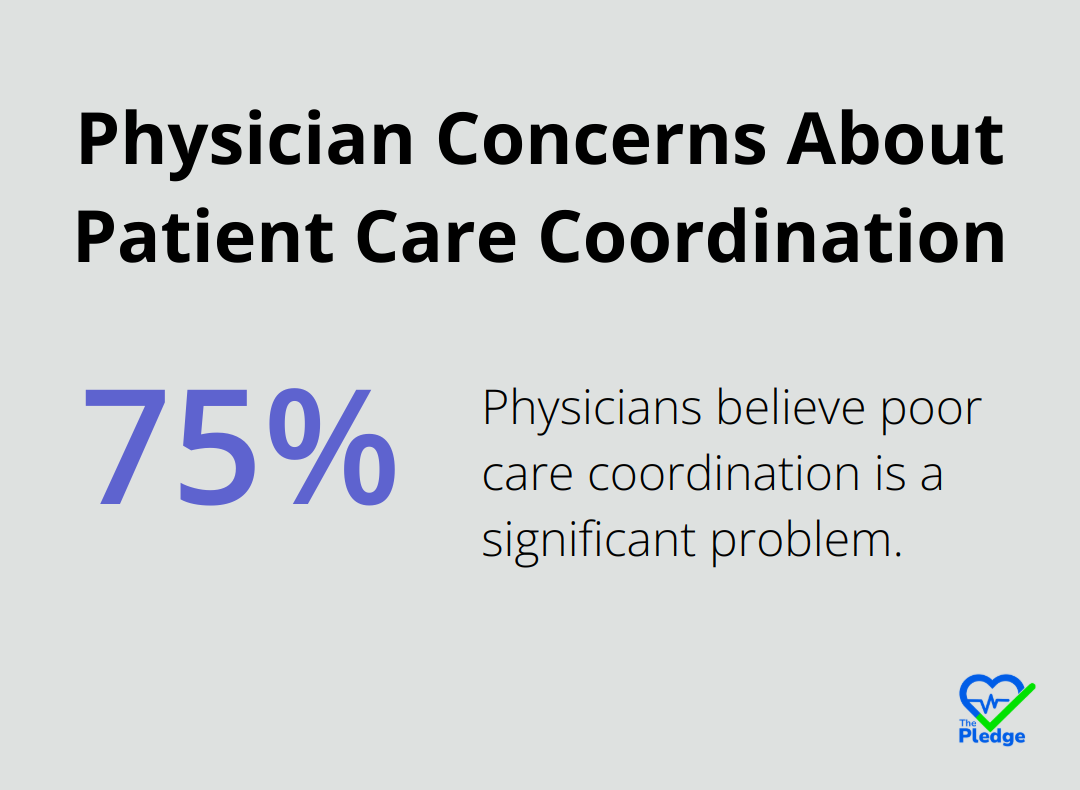
A survey by the American Medical Association found that 75% of physicians believe poor coordination of patient care is a significant problem in the healthcare system. This inefficiency not only compromises patient care but also drives up healthcare costs unnecessarily.
The Administrative Burden and Its Hidden Costs
Fragmented health records create a substantial administrative burden for healthcare providers and staff. Administrative spending accounts for between 15 and 30 percent of healthcare costs. Much of this time is spent trying to piece together a patient’s medical history from various sources.
This administrative overhead translates into increased healthcare costs. The Center for American Progress estimates that administrative complexity in the U.S. healthcare system results in $265 billion in excess spending annually. A unified patient record system could significantly reduce this burden, allowing healthcare providers to focus more on patient care and less on paperwork.
Patient Frustration and Disengagement
One of the most overlooked consequences of fragmented health records is the frustration it causes patients. Having to repeatedly provide the same information to different healthcare providers can be exhausting and demoralizing. This repetition isn’t just an inconvenience-it can lead to errors if patients forget important details or become fatigued with the process.
A survey by the Pew Research Center found that 32% of Americans have experienced a medical error (either personally or with a family member). Many of these errors were attributed to communication breakdowns and lack of information sharing among healthcare providers.
The constant need to rehash medical histories can also lead to patient disengagement. When patients feel that their healthcare providers aren’t communicating effectively, they may lose trust in the system and become less likely to follow through with recommended treatments or preventive care measures.
As we’ve seen, fragmented health records pose significant challenges to patient safety, care coordination, and overall healthcare efficiency. The solution lies in implementing a unified patient record system-a topic we’ll explore in depth in the next section.
How a Unified Patient Record System Transforms Healthcare
A unified patient record system revolutionizes healthcare, addressing critical issues in patient care and healthcare operations. This approach significantly improves patient safety, enhances care coordination, reduces costs, and boosts patient engagement.
Elevating Patient Safety
A unified patient record system dramatically improves patient safety. Medical errors have been recognized as a serious public health problem, reported as the third leading cause of death in the US. A unified system can significantly reduce these numbers by providing healthcare providers with a complete, up-to-date view of a patient’s medical history, allergies, and current medications.
For example, when a patient arrives at the emergency room, doctors can instantly access their complete medical history, including recent lab results and medication changes. This immediate access to crucial information prevents potentially life-threatening drug interactions or allergic reactions.
Streamlining Care Coordination
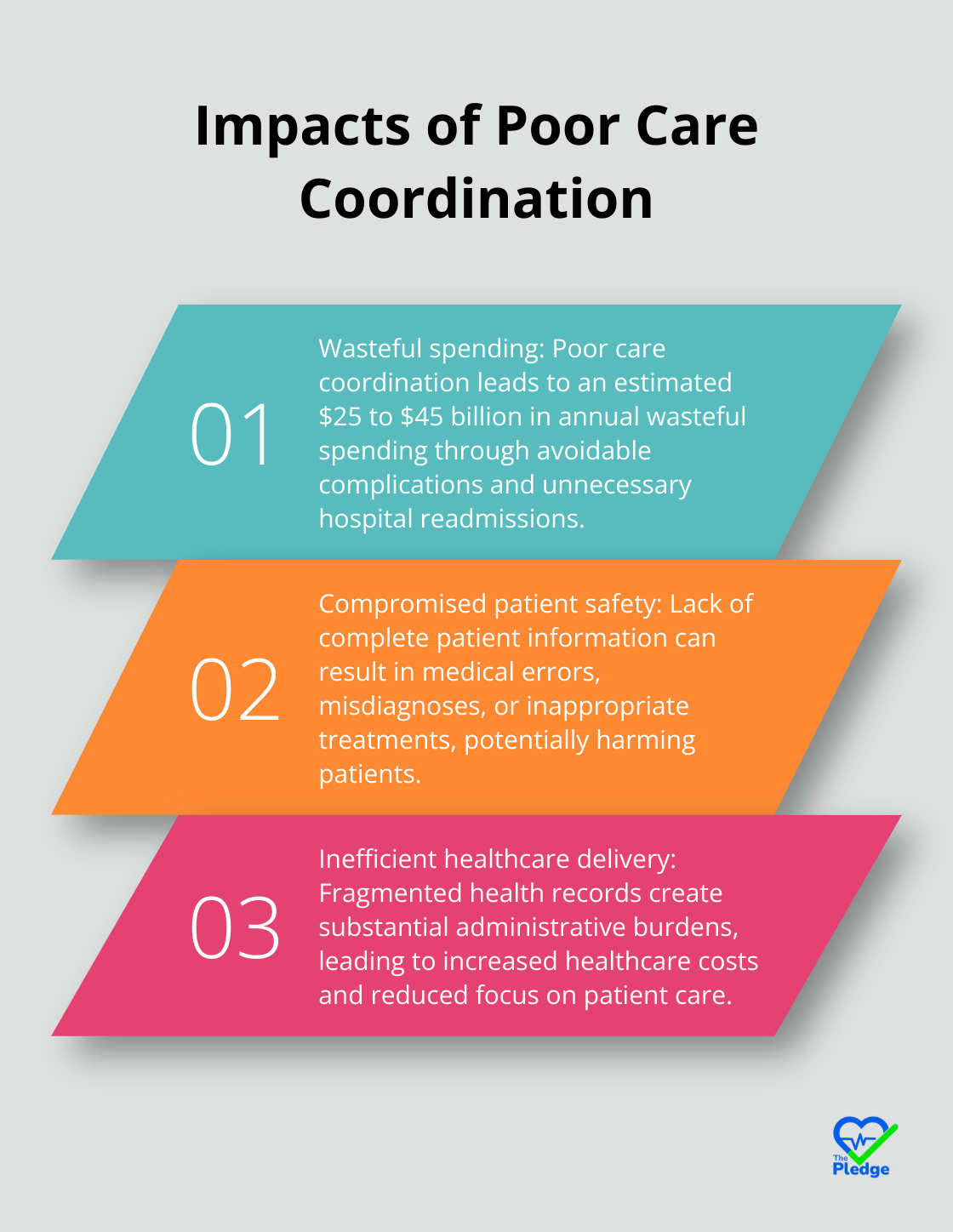
A unified patient record system enhances care coordination among healthcare providers. Poor care coordination leads to an estimated $25 to $45 billion in wasteful spending annually through avoidable complications and unnecessary hospital readmissions.
With a unified data ecosystem, primary care physicians, specialists, and hospital staff can all access and update the same patient record in real-time. This seamless flow of information ensures that all providers are on the same page, reducing the risk of conflicting treatments or duplicate tests.
Slashing Administrative Costs
The administrative burden of managing fragmented health records drives healthcare costs. The U.S. healthcare system spends about $496 billion annually on billing and insurance-related costs.
A unified EMR can help reduce healthcare costs by automating routine tasks, reducing the need for manual record-keeping, and enabling real-time data access. This automation not only saves time but also allows healthcare providers to focus more on patient care rather than paperwork.
Empowering Patients
Patient engagement is vital for better health outcomes, and a unified patient record system plays a critical role in this. Patients who have access to their health records are more likely to adhere to treatment plans and engage in preventive care.
A user-friendly interface allows patients to easily access their health information, schedule appointments, and receive personalized health reminders. This level of engagement not only improves patient satisfaction but also leads to better health outcomes and reduced healthcare costs in the long run.
Unlocking Data-Driven Insights
A unified patient record system provides a goldmine of data for population health management. Healthcare organizations can analyze trends across large patient populations to identify at-risk groups, predict disease outbreaks, and develop targeted interventions.
AI-powered systems can analyze data from thousands of patient records to identify early warning signs of chronic diseases like diabetes or heart disease. This proactive approach allows healthcare providers to intervene early, potentially preventing the onset of these conditions and reducing long-term healthcare costs.
The implementation of a unified patient record system represents a fundamental shift in healthcare delivery. The next section will explore how The Pledge’s solution brings these benefits to life, offering a comprehensive and user-friendly approach to unified patient records.
How The Pledge Simplifies Unified Patient Records
The Pledge has developed a comprehensive solution that addresses the complexities of implementing a unified patient record system. Our platform integrates health data from various sources, providing a single, coherent view of a patient’s medical history.
Centralized Data Integration
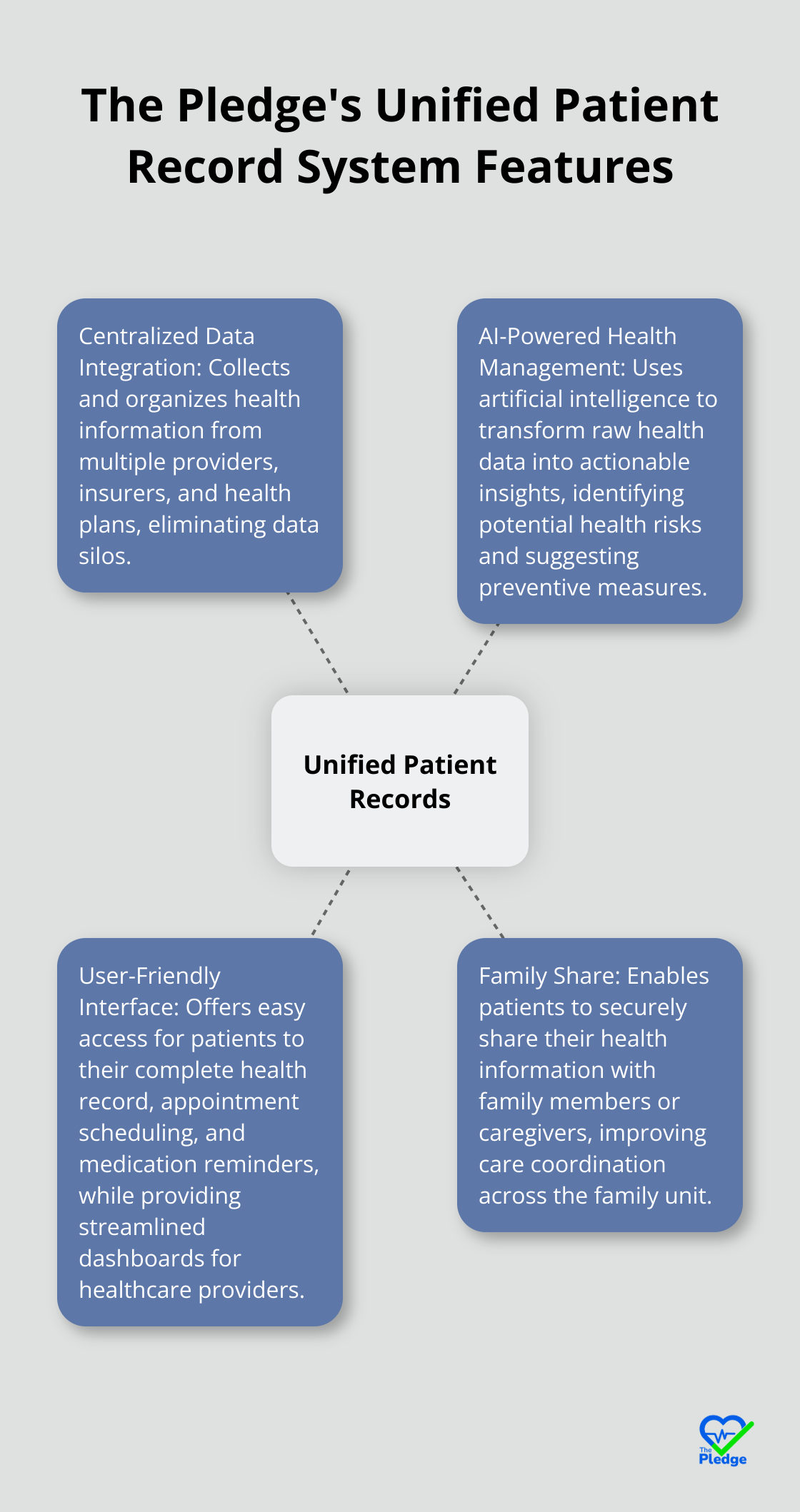
The Pledge’s system acts as a central hub, collecting and organizing health information from multiple providers, insurers, and health plans. This integration eliminates data silos and ensures that all relevant information is readily available to authorized healthcare professionals.
Our platform supports comprehensive interoperability with HL7® v2, HL7 FHIR®, DICOM, and IHE profiles, enabling smooth compatibility across various healthcare environments. This compatibility allows for easy adoption without the need for extensive infrastructure changes.
AI-Powered Health Management
The Pledge uses artificial intelligence to transform raw health data into actionable insights. AI is powerful and has the potential to fundamentally transform the practice of medicine and the delivery of healthcare. Our AI algorithms analyze patient records to identify potential health risks, suggest preventive measures, and generate personalized care plans.
The system might detect a pattern of rising blood pressure readings and automatically schedule a follow-up appointment with the patient’s primary care physician. This proactive approach helps catch health issues early, potentially avoiding more serious complications.
User-Friendly Interface
We designed The Pledge’s interface with both patients and healthcare providers in mind. For patients, the mobile app offers easy access to their complete health record, appointment scheduling, and medication reminders. The intuitive design ensures that even users with limited tech savvy can navigate the system easily.
Healthcare providers benefit from a streamlined dashboard that presents relevant patient information at a glance. This efficiency allows doctors to spend less time searching for information and more time focusing on patient care.
Family Share for Collaborative Care
The Pledge’s Family Share feature enables patients to securely share their health information with family members or caregivers. This functionality proves particularly valuable for managing the care of elderly parents or children with chronic conditions.
Adult children can monitor their parents’ medication adherence or view upcoming appointments, allowing for better coordination of care across the family unit. This feature improves patient outcomes by fostering a support network and ensuring continuity of care.
Final Thoughts
A unified patient record system addresses critical healthcare challenges. It improves patient safety, enhances care coordination, and reduces administrative costs. This comprehensive approach empowers patients to take an active role in their health management while providing valuable insights for population health strategies.
The benefits of unified patient records extend to all healthcare stakeholders. Patients experience better outcomes and a seamless healthcare journey. Healthcare providers make more informed decisions and streamline their workflows. Healthcare systems reduce costs and improve efficiency in managing population health.
The Pledge’s innovative platform offers a solution to implement a unified patient record system. It centralizes health data, leverages AI for personalized care, and provides a user-friendly interface (for both patients and providers). Healthcare organizations that adopt this technology will position themselves to deliver high-quality, efficient, and patient-centered care.