
Managing care for multiple family members is messy. Appointments slip through the cracks, medication schedules get confused, and important health updates never reach the people who need them.
At The Pledge, we’ve seen how streamlined family care reminders change this. When families coordinate through centralized systems with real-time notifications, health outcomes improve and stress drops significantly.
Why Family Care Coordination Actually Matters
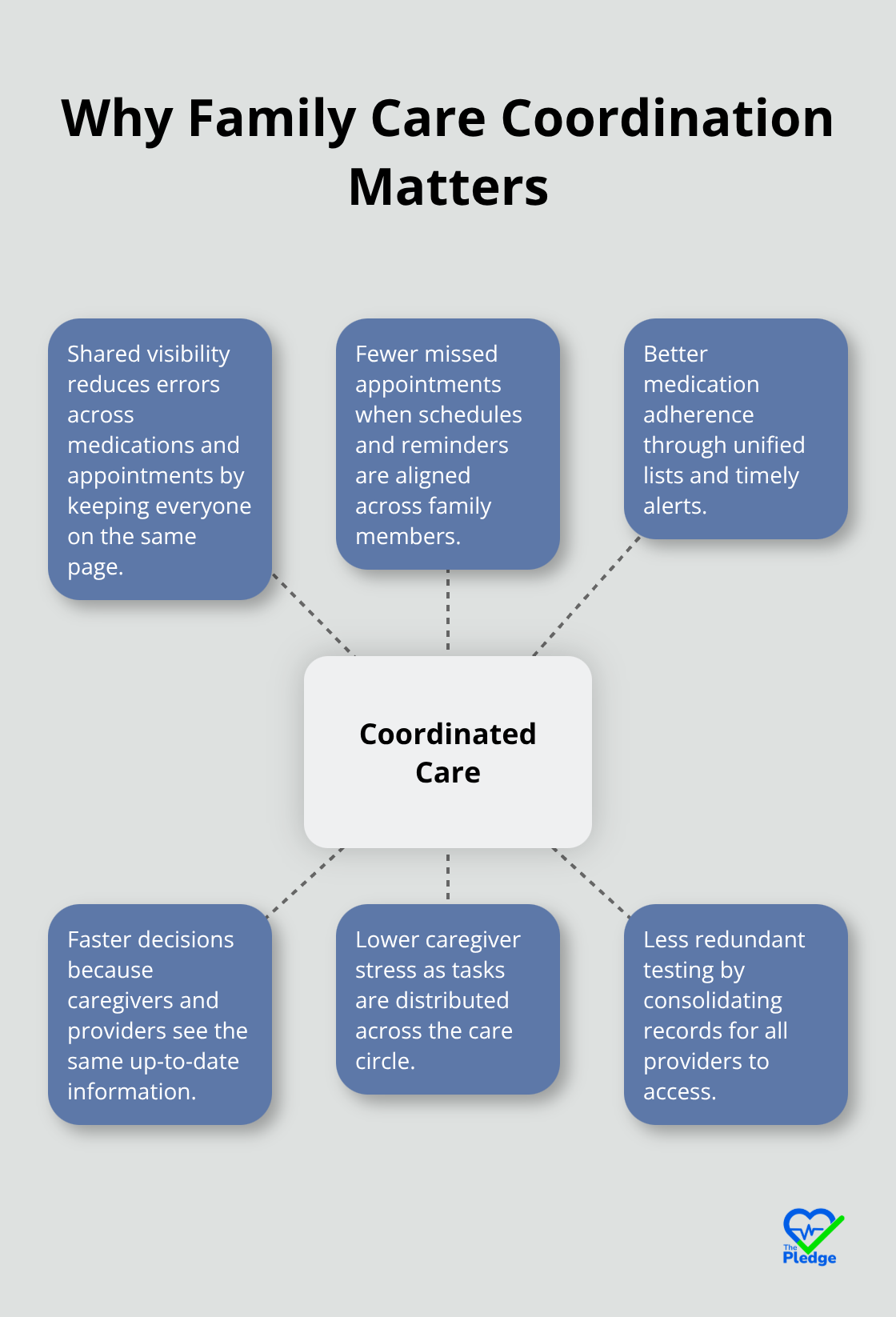
Poor care coordination creates real consequences. The Agency for Healthcare Research and Quality documents how fragmented systems directly cause missed appointments, duplicated tests, and preventable hospital readmissions. When family members manage health separately without shared visibility, critical information vanishes. A parent’s medication list never reaches the specialist treating their adult child. A grandparent’s recent lab results sit unshared while another family member orders redundant testing. The Agency for Healthcare Research and Quality defines care coordination as the deliberate organization of patient care activities between two or more participants to facilitate appropriate delivery of health care services, yet most families operate without any systematic approach. This fragmentation isn’t just inefficient-it’s dangerous.
Missed doses, conflicting medications, and overlooked drug interactions create real harm.
Scattered Information Forces Reactive Care
Fragmented health data pushes families into reactive mode. Someone misses a medication reminder because it was texted to a phone number they rarely check. A specialist never receives the complete medication history because records remained locked in a hospital system the family stopped visiting years ago. The Johns Hopkins Bloomberg School of Public Health found that caregivers for older adults increased by nearly one-third between 2011 and 2022, yet most caregiving happens without centralized coordination tools. When multiple family members coordinate care without shared visibility, each person works with incomplete information and makes decisions in isolation. This creates unnecessary stress and increases error rates exponentially. A parent managing a teenager’s asthma and a grandparent’s diabetes simultaneously cannot track overlapping appointments, medication refills, and follow-up tasks across fragmented platforms. Research shows that systematic reminder systems significantly improve appointment attendance and task completion, yet most families rely on informal methods like text messages and phone calls that regularly fail.
Engaged Family Members Improve Health Outcomes
Engaged family members improve health outcomes measurably. When everyone in the household has transparent access to relevant health information through secure, centralized systems, adherence improves and complications drop. The American Academy of Family Physicians emphasizes that family medicine requires lifelong, whole-person care with coordinated navigation-something impossible when health data stays scattered. Families that implement coordinated reminder systems see fewer missed appointments, better medication adherence, and faster responses to health changes. A parent who can instantly see their adult child’s lab results and share them with specialists accelerates diagnosis. A caregiver who receives automated medication reminders coordinated across multiple family members prevents dosing errors. The NIH highlights that mobile apps for family caregivers covering medication tracking, appointment management, and remote check-ins validate the effectiveness of digital coordination tools. When family members operate from the same information set with real-time updates, care becomes proactive rather than reactive. They catch problems earlier, coordinate specialist visits more efficiently, and reduce the burden on any single person managing complex family health needs.
How Digital Systems Close Information Gaps
Technology solves what informal coordination cannot. Centralized platforms eliminate the need to manually track who knows what information and when. A shared health dashboard lets all authorized family members access lab results, medication lists, and appointment schedules instantly. Real-time notifications alert caregivers to missed doses or upcoming appointments before problems escalate. Automated systems reduce the mental load that falls on one primary caregiver, distributing responsibility across the entire care circle. When a family implements these tools rather than relying on phone calls and scattered notes, coordination becomes systematic and reliable. The result: fewer errors, faster decision-making, and measurably better health outcomes across the entire household.
How Digital Reminders Transform Care Management
Real-time notifications fundamentally change how families respond to health needs. When a medication dose is missed, the system alerts caregivers immediately rather than discovering the problem days later during a routine check. Medisafe, a medication management tool, provides real-time dose reminders that coordinate across multiple caregivers, preventing the confusion that arises when no one knows who administered the last dose. Cochrane Collaboration research confirms that multi-channel reminder approaches using text, email, and app alerts generate significantly higher engagement than single-channel methods.
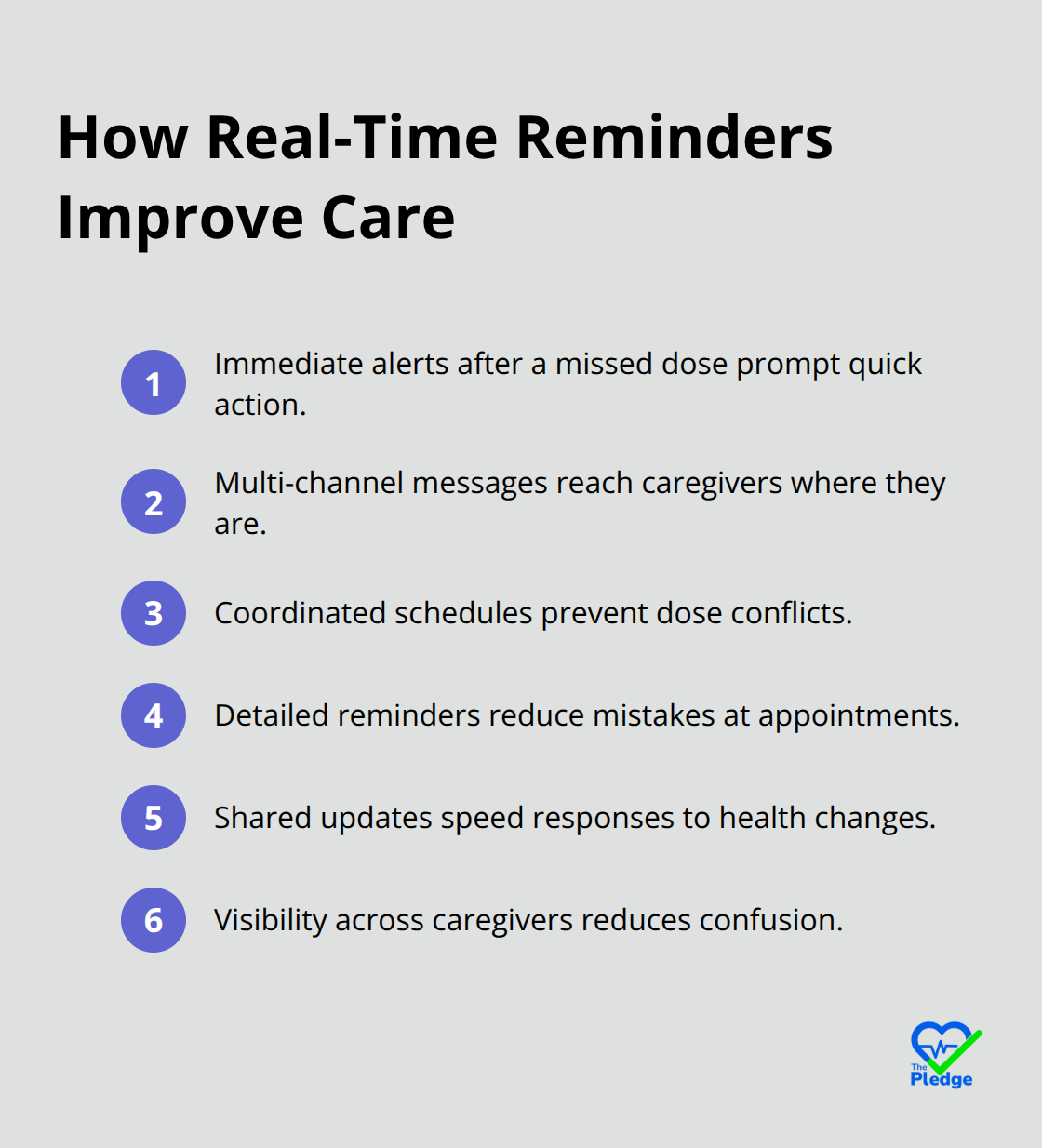
A parent managing their teenager’s asthma medication and their own blood pressure treatment receives coordinated reminders that prevent dose conflicts and overlapping schedules. When reminders include specific details like appointment location, clinician name, required documents, and after-hours contact numbers, families act faster and with fewer errors.
Centralized Data Stops Information from Disappearing
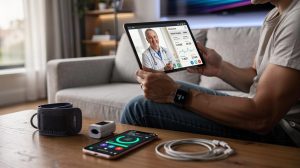
Fragmented records create dangerous gaps. A specialist never receives the complete medication history, lab results sit unshared across different healthcare systems, and critical allergies remain unknown to providers treating acute conditions. Centralized medical records consolidate test results and care plans in one HIPAA-compliant repository, giving authorized family members instant access to the same information providers see. The American Academy of Family Physicians emphasizes that family medicine requires coordinated navigation across the patient’s entire health picture, yet most families operate with scattered information across multiple clinics, pharmacies, and hospitals. When family members access a shared health dashboard, they catch medication conflicts before they cause harm, coordinate specialist visits without redundant testing, and respond to health changes proactively. A caregiver managing an older adult’s diabetes and heart condition can instantly verify medication lists, review recent lab values, and check appointment schedules without making multiple phone calls.
Automation Removes Manual Coordination Work
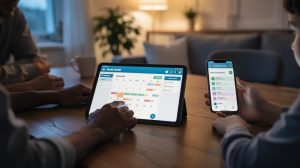
Families relying on phone calls, text messages, and scattered notes spend enormous time on coordination tasks that technology handles instantly. Automated systems assign tasks, send escalating reminders for overdue items, and track referrals to closure, eliminating the gaps where care falls apart. A shared care calendar accessible to all authorized family members and paid caregivers prevents task duplication and keeps schedules aligned, reducing the fragmentation that slows response times. Medication reminders integrated with pharmacy records trigger automatically when refills are needed, preventing the missed doses that compromise health outcomes. When systems track metrics like appointment show rates and overdue tasks, families identify coordination failures early and adjust their approach. The burden distributes across the entire care circle rather than concentrating on one exhausted caregiver managing everything alone.
Transparency Accelerates Decision-Making
This systematic approach frees time for meaningful interaction rather than administrative overhead. Transparency across the care team accelerates decision-making and reduces the administrative burden that typically falls on unpaid family caregivers (a population that increased nearly one-third between 2011 and 2022). When all authorized family members and providers access the same current information simultaneously, they coordinate faster and catch problems earlier. The next step involves selecting the right platforms and configuring them to match your family’s specific needs and preferences.
Building Your Family Care Reminder System
Select Platforms That Enforce Security and Privacy
Platform selection matters more than most families realize. You need systems that enforce HIPAA compliance with role-based access controls, meaning a parent can view a child’s medications while a teenager cannot access a grandparent’s mental health records. GoodRx and Medisafe represent two practical tools worth evaluating: GoodRx shows lower-cost pharmacy options across nearby locations, directly addressing medication cost barriers that prevent adherence, while Medisafe delivers real-time dose reminders coordinated across multiple caregivers to prevent the confusion of who administered which dose. The NIH emphasizes that medication tracking and appointment management apps validate digital coordination as effective, yet the critical step involves testing these tools with your specific family structure before full implementation.
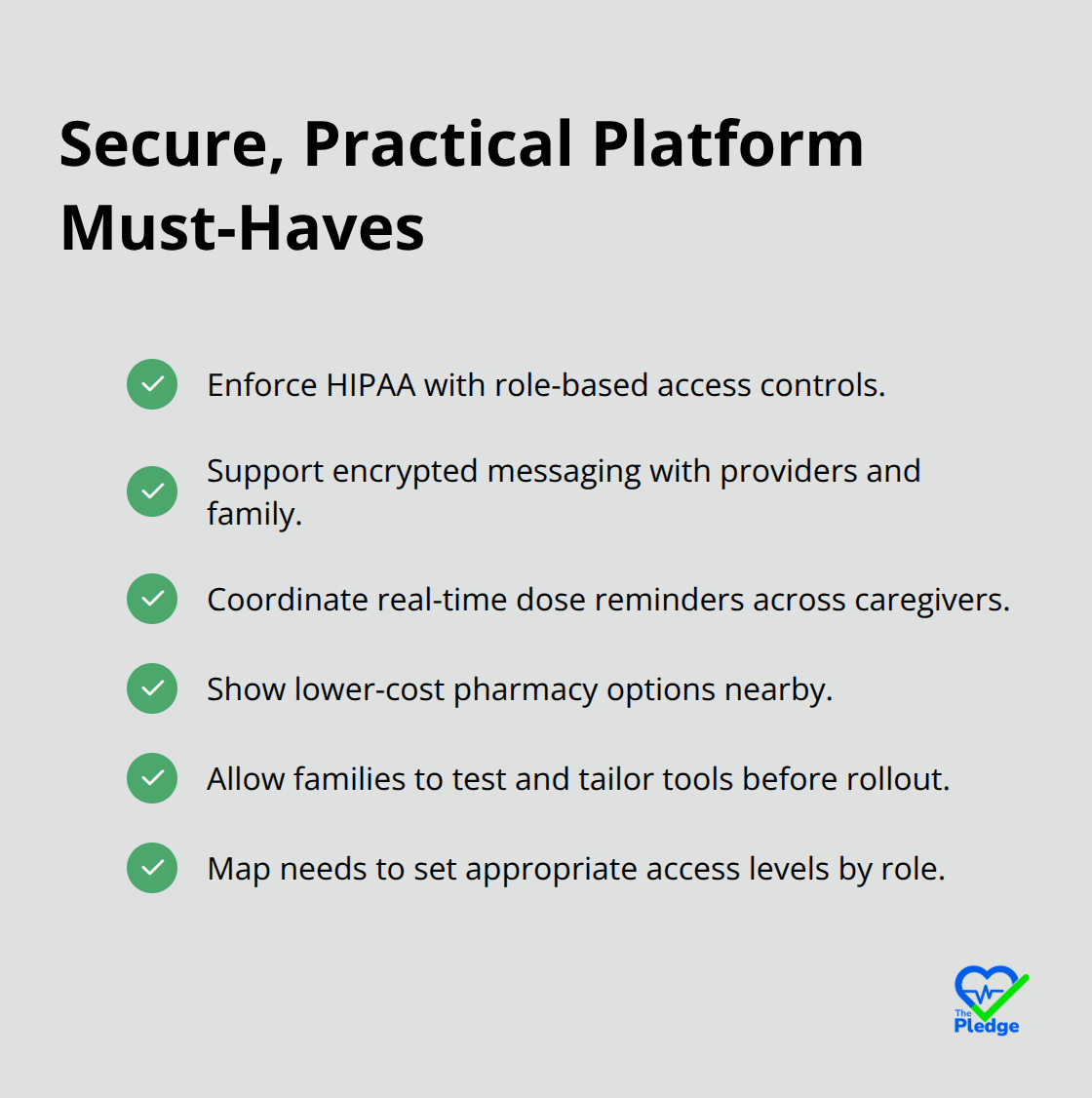
Secure data sharing platforms must support encrypted messaging between family members and providers, preventing the data breaches that undermine trust and create legal liability under HIPAA. Start by mapping your family’s actual needs: How many people require medication reminders? Which appointments overlap? What information must stay private versus shared? A caregiver managing an older adult’s diabetes and heart condition needs different access levels than a teenager managing their own asthma.
Configure Reminders to Match How Your Family Actually Communicates
Customization prevents alert fatigue while maintaining reliability. A study in the Cochrane Collaboration found that multi-channel reminders using text, email, and app alerts generate significantly higher engagement than single-channel methods, yet bombarding caregivers with notifications causes them to ignore all of them. Configure your system so reminders arrive through the communication channel each person actually checks: one caregiver prefers text messages while another uses email exclusively.
Set reminder frequency based on actual need rather than default settings, with escalation paths that trigger phone calls only when automated reminders go unanswered for time-sensitive items like missed medication doses. Research from the Institute for Healthcare Improvement shows that weekly caregiver huddles surface coordination issues early, so your platform should support synchronous communication alongside asynchronous reminders.
Connect Your Reminder System to Existing Health Records and Calendars
Integration with existing calendars and health systems eliminates duplicate data entry that consumes enormous time and introduces transcription errors. When your reminder system connects directly to your family’s pharmacy records, medication refill reminders trigger automatically rather than requiring manual tracking. A shared calendar accessible to all authorized family members and any paid in-home caregivers prevents the task duplication that wastes time and creates confusion about who handles which responsibility.
The AHRQ defines care coordination as deliberate organization of patient care activities between multiple participants, and your technical infrastructure must reflect this reality by connecting appointments, lab results, medication schedules, and referral tracking in one location. Track metrics like appointment show rates and overdue tasks to identify coordination failures before they cause health consequences, adjusting your configuration as patterns emerge.
Final Thoughts
Streamlined family care reminders transform how households manage health by moving families from scattered phone calls and forgotten tasks to coordinated systems with real-time notifications. Care becomes proactive instead of reactive, everyone stays informed simultaneously, and decisions happen faster with measurably improved health outcomes. Caregivers report significantly lower stress when responsibilities distribute across the entire care circle rather than concentrating on one exhausted person, while automated systems eliminate the administrative overhead that consumes enormous time.
Technology consolidates fragmented information into one secure location where real-time updates keep all authorized family members and providers aligned on the same health picture. Automated reminders trigger at the right moment through the communication channel each person actually uses, and integration with existing calendars and pharmacy records prevents duplicate data entry and transcription errors that introduce harm. When a parent shares their adult child’s lab results with a specialist instantly, diagnosis accelerates, and when a caregiver receives coordinated medication reminders across multiple family members, dosing errors disappear.
Start with your family’s actual needs, configure your system to match how you communicate, and connect your reminders to existing health records. Visit The Pledge to explore how centralized health management transforms family care coordination and empowers your household to take control of wellness together.



![[Guide] Incentives That Drive Preventive Health Participation](https://thepledge.app/wp-content/uploads/emplibot/Guide_-Incentives-That-Drive-Preventive-Health-Participation_1783650286-300x168.jpeg)