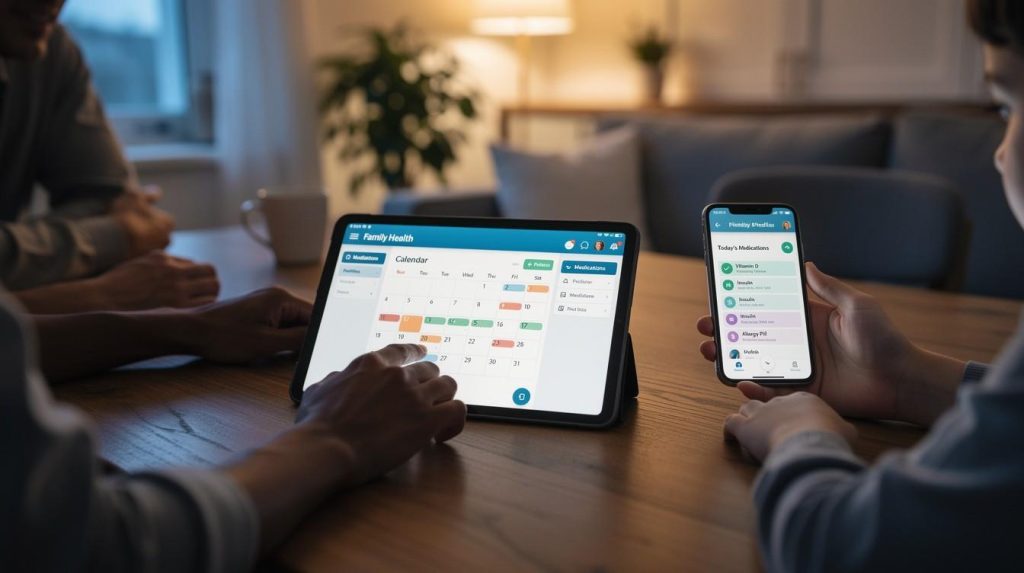
Managing health across your entire household shouldn’t require juggling multiple apps, paper records, and scattered appointment details. A family health management app centralizes everything your household needs in one secure place.
At The Pledge, we’ve seen firsthand how coordination gaps lead to missed appointments, duplicate tests, and preventable health issues. The right digital tools transform how families stay organized and healthy together.
Why Your Family’s Health Records Stay Fragmented
Healthcare fragmentation destroys family health coordination. Most households rely on separate patient portals for each family member, scattered appointment reminders across different providers, and medication lists that exist nowhere officially. According to research analyzing 175 caregiver-focused apps, roughly 67% of apps focus exclusively on the patient rather than the caregiver managing multiple family members-which means most digital tools ignore the person actually coordinating everything. Moms make over 80% of family healthcare decisions in the U.S., yet they’re forced to manually track appointments, prescriptions, and test results across fragmented systems. When your child’s pediatrician, your spouse’s cardiologist, and your parent’s primary care doctor all use separate portals, critical information gaps emerge. A missed medication refill at one clinic never triggers a reminder elsewhere. Test results from one provider never reach another. Preventative care opportunities vanish because nobody has a complete picture of your family’s health needs.
The Administrative Burden Multiplies Across Family Members
The time required to coordinate care for multiple family members becomes genuinely unsustainable. Family caregivers average 11 hours of care per week according to data from NAC and AARP, but that number explodes to 100+ hours weekly when managing dementia, mental illness, or cancer. Most of this time disappears into logistics: calling to confirm appointments, manually entering medication names into different systems, searching through email chains for lab results, and coordinating schedules across pediatricians, specialists, and elder care providers. When information lives in separate apps, notebooks, and provider portals, you’re not actually managing health-you’re managing information chaos. The right solution consolidates everything into one accessible place where appointment reminders, medication schedules, and health updates exist in a single hub rather than scattered across multiple platforms. This approach reduces cognitive load dramatically and frees caregivers to focus on actual health decisions rather than administrative overhead.
Coordination Produces Measurable Health Improvements
Fragmented care doesn’t just create frustration; it produces measurable harm. Families with centralized health records experience fewer medication errors, catch preventative issues earlier, and reduce unnecessary hospital visits. When all family members’ health information lives in one secure location, patterns emerge that isolated records never reveal. A family history of diabetes becomes visible across multiple members, enabling earlier intervention. Medication interactions that might have been missed become apparent. Appointment scheduling becomes efficient instead of chaotic. Research on coordinated care platforms shows that real-time data sharing between family members and providers reduces hospital admissions and emergency department visits. The difference between paper calendars, sticky notes, and multiple apps versus one unified system isn’t incremental-it’s transformational for families managing chronic conditions, aging parents, or multiple children with different healthcare needs. These improvements set the stage for understanding what features actually matter when you’re selecting the right tool for your household.
What Makes a Family Health App Actually Useful
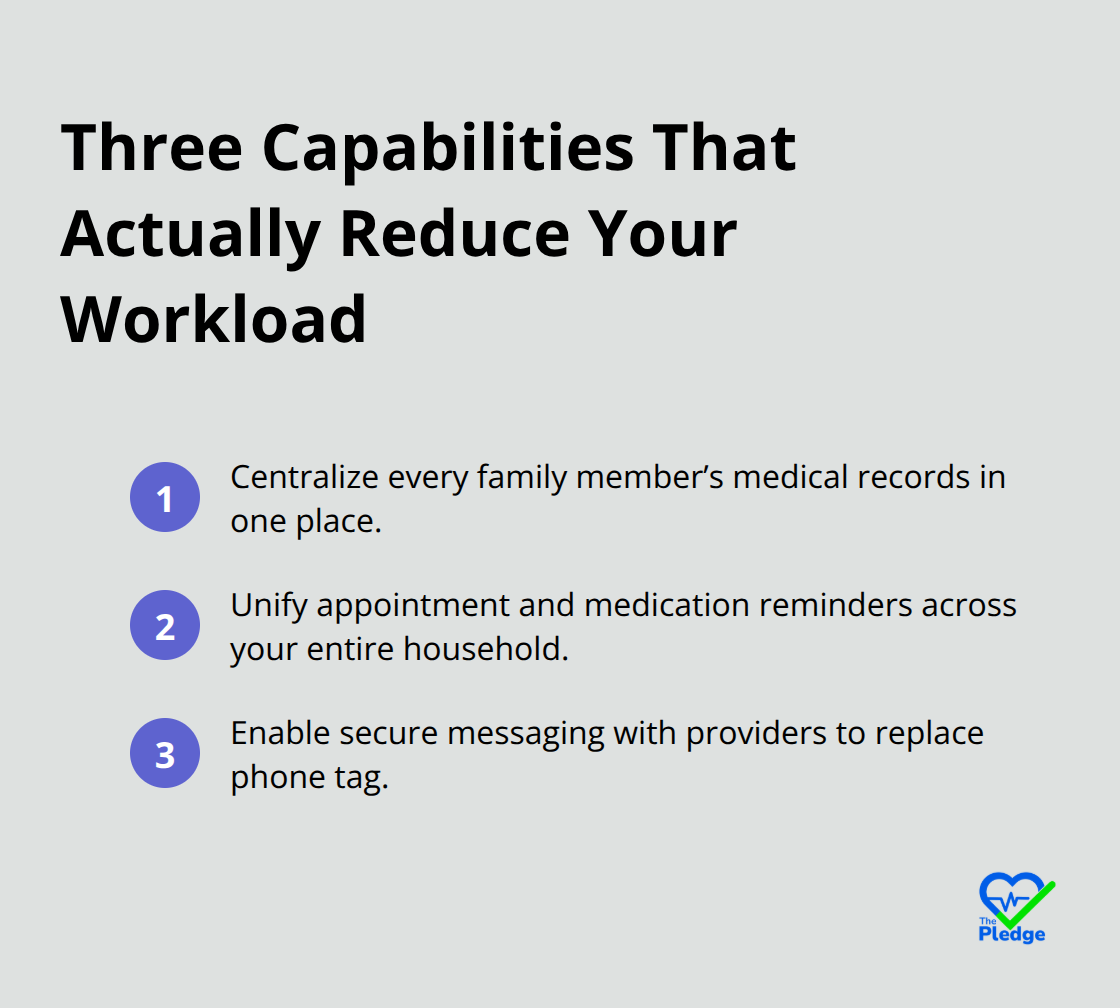
A family health app only matters if it solves the specific coordination problems you face daily. Generic wellness apps don’t cut it because they ignore the reality of managing health across multiple people with different ages, conditions, and providers. Beyond basic features, three capabilities separate tools that genuinely reduce your workload from apps that create more chaos.
Centralized Medical Records for Every Family Member
Your household needs one location where pediatric records, adult medications, aging parent diagnoses, and family history all exist together. This isn’t about convenience; it’s about preventing the errors that happen when information scatters. Research on 175 caregiver-focused apps found that 67% focus only on the patient, ignoring the person actually managing everyone’s care. That’s backwards. A functional family app must display each member’s current medications, allergies, recent test results, and upcoming appointments in a format you can access in seconds during a doctor visit or emergency. Cloud-based storage matters here because paper records and phone photos disappear when you need them most. The system should let you assign different permission levels so your teenager sees their own records while your aging parent’s information stays accessible to designated caregivers only. A unified EMR will significantly contribute to reducing barriers to quality care and improving coordination of care for patients.
Appointment and Medication Reminders That Work Across Your Household
Appointment reminders from individual providers don’t coordinate with each other, which means your family ends up with conflicting schedules or forgotten visits. An integrated system sends reminders for all family members from one dashboard, allowing you to spot conflicts before they happen. Medication reminders need to work the same way across your entire household. Research on medication reminders with caregiver connectivity shows a statistically significant increase in adherence in groups receiving reminder interventions compared to controls. The app should notify you when prescriptions need renewal before they run out, alert you to potential drug interactions across family members, and track whether medications were actually taken. For families managing dementia or cognitive decline in older relatives, geofencing features reduce constant check-ins while maintaining safety. Real-time notifications also matter when someone schedules an appointment through a provider portal; you shouldn’t have to manually enter it again into a separate calendar.
Secure Messaging That Eliminates Phone Tag
Direct communication channels with your family members’ providers eliminate the back-and-forth phone calls that consume hours every month. Instead of calling your parent’s cardiologist, waiting on hold, leaving a message, and waiting for a callback, you send a secure message directly through the app with your parent’s latest blood pressure readings attached. Social-style family feeds minimize information fragmentation and reduce the relay-station updates where information gets lost between family members. When your child’s pediatrician needs to know about a medication your spouse’s doctor prescribed, one secure share sends everything instead of you playing messenger. Structured coordination reduces communication fatigue by letting family members and friends offer help through the app, with automated reminders keeping commitments on track. This matters because roughly 34 million American adults serve as family caregivers according to NAC and AARP data, and most waste significant time on administrative coordination that a centralized system eliminates entirely.
Selecting the Right Features for Your Family’s Needs
Not every family needs identical features, which means your selection process should start with your specific situation. If you’re coordinating care for aging parents with multiple chronic conditions, medication tracking and provider communication become non-negotiable. If you’re managing young children’s pediatric care alongside elder care, appointment coordination and health history storage take priority.
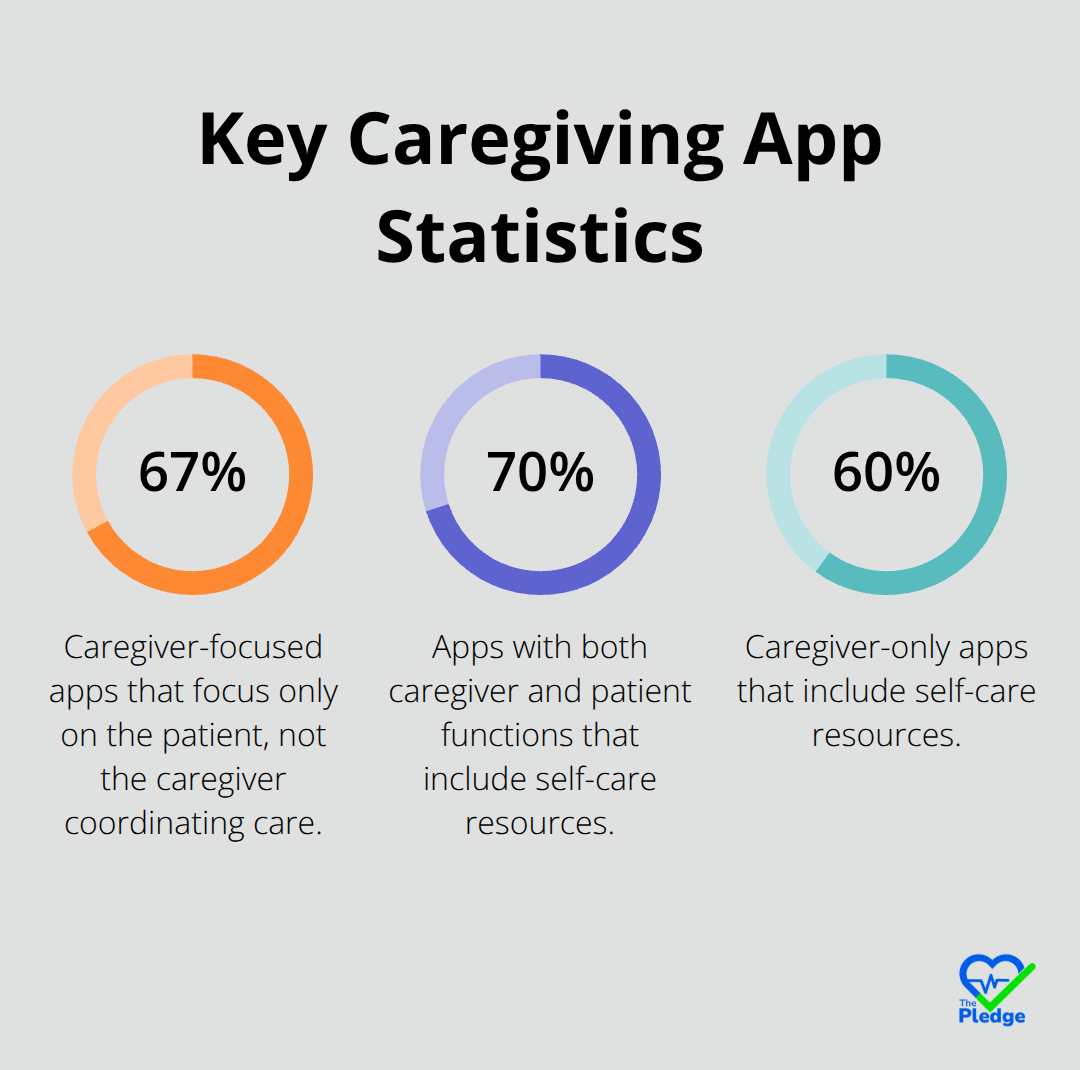
The most effective apps combine patient-focused features (medication lists, test results, appointment schedules) with caregiver-specific tools (task assignments, secure messaging, permission controls). Research analyzing caregiver apps found that apps offering both caregiver and patient functions include self-care resources 70% of the time, compared to only 60% of caregiver-only apps. This distinction matters because you can’t coordinate your family’s health effectively while ignoring your own wellness. The right platform recognizes that the person managing everyone’s care needs support too, not just the people receiving care. With these core features in place, your household can move from reactive health management (responding to crises) to proactive coordination (preventing problems before they happen).
Coordinating Preventative Care and Reducing Emergencies
Preventative care only works when your entire household follows through consistently. Appointment reminders, wellness tracking, and provider communication must function as an integrated system rather than isolated tasks. A centralized family health app transforms preventative care from something you think about occasionally into something that happens automatically across your household.
Patterns Emerge When Health Data Lives in One Place
When your app tracks wellness goals for every family member in one place, patterns emerge that scattered records never reveal. You notice your teenager hasn’t had their annual physical in 18 months. You see that your spouse’s blood pressure readings have crept upward over the past month. You catch that your parent’s medication refill is due before they run out.
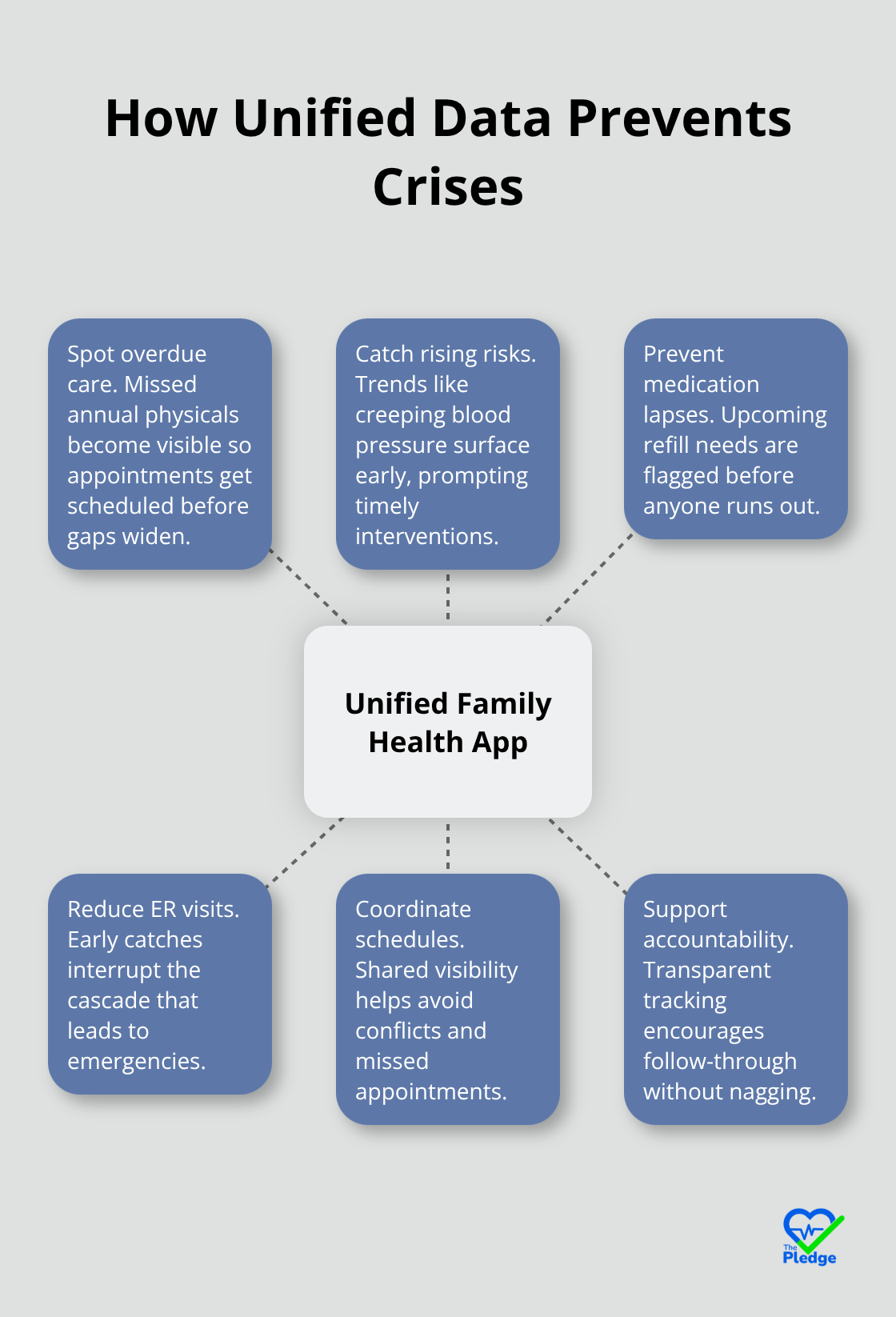
These small catches prevent the cascade that leads to emergency room visits.
Research on coordinated care platforms shows that real-time data sharing between family members and providers reduces hospital admissions and emergency department visits significantly. The mechanism is straightforward: when everyone’s health information exists in one accessible location, preventative interventions happen on schedule instead of being forgotten until a crisis forces an emergency visit.
Shared Health Visibility Strengthens Family Accountability
Shared health visibility changes how family members support each other’s wellness. Instead of your spouse asking whether you took your medication or your parent forgetting to mention a symptom at their next appointment, the app creates accountability without nagging. When medication adherence is tracked transparently across your household, compliance rates improve measurably.
When appointment reminders go to multiple family members simultaneously, scheduling conflicts disappear because everyone sees the calendar before booking. For families managing chronic conditions, this coordination prevents the expensive cycle of missed appointments, medication non-compliance, and preventable hospitalizations. A family member with diabetes who receives consistent medication reminders and tracks blood sugar readings in the app alongside their provider’s notes stays healthier and avoids the complications that drive emergency visits.
Financial Impact of Preventing Crises
The financial impact matters significantly. Preventing one hospital admission typically costs far less than managing one emergency room visit. Your family health app converts the time you already spend managing healthcare into a system that catches problems before they become expensive crises. This shift from reactive emergency care to proactive preventative coordination is where digital health tools deliver their most tangible value (and where families see the greatest return on their investment in health management technology).
Final Thoughts
Coordinated family health management transforms how your household prevents crises and reduces unnecessary costs. When your medical information lives in one secure place instead of scattered across multiple providers and apps, preventative care happens automatically, appointments avoid conflicts, and medications refill before they run out. Patterns emerge that catch problems early, preventing the expensive cascade toward emergency rooms and hospital admissions.
We at The Pledge built our platform to eliminate the fragmentation that makes healthcare coordination exhausting. Your family health management app centralizes vital medical information, benefits, and real-time health metrics so your entire household stays organized and healthy together (with AI-driven reminders, secure data sharing, and family participation features that transform reactive emergency care into proactive coordination). This shift delivers tangible value because preventing one crisis costs far less than managing one emergency visit.
Start consolidating your household’s health information today and move from managing chaos to managing health. Your family’s wellness journey becomes simpler, more coordinated, and genuinely preventative when you take control now.




![[Guide] Incentives That Drive Preventive Health Participation](https://thepledge.app/wp-content/uploads/emplibot/Guide_-Incentives-That-Drive-Preventive-Health-Participation_1783650286-300x168.jpeg)