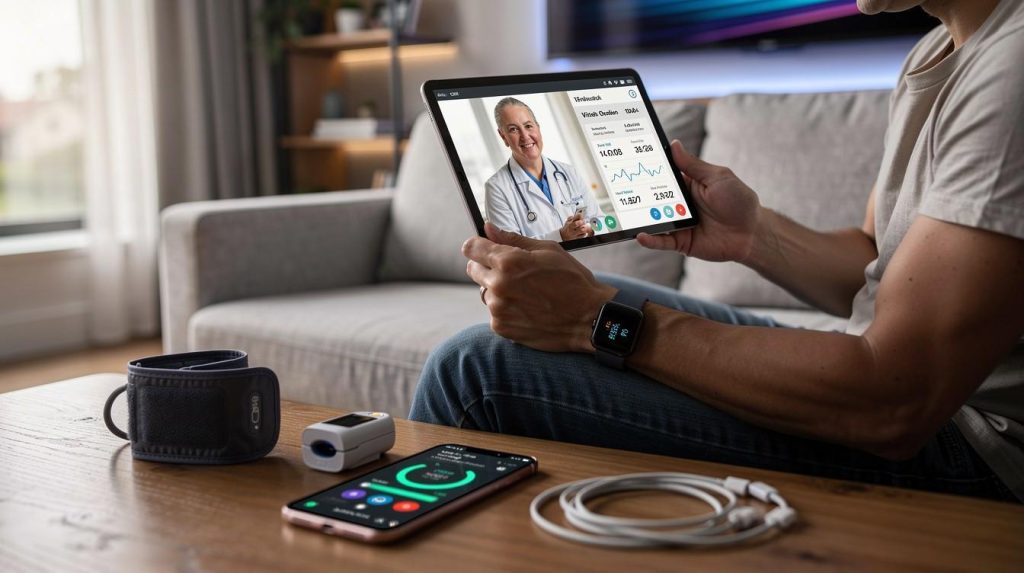
Healthcare is no longer confined to clinic walls. Patients now expect to access care from their homes, offices, and anywhere else life takes them.
At The Pledge, we’ve seen remote health access reshape how people manage their wellbeing. This shift isn’t just convenient-it’s fundamentally changing healthcare delivery, reducing costs, and improving outcomes for millions.
Why Remote Health Access Matters Now
The Shift Away from Facility-Based Care
Healthcare is moving away from reactive, facility-based care toward proactive management from home. Patients reject the old model: taking time off work, arranging childcare, sitting in waiting rooms for routine checkups. This demand reflects real economic pressure. Travel costs, parking, and lost productivity accumulate quickly. A patient managing diabetes or hypertension needs frequent monitoring, and traditional clinic visits drain both time and money. Remote monitoring addresses this directly by eliminating these barriers entirely.
Measurable Financial Impact
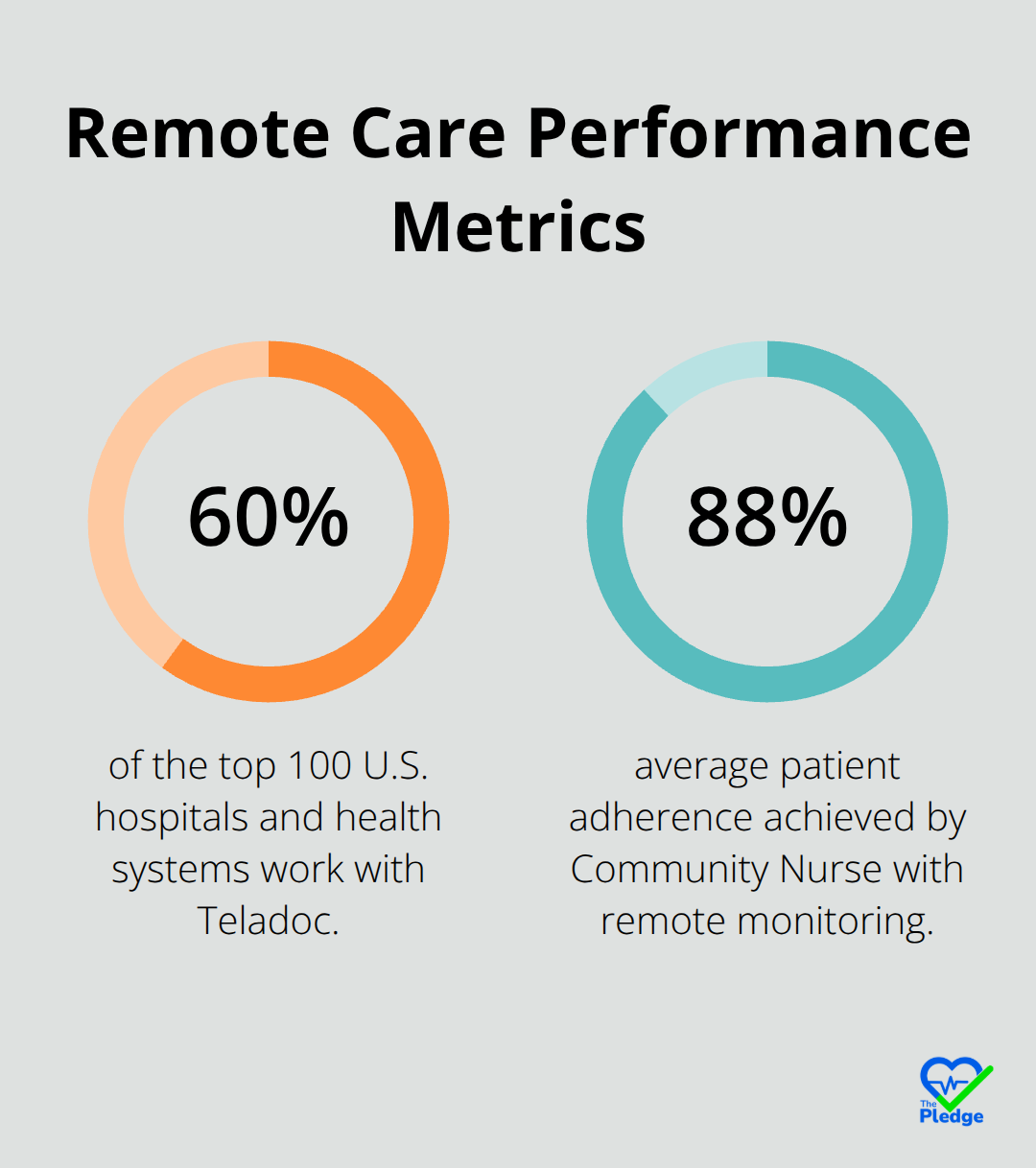
Studies show that regular telemedicine follow-ups and remote monitoring lower hospital readmissions and improve treatment adherence. For employers, this matters enormously. More than half of Fortune 500 companies now partner with platforms offering virtual care, recognizing that healthier employees mean lower insurance premiums and higher productivity. The data proves concrete results: Frederick Health reported $2.3 million in savings over 12 months using remote patient monitoring for chronic care patients. Community Nurse achieved 88% average patient adherence with remote monitoring while simultaneously reducing hospital readmissions and care costs. These operational improvements directly affect the bottom line.
Early Detection Through Continuous Monitoring
Prevention through continuous data represents remote health access at its strongest. Traditional healthcare waits for problems to surface; remote monitoring catches them early. Wearable devices and home-based sensors track vital signs like blood pressure, glucose levels, and heart rate in real time, enabling clinicians to detect deterioration before patients need emergency care. Teladoc Health, the most recognized virtual care brand, operates within an ecosystem serving 100 million Americans across 100+ health plans. This scale reveals adoption patterns: virtual care platforms are increasingly used by health systems, and states rely on remote care to transform rural health where in-person access remains limited.
Reducing System Burden and Expanding Access
Remote monitoring reduces avoidable emergency department visits and hospital admissions, allowing earlier discharge and lowering total cost of care. For rural populations specifically, telemedicine eliminates travel barriers that previously kept people from specialist appointments. The financial impact extends beyond individual patients-entire health systems benefit from reduced facility strain and improved resource allocation. These improvements create space for clinicians to focus on higher-need cases while patients receive appropriate care at home.
Building Engagement for Better Outcomes
Real engagement drives real outcomes. Platforms that centralize health data and use AI to send personalized reminders keep people engaged with their care plans. When patients receive timely alerts and understand their health trends, they take ownership of their conditions. This engagement translates to better health management and lower costs for employers. Telehealth apps increasingly support mental health alongside physical health, making therapy accessible to those who couldn’t reach it before due to cost, location, or scheduling conflicts. The next section explores how organizations can select and implement the right remote health platform to capture these benefits.
Where Virtual Care Stands Today
The Market Has Moved Beyond the Pandemic Surge
The telehealth market stabilized into permanent infrastructure after the pandemic surge. Virtual care adoption continues to accelerate, consolidating around platforms that integrate with existing health systems. Teladoc Health demonstrates this scale clearly: the platform reaches 100 million Americans across 100+ health plans, with more than half of Fortune 500 employers now using virtual care solutions. This represents mainstream adoption, not experimentation anymore.
Major Health Systems Have Embedded Remote Care Into Operations
Health systems recognize the operational value of remote care. Sixty percent of the top 100 U.S. hospitals and health systems work with Teladoc, proving that major medical institutions no longer treat remote care as supplementary-they’ve embedded it into core operations. The shift reflects hard economics. Frederick Health saved $2.3 million in 12 months using remote patient monitoring for chronic conditions. Community Nurse achieved 88% patient adherence rates while simultaneously reducing both readmissions and care costs. These results represent the new baseline for organizations serious about cost control and patient outcomes.
Integration With Existing Systems Creates Competitive Advantage
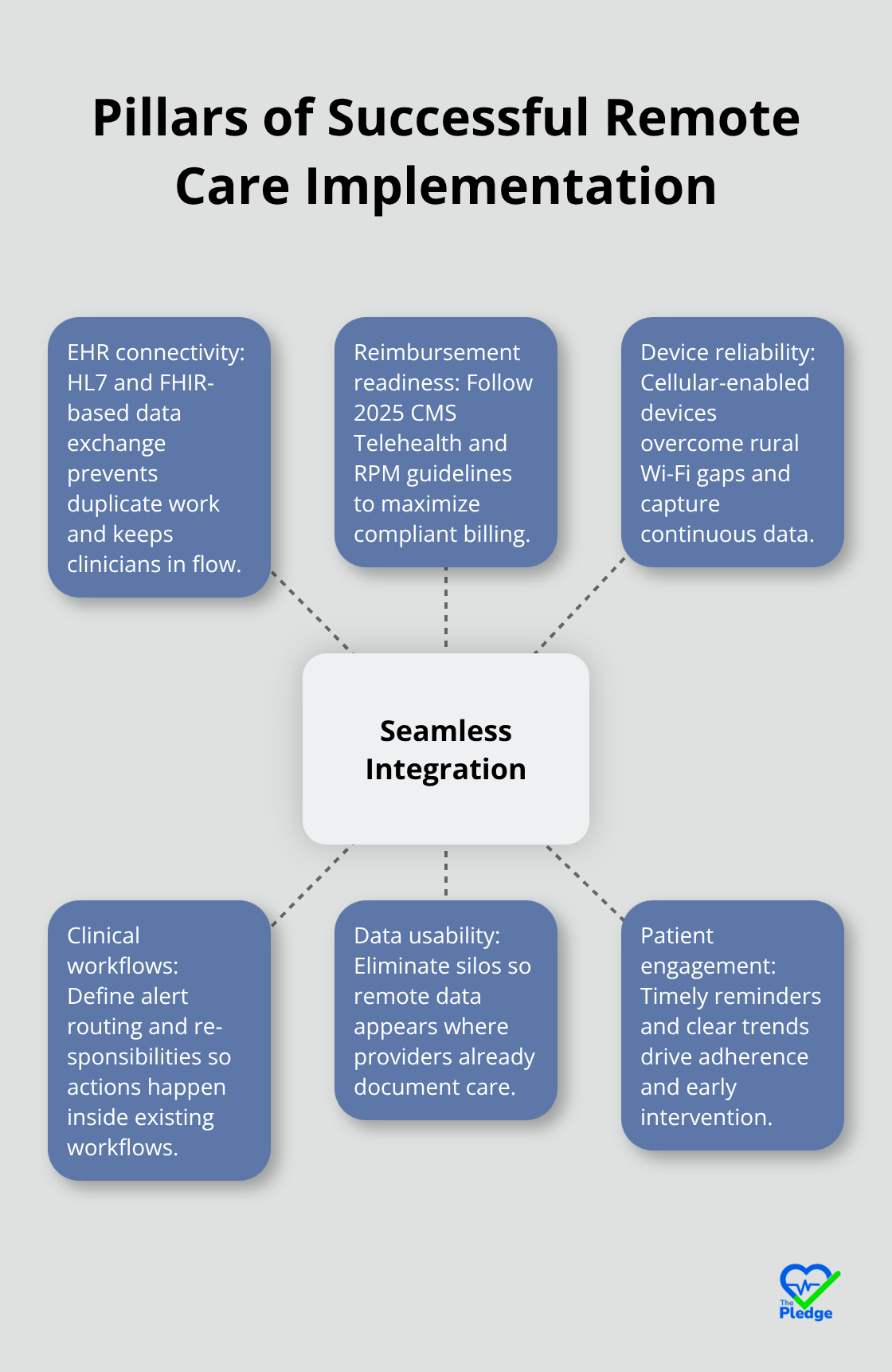
Integration with existing EHR systems separates successful platforms from failed pilots. Platforms that fail to connect with electronic health records create duplicate work, frustrate clinicians, and patients abandon them. Health Recovery Solutions won Best in KLAS for Remote Patient Monitoring four consecutive years specifically because their platform eliminates data silos and reduces clinician documentation burden. The CMS released updated Telehealth and RPM Billing Guidelines for 2025 to help organizations maximize reimbursement while staying compliant-a clear signal that remote monitoring has become a permanent revenue stream.
Device Selection and Connectivity Matter More Than Interface Design
Organizations implementing remote care should prioritize platforms offering HL7 and FHIR-based data exchange with existing systems. Cellular-enabled devices matter more than flashy interfaces; rural connectivity gaps persist, and devices that work without perfect Wi-Fi expand your addressable population. Wearables tracking blood pressure, glucose, and heart rate generate the data that drives early intervention, but only if that data flows seamlessly into clinical workflows where providers actually see it and act on it.
The Technology and Reimbursement Infrastructure Exist
The technology exists. The reimbursement exists. What separates successful implementations from failed pilots is ruthless focus on integration, not features. Organizations that prioritize seamless data flow, clear clinical workflows, and compliance with updated billing guidelines position themselves to capture the financial and operational benefits that remote care delivers. The next section explores how to select and implement the right platform for your specific needs.
Making Remote Care Work in Your Organization
Audit Your Infrastructure Before Selecting a Platform
Selecting the right platform requires brutal honesty about your current infrastructure and clinical workflows. Organizations fail at remote care implementation not because the technology is inadequate, but because they choose platforms that don’t integrate with their existing systems. Start with an audit of your current electronic health record system and identify which vendors offer HL7 and FHIR-based data exchange. This isn’t optional-platforms that don’t connect natively to your EHR will create duplicate documentation, frustrate your clinicians, and patients will abandon the service. Health Recovery Solutions won Best in KLAS for Remote Patient Monitoring four consecutive years specifically because they eliminated data silos. When evaluating platforms, prioritize seamless integration over flashy user interfaces. Test whether alerts actually reach clinicians in their existing workflows. Ask vendors directly: can a provider see remote monitoring data without logging into a separate application? If the answer is no, move to the next vendor. Your clinicians won’t adopt tools that require extra steps.
Prioritize Device Connectivity Over Interface Design
Device selection matters more than most organizations realize. Cellular-enabled devices outperform Wi-Fi-only equipment, particularly if your population includes rural employees or retirees. Blood pressure monitors, glucose meters, and heart rate trackers generate the data that drives early intervention, but only if those devices work reliably without perfect internet connectivity. Rural connectivity gaps persist, and devices that function without flawless Wi-Fi expand your addressable population significantly. Test devices in your actual environment before committing to large-scale deployment.
Navigate Reimbursement and Start With High-Cost Conditions
Work directly with your benefits broker to understand reimbursement under the 2025 CMS Telehealth and RPM Billing Guidelines. Medicare and most private insurers now reimburse remote patient monitoring, but billing codes vary by condition and region. Frederick Health documented $2.3 million in savings over 12 months using remote patient monitoring for chronic care patients-those savings came from reduced readmissions and avoided emergency visits, not from cutting benefits. Start with your highest-cost chronic conditions: diabetes, hypertension, and COPD. These conditions generate the most frequent clinic visits and emergency department utilization, meaning remote monitoring delivers immediate financial impact. Community Nurse achieved 88% average patient adherence with remote monitoring while simultaneously reducing hospital readmissions.
Train Users and Support Adoption With Clear Workflows
User adoption fails when organizations underestimate training requirements. Older adults specifically need straightforward onboarding, robust technical support, and involvement of family caregivers. Provide cellular-connected devices with minimal setup steps. Send regular reminders through the same channels patients already use-text messages, not app notifications. Clarify who reviews alerts and when patients should expect contact from clinicians. Vague escalation procedures destroy trust faster than any technical problem.

Define dashboards and alert responsibilities across your clinical team before launch. Specify exactly which staff member reviews which alerts and what action they should take.
Final Thoughts
Healthcare delivery is fundamentally decentralizing, and organizations that implement remote health access now gain competitive advantage through reduced readmissions, lower emergency department utilization, and measurable cost savings. Frederick Health’s $2.3 million savings over 12 months and Community Nurse’s 88% patient adherence rates demonstrate this isn’t theoretical-these are operational results happening today. The technology exists, reimbursement exists, and the barrier isn’t capability but execution.
Organizations ready to implement remote solutions should start immediately with an audit of EHR integration, prioritize cellular-enabled devices over interface design, and navigate 2025 CMS billing guidelines with your benefits broker. Train staff on clear workflows before launch and start with high-cost chronic conditions where remote monitoring delivers immediate financial impact. The shift toward decentralized healthcare accelerates regardless, and those that wait face pressure from competitors offering superior employee health benefits at lower cost.
The Pledge centralizes health data and sends personalized reminders to drive engagement at scale, helping employers and individuals navigate this transition seamlessly. The future of healthcare happens at home, supported by platforms that integrate seamlessly with existing systems and prioritize clinician adoption over flashy features.



![[Guide] Incentives That Drive Preventive Health Participation](https://thepledge.app/wp-content/uploads/emplibot/Guide_-Incentives-That-Drive-Preventive-Health-Participation_1783650286-300x168.jpeg)