
Health tech adoption among busy families isn’t a nice-to-have anymore-it’s becoming essential. Yet most families abandon wellness technology within weeks because it adds friction rather than removing it.
At The Pledge, we’ve seen firsthand that the problem isn’t the technology itself. It’s that families need solutions that fit their chaotic schedules, not solutions that demand families reshape their lives around an app.
Why Families Abandon Health Tech
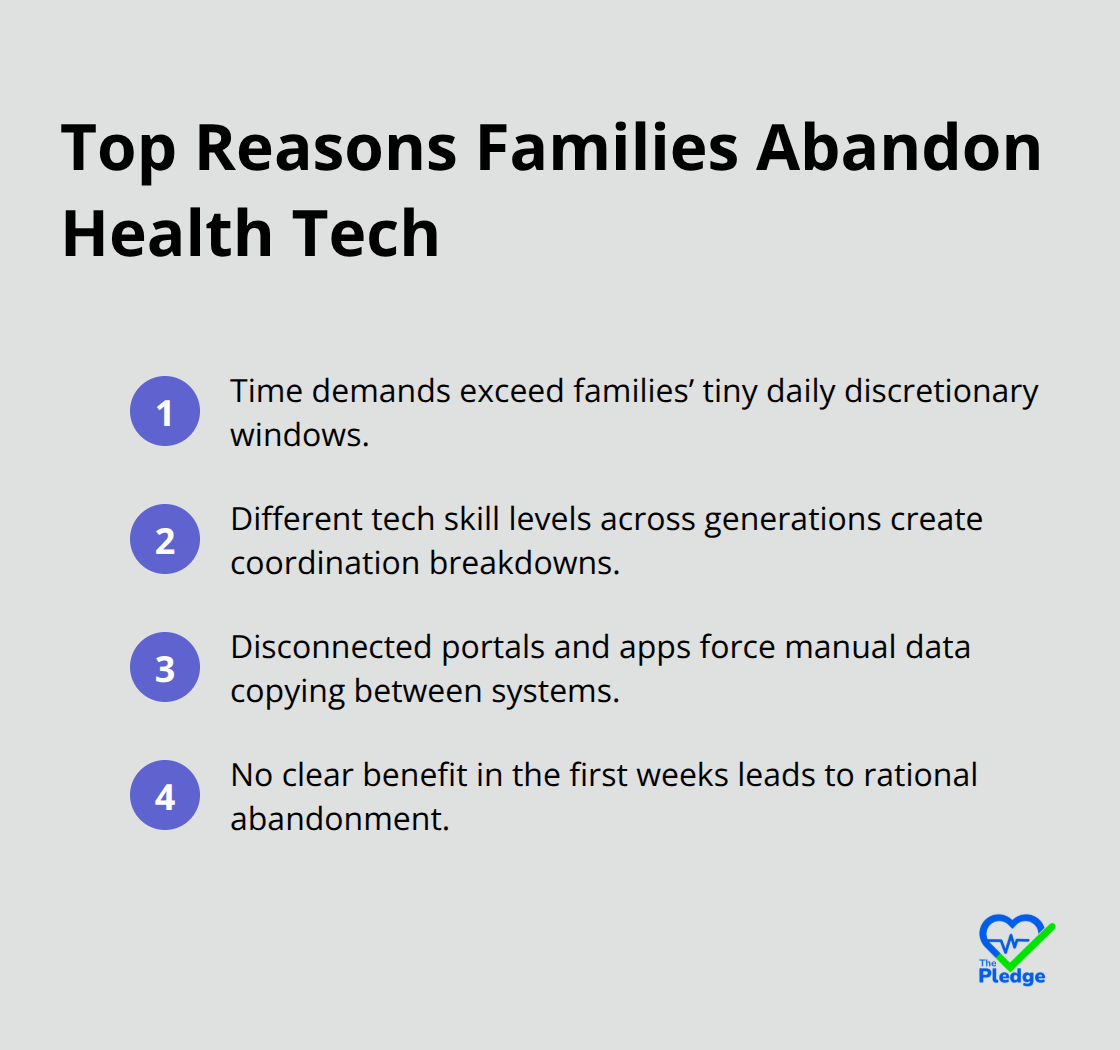
Busy families face a collision between good intentions and reality. According to research from the Health Information National Trends Survey, digital health resource adoption rates among American adults show significant variation based on individual and community factors, yet most abandon these tools within weeks. The culprit isn’t laziness or resistance to technology-it’s that families operate within rigid constraints that most health tech ignores.
Time Scarcity Consumes Adoption Windows
Time scarcity kills adoption first. A parent managing school schedules, work deadlines, and household responsibilities has roughly 15 minutes of discretionary time per day. Health tech that demands 10 minutes of setup, navigation, and data entry consumes that entire window. The app becomes a burden rather than a solution. Families don’t have capacity to learn new interfaces when they’re already stretched thin. Research shows that when families perceive ease of use and reliable connectivity, adoption improves significantly.
But most consumer health apps ignore this reality-they prioritize features over simplicity, assuming users will invest time to unlock value. They won’t.
Digital Literacy Gaps Within Households
The second barrier emerges when multiple generations share responsibility for health management. Grandparents, teenagers, and working parents have wildly different comfort levels with technology. One family member can’t figure out the interface, another won’t adopt it without peer pressure, and the primary caregiver gets stuck providing tech support instead of managing actual health. Research on older adults with chronic conditions shows that sensory impairments, cognitive limitations, and motor difficulties consistently hinder adoption-and these challenges exist across age groups, not just seniors. When a single app requires different skill levels from different users, coordination fails. The family defaults to whatever system the least tech-savvy member can handle, which often means abandoning the app entirely.
Fragmentation Across Healthcare Systems
Most families already juggle multiple health systems: their primary care doctor uses one portal, the insurance company operates a different one, specialists send information via email, and prescription refills happen on yet another platform. Health tech that doesn’t connect to these existing systems forces families to manually copy information between apps, defeating the purpose of digital solutions. Interoperability as a major enabler for seamless family care remains absent from most consumer health apps, which operate in silos. Families managing family health alongside their own health often abandon tools that force them to switch between separate systems. They abandon the new app and stick with whatever fragmented mess they already know.
Lack of Demonstrable Value in Early Weeks
The perceived value problem compounds this friction. When a health app requires 20 minutes of setup but shows no immediate benefit, families rationally abandon it. A parent managing a child’s asthma needs reminders that actually prevent attacks, not a dashboard showing historical data. A family coordinating an aging parent’s medications needs the app to reduce phone calls and paperwork, not add another inbox to monitor. Without demonstrable value within the first two weeks of use, adoption fails. Human support separates winners from abandoned apps-those that pair technology with licensed therapists or coaches retain users at dramatically higher rates. Families see no reason to continue using a tool that doesn’t solve their immediate problems.
These barriers explain why adoption fails, but they also point toward what actually works. Families will adopt health tech when it saves time, works across their existing systems, and delivers visible value immediately. The question becomes: how do platforms remove friction instead of adding it?
How The Pledge Removes the Friction
The barriers families face aren’t inevitable. They’re design choices that most health platforms accept rather than solve. When families encounter apps that work against their schedules instead of with them, they abandon them. When apps ignore the reality of multi-generational households or fragmented healthcare systems, adoption fails. The solution isn’t more features or prettier dashboards. It’s ruthless simplification paired with systems that actually connect to where families already spend their time and attention.
Centralizing Information Across Multiple Systems
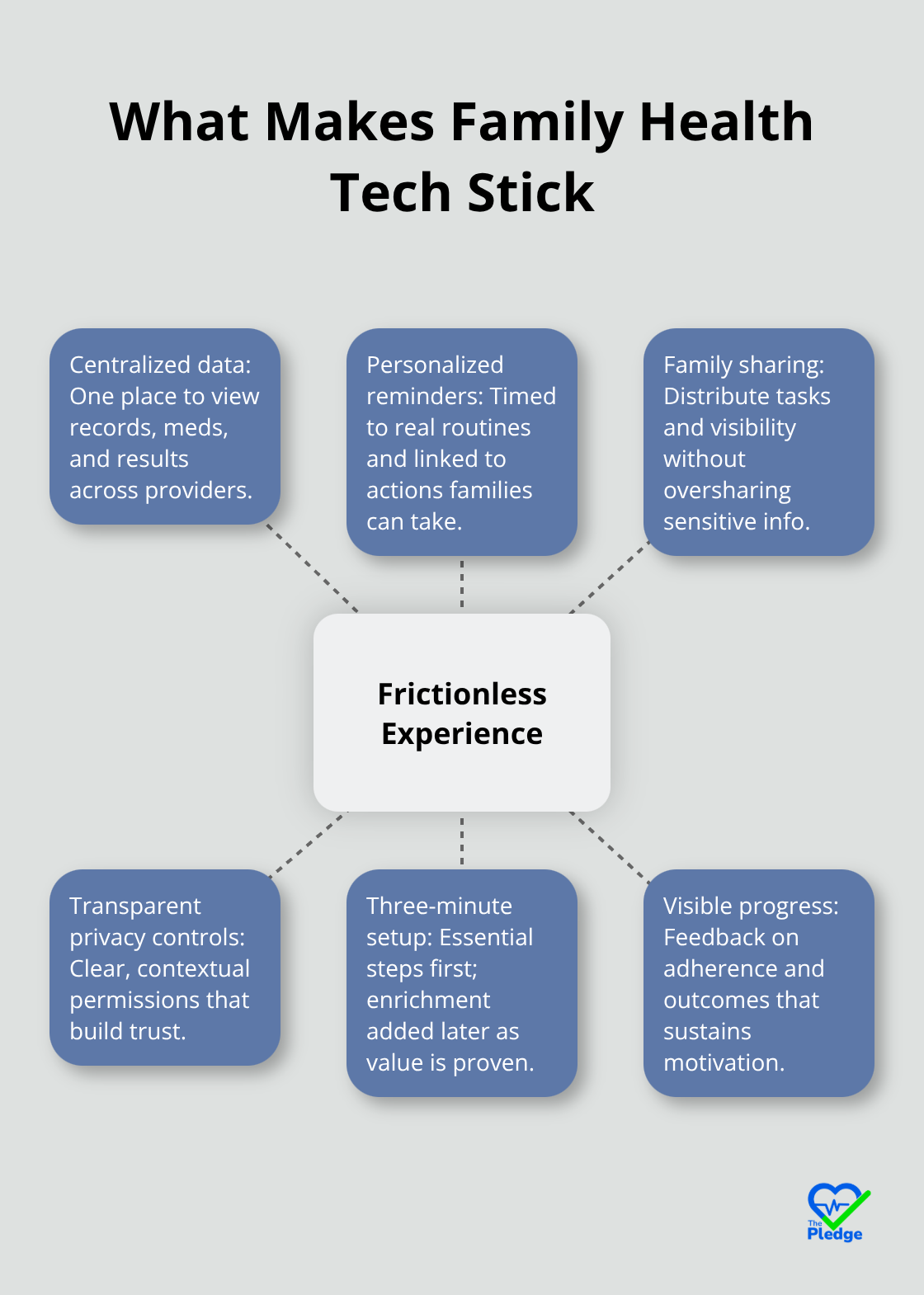
Most families juggle information across multiple providers, insurance portals, and family members texting screenshots of lab results. A centralized platform consolidates this chaos into one interface where a parent can see their child’s vaccination records, their aging parent’s medication schedule, and their own test results without switching between multiple logins. Research shows that when families access their health information in one location with reliable connectivity, usage increases significantly. The difference between a platform that saves families time per week and one that costs time per week determines whether they stick with it or abandon it. Centralized data isn’t a luxury feature. It’s the foundation that makes everything else possible.
Delivering Reminders That Fit Real Life
When a family member receives a reminder about a medication refill, that reminder appears in the same app where they already manage their health information. They don’t need to navigate elsewhere or cross-reference information. The reminder connects directly to their pharmacy integration, their provider information, and their family’s shared care plan. This reduces the cognitive load families face when managing health for multiple people across different conditions and care settings. Personalized reminders that account for individual preferences and family routines drive engagement because they show up at times when families can actually act on them, not when a generic system thinks they should.
Distributing Care Responsibility Across the Family
The Family Share feature transforms how families coordinate care. Instead of one person bearing the entire burden of managing health information for aging parents, teenagers with chronic conditions, or spouses managing complex medical situations, responsibility distributes across the family. Adult children can monitor aging parents’ medication adherence without intrusive surveillance. Parents can track pediatric appointments and immunizations without maintaining separate calendars. Spouses can share relevant health information without oversharing everything. This matters because research shows that family and caregiver support increases adoption and sustained use of digital health tools.
Solving Problems Families Face Daily
When families see that a platform reduces friction by decreasing the number of phone calls they need to make, the amount of time spent scheduling appointments, and the confusion about what medications someone is actually taking, they keep using it. The platform works because it solves the actual problems families face daily, not the problems health tech companies imagine families should have. This shift from feature-driven design to problem-driven design separates tools that families abandon from tools that become essential to their routines.
These design principles explain why some platforms succeed where others fail. But understanding the principles isn’t enough. Families also need to know how to overcome the specific barriers that emerge during adoption-the privacy concerns that make them hesitant to share data, the setup complexity that discourages initial use, and the habit changes required to sustain engagement over time.
Real Barriers Families Face and How to Overcome Them
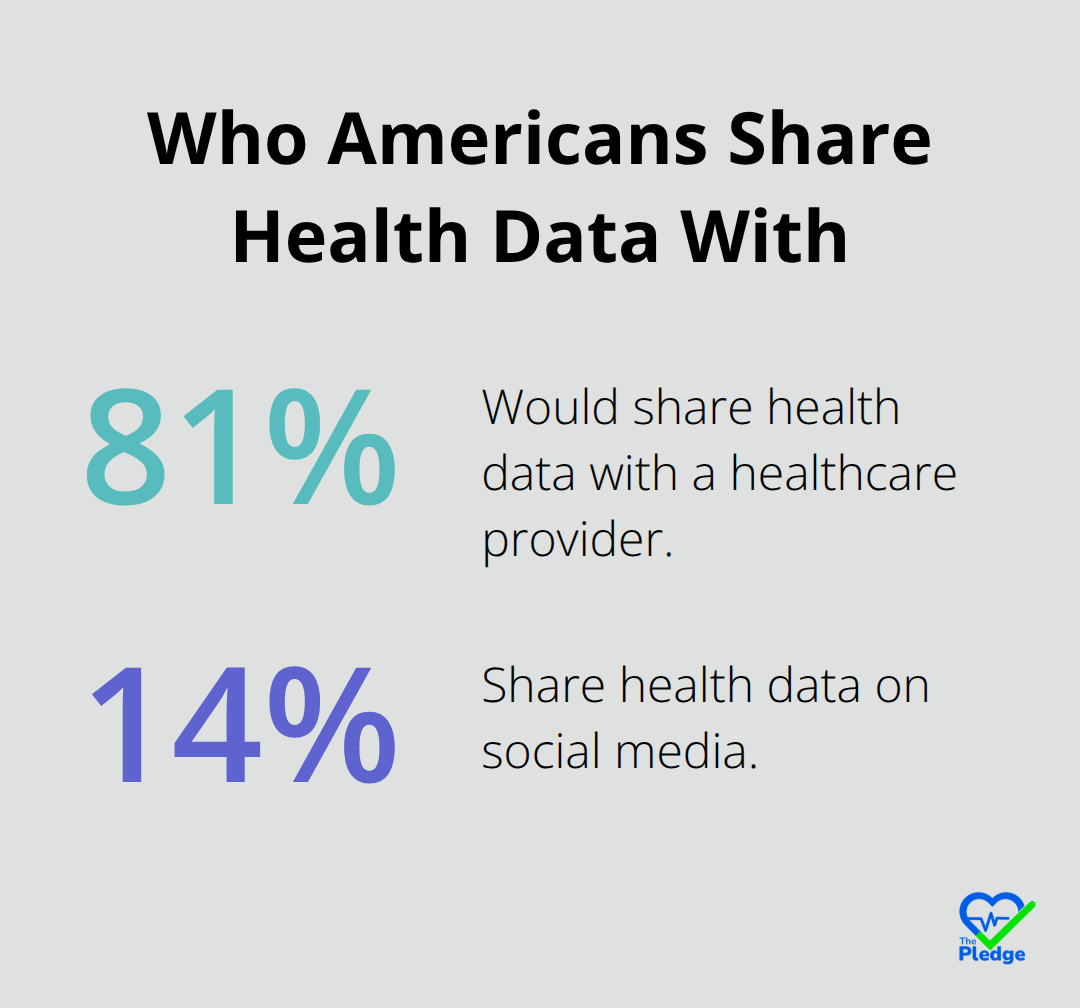
Privacy fears dominate early adoption conversations, but the real issue is far simpler: families don’t trust systems that fail to explain what happens to their information. According to research from the Health Information National Trends Survey, about 81% of American adults would share health data with a healthcare provider, yet only 14% share on social media. The gap isn’t about privacy itself. It’s about context and control.
Families willingly share medical information when they understand exactly who accesses it, why they need it, and what protections exist. When a platform obscures data practices or buries privacy controls in settings menus, families rationally refuse to engage.
Transparency must function as a design principle, not an afterthought. Families need to see data-sharing permissions at the moment they’re asked to share, not buried in a 40-page terms document. They need to understand that a medication reminder feature requires access to their pharmacy history, but they can block access to mental health records if they choose. This granular control transforms privacy from a barrier into a feature that families appreciate. Research on older adults adopting digital health shows that clear communication about data use significantly improves uptake. When clinicians endorse a platform and patients see tangible health benefits from sharing, willingness to share increases dramatically. The setup phase determines whether families ever reach that point of trust. Most health apps demand full data access during onboarding before families understand what value they’ll receive. This backward approach kills adoption before it starts.
Overcoming Privacy Concerns Through Transparent Design
Families need to see exactly what information a platform collects and how it protects that information. A parent managing a child’s asthma should understand that medication reminders require pharmacy access, but they can choose whether to share mental health records with extended family members. This level of control matters because research shows that willingness to share with providers reaches about 81%, but sharing on social media drops to 14%. The difference lies in trust and perceived control. When families feel they control what information flows where, they share more freely. Platforms that hide privacy settings or require all-or-nothing data sharing encounter resistance. Families abandon tools that feel invasive, even if those tools would improve their health outcomes.
Reducing Setup Complexity to Three Minutes
Setup complexity represents the second critical barrier, and this one kills adoption faster than privacy concerns. A study published in BMJ examining real-world health technology implementation identified that setup requiring more than 15 minutes causes significant user abandonment. Families managing multiple household members, work schedules, and existing healthcare appointments lack 45 minutes to input medication lists, answer demographic questions, and navigate insurance integrations. The winning approach separates essential setup from optional enrichment. Essential setup takes three minutes maximum: create an account, connect one family member’s health information, set one reminder. Everything else happens gradually through optional features that families activate when they see value.
A parent managing a child’s asthma doesn’t need to input the entire family medical history before receiving their first medication reminder. They need that reminder working within minutes, then gradually add more family members and features as they recognize benefit. Research on sustained digital health adoption shows that early wins drive long-term engagement. When families experience value in the first session, they invest time in deeper setup later. When setup demands investment before delivering value, they abandon the app. The onboarding experience should mirror how families actually adopt technology in their lives: they try it, see if it works, then commit to deeper engagement. Phased rollout works because families see immediate benefit before complexity increases.
Human support during setup matters more than sophisticated automation. A five-minute call from someone who helps families connect their first data source and set their first reminder drives adoption more effectively than any self-service wizard. Nurse-proactive phone calls combined with app usage significantly improved sustained adoption in research examining digital health tools for chronic disease management.
Sustaining Engagement Through Visible Progress
The final barrier emerges weeks into adoption, after families overcome privacy concerns and complete setup. Changing health behaviors requires more than reminders and dashboards. Family members need to actually alter their daily routines, and that happens slowly or not at all without deliberate support. Research on behavior change shows that reminders alone increase adherence by roughly 20%, but goal-setting combined with progress feedback increases adherence by 40% or more. Families need to see that the app helped them remember medications three days in a row, or that coordinating care through a shared platform reduced the number of phone calls to aging parents by half. Without visible progress, motivation collapses and families revert to old habits.
Personalized reminders that account for individual preferences and family routines drive engagement because they show up when families can act on them. A parent with a chaotic morning schedule needs medication reminders at dinner, not 6am. A family coordinating an aging parent’s care needs appointment reminders sent to the adult child managing logistics, not the parent who can’t act on them. Generic reminder systems fail because they ignore the reality of how families actually operate. The winning approach tracks what works for each family member and adapts. When a reminder results in action, the system learns that timing and person combination works. When reminders get ignored, the system adjusts. This requires data infrastructure that most consumer health apps lack.
Sustaining engagement also demands that families see their effort producing results. A family managing a parent’s diabetes needs to see that medication adherence improved and A1C levels are trending down, not just receive abstract health scores. Concrete health improvements drive continued adoption. Families will maintain engagement with tools that demonstrably improve health outcomes or reduce healthcare burden. They’ll abandon tools that require ongoing effort without showing tangible returns.
Final Thoughts
Wellness technology adoption succeeds when platforms stop asking families to reshape their lives around apps and start reshaping apps around family life. The barriers families face aren’t mysterious or insurmountable-they’re predictable friction points that emerge when health tech ignores how busy households actually operate. Time scarcity, digital literacy gaps, fragmented healthcare systems, and lack of immediate value kill adoption, but these same barriers point directly toward what works: ruthless simplification, transparent design, rapid setup, and visible progress.
The families who sustain engagement with health platforms experience value within minutes, not weeks. A parent sees a medication reminder that actually prevents a missed dose. An adult child monitors an aging parent’s care without intrusive surveillance. A household coordinates appointments across multiple family members in one place instead of juggling separate systems. These aren’t aspirational benefits-they’re concrete problems that families face daily, and solving them drives adoption far more effectively than adding features or improving dashboards.
Simplicity separates tools that families abandon from tools that become essential to their routines. Three-minute setup instead of 45-minute onboarding, privacy controls that families understand immediately rather than buried settings menus, and reminders that arrive when families can act on them all matter far more than sophisticated features. The Pledge demonstrates this approach by centralizing health data, delivering personalized reminders, and enabling family coordination through a single interface.





![[Guide] Incentives That Drive Preventive Health Participation](https://thepledge.app/wp-content/uploads/emplibot/Guide_-Incentives-That-Drive-Preventive-Health-Participation_1783650286-300x168.jpeg)