
Health literacy in the workplace isn’t a nice-to-have-it’s a business necessity. Employees who understand their health options make better decisions, show up more often, and stay engaged with their work.
At The Pledge, we’ve seen firsthand how organizations that invest in health literacy initiatives cut absenteeism, reduce healthcare spending, and build stronger teams. This guide shows you exactly how to measure what works and why it matters for your bottom line.
How Health Literacy Cuts Absenteeism and Healthcare Costs
Understanding the Direct Impact on Absenteeism
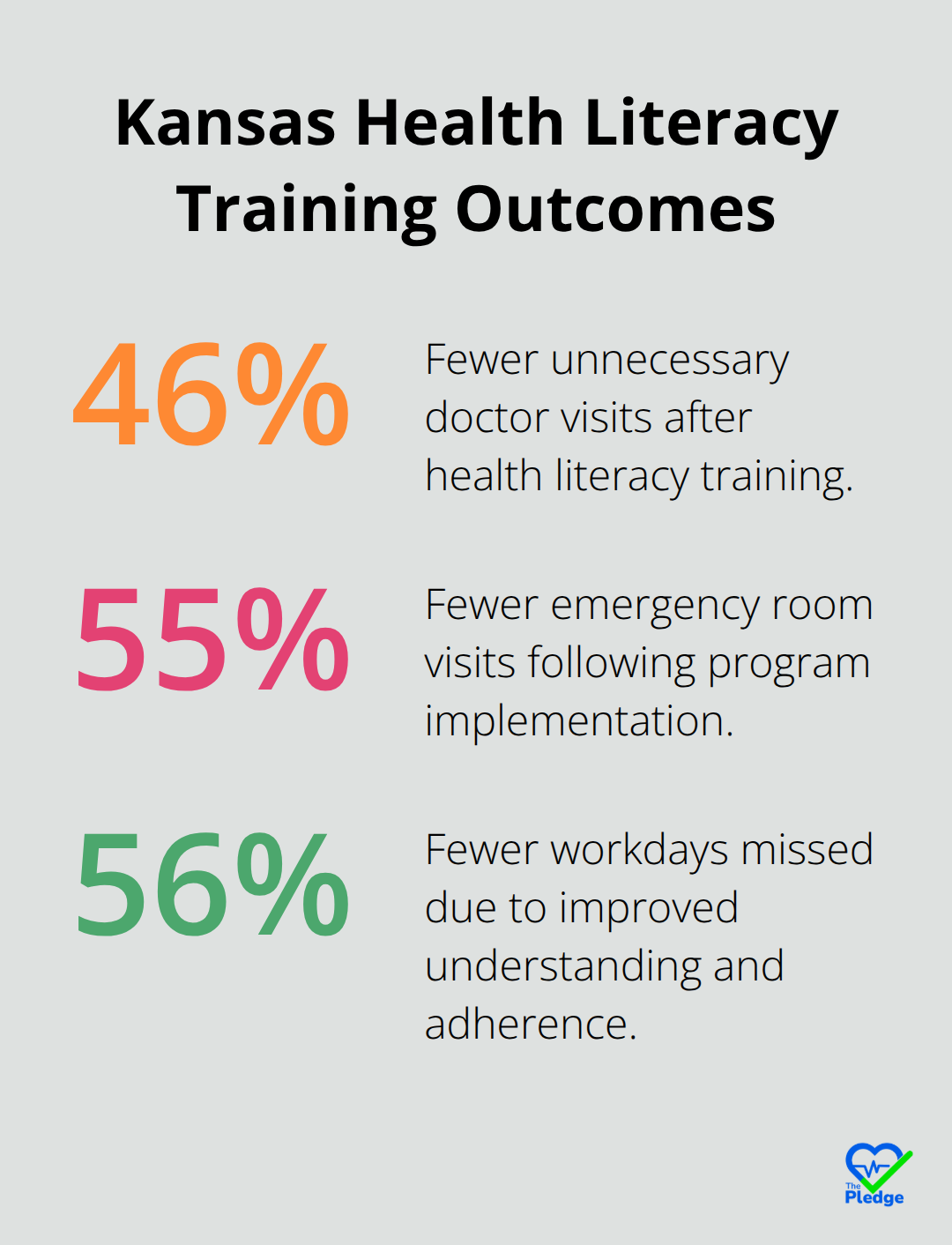
Health literacy directly reduces absenteeism because employees who understand their health options take preventive action instead of waiting for problems to escalate. According to research from the Medical University of South Carolina, a more health-literate workforce shows fewer sick days and better adherence to care plans, which supports faster returns to work. A Kansas program study found that health literacy training reduced healthcare utilization and missed work dramatically, reporting 46% fewer unnecessary doctor visits, 55% fewer ER visits, and 56% fewer workdays missed. That’s not theoretical improvement-those are concrete reductions that show up in payroll and scheduling.
Why the Workplace Matters for Health Behavior
Employed US adults spend more than half of their waking lives at work, according to the US Bureau of Labor Statistics, which means the workplace is where health behaviors either improve or stall. Low health literacy drives higher healthcare costs due to misinterpreting benefits, delayed care, unnecessary services, and poorer health management. The US spent about $12,555 per person on healthcare in 2022, the highest per-capita rate in the world, with Switzerland at $8,049 and the OECD average at $6,414. Better health literacy creates immediate savings because employees stop using emergency rooms for routine care and stop missing appointments.
The Connection Between Understanding and Engagement
Organizations that boost health literacy see increased engagement with corporate health programs, which improves the ROI on expensive benefits initiatives. Employees with greater health knowledge are more likely to take preventive health measures, resulting in fewer sick days and better long-term outcomes. About 36% of U.S. adults have basic or below-basic health literacy, which means your workforce likely contains employees who struggle to understand their benefits, navigate insurance plans, or recognize when they need care. Companies using wellness apps see about 41% higher participation, which shows that accessibility matters. Health and well-being are closely linked to productivity-employees in good physical, mental, and emotional health are more likely to perform at their best. This means health literacy initiatives aren’t about wellness culture; they’re about measurable performance gains tied directly to your business outcomes.
Now that you understand how health literacy reduces costs and absenteeism, the next section reveals the specific programs that actually drive these results.
Programs That Deliver Real Health Literacy Results
The Gap Between Benefits and Understanding
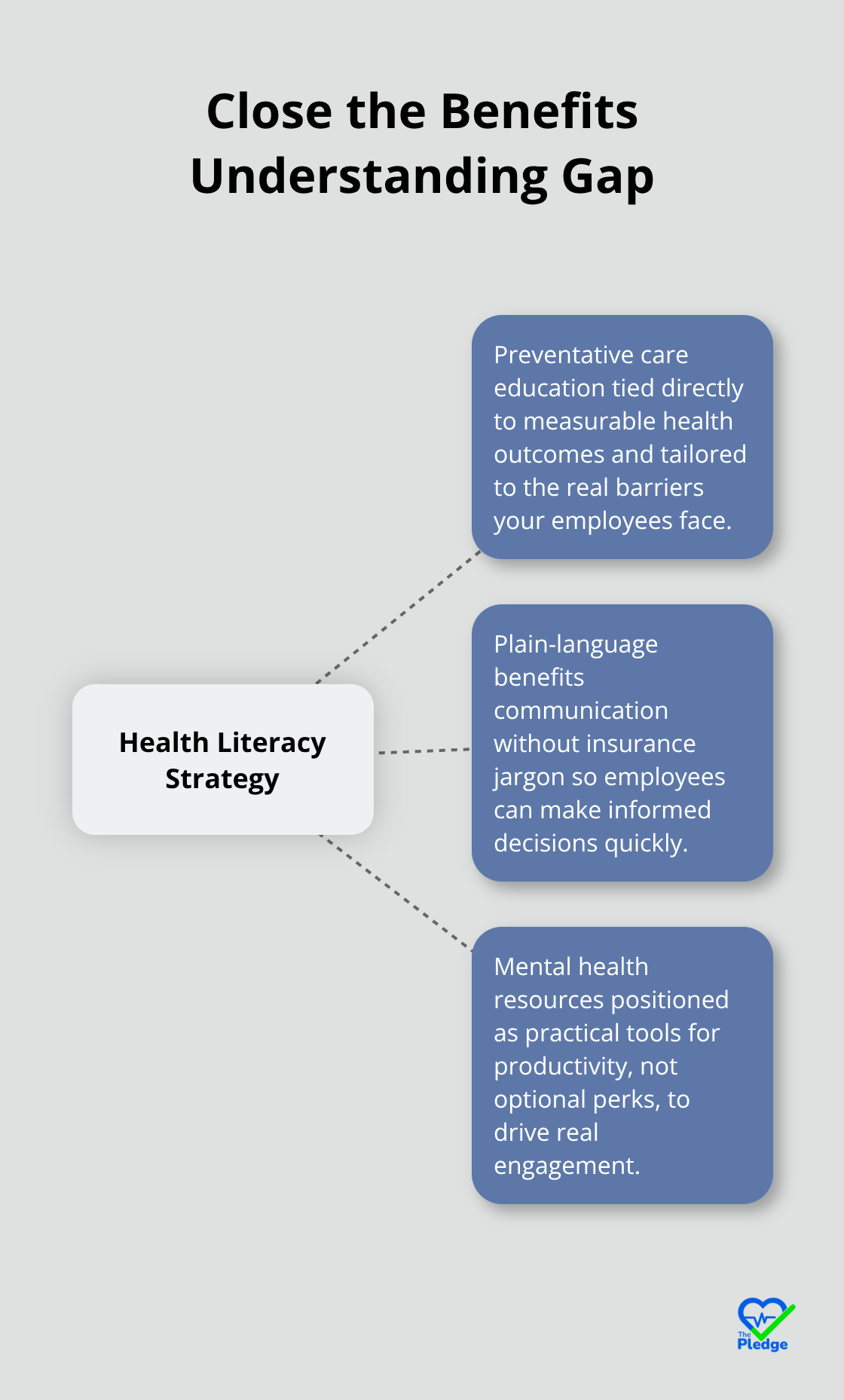
The gap between offering health benefits and employees actually understanding them is where most organizations lose money. Companies spend heavily on comprehensive plans, but employees still make uninformed decisions because the information never reaches them in usable form. Closing this gap requires three distinct approaches that work together: preventative care education that connects directly to measurable health outcomes, benefits communication stripped down to plain language without insurance jargon, and mental health resources positioned as practical tools for staying productive at work rather than optional wellness perks.
Preventative Care Education That Matches Your Workforce
Start with preventative care education that ties directly to your specific workforce. A Kansas program study demonstrated that health literacy training reduced unnecessary doctor visits by 46% and emergency room visits by 55%, but only when the education addressed the actual barriers your employees face. If your workforce skews older, focus education on screening schedules and managing chronic conditions at work. If you have younger employees, emphasize preventative screenings and how early detection prevents long absences later. Multilingual materials matter here: research from Frontiers in Public Health shows that language-tailored content and bilingual staff significantly enhance outcomes, especially for non-native English speakers.
Stripping Jargon From Benefits Communication
Benefits communication needs to be stripped down to plain language without insurance jargon, because plain language and visuals consistently improve health literacy outcomes far more than dense policy documents. The Medical University of South Carolina found that a health-literate workforce shows better adherence to care plans, which means your employees need to understand not just what services exist, but why using them makes their work life better. Employees who grasp how their benefits work actually use them, which drives down unnecessary emergency room visits and reduces overall healthcare spending.
Mental Health Literacy as a Productivity Driver
Mental health literacy deserves equal priority because workplace stress directly impacts productivity. Interventions that include manager training, peer support networks, and clear pathways to mental health resources consistently show higher engagement. Companies should measure success by tracking how many employees actually use preventative services and mental health resources, not just how many attend a wellness seminar. The goal is sustained behavior change, which means your communication strategy must repeat key messages across multiple formats-videos, written guides, app notifications, and in-person sessions-because single-touch education disappears quickly.
Measuring What Actually Works
Your measurement approach determines whether these programs stick or fade. Track how many employees use preventative services, monitor changes in healthcare utilization patterns, and assess whether employees can accurately explain their benefits without confusion. The data reveals which communication formats resonate with your workforce and which messages drive actual behavior change. This measurement foundation becomes essential when you move to the next phase: calculating the exact ROI these initiatives generate and proving their impact to leadership.
Measuring Health Literacy Impact on Your Bottom Line
Establish Baselines Before You Launch
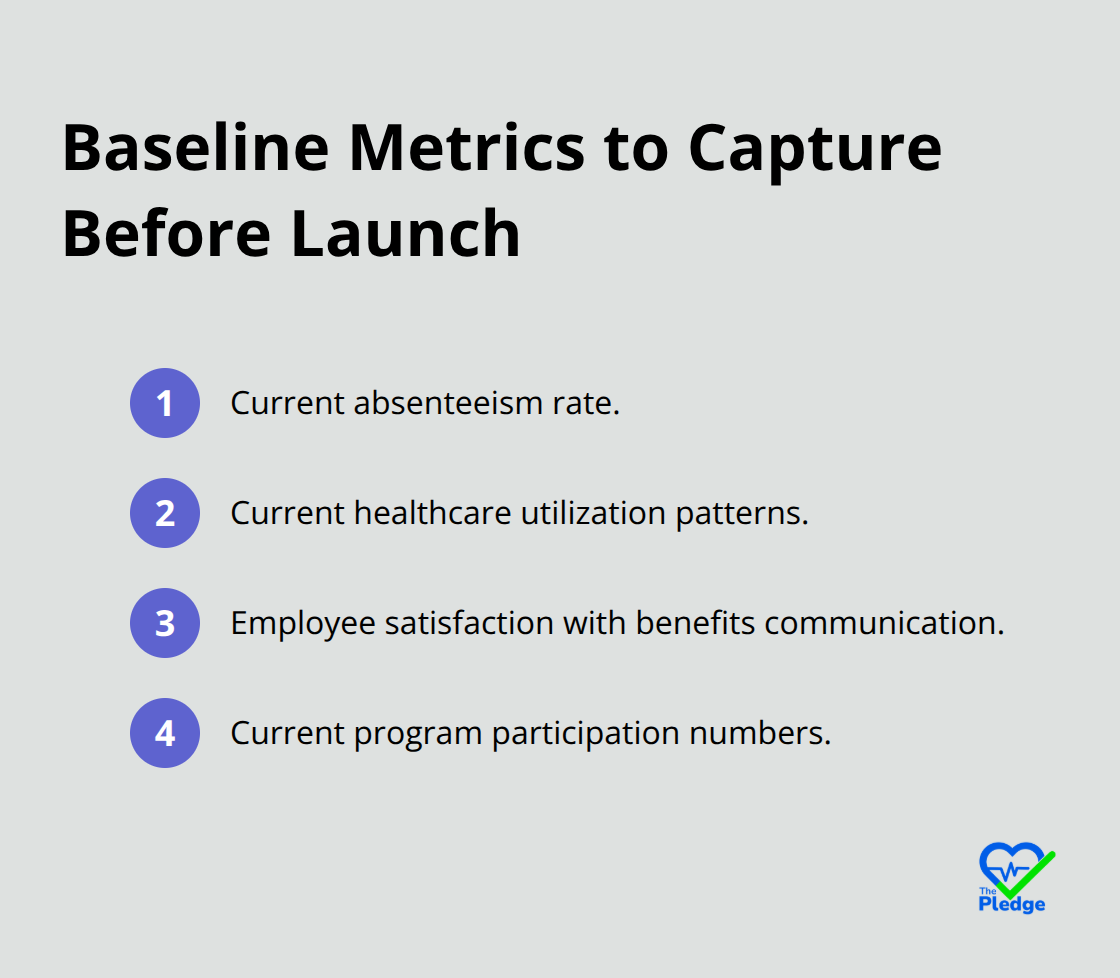
Measuring health literacy initiatives requires moving past attendance metrics and focusing on the financial and productivity data that actually matter to leadership. The Kansas program study showed 46% fewer unnecessary doctor visits, 55% fewer ER visits, and 56% fewer workdays missed after health literacy training, but those numbers only emerged because someone tracked specific behaviors before and after implementation. Start with baseline metrics before launching any program: current absenteeism rates, current healthcare utilization patterns, current employee satisfaction scores with benefits communication, and current program participation numbers. Without baselines, you cannot prove impact.
Track the Metrics That Reveal Real Change
Track absenteeism rigorously by distinguishing between unscheduled absences and planned time off, since health literacy improves unscheduled absences most directly. Monitor whether employees actually use preventative services through claims data for screening participation, vaccination rates, and primary care visits. Health-literate employees show better adherence to care plans, which shows up as consistent follow-up appointments and medication refills. Healthcare cost reduction appears in claims data within 6 to 12 months, showing lower emergency room utilization, fewer unnecessary specialist visits, and reduced hospitalizations.
Measure employee satisfaction specifically around benefits understanding, not general wellness satisfaction, because those are different outcomes. Ask employees whether they can explain their deductible, understand their coverage for preventative care, and know how to access mental health resources. Companies using wellness apps see about 41% higher participation, so track app adoption and engagement separately from overall program participation.
Set Aggressive but Achievable Targets
Try for 60% to 70% program participation within the first year, a 10% to 15% reduction in unscheduled absences within 12 months, and a 5% to 10% reduction in per-employee healthcare costs within 18 months. These targets are aggressive but achievable based on published results. Present these metrics to leadership quarterly using a simple dashboard that shows three numbers: the percentage reduction in healthcare costs compared to the previous year, the percentage reduction in absenteeism, and the percentage of employees actively using health literacy tools. Leadership cares about these three metrics because they directly affect profitability.
Calculate ROI and Adjust Mid-Year
Calculate ROI by taking total program costs, subtracting the dollar value of healthcare savings and productivity gains from reduced absences, and dividing by program costs. A typical employer sees 3 to 5 dollars returned for every dollar spent on health literacy initiatives, though this varies based on baseline health status and program design. Centralized health platforms that send personalized reminders offer the additional advantage of measuring engagement in real time, showing exactly which employees access their benefits information, which preventative services they schedule, and which communication formats drive the highest engagement. This real-time data lets you adjust messaging and program focus mid-year rather than waiting for annual claims reports.
Combine Cost Metrics With Engagement Metrics
The strongest programs combine cost reduction metrics with engagement metrics because engagement predicts sustained behavior change. An employee who actively uses a platform to understand their benefits and schedule preventative care is far more likely to maintain those behaviors long-term than an employee who attended a one-time workshop. Track these metrics consistently, report them transparently, and use the results to refine your approach each year.
Final Thoughts
Health literacy in the workplace transforms how employees manage their health and directly impacts your bottom line. The Kansas program study proved this with concrete numbers-56% fewer missed workdays, 46% fewer unnecessary doctor visits, 55% fewer emergency room visits-and these results appear consistently across organizations that prioritize health literacy initiatives. Organizations typically see three to five dollars returned for every dollar spent, with healthcare costs dropping within 12 to 18 months and absenteeism falling measurably within the first year.
Implementation requires three essential actions that work together. Establish baseline metrics before launching any program so you can measure actual impact, design your health literacy initiatives around your specific workforce (older employees need different preventative care education than younger ones, and non-English speakers require language-tailored materials), and track engagement and cost reduction together because sustained behavior change requires both metrics working in tandem. Leadership responds to three numbers: percentage reduction in healthcare costs, percentage reduction in unscheduled absences, and percentage of employees actively using health literacy tools.
A platform that centralizes health information, sends personalized reminders, and removes friction from understanding benefits accelerates these results significantly. The Pledge integrates your health data and simplifies care navigation through AI-powered technology to drive the engagement rates your organization needs. Start measuring today and implement strategically to watch your productivity gains compound year after year.