

Healthcare spending continues to spiral upward, with the US spending $4.3 trillion annually on medical care. Yet a significant portion of these costs stems from preventable conditions and delayed treatments.
At The Pledge, we’ve analyzed how preventive care reduces healthcare costs through early intervention and systematic health management. The data shows preventive measures can cut healthcare expenses by 30-50% while improving patient outcomes across multiple disease categories.
How Much Money Does Early Detection Actually Save?
Massive Treatment Cost Reductions Through Early Intervention
The numbers on early detection savings are staggering. Heart failure treatment costs range from $22,162 to $40,121 per hospitalization according to recent Medicare data, while preventive screenings cost under $200. Cancer treatment averages $150,000 per patient when doctors catch it in late stages, but drops to $28,000 when routine screenings detect it early.
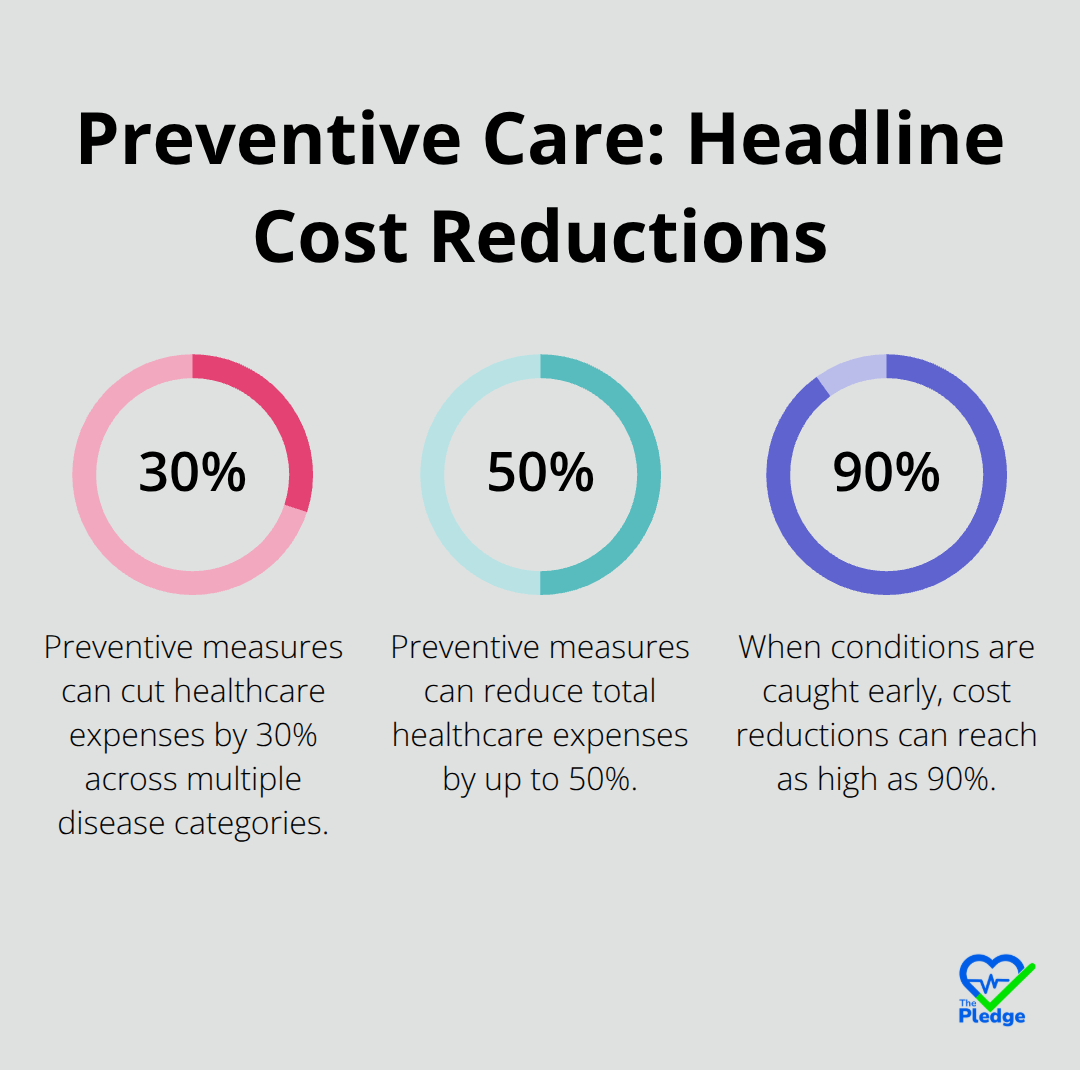
The Diabetes Prevention Program demonstrated that lifestyle interventions reduce new diabetes cases by over 50%, which prevents an average of $13,000 in annual treatment costs per person. These aren’t marginal improvements – we’re looking at cost reductions of 80-90% when conditions are caught before they require intensive intervention.
Emergency Department Usage Plummets With Preventive Programs
Emergency department visits average $1,000 per Medicare beneficiary, yet proper primary care management could prevent 40% of these visits. Personalized preventive care programs like MDVIP show members experience 10.8% ER visit rates in year one compared to significantly higher rates among non-members. Members of comprehensive preventive programs achieved $150 per member per month savings after three years (primarily through reduced emergency and urgent care use). The pattern remains consistent – patients with regular preventive care access use emergency services 30-60% less frequently than those without structured preventive programs.
Long-Term Healthcare Expenditure Patterns Shift Dramatically
Chronic diseases currently cost the US economy $3.7 trillion annually when we include lost productivity, but effective management programs reduce healthcare costs per member per month according to comprehensive diabetes management studies. The Milken Institute found chronic illnesses cost $4 in lost productivity for every $1 spent on healthcare, which makes prevention programs that target lifestyle factors incredibly valuable. Primary preventive services could reduce healthcare expenditures nationwide if implemented at scale, with potential net savings of nearly $1.5 billion. These long-term savings compound over decades and create the foundation for sustainable healthcare cost management that extends far beyond individual patient outcomes.
Which Preventive Programs Actually Save Money
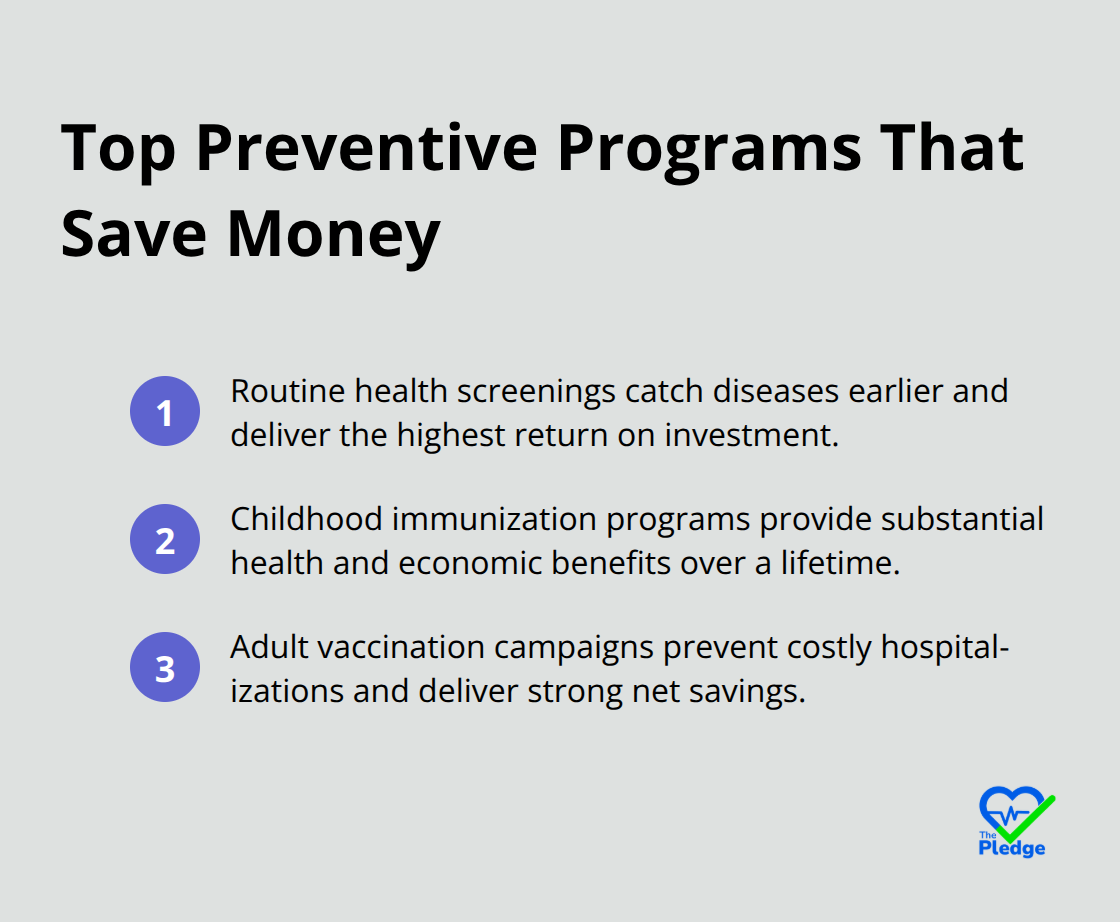
Healthcare organizations waste billions on ineffective wellness initiatives, but three specific program types consistently generate measurable cost savings. Routine health screenings represent the highest-return preventive investment, with colorectal cancer screening showing moderate net benefit for adults aged 45 to 49 years and mammograms that detect breast cancer early at costs under $50,000 per life saved (according to the US Preventive Services Task Force). Childhood immunization programs deliver extraordinary returns, with routine childhood vaccines providing substantial health and economic benefits for children born during 1994–2023.
Vaccination Programs Generate Massive Returns
Adult vaccination programs show equally impressive financial performance. Influenza vaccines prevent approximately 40,000 hospitalizations annually at $18 per dose, while pneumococcal vaccines for adults over 65 cost $69 but prevent pneumonia cases that average $20,000 in treatment costs. The shingles vaccine costs $280 but prevents cases that require $4,000 in treatment expenses. Only 37% of adults receive routine influenza vaccinations despite these proven savings, which indicates massive untapped potential for cost reduction through expanded immunization access.
Chronic Disease Management Programs Cut Costs Systematically
Diabetes management programs achieve the most consistent cost reductions among chronic disease interventions. Comprehensive diabetes programs reduce healthcare costs by $44 per member monthly through medication adherence monitoring, lifestyle coaching, and regular glucose tracking. Hypertension management programs prevent strokes that cost $74,000 each through $200 annual monitoring programs. Heart failure management reduces 90-day readmission costs from $22,000 to under $8,000 through remote monitoring and medication optimization.
These programs work because they target high-cost conditions with proven intervention protocols that prevent expensive emergency episodes. The success of these targeted approaches creates a foundation for broader implementation strategies that maximize cost savings across different healthcare settings. Corporate health solutions can help organizations implement these proven preventive programs while understanding medical bills becomes crucial for tracking actual savings.
How Do You Implement Cost-Effective Preventive Care
Corporate wellness programs succeed when they target specific health conditions rather than offer generic health advice. Many employers with health benefits sponsor wellness programs, but most fail to generate measurable savings because they lack focused intervention strategies.
Successful programs concentrate on high-cost conditions like diabetes, hypertension, and obesity through structured protocols. Companies achieve significant savings when they implement comprehensive preventive care programs that include regular biometric screenings, medication adherence tracking, and lifestyle coaching sessions.
The key lies in selecting evidence-based interventions with proven cost reduction potential rather than feel-good wellness activities that produce no financial returns.
Technology Platforms Drive Scalable Prevention
Digital health platforms transform preventive care delivery by automating patient outreach and monitoring compliance with screening schedules. Remote monitoring devices for blood pressure, glucose levels, and weight management reduce clinic visits while maintaining care quality through real-time data transmission to healthcare providers.
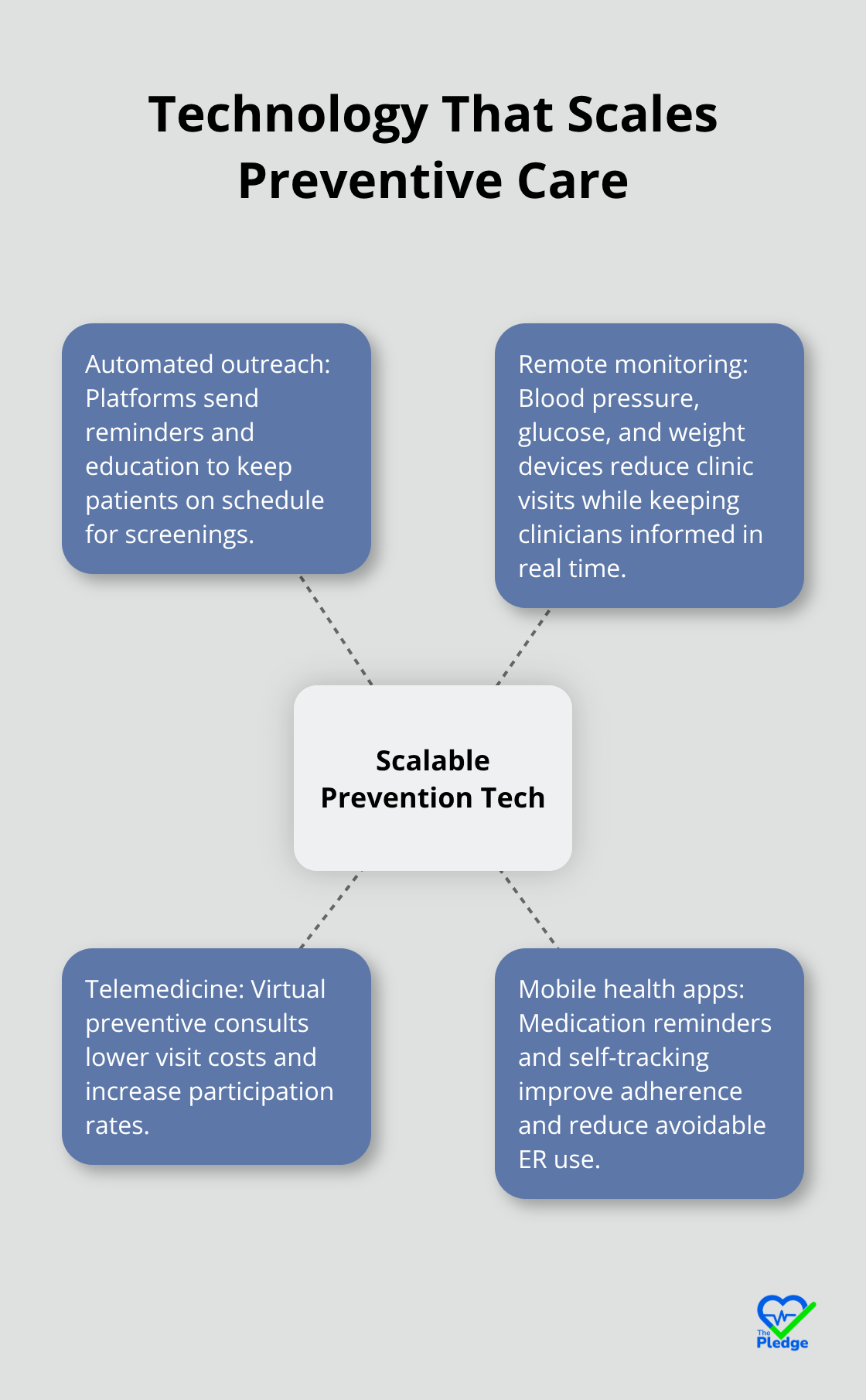
Telemedicine platforms enable preventive consultations with significant cost savings compared to in-person visits while increasing patient participation rates. Mobile health apps with medication reminders improve adherence rates among chronic disease patients (which directly translates to reduced emergency department visits and hospitalizations).
These technology solutions work because they remove barriers to preventive care access while providing continuous health monitoring that catches problems before they become expensive medical emergencies.
Healthcare System Integration Maximizes Program Effectiveness
Integration with existing electronic health records systems allows preventive programs to leverage patient data for targeted interventions rather than implement broad-based approaches that waste resources on low-risk individuals.
Primary care practices with integrated preventive care protocols achieve better outcomes than standalone wellness programs because they coordinate screening schedules with routine medical care. Health management programs show return on investment within 2-3 years when they connect with existing healthcare delivery systems rather than operate as separate initiatives.
The integration approach ensures preventive care recommendations align with clinical guidelines and physician oversight (which increases patient trust and program participation rates while reducing administrative overhead costs).
Employee Wellness Programs in Corporate Settings
Employers achieve the highest returns when they focus workplace wellness programs on employees with existing risk factors rather than blanket approaches. Companies that screen employees for diabetes risk and provide targeted interventions see significant reductions in healthcare claims within 18 months.
Workplace biometric screenings identify high-risk individuals who generate substantial annual healthcare costs without intervention. Successful corporate programs combine health risk assessments with personalized coaching sessions that address specific conditions like pre-diabetes or hypertension.
The most effective programs tie wellness participation to health insurance premium reductions (typically 10-20% discounts) which increases employee engagement while creating immediate cost savings for both parties.
Final Thoughts
The evidence shows exactly how preventive care reduces healthcare costs through systematic early intervention and targeted health management. Organizations that implement comprehensive preventive programs achieve 30-50% cost reductions while they prevent expensive emergency episodes that drain healthcare budgets. The most successful preventive strategies focus on high-impact interventions like routine screenings, vaccination programs, and chronic disease management rather than generic wellness initiatives.
Companies see measurable returns within 2-3 years when they target specific conditions through evidence-based protocols. Healthcare stakeholders must prioritize integration with existing systems and leverage technology platforms to scale preventive care delivery effectively. Digital health solutions remove access barriers while they provide continuous monitoring that catches problems before they become costly medical emergencies.
The future of preventive care economics depends on data-driven approaches that identify high-risk individuals and deliver personalized interventions. We at The Pledge transform this landscape through our platform that centralizes health data and enables AI-powered preventive care coordination (which drives both better outcomes and substantial cost savings for employers and employees alike). The Pledge represents the next generation of preventive healthcare technology that makes cost-effective prevention accessible to organizations of all sizes.