
At The Pledge, we’ve seen firsthand how employee wellness programs can transform workplaces.
Types of employee wellness programs have evolved significantly over the years, addressing various aspects of health and well-being.
From physical fitness initiatives to mental health support and work-life balance measures, these programs are reshaping corporate culture.
Let’s explore the different categories of wellness programs that companies are implementing to boost employee satisfaction and productivity.
Physical Health Programs That Drive Results
At The Pledge, we’ve witnessed physical health programs transform employee wellness and productivity. These initiatives offer comprehensive solutions that address various aspects of physical health, going beyond basic gym memberships.
Fitness Challenges: Boosting Engagement
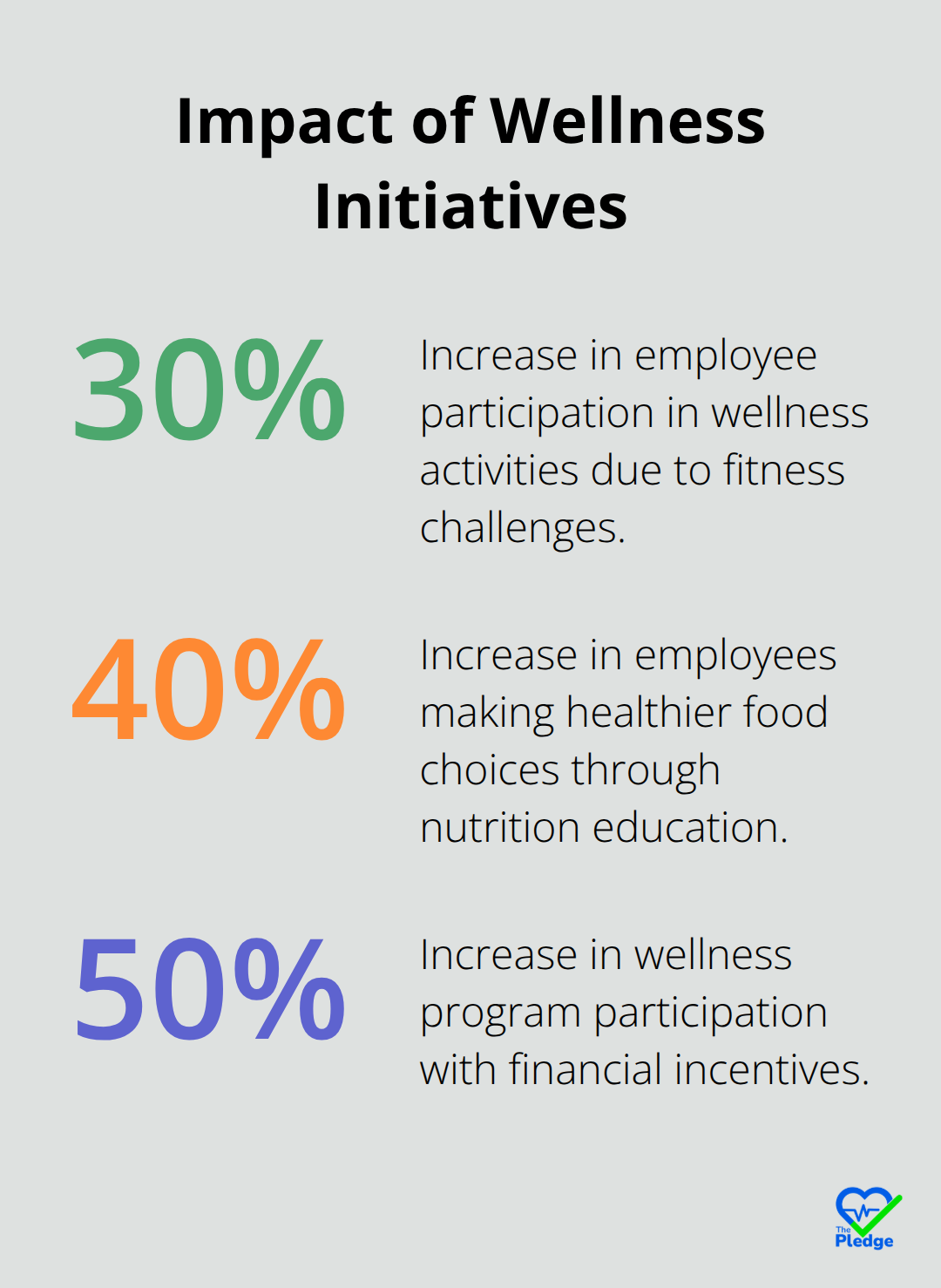
Fitness challenges form a cornerstone of effective physical health programs. Companies that implement regular fitness challenges see a 30% increase in employee participation in wellness activities. Step challenges using wearable devices have proven particularly effective. One client reported a 25% reduction in sedentary behavior among employees after implementing a company-wide step challenge.
To maximize impact, we suggest structuring challenges in teams. This approach fosters camaraderie and healthy competition. A study by the American Journal of Health Promotion found that team-based challenges resulted in 3x higher sustained engagement compared to individual challenges.
Nutrition Education: Making Healthy Choices
Nutrition education needs to be practical and engaging to make a real difference. Hands-on cooking classes and meal prep workshops yield the best results. Companies that offer these programs report a 40% increase in employees making healthier food choices.
Another effective strategy involves partnering with local farmers’ markets or CSA programs to provide fresh produce to employees. This approach not only promotes healthier eating but also supports local businesses. One client saw a 50% increase in fruit and vegetable consumption among employees after implementing this program.
Biometric Screenings: Inspiring Change
Biometric screenings and health risk assessments are powerful tools when used correctly. They provide valuable data, but the key lies in the follow-up. Research has shown that workplace wellness programs can change health beliefs and increase self-reports of having a primary care physician, although they may not significantly affect clinical outcomes.
To maximize participation, consider offering incentives for completing screenings and follow-up actions. A study by the RAND Corporation found that financial incentives increased participation in wellness programs by up to 50%.
The most effective physical health programs are those tailored to your workforce’s needs and integrated into your company culture. As we move forward, it’s essential to consider how these physical health initiatives can complement mental health and stress management programs, creating a holistic approach to employee wellness.
Mental Health Programs That Drive Results
At The Pledge, we observe a significant shift in corporate approaches to mental health and stress management. The most effective programs address the root causes of workplace stress and mental health challenges.
Employee Assistance Programs: Comprehensive Support
Employee Assistance Programs (EAPs) offer a wide range of services beyond traditional counseling. Modern EAPs include mental health counseling, financial and legal services, dependent care services, and workplace conflict resolution services.
To maximize EAP effectiveness:
- Promote EAP services regularly through multiple channels
- Train managers to recognize distress signs and refer employees to EAP services
- Offer 24/7 access to EAP resources, including virtual counseling options
Mindfulness at Work: Stress Reduction Tools
Mindfulness and meditation programs prove to be powerful tools for stress reduction. A study in the Journal of Occupational Health Psychology found that employees who participated in an 8-week mindfulness program reported a 28% reduction in stress levels.
Successful implementation strategies include:
- Offer guided meditation sessions during lunch breaks
- Create quiet spaces or “mindfulness rooms” in the office
- Provide access to mindfulness apps (like Headspace or Calm) as part of the benefits package
A tech company reported a 20% increase in employee focus and a 15% decrease in workplace conflicts after introducing daily 10-minute guided meditation sessions.
Proactive Stress Management: Prevention Strategies
The most effective stress management programs focus on prevention rather than reaction. The American Institute of Stress found that workplace stress costs U.S. businesses up to $300 billion annually in lost productivity.
Forward-thinking companies combat this by:
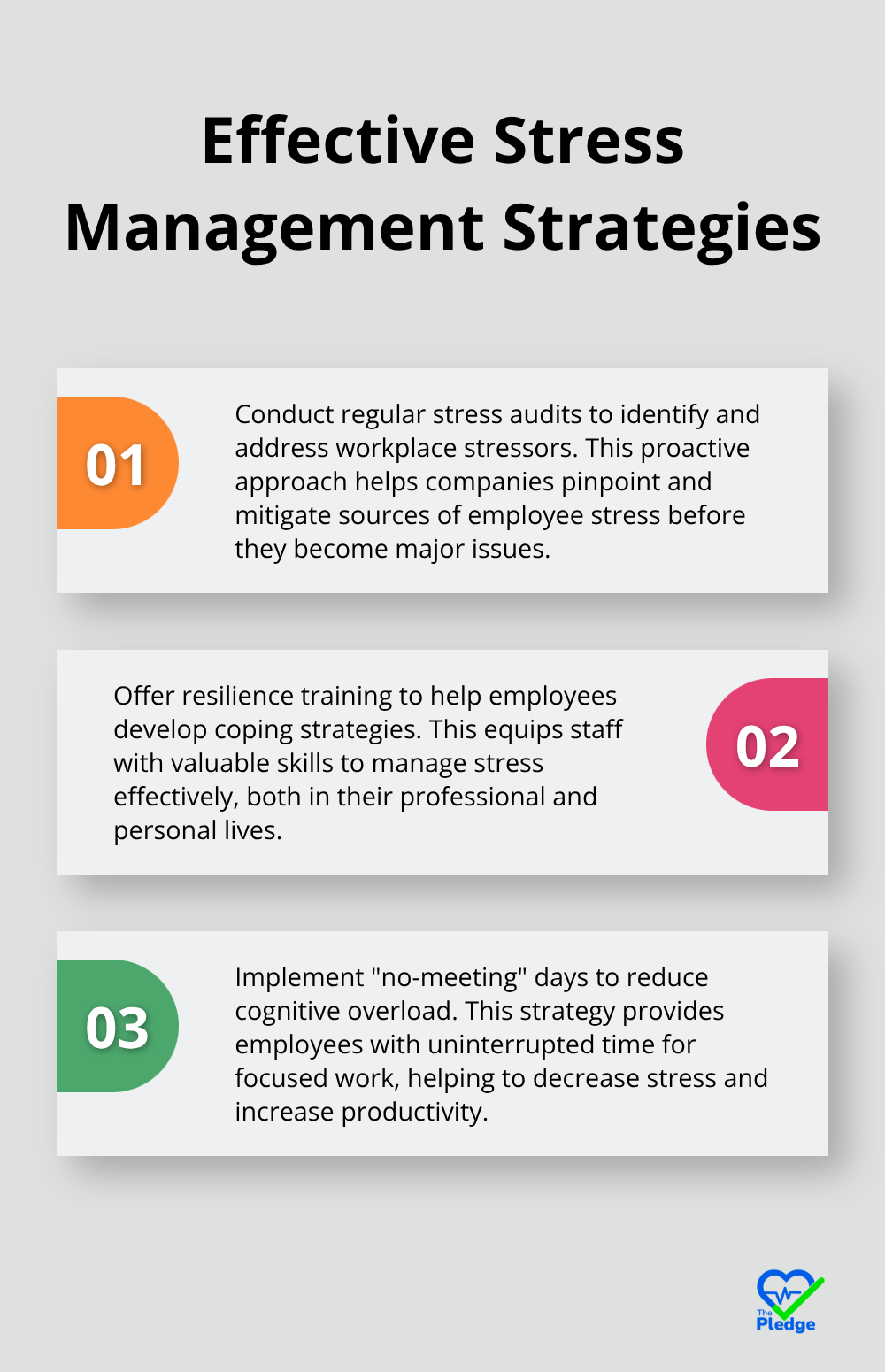
- Conducting regular stress audits to identify and address workplace stressors
- Offering resilience training to help employees develop coping strategies
- Implementing “no-meeting” days to reduce cognitive overload
A manufacturing company saw a 30% reduction in stress-related sick days after implementing these measures.
The key to successful mental health and stress management programs lies in creating a culture where mental health is prioritized and destigmatized. This approach not only improves employee well-being but also drives significant improvements in productivity and retention.
As we transition to the next section, we’ll explore how work-life balance initiatives complement these mental health programs, creating a holistic approach to employee wellness.
Work-Life Balance: The Key to Employee Wellness
At The Pledge, we see how work-life balance initiatives improve employee wellness and productivity. Research shows that employees who are in good physical, mental, and emotional health are more likely to deliver optimal performance in the workplace.
Flexible Work Arrangements: Beyond Remote Work
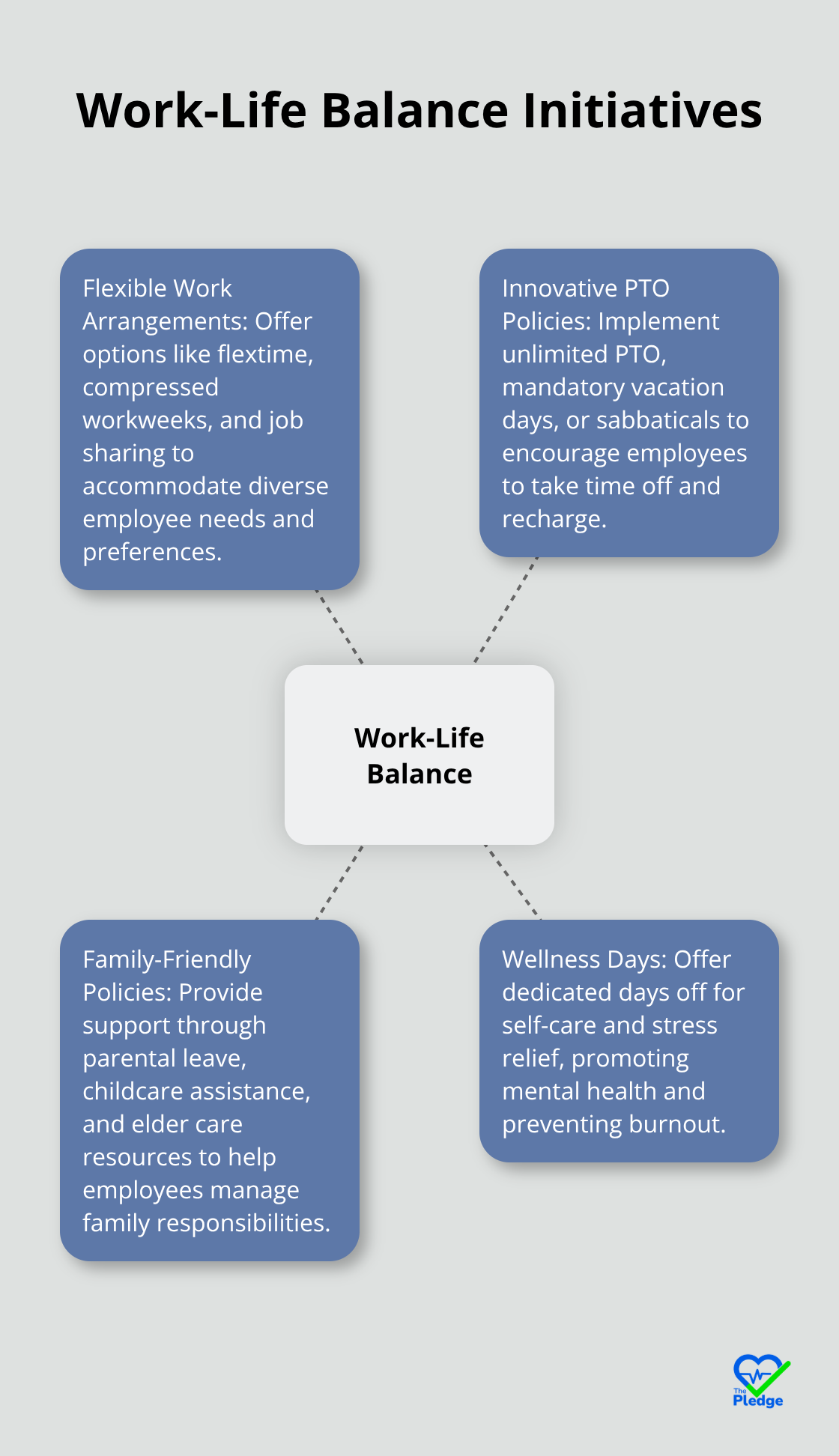
Flexible work arrangements offer a range of options:
- Flextime: Employees select their start and end times
- Compressed workweeks: Longer days for shorter weeks
- Job sharing: Two part-time employees fill one full-time position
A FlexJobs survey found that while remote work is still prevalent, the specific statistics on worker loyalty have changed. Companies implementing flexible work policies often see benefits in employee satisfaction and retention.
Paid Time Off: Encouraging Actual Use
Innovative paid time off (PTO) policies focus on encouraging employees to use their time off:
- Unlimited PTO: This policy can increase productivity when implemented correctly
- Mandatory vacation days: Some companies require employees to take a minimum number of days off each year
- Sabbaticals: Extended paid leave for long-term employees
Companies that implement a mandatory vacation policy often see a decrease in burnout rates.
Family-Friendly Policies: Supporting Work-Life Integration
Family-friendly policies attract and retain top talent. Effective strategies include:
- Parental leave: Companies offering paid parental leave see an increase in employee retention
- Childcare support: On-site childcare or childcare subsidies can reduce absenteeism
- Elder care resources: Support for employees caring for elderly parents becomes increasingly important with an aging population
Companies that implement comprehensive family support programs often see an increase in employee engagement scores among working parents.
Wellness Days: Promoting Mental Health
Wellness days (sometimes called “mental health days”) allow employees to take time off specifically for self-care and stress relief. Benefits include:
- Reduced presenteeism: Employees work more productively when they’re not burnt out
- Increased job satisfaction: Employees feel valued when their mental health is prioritized
- Improved work-life balance: Regular breaks prevent work from overtaking personal life
Companies that offer dedicated wellness days report a decrease in stress-related absences.
Final Thoughts
Employee wellness programs have transformed corporate culture and drive positive outcomes for employees and employers. These programs address physical health, mental well-being, and work-life balance through various initiatives. Companies customize their wellness strategies to meet unique workforce needs and challenges, which maximizes participation and effectiveness.
The importance of employee wellness programs in the workplace continues to grow. They improve employee health, job satisfaction, productivity, and retention. Different types of employee wellness programs evolve to meet changing workplace demands and employee expectations.
The Pledge offers a comprehensive solution that simplifies health management and promotes preventative care. It centralizes health data and provides personalized tools, empowering employees to take control of their wellness journey (leading to better health outcomes and reduced healthcare costs for employers).
![[Guide] Incentives That Drive Preventive Health Participation](https://thepledge.app/wp-content/uploads/emplibot/Guide_-Incentives-That-Drive-Preventive-Health-Participation_1783650286-300x168.jpeg)