
Employee wellness programs are transforming the modern workplace. These initiatives go beyond traditional benefits, focusing on holistic employee well-being.
At The Pledge, we’ve seen firsthand how well-designed wellness programs can boost productivity, reduce healthcare costs, and improve job satisfaction.
In this post, we’ll explore the key components of effective employee wellness programs and provide practical tips for implementation.
How Employee Wellness Programs Boost Business Success
Employee wellness programs are not just a nice-to-have perk. They’re a strategic investment that can significantly impact your bottom line. Many companies achieve remarkable results through well-designed wellness initiatives.
Productivity Soars
When employees are healthy and engaged, they perform better. A study by the American Journal of Health Promotion found that companies with comprehensive wellness programs saw a 56% reduction in lost work time. This translates to more hours on the job and increased output.
It’s not just about being present. Healthy employees focus more and have more energy. They’re less likely to experience the afternoon slump or struggle with brain fog. This leads to higher quality work and fewer errors.
Healthcare Costs Plummet
Healthcare expenses concern businesses greatly. Wellness programs can help curb these costs. The RAND Corporation reports that disease management programs resulted in a reduction of $136 in healthcare costs per member, per month.
Preventive care is key. When employees regularly engage in health screenings and adopt healthier lifestyles, they’re less likely to develop chronic conditions. This means fewer doctor visits, less medication, and reduced insurance claims.
Employee Satisfaction and Retention Increase
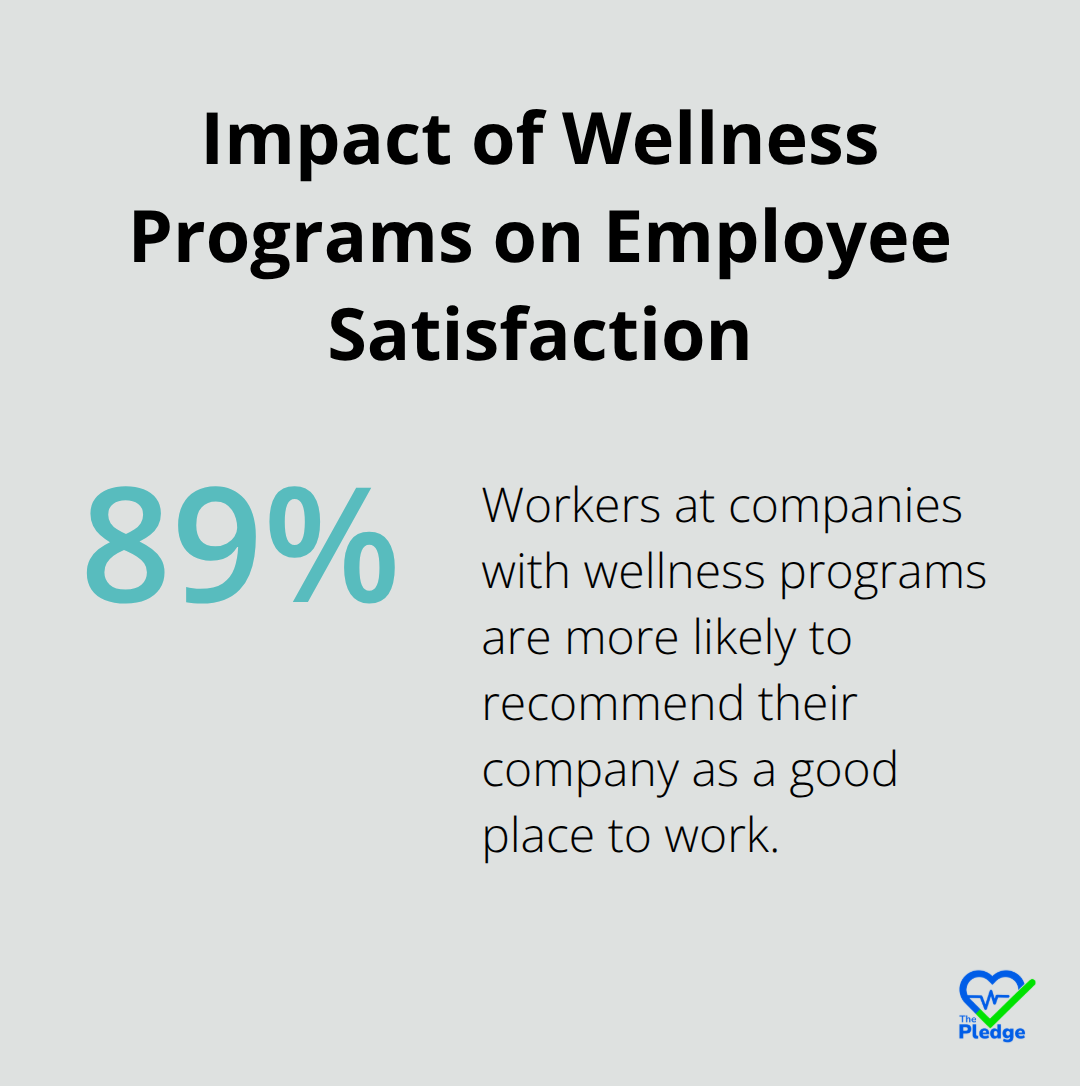
Happy employees stick around. A study by the American Psychological Association found that 89% of workers at companies with wellness programs were more likely to recommend their company as a good place to work.
Wellness programs show employees that you care about their well-being. This fosters loyalty and can significantly reduce turnover rates. Consider this: replacing an employee can cost up to 200% of their annual salary. Investing in wellness doesn’t just save on healthcare costs – it avoids the hefty price tag of constant recruitment.
Comprehensive Programs Yield Best Results
The success of your wellness program depends on its design and implementation. It’s not enough to offer a gym membership and call it a day. The most effective programs are comprehensive, addressing physical, mental, and financial wellness. They’re also tailored to your specific workforce, taking into account their unique needs and challenges.
Many companies have helped design and implement wellness programs that deliver real results. Platforms that make it easy to track progress, engage employees, and measure ROI (Return on Investment) are particularly effective. By centralizing health data and providing personalized recommendations, these platforms ensure that your wellness program is more than just a checkbox – it’s a powerful tool for business success.
As we move forward, it’s important to understand the key components that make up an effective employee wellness program. Let’s explore these elements in detail to help you create a program that truly elevates your workforce.
What Makes a Wellness Program Truly Effective?
Employee wellness programs vary in their impact. The most successful initiatives address multiple aspects of employee well-being. The Pledge has identified key elements that distinguish effective programs.
Physical Health: Beyond Gym Memberships
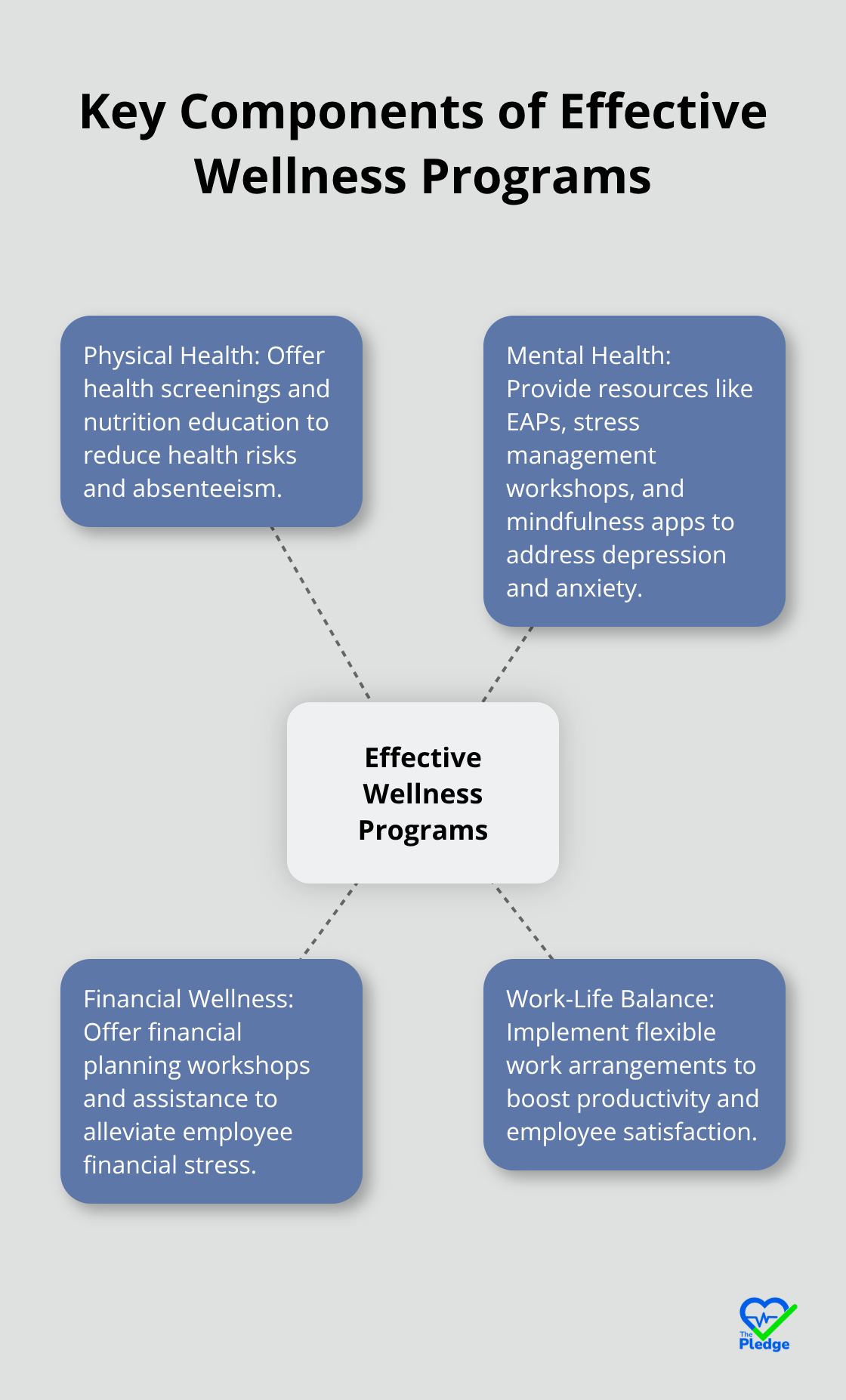
Effective physical health initiatives offer more than just fitness facilities. On-site health screenings can detect potential issues early. A study by the American Journal of Health Promotion found that companies offering such screenings reduced employee health risks by 3.6% over time.
Nutrition education plays a vital role. The CDC reports that workplace nutrition programs can decrease sick leave absenteeism by 25%. Companies can partner with local nutritionists for lunch-and-learn sessions or implement healthy snack programs in the office.
Mental Health: Eliminating Stigma
Mental health support is essential in the workplace. The World Health Organization estimates that depression and anxiety cost the global economy $1 trillion per year in lost productivity. Effective programs address this issue with resources such as:
- Employee Assistance Programs (EAPs) offering confidential counseling
- Stress management workshops
- Mindfulness and meditation apps
Some companies take bold steps. Unilever, for example, trained over 1,000 employees as mental health champions, creating an internal support network.
Financial Wellness: Alleviating Money Stress
Financial stress significantly impacts employee performance. A PwC survey found that 54% of employees consider financial matters their primary source of stress. Comprehensive wellness programs address this by offering:
- Financial planning workshops
- Student loan repayment assistance
- Access to financial advisors
Companies like Aetna have seen positive results with such initiatives. After implementing a student loan repayment program, they reported a 33% decrease in employee turnover among participants.
Work-Life Balance: The New Productivity Catalyst
Flexible work arrangements have become a necessity. A Gartner study found that 43% of workers believe flexible working hours help them achieve greater productivity. Effective work-life balance strategies include:
- Remote work options
- Flexible scheduling
- Unlimited PTO policies
Companies must implement these thoughtfully. Airbnb, for instance, combines its flexible work policy with regular in-person team-building events to maintain company culture.
The most effective wellness programs cater to the specific needs of each workforce. Regular surveys and feedback sessions help companies understand what their employees truly need and value. A comprehensive approach that addresses physical, mental, financial, and work-life balance concerns not only improves employee health but also enhances overall business performance.
Now that we’ve explored the key components of effective wellness programs, let’s examine how to implement these initiatives successfully in your organization.
How to Launch a Winning Wellness Program
Conduct a Comprehensive Needs Assessment
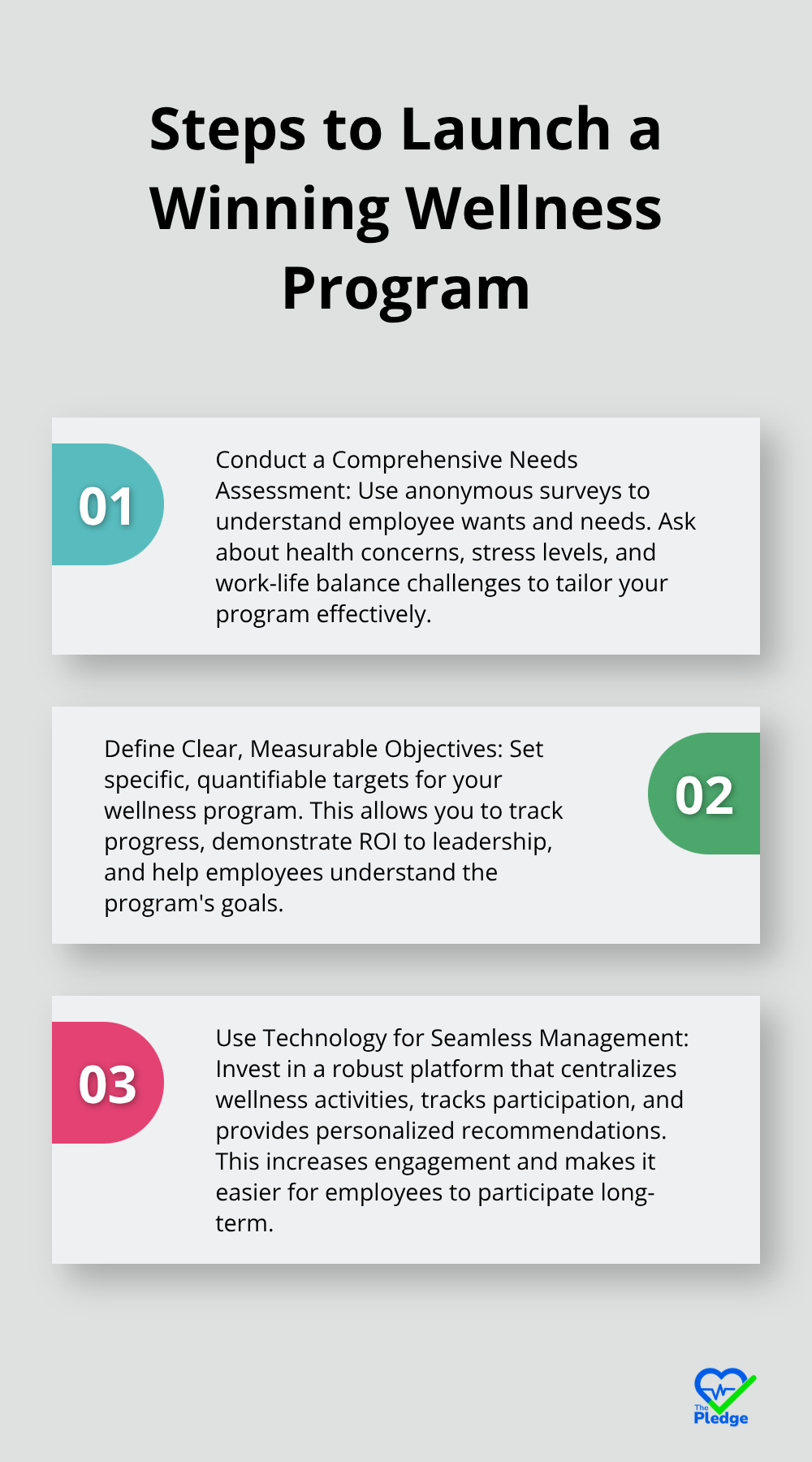
Before you implement any wellness initiatives, understand what your employees want and need. Use anonymous surveys to gauge interest in different wellness activities. Ask about current health concerns, stress levels, and work-life balance challenges. Don’t forget to identify potential barriers to participation.
When designing your Comprehensive Needs Assessment, consider including questions that follow a pattern of asking about self-perception, organization perception, and wellness input. Your team may want to add an introduction to briefly explain the purpose of the assessment.
A recent study found that 69% of employers prioritize wellbeing support to improve their benefits. Workers born after 1995 particularly want their employers to provide more support in managing their wellness. Tailor your program to your specific workforce.
Define Clear, Measurable Objectives
Specific, quantifiable objectives lead to tangible results. Set concrete targets for your wellness program. For example:
- Reduce absenteeism by 15% within the first year
- Increase employee engagement scores by 10 points
- Achieve 75% participation in health screenings
These specific targets allow you to track progress and demonstrate ROI to leadership. They also help employees understand what the program aims to achieve.
Use Technology for Seamless Management
In today’s digital world, paper-based wellness programs fall short. Invest in a robust platform that centralizes all wellness activities, tracks participation, and provides personalized recommendations.
Modern wellness platforms integrate with existing health plans and wearable devices. This allows for real-time health data tracking and personalized nudges to keep employees engaged. Some companies report engagement rates four times higher than industry standards with such platforms.
When you select a technology solution, prioritize user-friendliness and data security. The easier it is for employees to participate, the more likely they are to stick with the program long-term.
Measure, Analyze, and Improve
The launch of your wellness program marks just the beginning. Continuous measurement and improvement prove crucial for long-term success. Regularly collect both quantitative and qualitative data:
- Participation rates in various activities
- Changes in health metrics (e.g., BMI, blood pressure)
- Employee feedback and satisfaction scores
- Healthcare cost trends
Use this data to identify effective and ineffective initiatives. Be prepared to pivot quickly if certain activities don’t resonate with your workforce.
A successful wellness program evolves with your organization and employees’ needs. These steps and the right technology can help you create a wellness initiative that elevates your workforce and drives business success.
Final Thoughts
Employee wellness programs transform workplaces by enhancing productivity, reducing healthcare costs, and increasing job satisfaction. These initiatives address physical health, mental well-being, financial wellness, and work-life balance to create a comprehensive approach to employee care. The most effective programs offer tailored solutions that meet the unique needs of each workforce.
Technology will shape the future of employee wellness in the workplace. AI-powered health platforms will provide personalized recommendations, integrate with existing health plans, and track real-time health data. This level of customization and engagement will lead to higher participation rates and improved health outcomes.
Employee wellness programs will become a fundamental aspect of corporate culture and strategy. Companies that invest in their workforce’s health and well-being improve their bottom line and contribute to a healthier society. The future of work prioritizes employee wellness, driving success for both individuals and organizations.