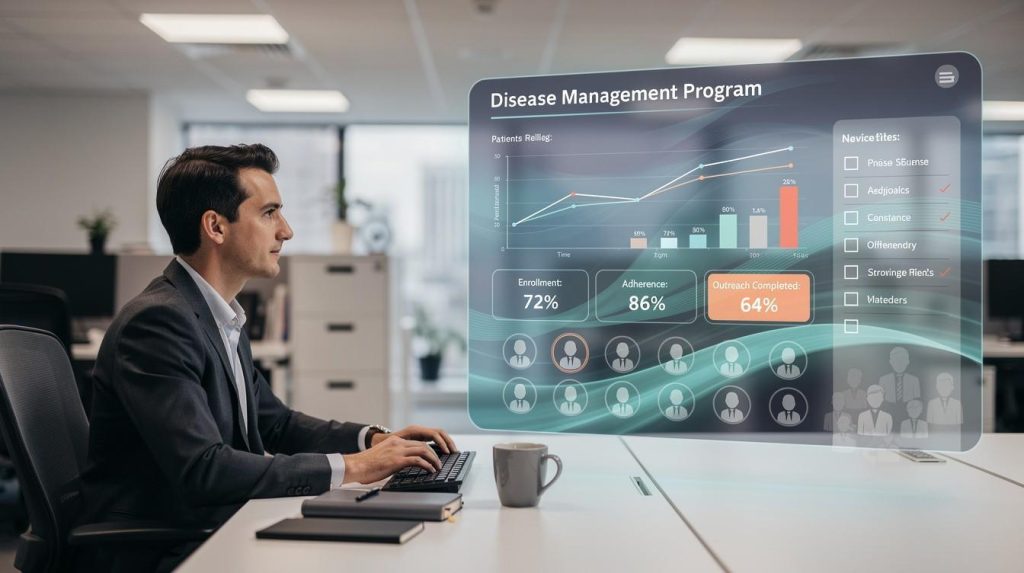
Employer disease management programs often look good on paper. Yet most fall flat because they’re built on outdated assumptions about how employees actually engage with their health.
At The Pledge, we’ve seen firsthand how fragmented systems and one-size-fits-all approaches drain budgets while health outcomes stagnate. The real problem isn’t the programs themselves-it’s that employers are missing what actually moves the needle.
Why Traditional Disease Management Programs Fail
The Engagement Gap Employers Ignore
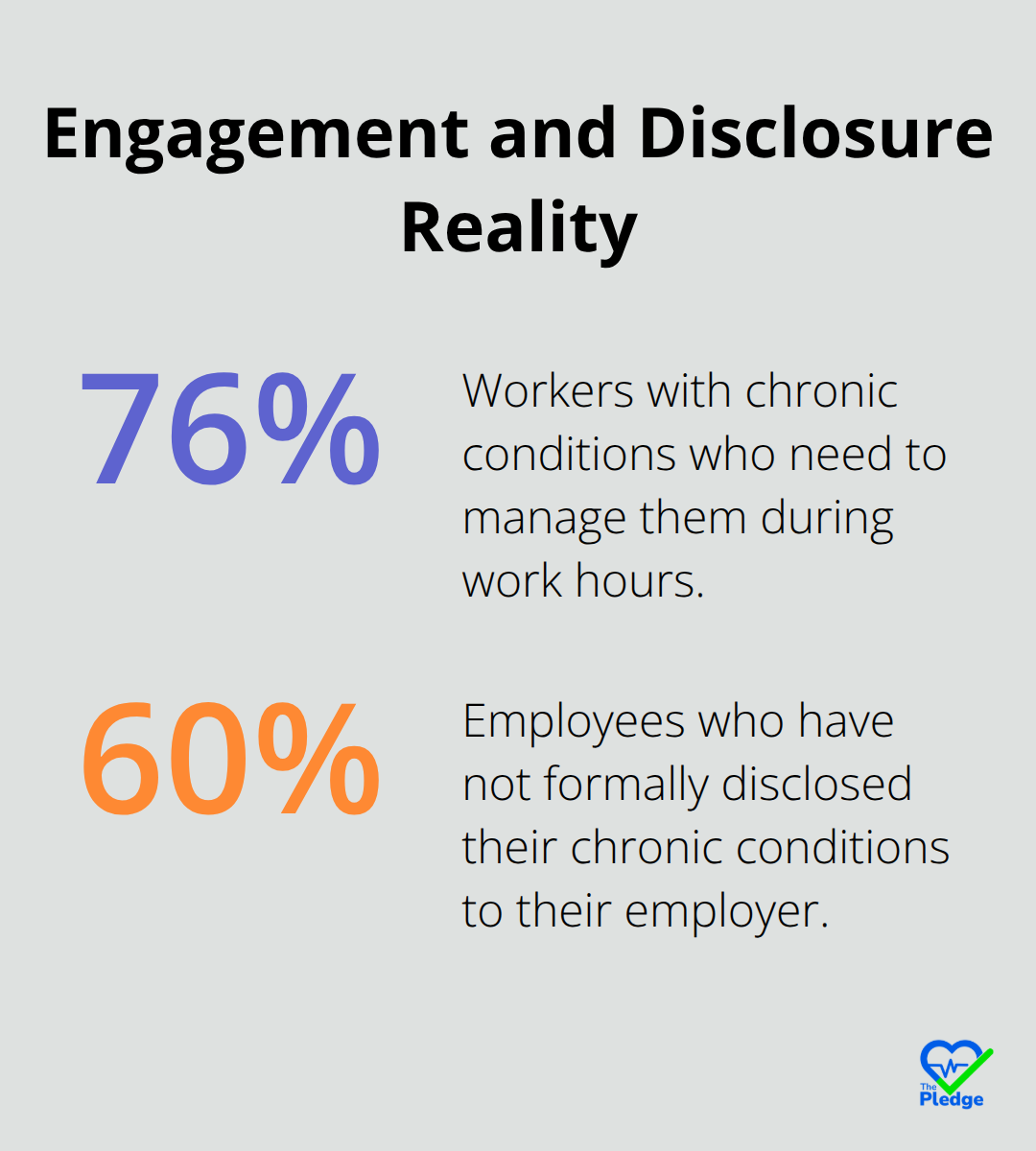
The engagement gap is real. A Harvard T.H. Chan School of Public Health poll conducted in October 2024 found that 76% of workers with chronic conditions need to manage their conditions during work hours, yet fewer than four in ten say their employer is very supportive of flexible schedules or working remotely more often if the work can be done. That disconnect matters. Traditional disease management programs treat employee participation as optional, bundling everyone into generic interventions that ignore the lived reality of managing a chronic condition alongside a job. Employees skip the program or half-engage, and employers watch their investment evaporate. The problem deepens when you consider that 60% of employees have not formally disclosed their chronic conditions to their employer, meaning the people most in need of support remain invisible to the system. Without deliberate design for the actual constraints employees face-scheduling conflicts, privacy concerns, competing demands-disease management becomes another checkbox that nobody uses.
Fragmented Systems Destroy Care Coordination
Fragmented systems kill disease management before it starts. Claims data lives in one place, health risk assessments in another, provider records in a third, and pharmacy information scattered across multiple vendors. This fragmentation means nobody has a complete picture of an employee’s health status, so interventions miss the mark. A person managing diabetes might receive a hypertension reminder without anyone knowing their medication adherence is already failing for their diabetes regimen. Care coordination requires unified data, and most traditional programs never achieve it. The Integrated Benefits Institute reports that 78.4% of employees have at least one chronic condition, and many have multiple overlapping diagnoses. Each siloed system adds friction: duplicate testing, missed medication interactions, contradictory care plans, and employees exhausted from repeating their health history across disconnected providers. When data doesn’t flow, neither does accountability. Nobody owns the outcome.
Single-Behavior Programs Miss What Actually Prevents Hospitalizations
Traditional programs focus on the wrong targets. They launch generic education modules, send quarterly wellness challenges, and hope behavior shifts. Evidence shows that approach fails. A 2024 meta-analysis in the Annals of Behavioral Medicine found that simultaneous targeting of physical activity, diet, medication adherence, and tobacco use yields superior outcomes compared to single-behavior programs. Hybrid human-plus-digital models outperform AI-only tools. Traditional disease management often picks one behavior-usually activity or weight-and ignores the medication adherence or dietary changes that actually prevent hospitalizations. Research from Georgetown University Health Policy Institute shows that digital MSK programs achieve higher completion rates than traditional approaches, yet most employer programs never achieve comparable results because they address root causes superficially. The real drivers of health change include personalized goal-setting, ongoing feedback, coaching accountability, and integration into daily work life. Employees need support embedded into their actual environment and schedules, not separated from work.
What Effective Programs Look Like
The strongest disease management programs share common traits. They identify high-cost, high-risk employees using claims and health data, then deploy targeted interventions where ROI actually lives. They measure outcomes across multiple dimensions: hospitalizations, emergency department visits, medication adherence, biomarkers (blood pressure, A1C), and employee-reported health. They sustain engagement through personalized coaching, real-time feedback, and behavioral science grounded in motivational interviewing and cognitive behavioral therapy. Most importantly, they treat disease management as a long-term commitment. A five-year longitudinal study shows Year 1 ROI of $4.02 per dollar spent, climbing to $9.64 by Year 5, with the strongest gains appearing only after sustained engagement. Traditional programs expect quick wins and abandon ship when Year 1 results disappoint.
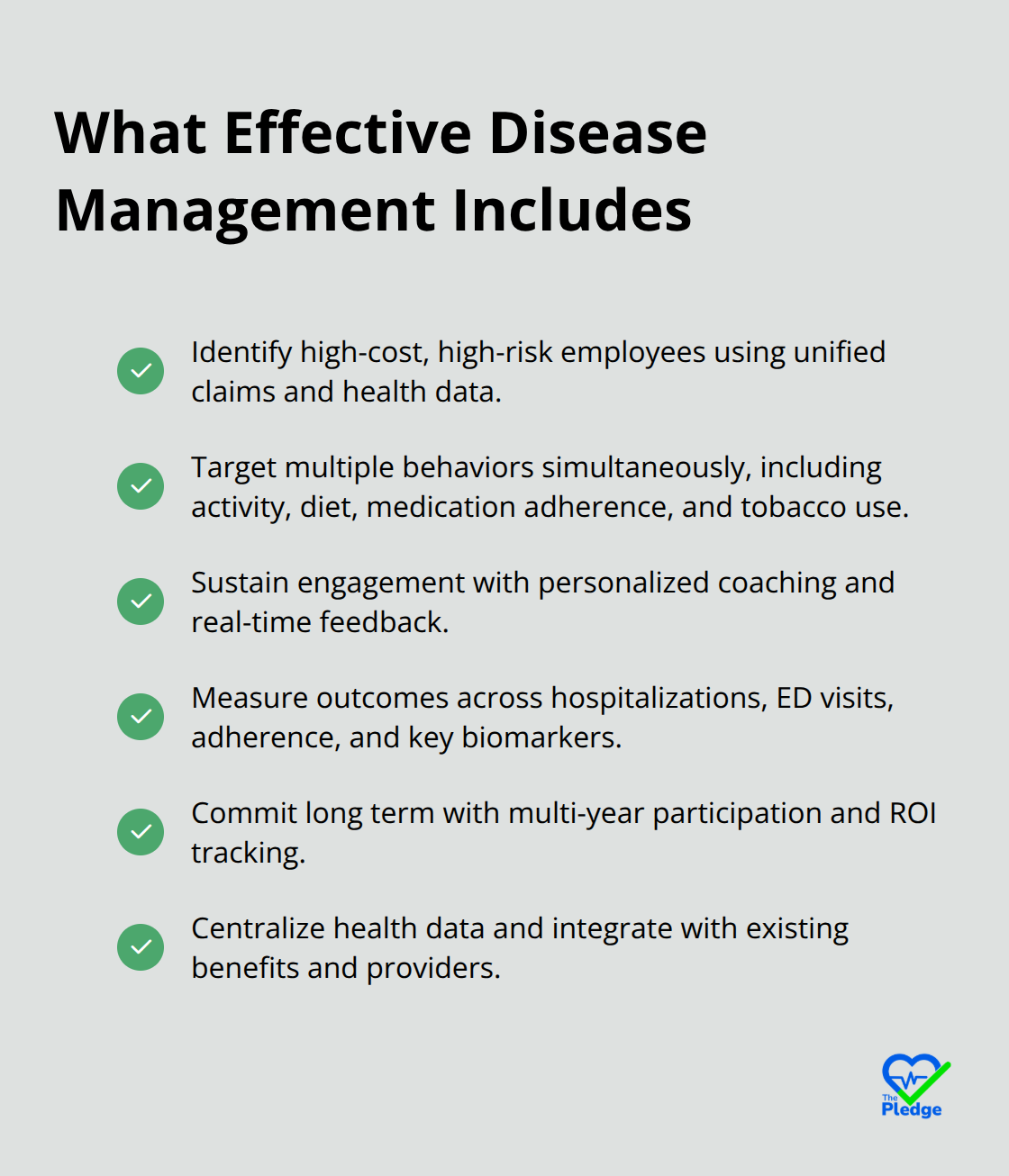
Modern platforms centralize health data, apply AI-driven personalization, and integrate seamlessly with existing benefits and providers-removing the friction that kills traditional programs. This shift from fragmented, one-size-fits-all approaches to coordinated, data-driven interventions is where employers unlock real health improvement and cost reduction.
The Price of Inaction
How Poor Disease Management Drains Productivity
Ineffective disease management doesn’t just fail to improve health-it actively drains employer budgets while employees suffer preventable complications. The Integrated Benefits Institute reports that productivity losses from chronic conditions average around $4,800 per employee per year due to absenteeism and presenteeism. Employees with three or more chronic conditions miss approximately 7.8 days annually compared to 2.2 days for those with no chronic conditions. This gap exists because traditional disease management programs don’t prevent the hospitalizations and emergency visits that force time away from work.
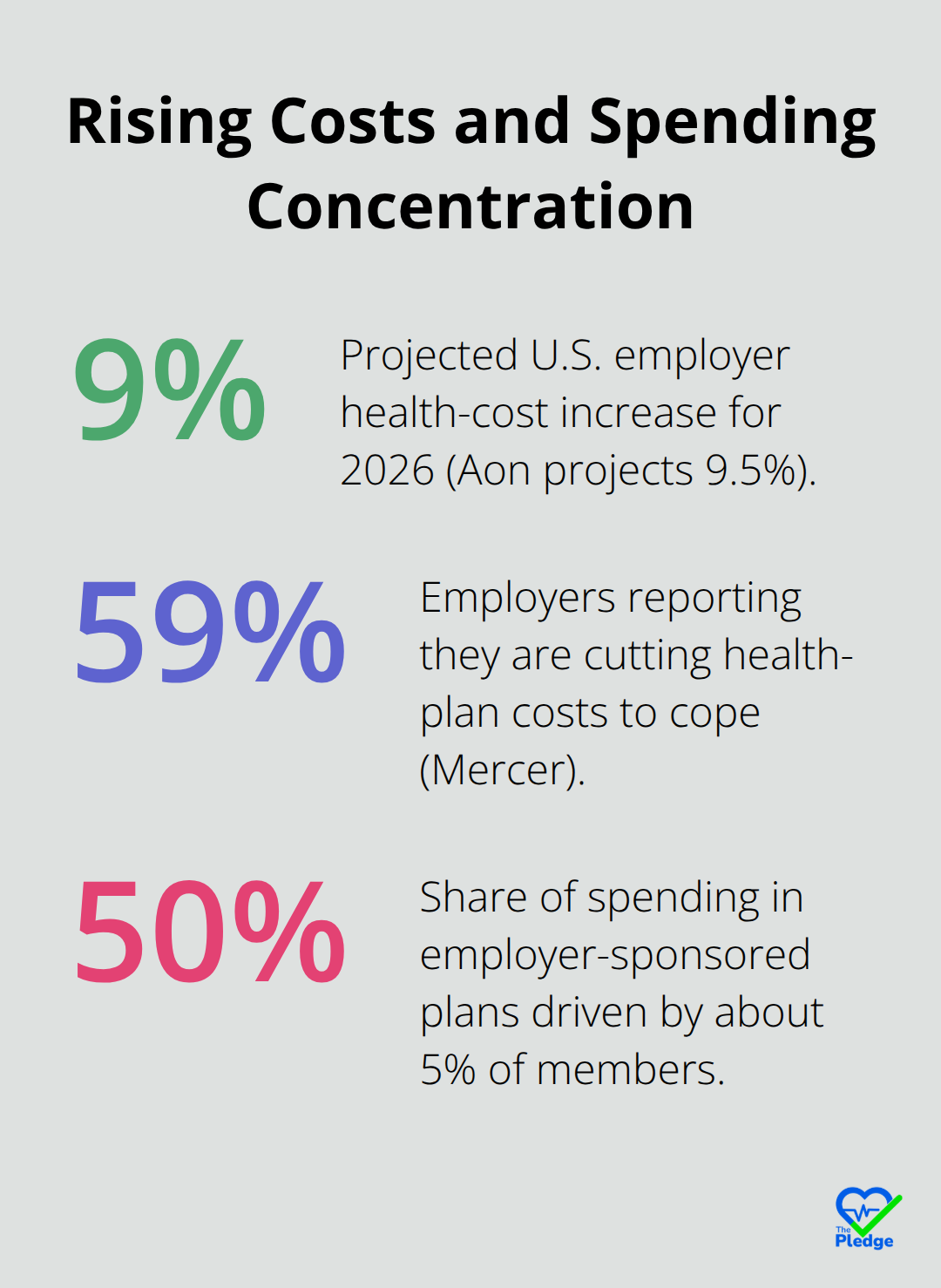
When programs lack real-time data integration and personalized intervention, employees don’t receive the medication reminders, dietary guidance, or activity coaching needed to stay stable. A single poorly managed hospitalization costs thousands and disrupts productivity for weeks. The CDC reports that chronic diseases account for 90% of the nation’s healthcare expenditures, and within employer-sponsored plans, about 5% of members drive 50% of spending. Those high-cost members typically have multiple chronic conditions managed across fragmented systems with no coordination. Employers investing in outdated disease management watch spending climb despite intervention because they’re not targeting the right employees with the right intensity.
Why Healthcare Costs Rise Despite Interventions
Rising healthcare expenditures despite disease management interventions signal a fundamental misalignment between program design and actual health drivers. Aon projects a 9.5% U.S. employer health-cost increase in 2026, and Mercer reports 59% of employers cutting health-plan costs to cope. Disease management programs that fail to sustain engagement or address multiple behaviors simultaneously deliver minimal cost offset.
A five-year longitudinal study shows that meaningful ROI requires sustained participation over years, yet traditional programs see engagement collapse after the first year when quick wins don’t materialize.
The Hidden Cost of Employee Turnover
Employee turnover compounds this problem significantly. When chronic conditions remain poorly managed, employees experience complications, reduced work capacity, and burnout. The Harvard T.H. Chan poll found that 49% of workers with chronic conditions feel they cannot take time off when needed, and 25% say their condition caused them to miss promotion opportunities. Employees facing this pressure either reduce hours, seek employers with better health support, or exhaust themselves trying to manage both work and uncontrolled illness.
Replacing a skilled employee costs 50% to 200% of annual salary depending on role. An employer losing five mid-level employees annually due to poor chronic disease support loses far more than any disease management program would cost. The real expense isn’t the program investment-it’s the cost of not having the right program in place. This reality shifts the conversation from “Can we afford disease management?” to “Can we afford not to invest in effective disease management?”
Breaking Down Silos That Kill Disease Management
The Fragmentation Problem That Employers Accept
Modern disease management succeeds because it solves the fragmentation problem that traditional programs accept as inevitable. Claims data sits in one system, pharmacy records in another, provider notes in a third, and employee health assessments scatter across multiple vendors. This fragmentation means nobody owns the employee’s health outcome. A nurse care manager reviewing claims data doesn’t see medication adherence issues flagged in pharmacy records. A primary care provider doesn’t know the employee just had an emergency department visit. The employee, meanwhile, receives conflicting guidance from disconnected interventions and stops participating. Research from the Institute for Healthcare Improvement shows that effective care coordination, including medication reconciliation and unified data access, reduces fragmentation and improves adherence. Yet most employers still tolerate this mess because replacing legacy systems feels expensive and disruptive. The cost of inaction is far higher. When data stays siloed, employees with multiple chronic conditions experience duplicate testing, missed drug interactions, and contradictory care plans. Each disconnection adds friction that drives disengagement.
Centralized Data Creates Real Coordination
Modern platforms centralize health data in a single source of truth, enabling real-time coordination across providers, pharmacies, and employers. This centralization allows care managers to see an employee’s complete medication list, recent lab results, upcoming appointments, and active health goals simultaneously. A hypertension intervention can account for diabetes medications already being taken. Appointment reminders account for work schedules and transportation barriers identified in initial assessments. Nobody has to repeat information or wait for records to transfer between systems.
AI-Powered Personalization Replaces One-Size-Fits-All
AI-powered personalization layers on top of unified data, delivering interventions matched to each employee’s specific conditions, behaviors, and barriers. Instead of generic activity challenges sent to everyone, an employee with poorly controlled diabetes receives glucose monitoring reminders, meal-planning support, and medication adherence coaching tailored to their actual routine. The system learns what works for each person and adjusts recommendations accordingly. This targeted approach produces far better engagement than traditional programs that treat all employees identically.
Real-Time Monitoring Prevents Crises
Remote monitoring and telehealth integration amplify this effect. Sustained engagement over years produces compounding ROI, with research examining medical cost savings attributed to disease management programs. Real-time biometric tracking-blood pressure readings, glucose logs, weight trends-triggers immediate feedback and intervention adjustments. An employee’s blood pressure creeping upward receives a prompt medication review or provider escalation before crisis. This proactive approach stops problems before they require expensive emergency care or hospitalization.
Integration Into Existing Benefits Removes Enrollment Friction
Seamless integration with existing benefits means employees access disease management through tools they already use: their health plan portal, pharmacy records, or employer benefits platform. This eliminates the enrollment friction that kills participation. When disease management requires yet another login, another app, another vendor relationship, engagement collapses. Integration into existing infrastructure removes that barrier and makes participation the path of least resistance.
Final Thoughts
The evidence shows that traditional employer disease management programs fail because they ignore how employees actually live and work. Fragmented systems, one-size-fits-all interventions, and weak engagement guarantees poor outcomes and wasted budgets. Employers winning this battle have moved beyond outdated approaches to centralized, personalized, and sustained disease management that produces real results.
Effective programs deliver compelling financial returns. Year 1 ROI of $4.02 per dollar spent climbs to $9.64 by Year 5 when organizations maintain engagement and target high-cost employees effectively. Productivity gains alone justify the investment: employees with poorly managed chronic conditions cost employers $4,800 annually in lost productivity, and a single prevented hospitalization often pays for years of disease management support.
The business case extends beyond cost reduction to retention and culture. Workers managing conditions at work need flexible schedules, remote options, and health support integrated into their daily environment. Start by assessing your current disease management gaps and identifying which chronic conditions drive the highest costs in your workforce, then evaluate whether your current programs address multiple behaviors simultaneously and sustain engagement beyond Year 1. Consider platforms like The Pledge that centralize health data, apply AI-driven personalization, and integrate seamlessly with existing benefits to remove friction and drive real results.
![Navigating Your Provider Network for Maximum Savings [Guide]](https://thepledge.app/wp-content/uploads/emplibot/Navigating-Your-Provider-Network-for-Maximum-Savings-_Guide__1781489382-300x168.jpeg)