

Every year, millions of employees make the wrong choice between urgent care and the emergency room, wasting time and money in the process. The truth is simple: most non-life-threatening health issues don’t belong in an ER, yet people go there anyway out of confusion or habit.
At The Pledge, we believe urgent care navigation should be straightforward. When you know which facility fits your situation, you save money, avoid hours of waiting, and get back to work faster.
What Conditions Actually Belong in Urgent Care
Urgent care exists for a specific category of health problems: conditions that need treatment today but won’t kill you if you wait a few hours. The distinction matters because sending a sprained ankle to the ER wastes both your time and hospital resources. Urgent care handles the middle ground between your doctor’s office and emergency care.
Common Conditions Urgent Care Treats
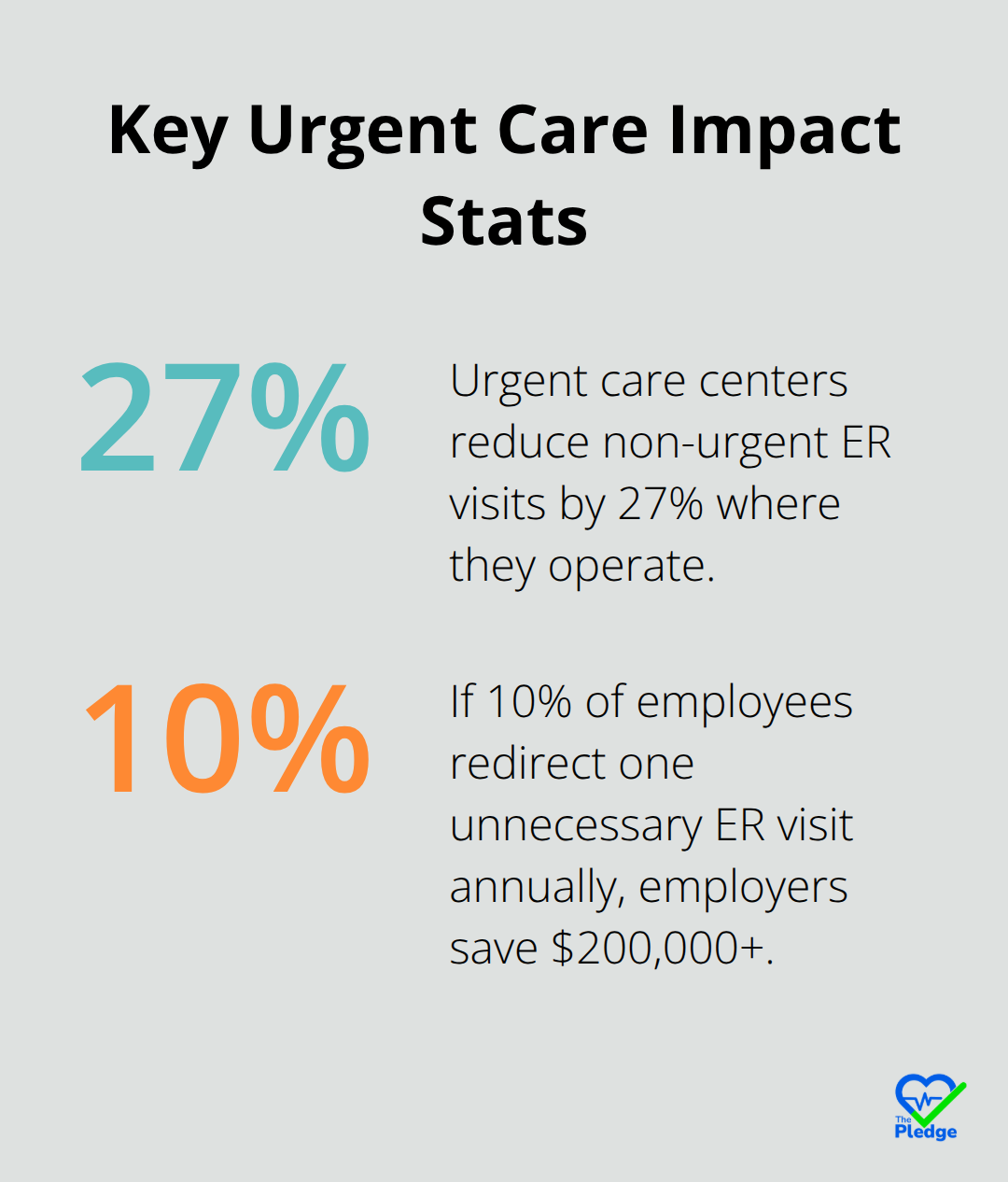
Fevers, flu symptoms, ear infections, sore throats, animal bites, cuts requiring stitches, minor sprains and strains, mild asthma flare-ups, and urinary tract infections all fit the urgent care category. These conditions are uncomfortable and sometimes painful, but they’re not emergencies. A study from Health Services Research found that urgent care centers reduce non-urgent ER visits by 27 percent in areas where they operate, which tells you how many people currently choose the wrong facility for these exact situations.
The Financial Gap Between Urgent Care and the ER
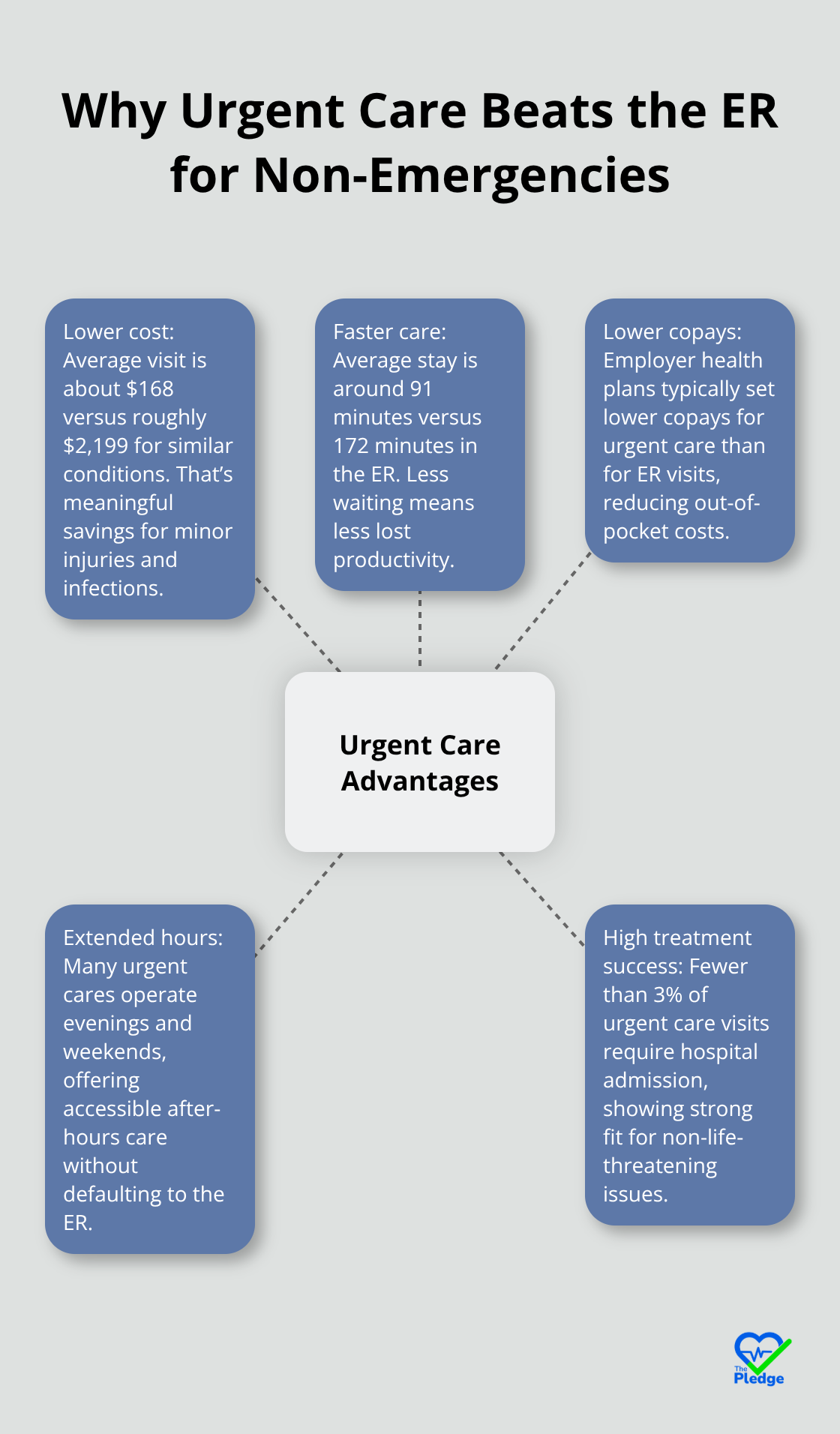
An urgent care visit costs roughly $168 on average, while a freestanding ER visit runs around $2,199 for the same types of conditions. That’s a tenfold difference for treating a minor injury or infection. Urgent care centers also move patients through faster, with an average length of stay around 91 minutes compared to 172 minutes in emergency rooms. This speed advantage means you return to work sooner, which matters when you’re dealing with something like a minor fracture or a bad cold.
Success Rates at Urgent Care Facilities
Fewer than 3 percent of urgent care visits require hospital admission, which shows these facilities successfully handle what they’re designed for. If your employer covers urgent care under your health plan, your copay is typically lower than an ER copay, making the financial incentive clear. Most patients who visit urgent care receive complete treatment and leave without needing further intervention.
Chronic Condition Flare-ups: When Urgent Care Works and When It Doesn’t
Chronic condition flare-ups sometimes require urgent care and sometimes require the ER, depending on severity. If you have asthma and your inhaler isn’t working, that’s urgent care territory. If you can’t breathe and feel like you’re suffocating, that’s the ER. If your diabetes is causing numbness or tingling, call your doctor or try urgent care. If you’re experiencing severe chest pain related to your condition, go directly to the ER.
The boundary is real but sometimes fuzzy, which is why knowing your condition matters. Urgent care doctors can manage most flare-ups for chronic illnesses that don’t involve life-threatening symptoms. They can prescribe medications, run basic tests, and provide imaging like X-rays. What they can’t do is provide intensive monitoring, advanced interventions, or admit you for overnight care. Understanding this limitation prevents you from wasting time at an urgent care when you actually need hospital-level intervention-and it also prevents unnecessary ER visits when urgent care would suffice.
How Much Money and Time You Actually Save with Urgent Care
The Real Cost Difference Between Urgent Care and the ER
An urgent care visit costs roughly $168 on average, while a freestanding ER visit runs around $2,199 for identical conditions. That $2,031 gap per visit adds up fast across your workforce. If just 10 percent of your employees redirect one unnecessary ER visit annually to urgent care, you save over $200,000 in direct medical costs. Insurance claims sometimes get denied when an insurer determines appropriate care could have been sought elsewhere, leaving employees with unexpected bills. Choosing urgent care eliminates that risk entirely and protects your team from surprise expenses.
Speed Gains That Boost Productivity
Urgent care visits average 91 minutes compared to 172 minutes in the ER-a 81-minute difference that matters when someone needs to return to work. An employee treated for a minor laceration or ear infection at urgent care loses two hours of productivity instead of four. During cold and flu season, these time savings compound across your entire employee base. The cost savings rival the direct medical savings when you calculate lost work hours across dozens or hundreds of employees. Urgent care centers typically operate evenings and weekends, eliminating the false choice between waiting until Monday or heading to the ER on a Saturday night.
Transparency Removes the ER Default
Many urgent care systems now offer real-time wait times and online reservation options, removing the guesswork that drives people toward the ER out of pure uncertainty. When employees know they can walk into urgent care within 30 minutes on a Sunday morning, they stop treating the ER as a default option. This transparency shifts behavior without requiring constant reminders. The research from Health Services Research showed urgent care centers reduce non-urgent ER visits by 27 percent in areas where they operate, meaning the infrastructure alone changes how people choose care.
What Urgent Care Actually Handles
Fewer than 3 percent of urgent care visits require hospital admission, proving these facilities handle exactly what they’re designed for. Urgent care doctors manage most acute conditions that don’t involve life-threatening symptoms-they prescribe medications, run basic tests, and provide imaging like X-rays. Employees who understand this distinction spend less money and waste less time than those who default to emergency rooms for every health concern. Your role as an employer involves helping your team recognize which conditions belong where, so they make smarter choices when illness strikes.
How Real Information Shapes Care Decisions
The Information Gap That Drives ER Overuse
Most employees default to the ER because they lack three critical pieces of data in the moment of decision. They don’t know which urgent care centers are nearby or open right now. They don’t know how long they’ll wait at either facility. They don’t know what their actual copay will be at each option.
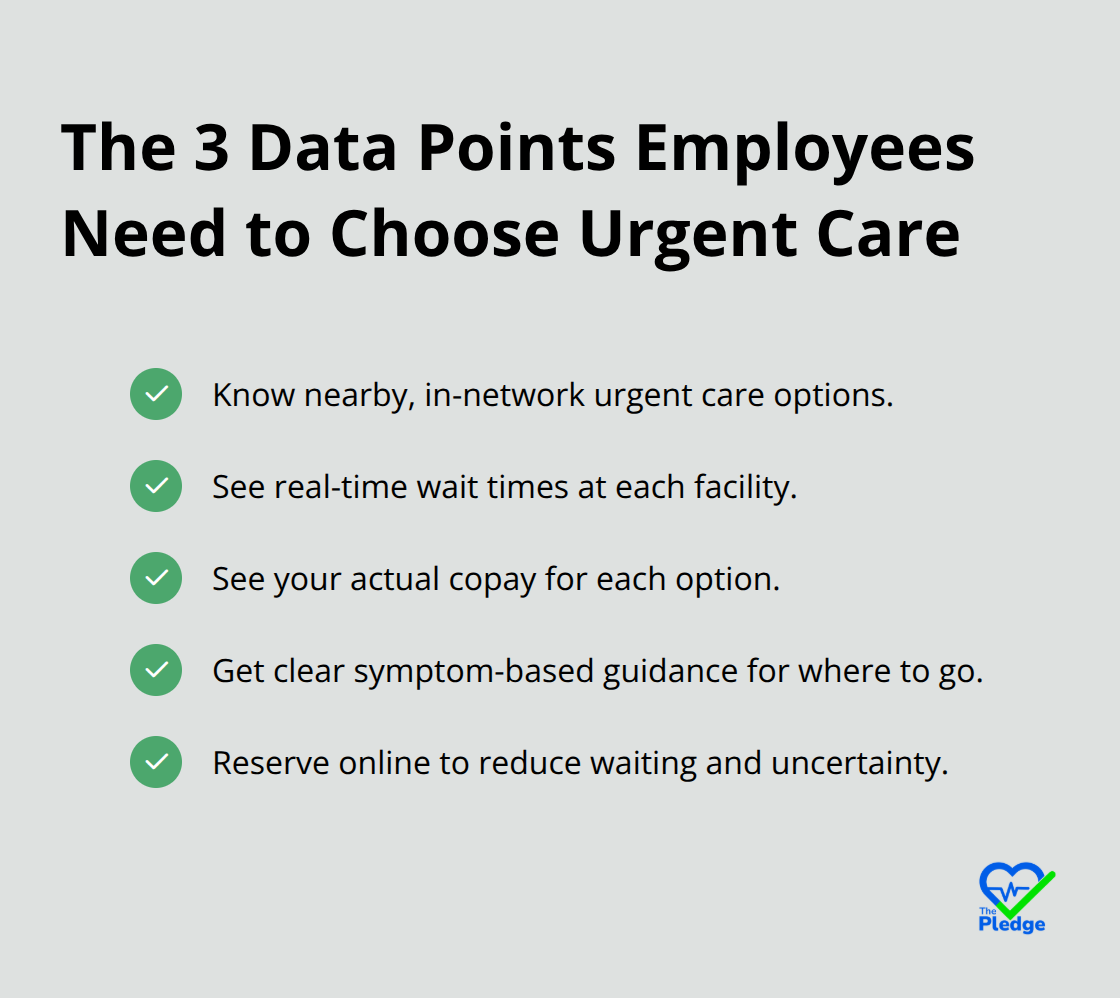
This information vacuum forces people toward the ER out of pure uncertainty. When an employee wakes up on Sunday with a fever and can see that an in-network urgent care is open two miles away with a 15-minute wait time, they make a different choice than someone staring at their phone with no information except a vague memory that the ER exists.
Transparency Changes Behavior
Cost transparency alone shifts how employees choose care. Research shows that when employees understand the financial difference between facilities, urgent care utilization rises significantly. An urgent care visit costs roughly $168 on average, while a freestanding ER visit runs around $2,199 for identical conditions. That $2,031 gap per visit adds up fast across your workforce. If just 10 percent of your employees redirect one unnecessary ER visit annually to urgent care, you save over $200,000 in direct medical costs. Insurance claims sometimes get denied when an insurer determines appropriate care could have been sought elsewhere, leaving employees with unexpected bills. Choosing urgent care eliminates that risk entirely and protects your team from surprise expenses.
Personalized Guidance Prevents Wrong Choices
Personalized care recommendations help employees distinguish between what needs emergency intervention and what falls into the urgent care category. An employee with mild asthma receives different guidance than someone experiencing severe chest pain, because the system knows their health profile. This personalization prevents both unnecessary ER visits and the dangerous scenario where someone with a genuine emergency goes to urgent care instead. Location data, wait times, cost transparency, and personalized recommendations combine into a single decision moment. An employee with a cut that needs stitches doesn’t have to wonder whether they should go to the ER or call their doctor. They see three urgent care options within five miles with current wait times, know their copay is $30 instead of $150, and get confirmation that their symptoms match the urgent care category.
Family Care Coordination
Family sharing features help parents manage care decisions for children and elderly relatives through a single interface. When your teenager sprains an ankle at soccer practice, you don’t have to make separate searches for urgent care options. You already have them. This coordination removes friction from the decision-making process and ensures consistent care navigation across your household.
Seasonal Reminders Keep Navigation Top-of-Mind
Quarterly reminders during high-utilization periods like cold and flu season keep urgent care navigation top-of-mind when employees face acute health decisions. These reminders reference specific, nearby urgent care centers with their hours and contact information, removing one more barrier to making the right choice. Urgent care centers typically operate evenings and weekends, eliminating the false choice between waiting until Monday or heading to the ER on a Saturday night. Urgent care visits average 91 minutes compared to 172 minutes in the ER-an 81-minute difference that matters when someone needs to return to work. An employee treated for a minor laceration or ear infection at urgent care loses two hours of productivity instead of four.
Final Thoughts
The choice between urgent care and the ER comes down to one fundamental question: does this condition threaten your life or limb right now? If the answer is no, urgent care is almost always the better option. Emergency rooms exist for genuine emergencies-chest pain, difficulty breathing, severe trauma, loss of consciousness-while urgent care handles everything else that needs treatment today but won’t kill you if you wait a few hours. The financial difference speaks for itself: $168 versus $2,199 for identical conditions, and the time difference matters just as much at 91 minutes versus 172 minutes.
Smart urgent care navigation removes the guesswork that drives unnecessary ER visits. Employees who know their nearby urgent care options, understand their copay structure, and can see real-time wait times make different choices than those operating in an information vacuum. When your teenager sprains an ankle or you wake up with a fever, you don’t wonder whether you’re making the right choice-you see your options, understand the costs, and get treated faster (all without the stress of an emergency room).
Taking control of your healthcare choices starts with understanding where different conditions belong. Visit The Pledge to see how your organization can simplify urgent care navigation for your entire team.
![Navigating Your Provider Network for Maximum Savings [Guide]](https://thepledge.app/wp-content/uploads/emplibot/Navigating-Your-Provider-Network-for-Maximum-Savings-_Guide__1781489382-300x168.jpeg)