Mental health care is shifting. Telehealth apps for mental health are making therapy accessible to millions who couldn’t reach it before-whether due to cost, location, or scheduling conflicts.
At The Pledge, we’ve seen how digital mental health solutions are removing real barriers to treatment. This guide walks you through what works, what to look for, and how to find the right app for your needs.
Why Telehealth Apps Matter Right Now
Telehealth apps for mental health have moved beyond convenience-they’ve become essential infrastructure for millions. The numbers tell the story. According to World Psychiatry research covering 176 randomized controlled trials, smartphone-based mental health apps deliver measurable results for depression and anxiety when compared to standard care. That’s not marginal improvement; that’s clinically meaningful change. Telehealth has made this treatment accessible to people who would never walk into a therapist’s office: rural patients with no psychiatrist within 50 miles, shift workers who can’t book a 9-to-5 appointment, and people with social anxiety who find video calls less intimidating than waiting rooms. The barriers that kept millions out of mental health care have collapsed, and the evidence backs up what we’re seeing in real usage patterns.
The Cost Reality That Changes Everything
Traditional therapy costs 100–200 per session, and that’s before insurance hassles. Telehealth flips the model. Talkspace Go starts at 29.99 per month for unlimited messaging with a therapist. BetterHelp runs 70–100 weekly for full access. Standalone meditation apps like Headspace cost 12.99 monthly or 69.99 annually. The CBT-I Coach from the U.S. Department of Veterans Affairs is free, no catch. For someone earning 35,000 a year, paying 2,000 annually for therapy was impossible; paying 360 for Headspace becomes manageable. Insurance coverage remains uneven-most standalone apps don’t work with insurance, though platforms like Talkspace and NOCD accept some plans. Telehealth has created an entry point to mental health care where none existed. Apps like Breathwrk deliver 50+ breathing classes for 69 annually. That’s radical democratization of care.
What Actually Works in Practice
The gap between downloaded apps and apps that change behavior is enormous. Engagement rates sit around 4% daily opens and 3% 30-day retention-people download, use once, abandon. But certain features predict success. CBT frameworks, mood tracking, and human support show stronger outcomes than meditation-only apps. WYSA pairs AI chatbots with real mental health coaches, blending automation with human touch. NOCD focuses specifically on OCD with virtual exposure and response prevention therapy from licensed therapists, running 99 weekly with potential insurance coverage. Worry Watch uses guided journaling and CBT exercises for anxiety, costing 2.99 monthly or 11.99 yearly, with real data showing that structured journaling reduces cognitive distortions. Between-session contact matters tremendously-research shows ongoing therapist messaging between scheduled sessions improves outcomes more than apps alone. That’s why BetterHelp’s emphasis on continuous therapist access through in-app messaging outperforms pure self-help alternatives. The platforms winning right now aren’t the ones with the prettiest interfaces; they’re the ones combining behavioral evidence, human contact, and realistic pricing into something people actually use long-term.
Why Human Support Separates Winners from Abandoned Apps
Apps that pair technology with licensed therapists or coaches retain users at dramatically higher rates than standalone tools. NOCD’s model-virtual ERP therapy sessions with licensed therapists plus live support between sessions-works because it removes the isolation that kills engagement. Worry Watch’s guided journaling with CBT structure works because a real framework guides users through their anxiety patterns rather than leaving them to figure it out alone. The research is clear: human guidance boosts efficacy significantly. Apps without any human element struggle to keep users past the first week, no matter how polished the design. This distinction matters enormously when you’re evaluating which app might actually stick in your routine versus which one will sit unused on your phone.
What Makes a Mental Health App Actually Work
Licensed Therapists Create Accountability
The difference between a mental health app that sits unused and one that actually changes your life comes down to three things: who’s behind it, how safe it is, and whether it actually tracks your progress. Most people download an app, use it once, and abandon it within weeks. Licensed therapists matter because they bring accountability and clinical judgment that algorithms cannot replicate. When NOCD pairs virtual exposure and response prevention therapy with licensed therapists rather than leaving you to self-navigate OCD management, retention jumps dramatically. Talkspace and BetterHelp both emphasize licensed therapist access, and that’s not marketing fluff-it’s the foundation of why these platforms retain users longer than meditation-only alternatives. Human support separates winners from abandoned apps. Apps that pair technology with licensed therapists or coaches retain users at dramatically higher rates than standalone tools. NOCD’s model-virtual ERP therapy sessions with licensed therapists plus live support between sessions-works because it removes the isolation that kills engagement. Worry Watch’s guided journaling with CBT structure works because a real framework guides users through their anxiety patterns rather than leaving them to figure it out alone. Research shows that human guidance boosts efficacy significantly. Apps without any human element struggle to keep users past the first week, no matter how polished the design.
Security and Privacy Protect Your Mental Health Data
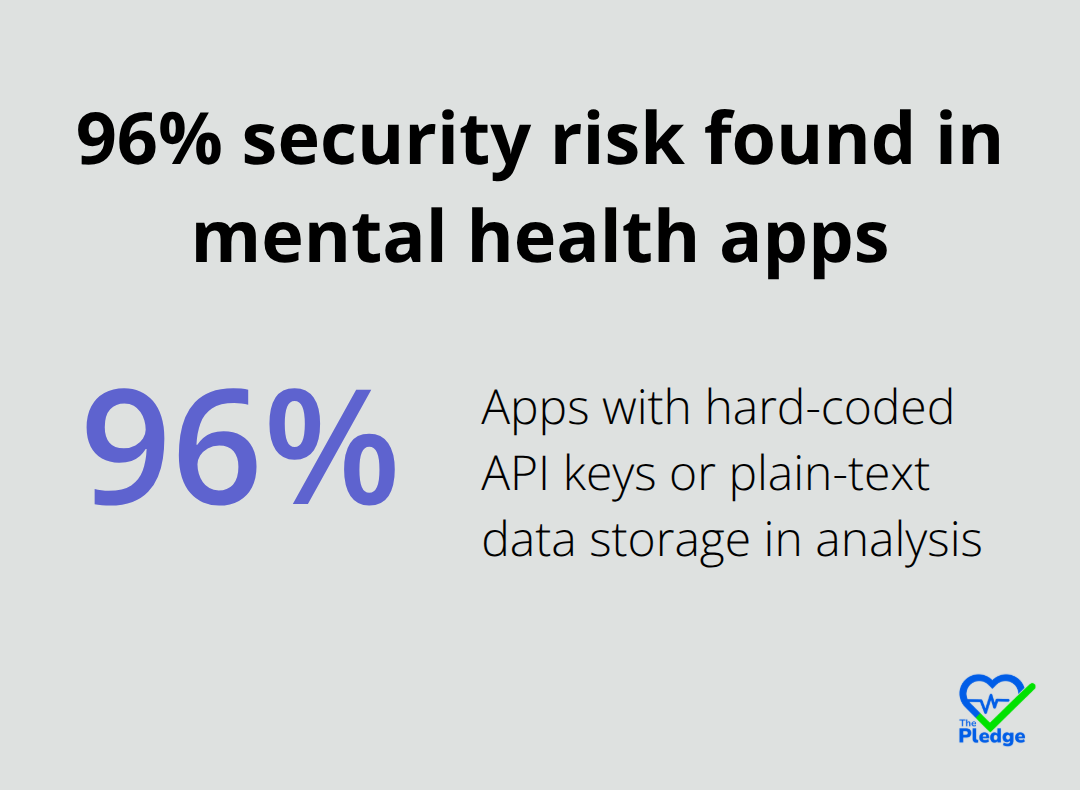
Security and privacy are non-negotiable, especially for mental health data. Apps with poor user experience often exhibit critical security flaws such as insecure cryptography. Hard-coded API keys and plain-text data storage appeared in roughly 96% of apps analyzed. This matters because mental health data is deeply personal-therapy notes, mood patterns, medication information-and breaches expose you to identity theft and discrimination.
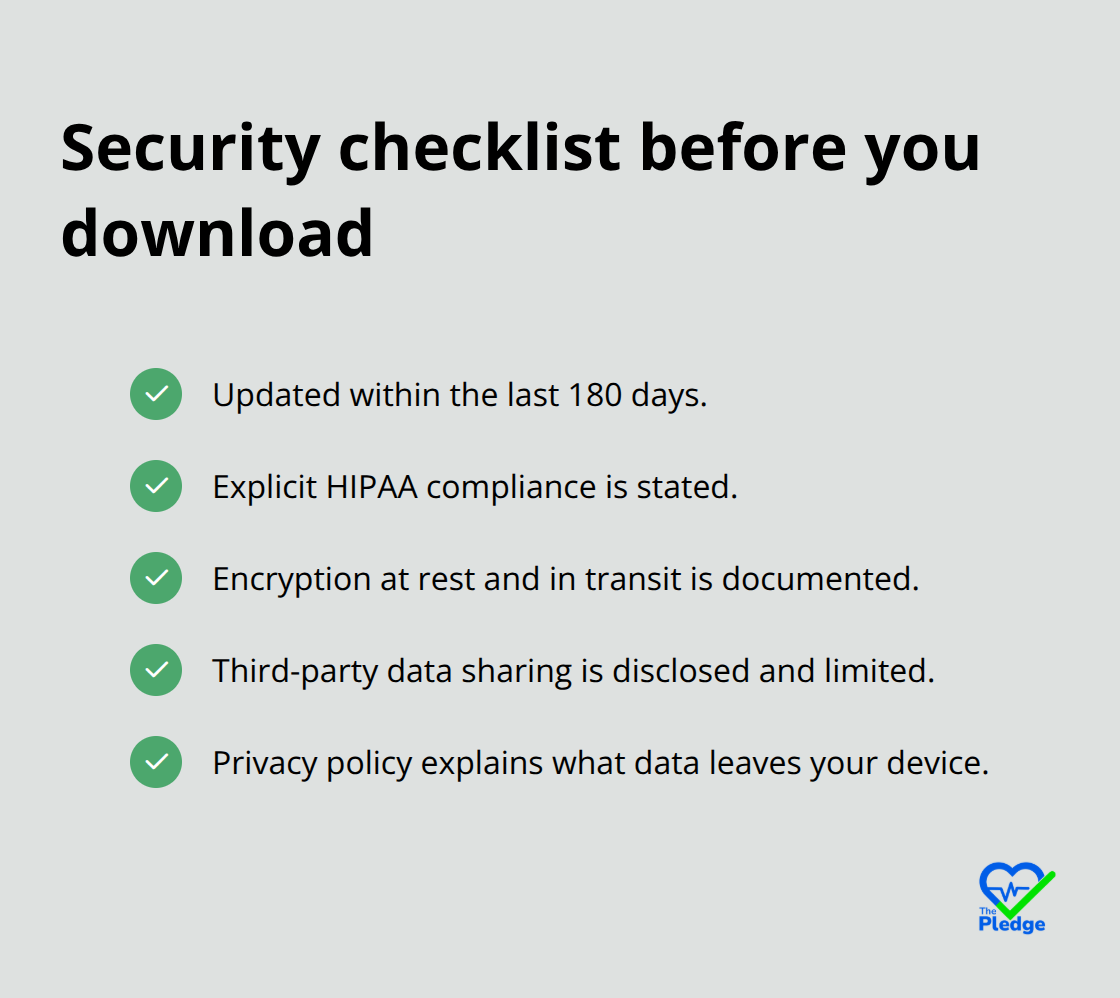
When you evaluate an app, check whether it has received updates in the last 180 days as a basic sign of active maintenance. Look for HIPAA compliance status explicitly stated, not implied. Verify that the privacy policy mentions encryption for data at rest and in transit. Many apps contact 11 to 12 third-party servers per session, sharing your data with Google, Crashlytics, and analytics firms without your knowledge. Read privacy policies carefully and understand what data leaves your device.
Personalized Treatment Plans Drive Real Results
Personalized treatment plans and progress tracking separate apps that work from apps that merely distract. Worry Watch uses guided CBT journaling structured around your specific anxiety patterns, costing 2.99 monthly, with research showing that this type of targeted journaling reduces cognitive distortions more effectively than generic meditation. WYSA combines AI chatbots with access to real mental health coaches, allowing the system to adapt as your needs shift rather than delivering the same generic content to every user. Apps that track mood, symptom frequency, and behavioral changes over time let you and any therapist you work with spot trends that feel invisible in the moment. BetterHelp’s messaging between sessions combined with structured progress notes creates accountability that standalone apps lack. The most effective apps do not try to do everything; they do one thing well and integrate with human support rather than replacing it entirely.
The apps that stick share specific characteristics worth understanding before you commit your time. Between-session contact matters tremendously-research shows ongoing therapist messaging between scheduled sessions improves outcomes more than apps alone. That’s why BetterHelp’s emphasis on continuous therapist access through in-app messaging outperforms pure self-help alternatives. The platforms winning right now are not the ones with the prettiest interfaces; they are the ones combining behavioral evidence, human contact, and realistic pricing into something people actually use long-term. Understanding these three pillars-licensed support, security, and personalization-positions you to evaluate which apps deserve your attention and which ones will waste your time.
Which Apps Deliver Real Results
BetterHelp and Talkspace Lead Through Human Connection
BetterHelp and Talkspace dominate the telehealth therapy market because they solved the retention problem that kills most mental health apps. BetterHelp emphasizes continuous therapist access through in-app messaging between scheduled sessions, with testers noting strong in-app responsiveness and meaningful engagement for mild-to-moderate mental health concerns. The platform accepts insurance in many cases, though coverage varies by plan. Talkspace Go undercuts the market at 29.99 monthly for unlimited messaging with a therapist, offering video, audio, and chat formats with a 7-day trial, and some sessions run just 30 minutes. The critical difference between these two and abandoned meditation apps sits in accountability: when a licensed therapist responds to your messages between appointments, you stay engaged. When you face a meditation recording alone, you quit. Real-world testing showed that platforms pairing human contact with structured tracking outperformed self-help alternatives by measurable margins.
Neither platform is perfect. BetterHelp’s testers noted mixed suitability for severe mental health issues, meaning someone with acute bipolar disorder or active suicidal ideation needs in-person care or higher levels of support. Talkspace’s shorter sessions mean less time per appointment than traditional 50-minute therapy, though the asynchronous messaging compensates by spreading support across the week. Insurance coverage remains inconsistent; if your plan doesn’t include these services, you pay out-of-pocket.
Pricing Reveals Who Can Actually Access Care
Standalone therapy subscriptions like Talkspace Go at 29.99 monthly sit far below traditional therapy costs of 100–200 per session, but specialized platforms charge more. NOCD, which focuses exclusively on OCD with virtual exposure and response prevention therapy from licensed therapists, runs 99 weekly with potential insurance coverage, making it expensive relative to general therapy apps but reasonable for someone whose OCD generates significant life disruption.
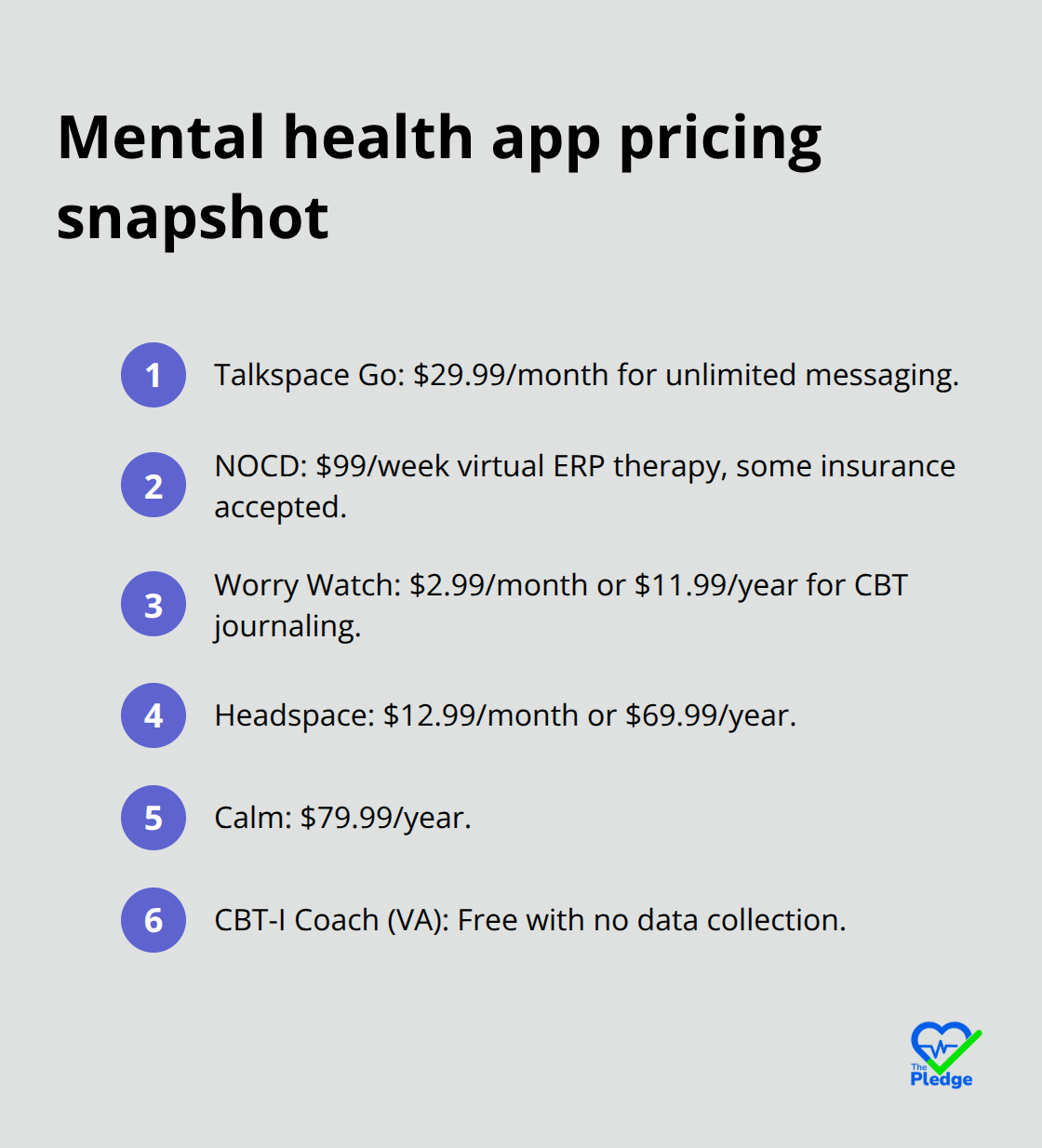
Worry Watch costs 2.99 monthly or 11.99 yearly for CBT-based anxiety journaling, but it’s iOS-only and offers no human support. Headspace costs 12.99 monthly or 69.99 yearly with 1,000+ meditations and optional therapy add-ons, while Calm charges 79.99 yearly for sleep-focused content.
The gap between free and premium matters enormously. CBT-I Coach from the U.S. Department of Veterans Affairs is completely free with no data collection, offering legitimate CBT techniques for insomnia without the privacy trade-offs that plague commercial apps. PTSD Coach, also from the VA, provides free symptom tracking and coping guides. These VA apps work because they prioritize function over engagement metrics. They’re not designed to keep you using the app forever; they’re designed to teach you skills you can use offline.
Availability and Insurance Coverage Determine Real Access
Availability varies by platform. Most apps support both iOS and Android, though Worry Watch remains iOS-only, limiting access for Android users managing anxiety. BetterHelp and Talkspace work nationwide, but rural patients sometimes struggle to match with therapists in their state due to licensing restrictions. Insurance acceptance matters practically: if your plan covers Talkspace or BetterHelp, your cost drops dramatically compared to paying full price. Most standalone mental health apps do not accept insurance, forcing you to choose between paying subscription fees or using insurance-covered in-person therapy exclusively.
The real question isn’t which app has the prettiest interface; it’s whether the app you choose addresses your specific condition, accepts your insurance, and offers human support if you need it to actually stick with treatment. Condition-specific platforms like NOCD (for OCD) and Worry Watch (for anxiety) work better for targeted issues than general-purpose apps. General platforms like BetterHelp and Talkspace work better if you need flexibility across multiple concerns or if you want to match with a specific therapist. Free VA apps work best if you have a specific condition (insomnia or PTSD) and want to learn skills without ongoing costs or privacy concerns. Your insurance coverage, device type, and specific mental health needs should drive your selection, not marketing claims or app store ratings.
Final Thoughts
Telehealth apps for mental health work when three conditions align: licensed human support, genuine security, and personalization that matches your specific needs. Apps pairing therapist contact with structured tracking outperform meditation-only alternatives by measurable margins. BetterHelp and Talkspace retain users because they solve the accountability problem that kills most mental health apps, while NOCD works for OCD by combining virtual exposure therapy with licensed therapists rather than leaving you to navigate alone. Worry Watch reduces anxiety through guided CBT journaling, not generic meditation.
Choosing the right app requires matching three factors to your situation. Identify your specific condition and whether you need general therapy or condition-specific support-OCD demands NOCD’s specialized approach, anxiety benefits from Worry Watch’s CBT structure, and depression often requires licensed therapist access through BetterHelp or Talkspace. Check insurance coverage before committing, since most standalone apps don’t accept insurance, but Talkspace and NOCD do in many cases, dramatically lowering your cost. Verify security basics: updates within 180 days, explicit HIPAA compliance, and privacy policies that explain data encryption and third-party sharing.
Digital mental health expands beyond apps into virtual reality therapies for anxiety disorders and AI-driven monitoring that detects relapse risk in schizophrenia. These advances matter, but they don’t replace the fundamental requirement: human oversight and clinical judgment. Telehealth apps for mental health work best as part of blended care, complementing rather than replacing in-person therapy when needed, and The Pledge helps you coordinate your complete health picture by integrating your health data and sending personalized reminders to keep you on track.