
Employee wellness programs have evolved from simple gym memberships to comprehensive strategies that boost productivity and reduce healthcare costs. Companies implementing wellness initiatives in the workplace see average returns of $3.27 for every dollar invested.
At The Pledge, we’ve analyzed successful wellness programs across industries to identify what works. This guide provides actionable steps to build programs that employees actually use and benefit from.
What Makes Workplace Wellness Programs Actually Work
Workplace wellness programs that drive real results contain three non-negotiable elements: physical health support, mental health resources, and work-life balance initiatives. The Society for Human Resource Management found that companies that integrate all three components see 33% higher employee satisfaction compared to those that offer isolated benefits.
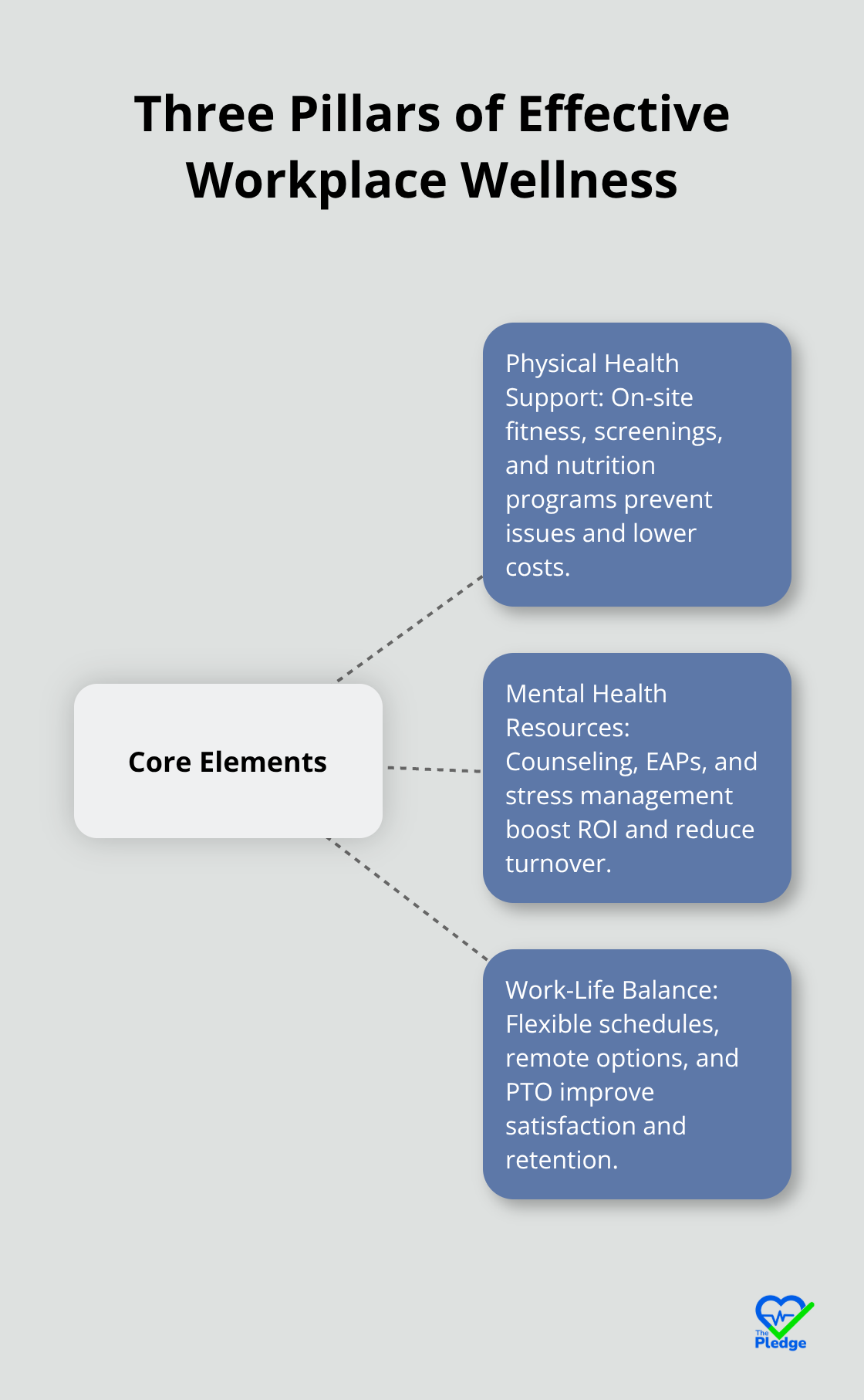
Physical health components include on-site fitness facilities, health screenings, and nutrition programs. Mental health support encompasses Employee Assistance Programs, stress management workshops, and counseling services. Work-life balance elements feature flexible schedules, remote work options, and paid time off policies.
Physical Health Components That Generate ROI
Successful physical wellness programs focus on prevention rather than treatment. Regular workplace health screenings detect chronic illnesses early and reduce treatment costs by 25-30%. Effective programs include biometric screenings, flu vaccination clinics, and ergonomic assessments.
Companies that implement comprehensive physical wellness see 20% fewer workers’ compensation claims according to the Occupational Safety and Health Administration. On-site fitness centers and subsidized gym memberships increase participation rates, but walking meetings and standing desks provide more consistent daily impact for employees.
Mental Health Support Drives Productivity
Mental health resources deliver the highest return on investment in wellness programs. Employers see $4 returned for every $1 spent on mental health support. Effective programs include confidential counseling services, stress management training, and mental health days.
Companies that offer robust mental health support experience 25% lower employee turnover and 21% higher profitability according to Gallup research. Mental health apps and digital therapy platforms increase accessibility, particularly for remote workers (who show 50% higher engagement when mental health resources are available).
Work-Life Balance Elements That Retain Talent
Flexible work arrangements form the foundation of modern wellness programs. Gallup research shows that flexible work schedules increase job satisfaction rates by 70%. Companies that enhance work-life balance initiatives witness employee retention rates increase by 25% according to LinkedIn data.
Remote work options, compressed workweeks, and unlimited PTO policies address different employee needs. The key lies in clear communication about expectations and boundaries (rather than unlimited flexibility without structure).
Technology Integration Amplifies Program Success
Digital wellness platforms streamline program administration and boost participation rates. Frost & Sullivan research shows that wellness apps enhance program participation by 50%. These platforms track progress, send reminders, and provide personalized recommendations based on individual health data.
Wearable device integration creates gamification opportunities that increase engagement. However, privacy concerns require transparent data handling policies and opt-in participation rather than mandatory tracking.
The next step involves conducting thorough employee assessments to identify which specific wellness components will generate the highest participation and ROI for your organization.
How to Build a Wellness Program That Works
Employee assessments form the foundation of successful wellness programs, yet many companies skip this step and launch generic programs that fail. The International Foundation of Employee Benefit Plans reports that comprehensive health assessments increase program participation by 40% compared to programs launched without baseline data.
Start with Anonymous Health Risk Assessments
Anonymous health risk assessments provide the data you need to design effective programs. Cover physical health status, stress levels, work-life balance challenges, and preferred wellness activities in your survey. Include questions about existing health conditions, fitness habits, nutrition patterns, and mental health support needs. This approach eliminates guesswork and targets resources where employees need them most.
Set Data-Driven Goals That Drive Results
Data-driven goal setting separates successful programs from expensive failures. Companies that set specific, measurable wellness goals see higher participation rates. Focus on three primary metrics: healthcare cost reduction, absenteeism rates, and employee engagement scores.
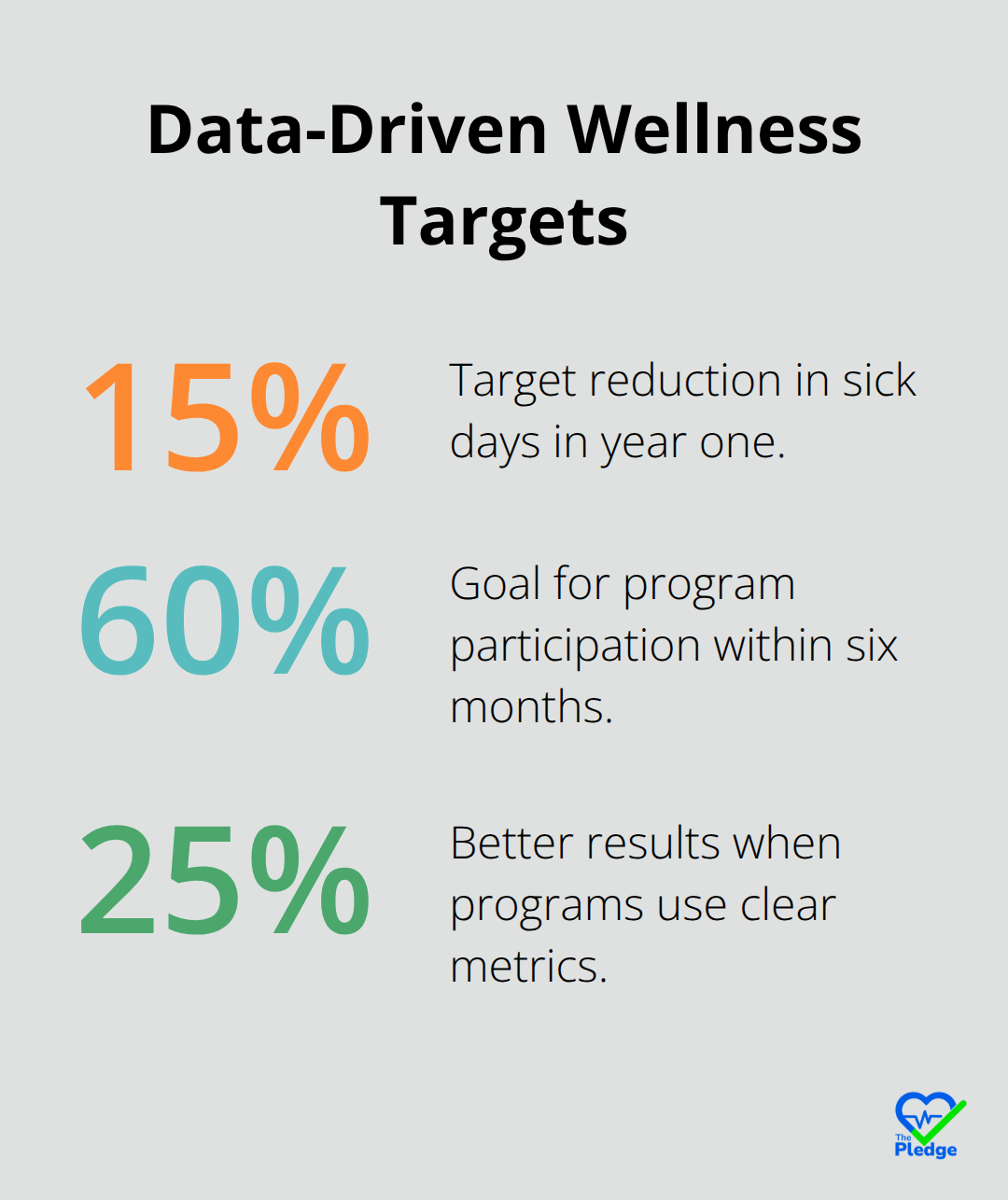
Set realistic targets like reducing sick days by 15% in year one or achieving 60% program participation within six months. Track leading indicators like health screening completion rates and wellness app usage rather than waiting for annual health outcomes. The American Psychological Association found that programs with clear metrics achieve 25% better results than those without defined success measures.
Choose Activities Based on Employee Preferences
Program selection must align with assessment results and employee preferences rather than popular trends. The Wellness Council of America reports that employee-requested programs generate 80% higher participation than management-selected initiatives.
High-impact, low-cost options include walking challenges, stress management workshops, and nutrition education seminars. Medium-investment programs like on-site fitness classes and health coaching deliver strong returns when employee interest exists (avoid expensive initiatives like full gym buildouts unless assessment data shows significant demand and commitment to usage).
Create Implementation Timelines That Work
Phased rollouts prevent overwhelming employees and allow for program adjustments based on early feedback. Launch core programs first (health screenings and basic fitness activities), then add specialized components based on participation data and employee requests.
Most successful programs achieve full implementation within 12-18 months, with quarterly program evaluations to track progress and make necessary adjustments. This systematic approach leads directly to the measurement strategies that determine whether your wellness investment delivers the expected returns.
How to Measure Wellness Program Success
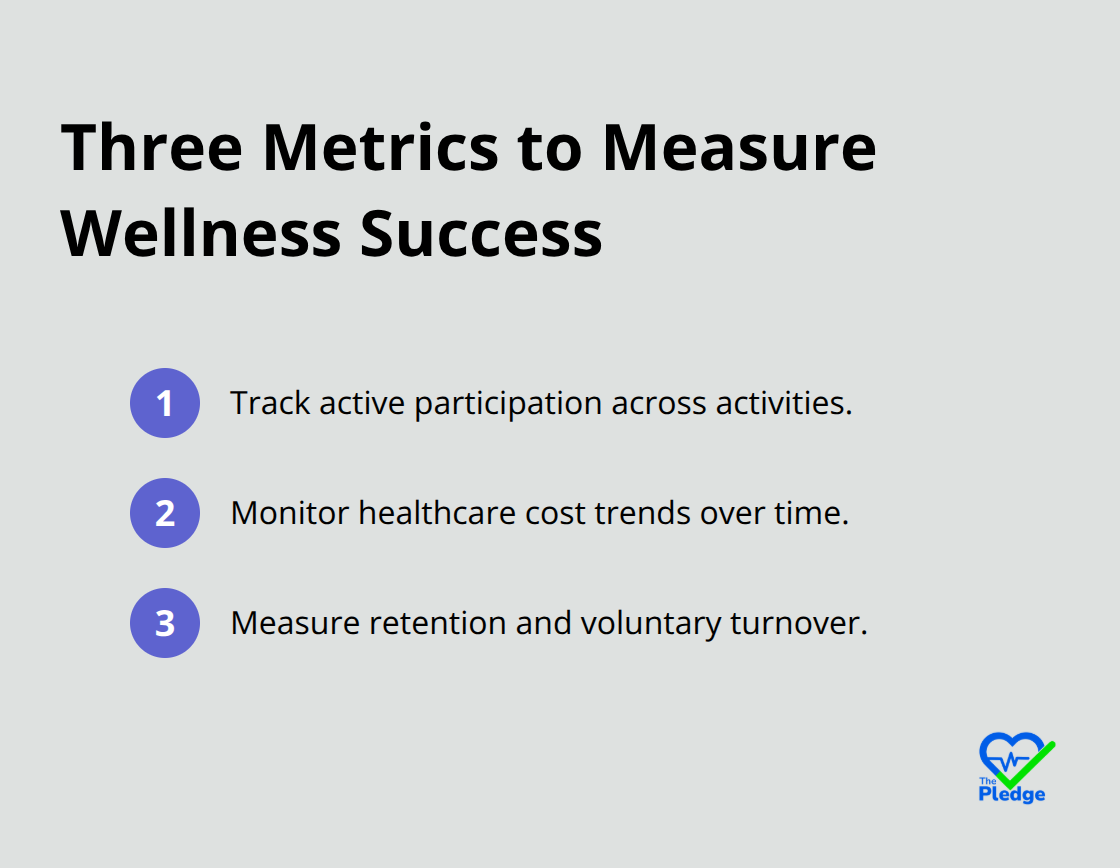
Wellness program success depends on three critical metrics that directly impact your bottom line: employee engagement rates, healthcare cost reductions, and retention data. Companies that track these metrics systematically see 30% higher program effectiveness according to the Kaiser Family Foundation. Establish baseline data before program launch to create meaningful comparisons.
Employee Engagement Metrics That Matter
Track participation rates across all wellness activities rather than overall enrollment numbers. Successful programs maintain 60-70% active participation rates after the initial six-month period. Monitor weekly app usage, health screening completion rates, and workshop attendance to identify which components drive engagement.
The International Foundation of Employee Benefit Plans found that companies that track detailed engagement metrics achieve 40% better outcomes than those that monitor only basic participation. Focus on consistent participation patterns rather than one-time event attendance, as sustained engagement correlates directly with health improvements and cost savings.
Healthcare Cost and Productivity Returns
Healthcare cost reduction appears 12-18 months after program launch (which makes early productivity metrics more valuable for immediate ROI assessment). Track sick leave usage, workers compensation claims, and productivity scores through manager evaluations. Zippia research shows that 72% of companies experience measurable healthcare cost reductions within two years of implementation.
Monitor medical claim frequency and severity through your benefits administrator to quantify direct savings. Companies that implement comprehensive wellness programs report positive ROI, with mental health components that deliver the highest returns at 4:1 ratios.
Long-term Health and Retention Tracking
Employee retention rates provide the clearest indicator of program value, as wellness-focused companies experience 25% higher retention according to LinkedIn data. Track voluntary turnover rates, exit interview feedback that mentions wellness benefits, and satisfaction scores related to health support.
Monitor biometric improvements through annual health screenings to document actual health outcomes. Companies that maintain detailed health outcome records demonstrate program value to leadership and secure continued funding for wellness initiatives (rather than face budget cuts during economic downturns).
Final Thoughts
Successful wellness initiatives in the workplace require systematic planning, employee-centered design, and consistent measurement. Companies that follow data-driven implementation see 33% higher satisfaction rates and achieve positive ROI within 18 months. The key lies in starting with comprehensive health assessments, setting measurable goals, and selecting activities based on actual employee needs rather than industry trends.
Employers benefit from reduced healthcare costs, lower absenteeism rates, and improved productivity. The average 6:1 return on investment makes wellness programs one of the most effective business strategies available (with mental health components delivering the highest returns). Employees gain access to preventive care, mental health support, and work-life balance resources that improve their overall quality of life.
Companies must commit to ongoing program evaluation and regular adjustments based on participation data and employee feedback. Start with core components like health screenings and basic fitness activities, then expand based on what employees actually use. The Pledge simplifies this process by centralizing health data and providing AI-driven personalized reminders that keep employees engaged with their wellness journey.




![[Guide] Incentives That Drive Preventive Health Participation](https://thepledge.app/wp-content/uploads/emplibot/Guide_-Incentives-That-Drive-Preventive-Health-Participation_1783650286-300x168.jpeg)