Most employees skip preventive care appointments, even when their health plans cover them fully. This gap between recommended screenings and actual attendance costs companies thousands per worker annually in lost productivity and emergency care.
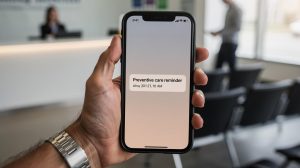
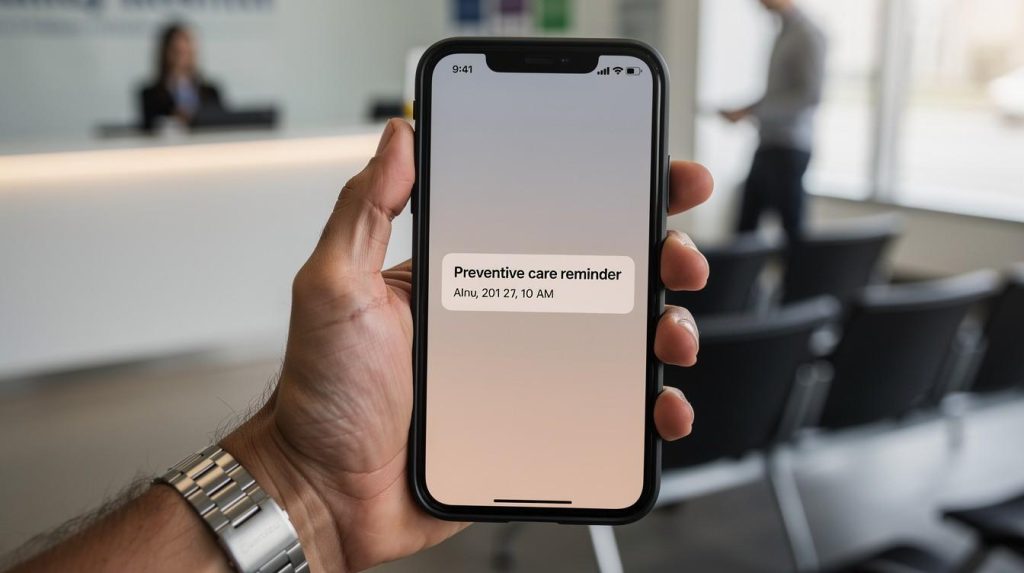
At The Pledge, we’ve found that preventive care reminders work. The right message, sent at the right time, transforms how people engage with their health.
The Real Cost of Skipped Preventive Care
Preventive care compliance isn’t just a health metric-it’s a financial crisis hiding in plain sight. When employees skip annual exams, cancer screenings, and diabetes monitoring, companies pay twice: once through emergency room visits and once through lost productivity. A worker who avoids preventive care costs employers an average of $2,500 annually in excess healthcare spending and absenteeism. The numbers get worse at scale. Across a 1,000-person workforce, that’s $2.5 million in preventable costs every year. Most organizations treat preventive care as optional rather than foundational.
The Compliance Gap Is Wider Than You Think
The gap between what healthcare providers recommend and what patients actually do is staggering. Automated outreach reminders improved preventive care compliance by 12 to 14 percent on average across clinical trials. Those gains came from simple reminders. Without them, the baseline compliance rates tell the real story: most employees are significantly overdue for routine screenings. A randomized controlled trial involving over 5,400 patients found that when physicians responded actively to computerized reminders, overall preventive care compliance jumped from 38 percent to 46 percent. FOBT screening compliance rose from 49 percent to 61 percent.
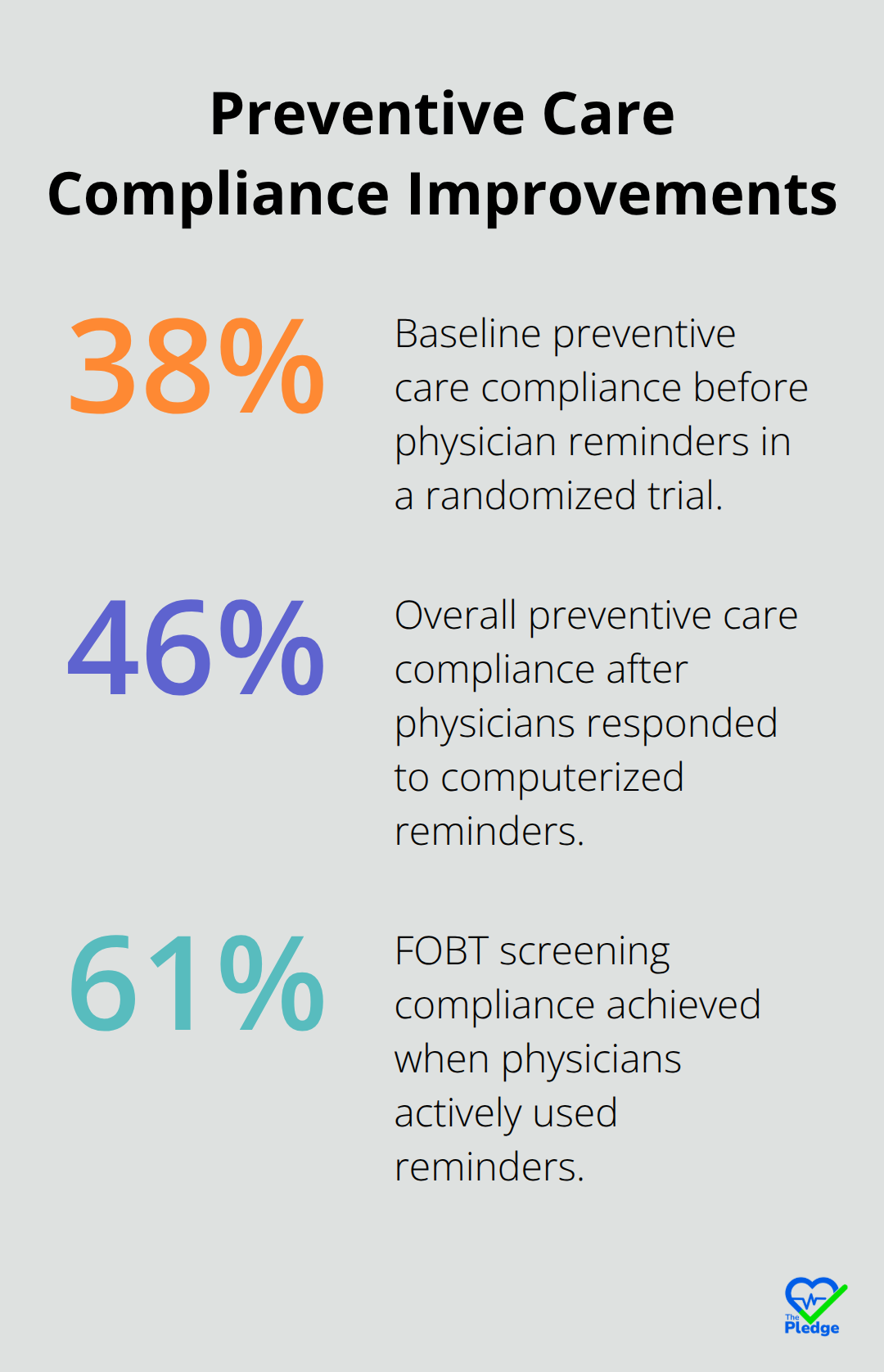
These aren’t marginal improvements-they’re the difference between catching disease early and managing catastrophic illness. Older patients showed the strongest response to reminders, with residents outperforming faculty in adherence rates, suggesting that reminder systems work best when they’re tailored to specific populations.
What Happens When Prevention Fails
Delayed screenings cascade into expensive interventions. A patient who skips annual diabetes monitoring labs until symptoms appear might face dialysis treatment costing approximately $12,299 monthly. Someone who avoids mammography until a palpable mass appears might need chemotherapy instead of early-stage surgery. These aren’t theoretical outcomes-they’re the standard trajectory when preventive care gets deprioritized. A single missed blood pressure screening can trigger a stroke that costs $100,000 to $300,000 in direct treatment costs (not counting lost wages and productivity). Organizations that ignore preventive care compliance aren’t just accepting higher insurance premiums; they’re accepting employee disability, turnover, and reduced output as normal business expenses.
Why Reminders Work Better Than Willpower
Employees don’t avoid preventive care because they lack motivation. They avoid it because life gets in the way. Work deadlines, family obligations, and simple forgetfulness push health appointments down the priority list. Reminders interrupt that pattern. A well-timed message-sent before the due date and including direct scheduling options-removes friction from the decision to act. Research shows that telephone reminders outperform letters, emails, texts, and postcards in driving action. Multi-channel approaches (combining phone calls, patient portals, email, and texts) reach more people and produce stronger results than single-channel strategies.
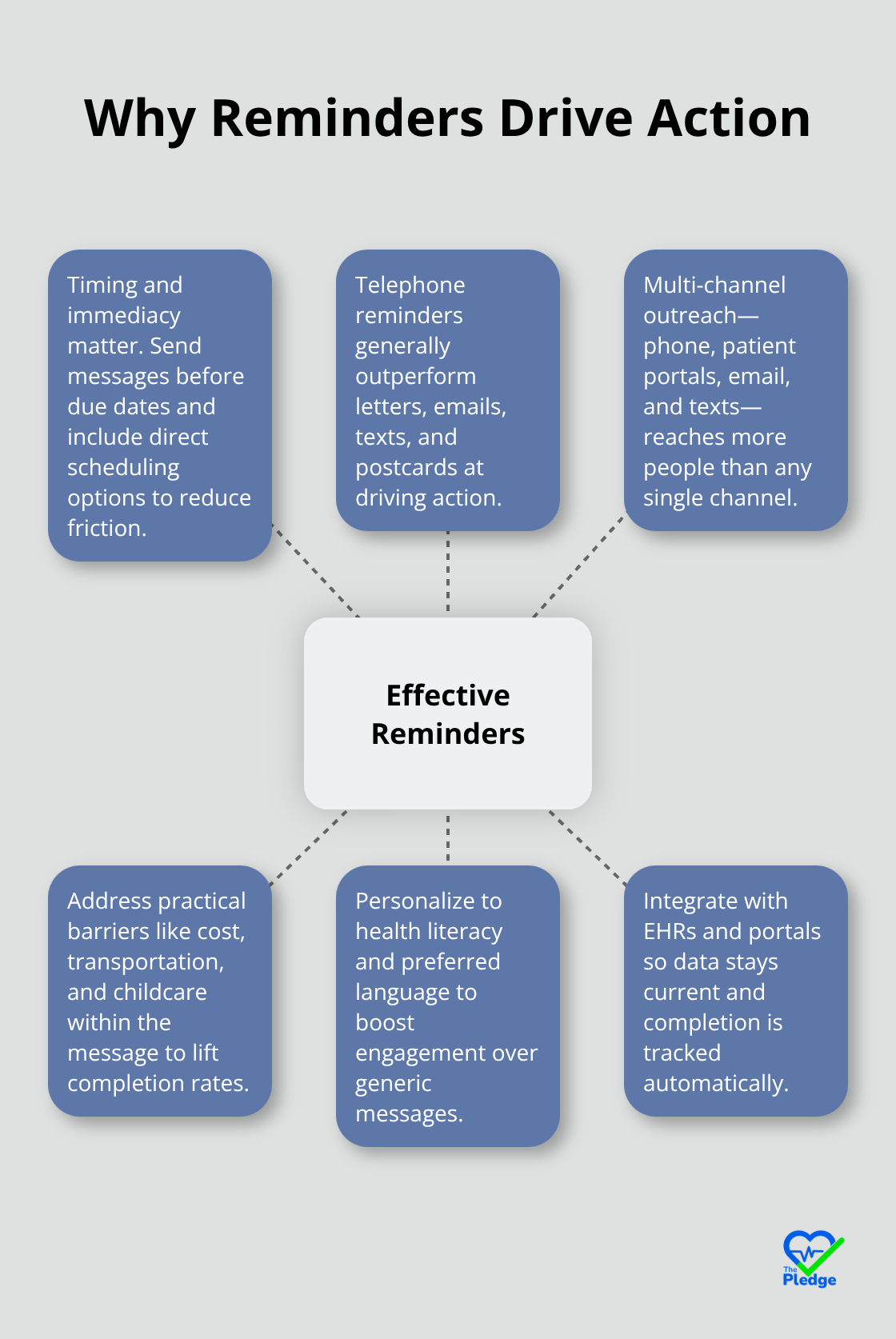
The most effective reminders include actionable next steps: a link to book an appointment, a phone number to call, or a clear explanation of what the screening involves. When reminders also address practical barriers (cost, transportation, childcare), completion rates improve further. Personalization matters too. Reminders tailored to health literacy levels and delivered in a patient’s preferred language produce higher engagement than generic messages.
The Population Health Approach Changes Everything
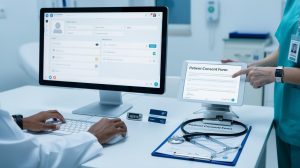
Population health systems identify which employees are overdue for specific screenings, then target them with coordinated outreach. Instead of waiting for patients to remember their own health, these systems actively reach out. One Medical’s Population Health program demonstrated that urine microalbumin testing-a critical diabetes monitoring tool-increased by 20.8 percentage points when automated reminders included lab action items within the notification itself. This approach works across multiple preventive services simultaneously (vaccines, cancer screenings, lipid panels, diabetes labs), creating a comprehensive safety net rather than isolated interventions. The key is integration: reminder systems connected to electronic health records and patient portals streamline workflow and make tracking completion rates straightforward. Organizations that implement population health reminders typically see results within four weeks, making this one of the fastest ways to close care gaps.
The evidence is clear: reminders transform preventive care compliance. The question isn’t whether they work-it’s how to implement them effectively across your organization.
How Personalized Reminders Drive Higher Engagement
Timing Determines Whether Reminders Stick
Timing determines whether a reminder lands or gets ignored. Send a message too early and it fades from memory before the appointment becomes relevant. Send it too late and the patient has already scheduled something else. Research shows that reminders sent one to two weeks before a screening is due produce the highest completion rates. This window gives employees enough notice to arrange their schedule without the message becoming stale.
Frequency matters equally. A single reminder generates compliance gains, but a second touchpoint delivered through a different channel increases completion by an additional 5 to 10 percentage points. Most organizations stop after one message. That’s a missed opportunity. A patient who receives an email reminder followed by an SMS three days before their appointment due date shows significantly higher show-up rates than someone who only gets one notification. The key is spacing: reminders should arrive at different intervals, never clustered together in ways that feel aggressive or repetitive.
Personalization Transforms Generic Messages Into Action
Generic messages fail. A reminder that simply states you need a mammogram produces lower engagement than one explaining why the screening matters, what the process involves, and how to schedule immediately through a patient portal or phone number. Personalized reminders tailored to a patient’s health literacy level and language preference increase comprehension and action dramatically.
Patients who receive reminders addressing practical barriers show substantially higher completion rates. When reminders note that the screening is covered at no cost, offer evening appointment slots, or mention that childcare referrals are available, completion rates jump 15 to 20 percentage points higher than those receiving standard messages. One Medical’s Population Health program found that including lab action items directly within reminder notifications (such as a button to order labs) boosted urine microalbumin testing completion by 20.8 percentage points. This approach works because it removes obstacles between the patient and the action.
Multi-Channel Delivery Reaches More People
Telephone calls remain the most effective single modality, but combining phone outreach with email, text messages, and patient portal notifications reaches more people and accommodates different communication preferences. Employees who prefer texts respond faster to SMS reminders. Those who check email regularly engage more with email notifications.
Organizations that offer multiple pathways allow patients to schedule through a patient portal link, call a dedicated number, or reply to confirm their appointment. This removes friction and increases follow-through. Integration with electronic health records ensures that reminders reflect current clinical data and that completion gets tracked automatically, eliminating manual follow-up work and enabling real-time dashboard visibility into which populations need additional outreach.
Addressing Barriers Within the Message Itself
The most effective reminders acknowledge and address what stops people from acting. Cost concerns disappear when a reminder states the screening is fully covered. Transportation worries fade when the message includes information about nearby locations or virtual options. Childcare obstacles vanish when referrals appear in the notification itself.
These details transform reminders from passive notifications into active problem-solving tools. Patients who see their specific barriers addressed in a reminder message complete screenings at rates substantially higher than those receiving generic outreach. The difference lies in treating reminders as conversations rather than announcements. When organizations invest in this level of personalization, they shift from hoping employees will remember their health to actively removing the reasons they don’t.
This foundation of timing, personalization, and multi-channel delivery sets the stage for implementing these strategies at scale. The next chapter explores how to build reminder systems that integrate seamlessly with your existing health infrastructure and measure their real-world impact.
Building Reminder Systems That Actually Work
Connect Reminders to Your Existing Infrastructure
Reminders fail when organizations treat them as standalone tools rather than components of their broader health management system. Electronic health records, benefits platforms, and employee communication systems already exist in your organization. Reminders must connect to these systems, not operate separately from them. When reminders pull data directly from your EHR, they reflect current clinical information and automatically update when screenings are completed, eliminating duplicate outreach and confusion.
Integration matters because friction kills compliance. A patient who receives a reminder but must then navigate a separate portal to schedule loses momentum. A patient who can schedule with a single click moves forward immediately. Your reminder system should connect to appointment scheduling systems so patients see real-time availability when they respond to outreach. It should integrate with your patient portal so employees can confirm receipt and reschedule without calling. It should feed completion data back into your EHR automatically so clinicians see which preventive services remain outstanding during office visits.
Identify High-Risk Populations Through Data Analysis
Data analytics determines which employees actually need reminders and which populations respond best to specific messaging approaches. Most organizations send reminders broadly without understanding their own compliance gaps. Start by analyzing your current preventive care completion rates by service type, age group, and department. A randomized controlled trial involving 5,407 patients found that patients aged 70 and older showed the strongest response to physician reminders, with FOBT compliance jumping from 49 percent to 61 percent when physicians actively responded to prompts. Your organization likely has similar patterns.
Identify which screenings show the lowest completion rates and which employee demographics fall furthest behind. Then test your reminder approach with these high-risk populations first rather than rolling out broadly. This targeted strategy produces faster results and allows you to refine messaging before scaling across your entire workforce.
Measure the Metrics That Predict Success
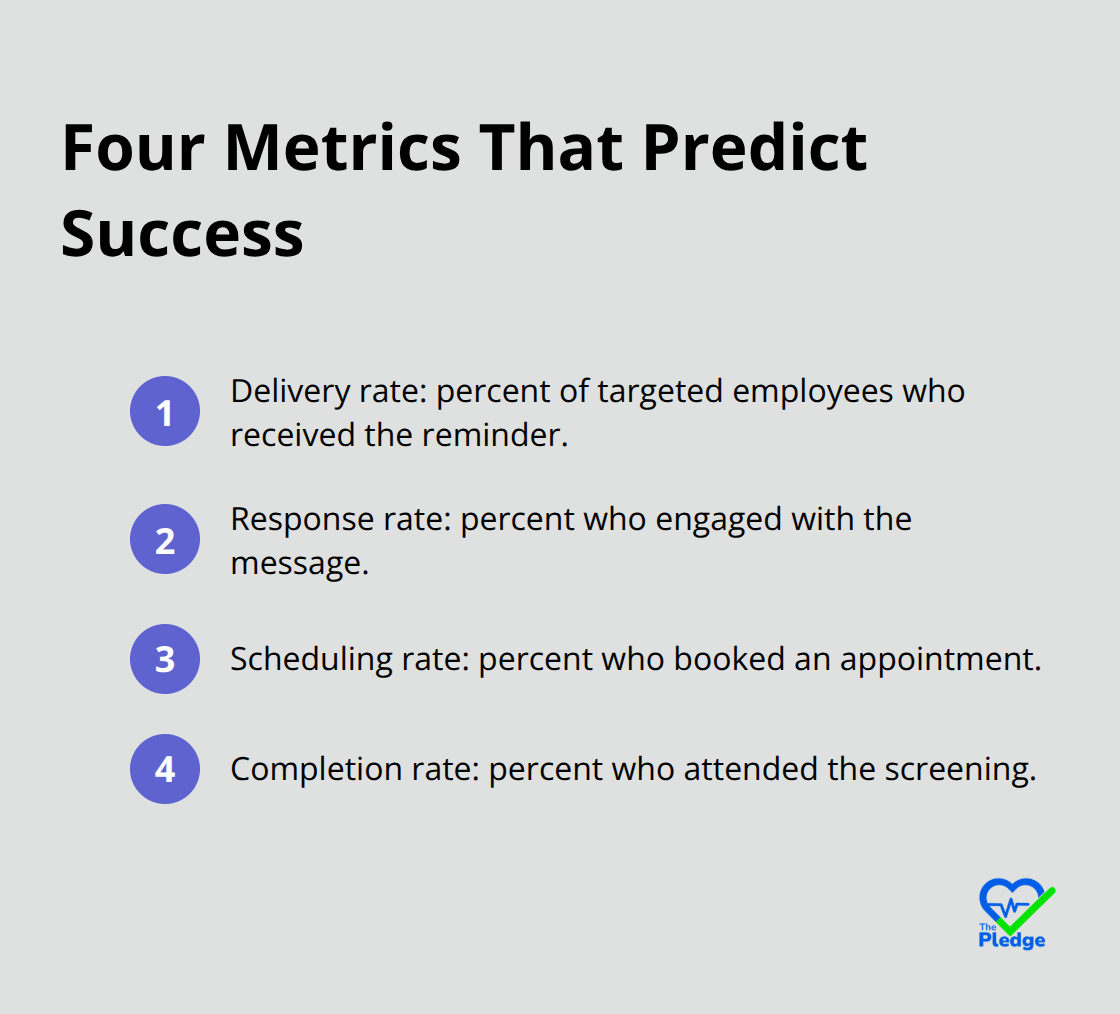
Track four specific metrics that predict success: reminder delivery rate (percentage of targeted employees who actually received the message), response rate (percentage who engaged with the reminder), scheduling rate (percentage who booked an appointment), and completion rate (percentage who actually attended). A healthcare system implementing reminder and recall programs typically sees telephone reminders outperform other modalities, yet many organizations default to email because it costs less.
The cost difference is real but misleading. A telephone reminder costs roughly 12 to 15 dollars per contact, while email costs under one dollar. However, telephone reminders drive higher completion rates than email alone. The math favors phone calls when you account for the downstream value of completed screenings.
Dashboard visibility into these metrics allows you to optimize in real time rather than waiting months for results. If SMS reminders show a 30 percent response rate while emails show 12 percent, shift budget toward texts. If certain employee populations ignore generic messages but respond to personalized content addressing specific barriers, adjust your messaging strategy accordingly. This continuous measurement transforms reminders from a static intervention into an adaptive system that improves over time.
Final Thoughts
Preventive care reminders transform compliance rates within weeks. Organizations that implement reminder systems see compliance jump 8 to 20 percentage points, with randomized trials showing FOBT screening compliance rise from 49 percent to 61 percent when physicians actively engaged with reminders, and population health outreach systems achieving 20.8 percentage point gains in diabetes monitoring labs. These improvements prevent disease progression and eliminate thousands in downstream treatment costs.
The financial case justifies immediate action. A single missed screening cascades into thousands in treatment costs-dialysis for undetected diabetes runs $12,299 monthly, and a stroke from skipped blood pressure checks costs $100,000 to $300,000 in direct treatment alone. Across a 1,000-person workforce, poor preventive care compliance costs employers $2.5 million annually in excess healthcare spending and lost productivity, yet telephone reminders (costing roughly $12 to $15 per contact) drive higher completion rates than cheaper email-only approaches and deliver measurable return on investment within four weeks.
Start with your highest-risk populations-employees over 70 show the strongest response to preventive care reminders-identify your compliance gaps by screening type and employee demographic, and measure delivery rate, response rate, scheduling rate, and completion rate in real time. The Pledge centralizes health data and delivers personalized preventive care reminders through a single platform, eliminating the complexity of managing multiple systems and allowing you to scale what works.