

Most wellness programs fail because companies track the wrong metrics. They count participation numbers and call it success, missing the real picture of whether employees actually get healthier or whether the program saves money.
At The Pledge, we’ve seen firsthand that measuring wellness program success requires looking beyond surface-level engagement. The metrics that truly matter connect employee health improvements directly to business outcomes like reduced healthcare costs and lower absenteeism.
Which Metrics Actually Predict Wellness Program Success
Participation rates tell you nothing about health outcomes. A program with 80% employee sign-ups means little if those employees never log back in or their health markers stay flat. The pattern across dozens of organizations is clear: companies obsess over registration numbers while ignoring the metrics that correlate with real business results. According to research from RAND Corporation’s 10-year wellness study, disease management drove 86% of hard healthcare cost savings, yet most organizations measure engagement without tracking whether participants actually improved their clinical risk factors. The disconnect between counting heads and measuring health is why so many wellness initiatives fail to justify their cost.
Track Engagement That Signals Real Commitment
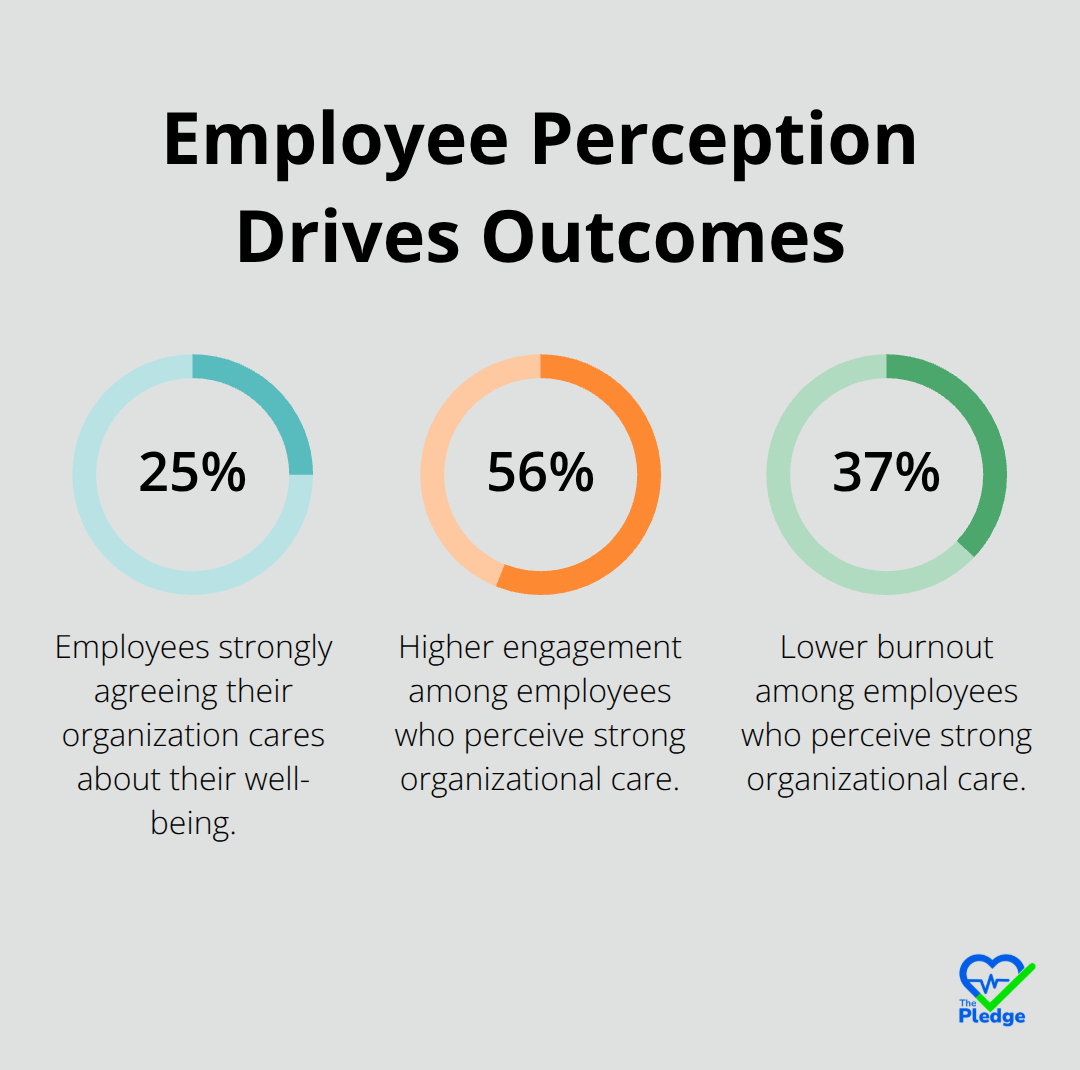
Participation is a vanity metric. Engagement is what matters. An employee who completes a health risk assessment once and never returns is not engaged. An employee who uses the platform weekly, completes coaching sessions, and actively tracks their progress is engaged. WebMD Health Services found that only 1 in 4 employees strongly agree their organization cares about their well-being, which directly impacts program uptake. The best-performing wellness programs report engagement rates above 75%, but this requires measuring the right behaviors.
Track how many employees complete health risk assessments beyond initial signup, how frequently they log into your wellness platform, and whether they finish multi-week programs or challenges. Monitor module completion rates for specific interventions like cardiac rehabilitation or diabetes management, not just registration. Pulse surveys every quarter reveal whether employees perceive the program as valuable. The data shows that programs exceeding 50% sustained engagement typically see measurable reductions in healthcare costs within 12 months, while programs with low repeat usage rarely justify their investment.
Connect Platform Activity to Health Outcomes
Most wellness vendors provide dashboards showing participation percentages but nothing linking that participation to biometric improvements or claims reduction. Insist on metrics that matter: how many high-risk participants moved to moderate risk after completing a disease management program, what percentage of employees with elevated cholesterol engaged with nutrition coaching, and whether those who engaged showed improvement in lab values. Research shows that efforts to help employees manage chronic illnesses saved $3.78 in health care costs for every $1 invested in the effort, a finding that underscores why tracking actual health improvements matters more than counting program registrations.
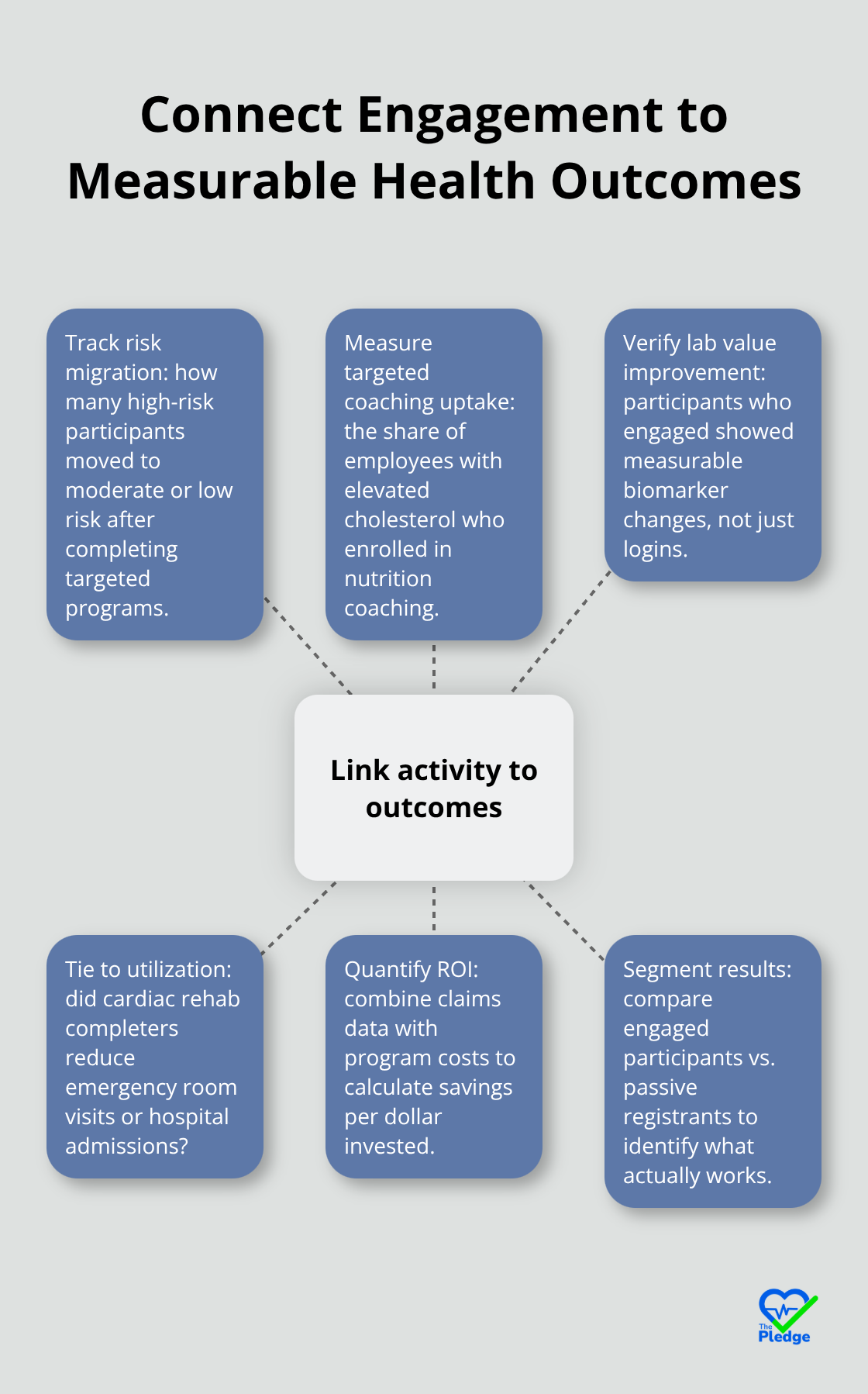
Measure utilization of specific program components tied to high-impact interventions. Track whether employees completing cardiac rehab actually reduced their emergency room visits or hospital admissions. Monitor whether participants in mental health coaching report lower burnout scores on follow-up surveys. Combine these health outcome metrics with program costs to calculate actual ROI rather than assuming participation equals results. Without this connection, you cannot distinguish between a program that attracts employees but fails to improve health and one that genuinely moves the needle on both employee wellness and organizational costs.
Move Beyond Vanity Metrics to Actionable Data
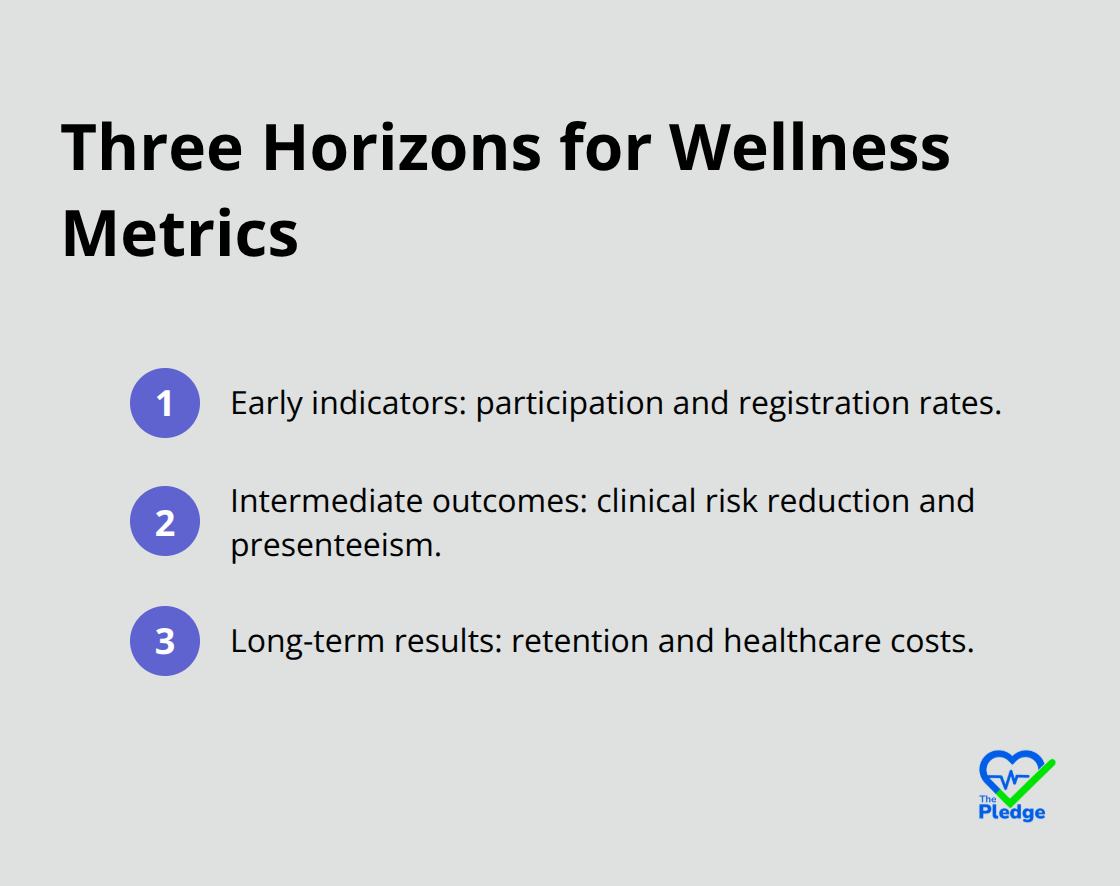
The real test of a wellness program lies in what happens after the initial signup. Healthcare cost savings and health risk reduction require multi-year tracking, while participation and pulse surveys can be monitored continuously. Employees who perceive strong organizational care are 34% more likely to stay with their employer, which means retention metrics matter alongside health improvements. Your wellness vendor should provide data across three horizons: early indicators (participation and registration), intermediate outcomes (clinical risk and presenteeism), and long-term results (retention and healthcare costs).
Demand transparency from your vendor about which metrics they track and how they connect activity to outcomes. The best programs combine quantitative data (claims data and platform analytics) with qualitative insights (employee feedback and focus groups). This dual approach reveals whether your program attracts participation without delivering health improvements or whether it genuinely transforms how employees manage their wellbeing. With these metrics in place, you can move forward to evaluating the specific health improvements and cost reductions your program actually produces.
Where Real Health Improvements Show Up in Your Numbers
The difference between a wellness program that works and one that wastes money appears in three places: whether employees actually get healthier, whether your healthcare bills drop, and whether the math adds up to a positive return. Most organizations measure participation but never connect it to these outcomes, which is why they cannot justify their wellness spending to leadership. We’ve worked with employers who discovered their programs had 60% participation but zero measurable change in biometric risk factors or claims costs. That gap reveals the truth: counting participants tells you nothing about whether the program moved the needle on health or finances.
Biomarker improvements are where health actually happens
Employees who complete a health risk assessment and never engage again will not improve their cholesterol, blood pressure, or weight. Employees who engage consistently with disease management programs do. Research from RAND Corporation found that disease management accounted for 86% of healthcare cost savings, not general wellness activities. This means your program must track specific clinical improvements: how many employees with elevated cholesterol engaged with nutrition coaching and then showed lab value improvements, how many high-risk participants moved to moderate or low risk after completing a cardiac rehabilitation program, and whether employees with diabetes who used coaching actually reduced their A1C levels. These metrics require pulling data from your claims system and combining it with program engagement data to see which employees actually changed their health status. Without this connection, you cannot distinguish between employees who signed up and employees who genuinely improved. Demand that your wellness vendor provides reports showing risk-factor improvement tied to specific program components, not just overall participation percentages. The vendors that cannot show this connection are hiding the fact that their programs do not move health outcomes.
Healthcare cost savings require patience and the right data
Healthcare spending does not drop overnight. Meaningful reductions in claims, emergency room visits, and hospital admissions typically take 12 to 36 months to become measurable. However, this does not mean you wait three years before checking progress. Track healthcare utilization metrics quarterly: are emergency room visits declining among program participants compared to non-participants, are hospital admission rates lower for employees in disease management programs, and are prescription drug costs dropping for those engaging with medication management coaching. A WebMD Health Services client achieved $207 million in cumulative healthcare cost savings over 15 years. The RAND research showed that disease management saved $3.80 for every dollar invested, while the Harvard Business Review documented a six-month cardiac rehabilitation program where high-risk participants reduced medical claims costs by $1,421 per person. These results came from programs that measured actual health improvements and claims changes, not just sign-up rates. Your finance team should work with your wellness vendor to calculate the difference in total medical spending between participants and non-participants, adjusted for baseline health risk. This comparison reveals whether your program actually reduces costs or simply attracts healthier employees who would have spent less anyway.
Separate true engagement from passive participation
Not all program users contribute equally to health outcomes. An employee who logs in once and abandons the platform differs fundamentally from one who completes multiple coaching sessions and tracks progress consistently. Your vendor should distinguish between these two groups when reporting results. High-risk participants who actually complete disease management interventions show measurable improvements in clinical markers and claims costs. Those who register but never return show neither. Track completion rates for specific programs (cardiac rehab, diabetes management, mental health coaching) rather than overall login frequency. This distinction matters because it reveals which program components drive real health change and which ones attract sign-ups without delivering results. When your vendor cannot separate engaged participants from passive registrants, you lose the ability to identify what actually works.
Align metrics with your business priorities
Different organizations prioritize different outcomes. Some focus on reducing emergency room utilization, others on lowering prescription drug costs, and still others on improving retention. Your wellness strategy should define which health improvements and cost reductions matter most to your business, then select metrics that track progress toward those specific goals. An employer struggling with high turnover should measure whether wellness program participants stay longer than non-participants. One facing rising pharmacy costs should track medication adherence and generic utilization among program users. One concerned about productivity should monitor presenteeism and sick days. The metrics you choose should connect directly to the business problems your organization is trying to solve. This alignment ensures that your wellness program addresses real organizational needs rather than pursuing generic health improvements that may not matter to your bottom line.
The next step involves understanding how to calculate actual return on investment and what benchmarks tell you about whether your program’s results are competitive.
Employee Satisfaction, Engagement, and Lasting Behavior Change
Employee satisfaction scores matter far less than what employees actually do with your wellness program. Companies obsess over survey ratings while ignoring the hard truth: employees who say they love your program but never use it are not moving health outcomes or reducing costs. WebMD Health Services found that only 1 in 4 employees strongly agree their organization cares about their well-being, and that perception gap directly predicts program abandonment. The real signal of program success appears in behavioral change, not in satisfaction ratings.
Measure What Employees Actually Do, Not What They Say
An employee who rates your program 8 out of 10 but completes zero coaching sessions and skips biometric screenings contributes nothing to your ROI. An employee who rates it 6 out of 10 but engages consistently with disease management, tracks their progress, and actually improves their health outcomes drives measurable results. Pulse surveys every quarter should ask specific questions: Did you use the program this month, which features did you actually find useful, and would you recommend it to a colleague? These questions reveal whether satisfaction translates into engagement. Employees who perceive strong organizational care show 56% higher engagement and 37% lower burnout according to WebMD’s 2025 survey, but only if that care translates into programs they actually use. Track completion rates for specific interventions, not just overall happiness ratings. When your data shows high satisfaction but low engagement, your program has a communication problem, not a quality problem, and you need to investigate why employees like something they refuse to use.
Track Absenteeism and Presenteeism Reductions
Employees who complete disease management programs, engage with stress management coaching, or participate in mental health interventions miss fewer work days and perform better when they are present. More than half of employers report reduced absenteeism after implementing wellness programs, and the cost savings from fewer sick days compound over time. However, this metric requires comparing program participants to non-participants, adjusted for baseline health risk, because healthier employees naturally take fewer sick days. Your vendor should provide data showing whether employees who engaged with your program took fewer sick days in the year after engagement compared to their own baseline, and whether that improvement exceeded the reduction you would expect from regression to the mean.
Presenteeism matters equally. Employees struggling with untreated chronic illness, unmanaged stress, or poor sleep produce lower output, more errors, and slower project completion. Employees who engage with your wellness program and improve their health status perform measurably better. Survey your managers quarterly about whether they observe performance improvements among employees in your program, and track objective metrics like project completion times or customer satisfaction scores for departments with high program engagement versus low engagement.
Sustain Behavioral Change Beyond Initial Interventions
An employee who completes a six-week cardiac rehabilitation program and then reverts to old eating habits within two months generates no lasting health improvement or cost reduction. An employee who completes the program and sustains behavioral change for two years continues generating savings and health benefits. Your vendor should track retention in specific programs beyond the initial intervention: are participants in nutrition coaching maintaining dietary changes six months later, are employees in smoking cessation programs still smoke-free at one-year follow-up, and are participants in fitness challenges maintaining increased activity levels?
This requires follow-up surveys and continued platform engagement monitoring. The vendors that cannot show sustained behavior change are selling one-time interventions, not programs that create lasting wellness. Demand longitudinal data showing whether your program participants maintain improved health markers and lower healthcare utilization for at least 12 months after completing an intervention. Employees who sustain behavioral change (not just those who complete initial programs) represent the true measure of program effectiveness and the foundation of long-term cost savings.
Final Thoughts
Measuring wellness program success means tracking metrics that connect directly to health improvements and business outcomes, not vanity numbers that obscure what actually works. Organizations that move the needle on employee wellness and cost reduction share one trait: they measure engagement that signals real commitment, health improvements tied to specific interventions, and behavioral changes that persist beyond initial programs. They abandon participation percentages and focus instead on whether high-risk employees complete disease management, whether those who engage show improved biomarkers, and whether healthcare costs actually decline.
Your wellness program lives or dies based on three decisions. First, define which health improvements and cost reductions matter most to your organization, then select metrics that track progress toward those specific goals-an employer struggling with turnover should measure retention among program participants, one facing rising pharmacy costs should track medication adherence, and one concerned with productivity should monitor presenteeism and sick days. Second, demand that your wellness vendor connects activity to outcomes by showing how many high-risk participants moved to moderate risk, whether those engaging with coaching actually improved their lab values, and how healthcare utilization changed for program participants compared to non-participants. Third, measure sustained behavioral change, not just program completion, because employees who revert to old habits within two months generate no lasting savings.
Start by defining success with specific, measurable objectives, then implement the metrics outlined here and report findings regularly to leadership. The Pledge centralizes health data and sends personalized reminders that drive the consistent engagement your program needs to move outcomes. Adjust your program based on what the data reveals, and measuring wellness program success this way transforms wellness from a cost center into a strategic investment that improves employee health, reduces healthcare spending, and strengthens retention.