
Healthcare costs are crushing employer budgets. Yet most companies believe they must choose between cutting expenses and keeping employees happy.
We at The Pledge know this doesn’t have to be true. The best cost containment strategies actually improve employee satisfaction while reducing what you spend on benefits.
How Employers Are Actually Cutting Healthcare Costs
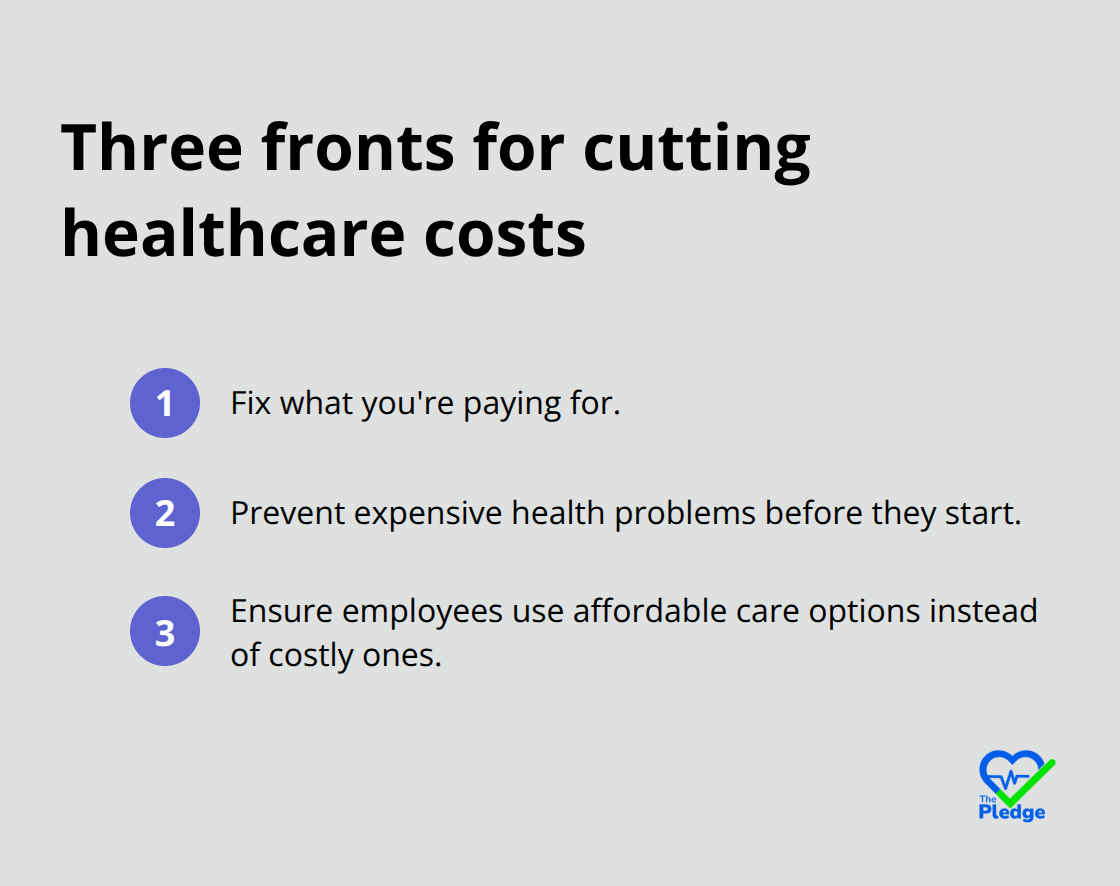
The United States spends about $4.9 trillion on healthcare annually, with employers bearing a significant portion of that burden. Yet most companies approach cost containment passively, simply accepting whatever premium increases their insurers hand them each year. Real cost reduction requires active intervention on three fronts: fixing what you’re paying for, preventing expensive health problems before they start, and ensuring your employees actually use affordable care options instead of expensive ones.
Audit Your Spending First
Start by identifying where your money actually goes. Dependent eligibility audits alone uncover ineligible dependents on your plan, with estimates suggesting 3–5% of dependents may be ineligible. That’s immediate savings without touching actual benefits. Next, examine your pharmacy spend closely. Tiered drug plans with generics priced at $7–$8 copays and brand-name drugs at $12–$20 have become standard, but many employers never verify they’re getting competitive pricing. The University of Michigan’s benefits analysis found that increasing prescription drug copays from $2 to $10 projected premium reductions of 5–12% across plans, demonstrating that targeted copay adjustments can meaningfully cut costs without destroying access.
Target Discretionary Services, Not Essential Care
More aggressive moves, like increasing emergency department copays to $25 alongside higher Rx copays, yielded premium reductions of 8.4–13.2%. These changes work because drug spending responds predictably to price changes (with prescription drug copay elasticity around −0.3), meaning modest price increases reduce utilization proportionally. The key is targeting discretionary services where employees have real choice, not essential care. Increasing outpatient copays alongside pharmacy adjustments produces measurable results without compromising access to necessary treatment.
Prevention Delivers Measurable Financial Returns
Preventive care programs aren’t feel-good extras; they’re financial infrastructure. Employers investing in comprehensive wellness programs, chronic condition management, and employee education see measurable claims reductions. Telehealth services cut costs further by offering convenient, lower-cost medical visits compared to in-person care, reducing unnecessary emergency department visits. The real leverage comes from identifying high-risk populations before they need expensive interventions.
Use Data to Spot High-Risk Populations
Use your claims data to spot patterns: which employees have unmanaged diabetes or hypertension? Who’s missing preventive screenings? Targeted interventions on these populations yield the highest return. Mental health support and financial wellness programs reduce absenteeism and burnout-related health costs, both of which inflate your claims experience. The most successful employers treat prevention as a cost-containment strategy with measurable ROI, not as an optional wellness perk. Once you’ve stabilized costs through these foundational moves, technology becomes your multiplier-allowing you to scale prevention efforts and coordinate care across your entire workforce.
How Technology Scales Your Cost Containment Efforts
Centralize Your Data to See What’s Actually Happening
Technology isn’t a replacement for the foundational cost-containment work we covered earlier-it’s the force multiplier that makes your prevention and data strategies actually work at scale. Most employers collect claims data but never act on it systematically. Employee health information sits scattered across multiple vendors, benefit statements, and provider systems. This fragmentation means you’re flying blind when it comes to identifying which employees need intervention or whether your prevention efforts actually move the needle on costs.
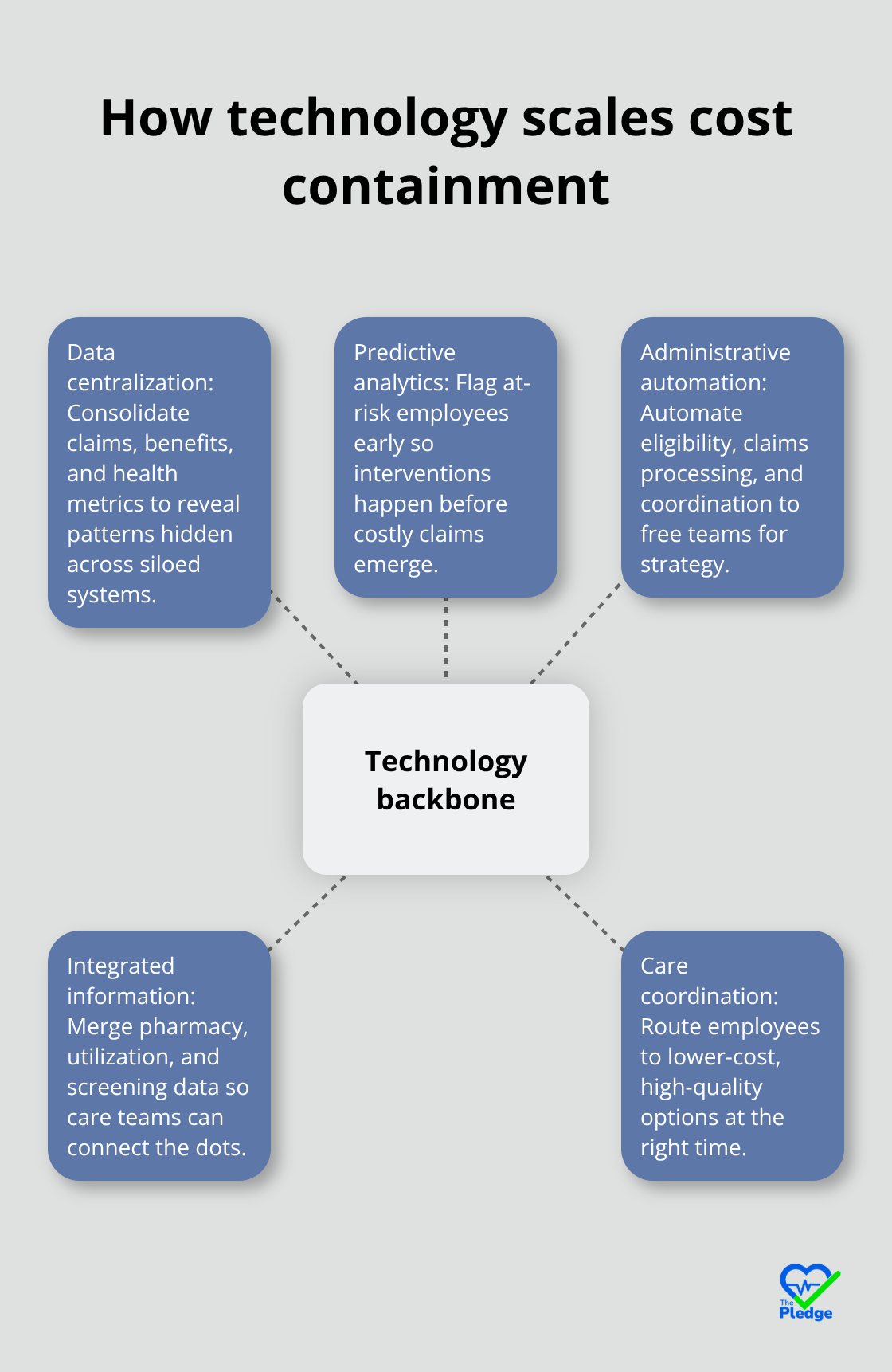
The real opportunity sits in centralizing that data and using it to coordinate care before problems become expensive. When you consolidate claims data, benefit information, and health metrics into a single system, you gain visibility into patterns that individual data sources hide. An employee might have high pharmacy spend for diabetes medication, multiple emergency department visits, and missed preventive screenings-but if that information lives in three different systems, nobody connects those dots. Centralized platforms eliminate this fragmentation and let you spot high-risk populations immediately rather than waiting for next year’s claims analysis.
Use Predictive Analytics to Intervene Before Claims Spike
AI-driven tools take this further by identifying at-risk employees before they generate expensive claims. Rather than waiting for utilization data to surface problems, predictive analytics flag individuals likely to develop costly conditions based on existing health metrics, age, claims history, and behavioral patterns. These systems send personalized reminders about preventive screenings, medication adherence, or specialist appointments-interventions that cost almost nothing to deliver but prevent far more expensive downstream care.
The shift from reactive to proactive decision-making is where real savings emerge. You stop responding to problems after they’ve already inflated your claims and start preventing them from occurring in the first place. This approach compounds over time as your prevention efforts reduce the population of high-risk employees who need expensive interventions.
Automate Administrative Work to Free Your Team
Administrative automation completes the picture by eliminating the manual work that consumes your benefits team’s time. Eligibility verification, claims processing, benefit explanations, and care coordination tasks that once required staff hours now run automatically. Your team shifts focus from paperwork to strategy-analyzing which interventions work best for your specific workforce, negotiating better rates with providers, and refining your prevention programs based on real results.
When you combine this technology backbone with the targeted cost-containment strategies we outlined-auditing spending, adjusting copays on discretionary services, and focusing on prevention-you create a system that continuously identifies opportunities and executes interventions without manual intervention at every step. This integrated approach transforms how your organization manages healthcare costs. The next chapter explores how to select and implement the right benefits structure for your workforce, ensuring your cost-containment strategy aligns with your employees’ actual needs and your organization’s financial goals.
Benefits That Actually Move the Needle on Costs and Engagement
The gap between what employers think their benefits accomplish and what they actually accomplish is enormous. Most companies offer wellness programs, telehealth access, and mental health coverage without measuring whether these benefits reduce claims or improve employee retention. The difference between mediocre benefits and strategic benefits comes down to design and execution. Generic wellness initiatives waste money. Telehealth sitting unused in your benefits package wastes money. Mental health coverage with no integration into your broader cost strategy wastes money. The employers cutting costs while improving satisfaction do something fundamentally different: they build benefits that employees actually use, that address their real health risks, and that connect directly to preventing expensive claims.
Wellness Programs That Target Your Actual Workforce
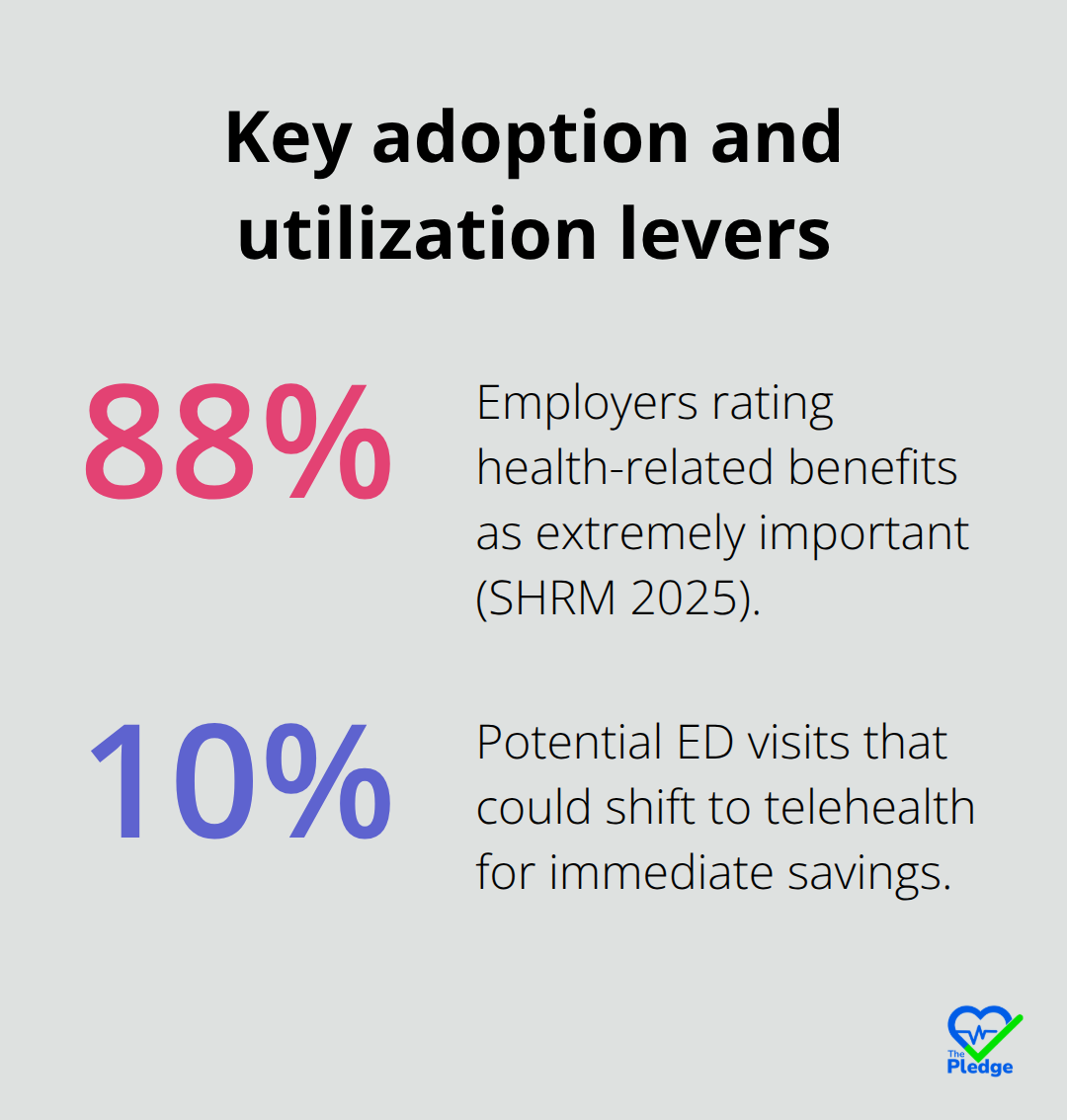
Wellness programs fail when they’re designed for an imaginary average employee instead of your specific population. A manufacturing company with a young, physically active workforce needs different interventions than a professional services firm with desk workers in their 40s and 50s. The SHRM 2025 Employee Benefits Survey found that 88% of employers consider health-related benefits extremely important, yet most don’t analyze whether their wellness investments match their workforce’s actual health risks. Start by examining your claims data to identify which conditions drive your highest costs.
If diabetes and hypertension dominate your claims, your wellness program should prioritize chronic disease management, not general fitness classes. If mental health claims are rising, invest in stress-reduction programs, financial wellness coaching, and accessible counseling. The employers seeing measurable reductions in claims costs are those investing in targeted interventions for high-risk populations rather than broad-based programs hoping to reach everyone. Regular biometric screenings combined with personalized follow-up for employees with elevated risk markers, medication adherence coaching for chronic conditions, and structured nutrition education for populations with metabolic disorders produce quantifiable cost reductions. These programs cost less to deliver than generic wellness events, yet generate significantly higher ROI because they address the specific health problems inflating your claims.
Telehealth as Infrastructure, Not an Optional Add-On
Telehealth reduces costs only when employees actually use it instead of emergency departments and urgent care centers. Too many employers offer telehealth without communicating its availability or integrating it into their benefits education. Your employees need to know that a telehealth visit costs a fraction of an ER visit and that many routine issues can be handled remotely without taking time off work. Employees with young children, shift workers, and those in rural areas value telehealth access far more than office workers in urban centers, so communication should reflect these different needs. The real cost containment comes from shifting utilization patterns: if 10% of your emergency department visits could be handled through telehealth, that’s immediate savings running into tens of thousands annually depending on your workforce size. Mental health support through telehealth particularly drives engagement and cost reduction because access barriers disappear. An employee struggling with anxiety or depression can connect with a mental health professional immediately rather than searching for a local therapist with availability. Kaiser Family Foundation data shows that preventive mental health intervention catches issues before they cascade into missed work, decreased productivity, and expensive crisis interventions. Pairing telehealth with mental health coverage removes the friction that prevents employees from seeking care early.
Mental Health as a Cost Driver You Can Actually Control
Mental health coverage that exists only on paper accomplishes nothing. The employers reducing costs through mental health benefits are those removing barriers to access: zero copays for mental health visits, unlimited session availability, same-day appointment scheduling, and integration with employee assistance programs. Depression, anxiety, and burnout directly increase healthcare costs through increased emergency department visits, higher rates of chronic disease complications, and elevated medication use. Employees struggling mentally often neglect preventive care, skip medication doses, and make poorer health decisions overall. When you invest in accessible mental health support, you’re not just improving well-being; you’re preventing downstream medical costs. Financial wellness programs paired with mental health coverage address a significant source of employee stress that directly impacts health outcomes. Employees worried about medical debt, retirement security, or unexpected expenses experience elevated stress hormones, worse sleep, higher blood pressure, and increased substance use. Offering financial counseling, debt management education, and transparent communication about plan costs reduces this stress burden. The employers achieving the strongest engagement rates combine mental health access with financial wellness education and connect both to their broader prevention strategy.
Final Thoughts
Cost containment strategies only work when they improve how employees experience healthcare, not when they restrict access or shift costs onto workers. The employers winning on both fronts-lower costs and higher engagement-treat these goals as inseparable rather than competing priorities. Preventive care costs less than emergency intervention, identifying high-risk employees before they need expensive treatment saves money, and helping employees navigate the healthcare system efficiently reduces waste.
Your actual workforce data should drive your strategy, not industry benchmarks or what competitors are doing. What health conditions drive your claims? Which employees face the biggest barriers to preventive care? What benefits would your team actually use? Answer these questions first, then design your cost containment approach around those realities. Targeted interventions on high-risk populations, mental health support that removes access barriers, and telehealth integrated into your benefits communication produce measurable results because they address real problems your employees face.
The long-term financial impact compounds over years as employees catch diabetes early through preventive screening and avoid expensive complications, workers with accessible mental health support miss fewer days and make better health decisions, and people use telehealth instead of emergency departments to reduce unnecessary costs. The Pledge centralizes your health information and uses AI to identify opportunities for intervention, transforming fragmented data into actionable insights that your team can act on systematically.
![[Guide] Incentives That Drive Preventive Health Participation](https://thepledge.app/wp-content/uploads/emplibot/Guide_-Incentives-That-Drive-Preventive-Health-Participation_1783650286-300x168.jpeg)