Healthcare data lives in separate boxes. Your doctor’s office doesn’t talk to your insurance company. Your hospital doesn’t share notes with your primary care physician. This fragmentation costs time, money, and sometimes patient safety.
Health information exchange changes that. At The Pledge, we’ve seen how digital platforms that connect these isolated systems transform care delivery, reduce costs, and help providers catch problems before they become emergencies.
Why Healthcare Data Stays Trapped in Separate Systems
Legacy Systems Built Before Interoperability Existed
Healthcare data lives in separate boxes because most organizations still operate on legacy systems built decades ago, before interoperability was even a concept. A patient’s EHR at their primary care office doesn’t automatically sync with their hospital records or their insurance company’s claims database. When a cardiologist orders a test, the results don’t flow back to the patient’s primary care physician unless someone manually requests them. The Sequoia Project found that this lack of real-time data sharing means providers often make decisions based on incomplete information, sometimes ordering duplicate tests they don’t know have already been performed.
The Communication Breakdown Between Patients, Providers, and Insurers
Insurance companies hold detailed information about what treatments are covered and what medications a patient takes, but this data rarely reaches the clinical care team in real time. Patients sit at the center of this chaos, often becoming the only link between fragmented systems. They repeat their medical history at every appointment, carry paper records between offices, and manually track which medications they take across different providers. This manual coordination doesn’t just waste time-it introduces errors. When a patient forgets to mention an allergy or medication interaction because the information isn’t visible in a unified system, the risk of adverse drug events increases significantly.
How Incomplete Information Leads to Preventable Errors
The Office of the National Coordinator reports that incomplete medication histories contribute to preventable errors. A specialist waiting for records from another facility postpones treatment decisions by days or weeks. A hospital discharge team cannot coordinate post-acute care effectively if they lack visibility into what services the patient’s insurance covers or what support systems exist at home. Preventative opportunities disappear entirely when no one system has enough data to identify at-risk patients before they develop serious conditions.
Missing the Window for Early Intervention
A patient with early warning signs of heart disease might never receive outreach from their insurer because the data needed to identify them exists only partially across multiple disconnected platforms. This fragmentation means providers and insurers cannot work together to catch problems early. The result: patients progress from preventable conditions to expensive emergency interventions, and the healthcare system bears the full cost of that failure. Digital health platforms that connect these isolated systems offer a different path forward-one where data flows seamlessly and insights emerge in real time.
How Digital Health Platforms Connect the Dots
Centralized Data Creates a Single Source of Truth
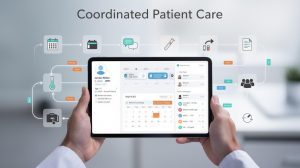
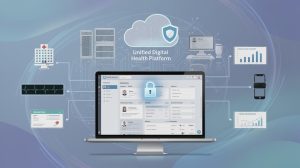
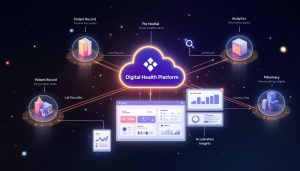
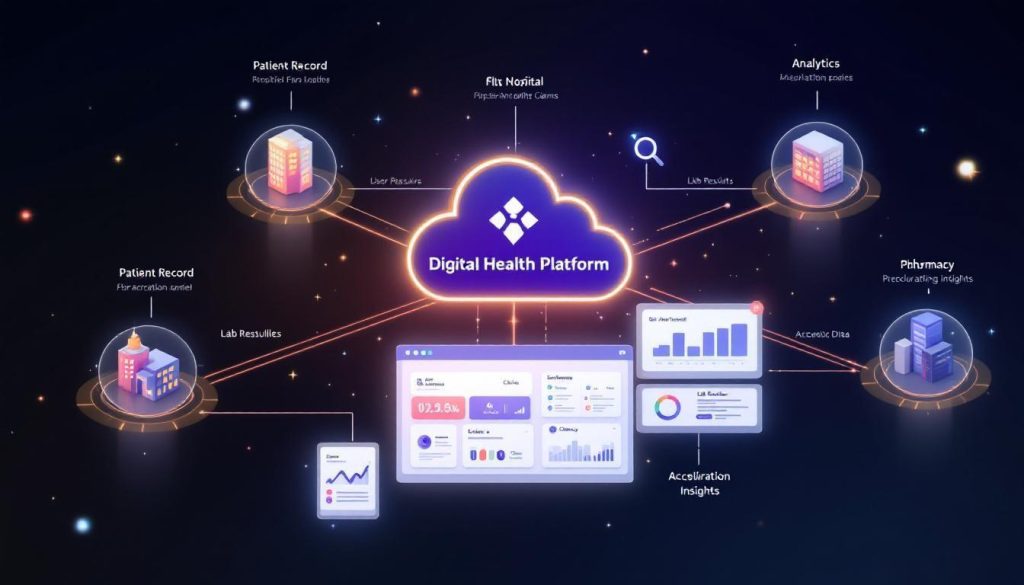
Digital health platforms solve the data fragmentation problem by creating a single source of truth for patient information. Rather than forcing providers, insurers, and patients to chase information across disconnected systems, these platforms aggregate medical records, insurance claims, medication histories, and lab results into one accessible location. This centralization matters because it eliminates manual work in healthcare coordination. When a cardiologist can instantly view a patient’s complete medication list, recent lab work, and insurance coverage details without making a phone call or waiting for faxed records, care decisions happen faster. The Office of the National Coordinator reports that real-time data access reduces care coordination delays, while The Sequoia Project found that providers with integrated data systems complete medication reconciliation in minutes rather than hours.
Real-Time Alerts Transform Reactive Care Into Prevention
Real-time alerts and AI-powered matching represent the second layer where digital health platforms create immediate value. Rather than waiting for quarterly reports or manual reviews, these systems flag at-risk patients the moment conditions emerge. A patient’s blood pressure reading from a home monitor automatically syncs to their care team, triggering an alert if values exceed safe thresholds. An AI algorithm identifies patients with early warning signs of heart disease by analyzing patterns across their medication history, lab work, and claims data, then notifies their insurer and primary care physician simultaneously. When a patient misses a dose of blood pressure medication, the system can surface this gap to their care team before it leads to complications. This predictive capability transforms healthcare from reactive emergency response into proactive prevention, fundamentally changing which patients receive attention and when. Providers who implement these systems report catching conditions at earlier, more treatable stages, while reducing unnecessary emergency department visits and hospitalizations.
Personalized Engagement Drives Better Health Outcomes
Digital health platforms send personalized reminders about preventative screenings, medication refills, and specialist appointments, achieving engagement rates that far exceed industry standards. These platforms work because they meet patients where they are-on their phones, at the moment they need information-rather than forcing them to navigate complex healthcare systems. A patient receives a notification about an upcoming mammogram screening, schedules it directly through the app, and their primary care physician receives confirmation automatically. An insurer identifies a patient with uncontrolled diabetes and sends targeted resources about nutrition and exercise, paired with access to a diabetes educator. This level of personalization works across the entire care ecosystem (providers, insurers, employers, and family members), creating accountability and support at every step. The result: patients take more active roles in their own care, conditions improve faster, and healthcare systems reduce the burden of managing preventable complications.
Real-World Impact of Health Information Exchange
Discharge Planning That Actually Works
When a hospital discharge team accesses a patient’s complete insurance coverage details, home support systems, and medication history before the patient leaves the building, readmission rates drop dramatically. Hospitals using integrated health information systems have achieved real-world hospital readmission reduction rates that decline from 21.5% to 17.8% for targeted conditions. This improvement stems from a fundamental shift: discharge planners now match patients with appropriate post-acute care services covered by their insurance, coordinate follow-up appointments with specialists who already have access to discharge summaries, and complete medication reconciliation before the patient walks out the door. A patient with congestive heart failure receives a clear care plan because their cardiologist, primary care physician, and home health provider all see the same medication list and lab values in real time.
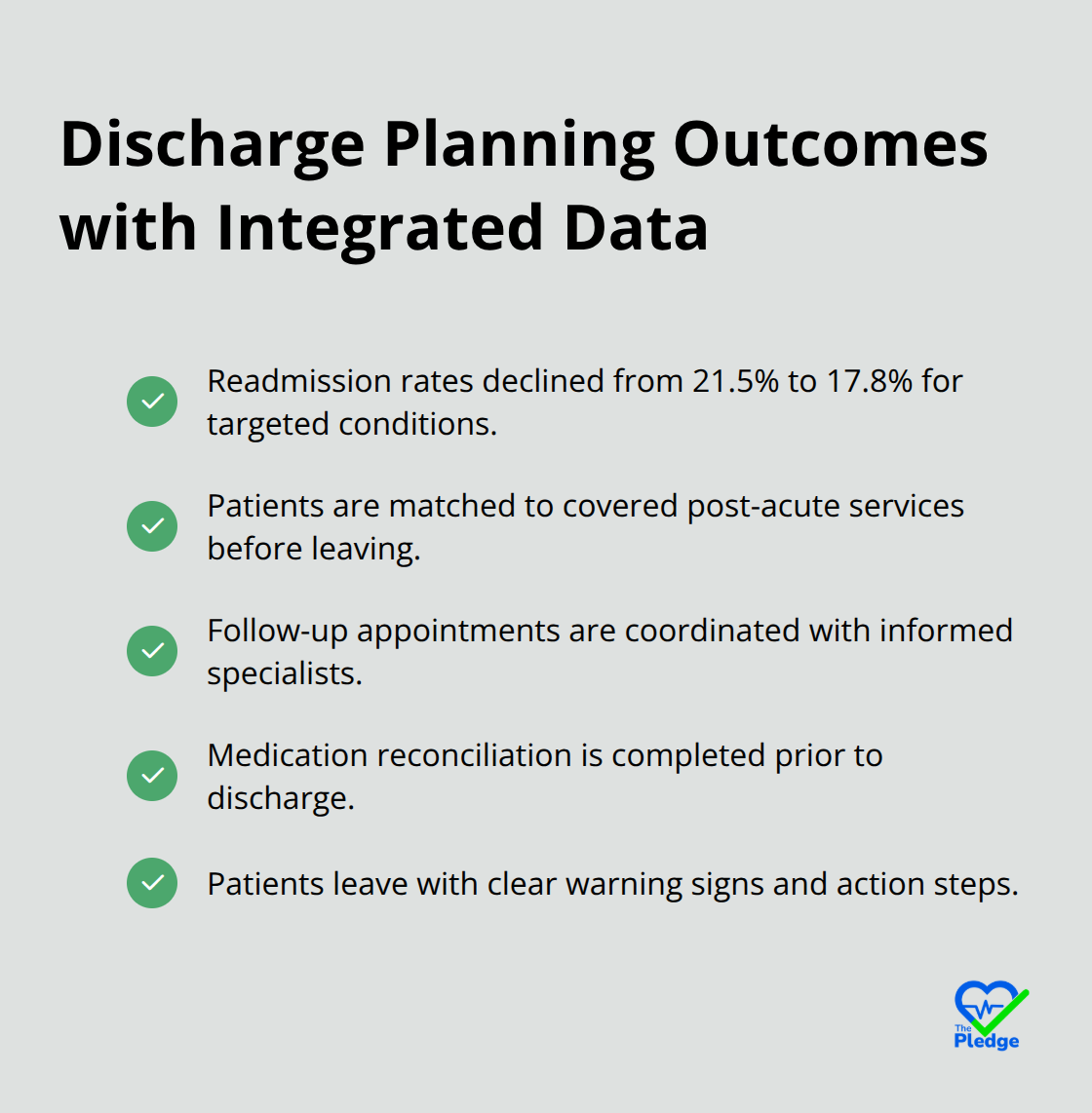
No one orders duplicate imaging. No one prescribes conflicting medications. The patient understands exactly which warning signs require immediate attention because their care team has already sent personalized alerts to their phone.
Prevention Replaces Emergency Response
Healthcare costs drop when prevention works, and prevention only works when data reaches the right person at the right moment. Integrated health information systems enable prevention-focused identification of high-risk chronic disease patients with conditions like asthma, depression, diabetes, hypertension, and lipid disorders. An insurer spots a patient with early warning signs through claims data and medication history, then alerts the patient’s primary care physician and sends the patient targeted resources about lifestyle modifications. The patient receives a reminder to attend a diabetes education class covered by their plan. Their provider adjusts medications based on recent lab work that now appears instantly in their EHR instead of arriving via fax days later. These interventions cost hundreds of dollars. An emergency hospitalization for diabetic ketoacidosis costs tens of thousands. When digital health platforms connect providers and insurers around shared patient data, the financial incentives align toward prevention, and patients benefit from care that actually prevents serious illness rather than simply treating it after the fact.
Engagement Metrics Reveal Patient Behavior Change
Platforms that deliver personalized health recommendations based on integrated data see engagement rates four times higher than industry standards, meaning patients actually use the tools, follow recommendations, and take control of their health. This engagement compounds over time-a patient who responds to one relevant reminder about a preventative screening becomes more likely to respond to the next reminder, building a pattern of proactive health management that extends far beyond any single intervention.
Final Thoughts
Health information exchange works because it aligns incentives across the entire healthcare system. When providers, insurers, employers, and patients access the same data simultaneously, everyone benefits from faster decisions, fewer errors, and better outcomes. The fragmentation that once defined healthcare-where each organization hoarded information and patients became messengers between disconnected systems-no longer has to be the default.
Digital health platforms have proven they can transform care delivery at scale. Hospitals reduce readmissions when they coordinate discharge planning with real-time insurance data. Insurers identify at-risk patients before emergencies happen and send targeted interventions that patients actually engage with. Providers make decisions based on complete medication histories instead of incomplete records, and patients take control of their health because they finally have visibility into their own care.
The financial case is equally clear: prevention costs hundreds of dollars, while emergency interventions cost tens of thousands. When data flows seamlessly across organizational boundaries, the math shifts decisively toward prevention. Healthcare systems that implement health information exchange report lower costs, better outcomes, and higher patient satisfaction simultaneously-a rare alignment where doing the right thing for patients also makes financial sense. Explore how The Pledge centralizes health data and delivers personalized, real-time insights to employees and their care teams.