Healthcare organizations are drowning in data they can’t access. Patient records sit trapped in incompatible systems, vendors hold employers hostage with switching costs, and care coordination suffers.
A vendor agnostic health platform changes this equation. At The Pledge, we’ve seen firsthand how breaking free from vendor lock-in transforms how employers manage health benefits and how providers deliver care. The organizations winning today aren’t betting on a single vendor-they’re building flexible ecosystems that adapt to their needs, not the other way around.
The Real Cost of Staying Fragmented
Data Fragmentation Hits Your Bottom Line
Healthcare data fragmentation isn’t a technical problem that only IT teams care about. It’s a business problem that directly hits your bottom line. When patient records sit trapped across incompatible systems, employers waste time and money coordinating care that should be seamless. A patient scheduled for surgery doesn’t know their cardiologist already flagged a risk. The ER orders duplicate tests because imaging results aren’t accessible. Employers pay for redundant services because nobody has a complete picture of what’s already been done.
The US healthcare system loses over $30 billion annually due to poor data interoperability. Fragmented health data costs everyone-you pay through preventable illness, providers pay through inefficient care, and the system as a whole hemorrhages resources that could go toward actual treatment.
Vendor Lock-In Multiplies the Problem
Vendor lock-in makes fragmentation worse. When your health platform only talks to one vendor’s systems, you’re stuck. Switching costs become astronomical. You’ve trained employees on one interface, integrated data with one provider, and built workflows around one system. Walking away means retraining everyone, rebuilding integrations, and managing months of implementation chaos. Employers often accept subpar service rather than face the switching penalty.
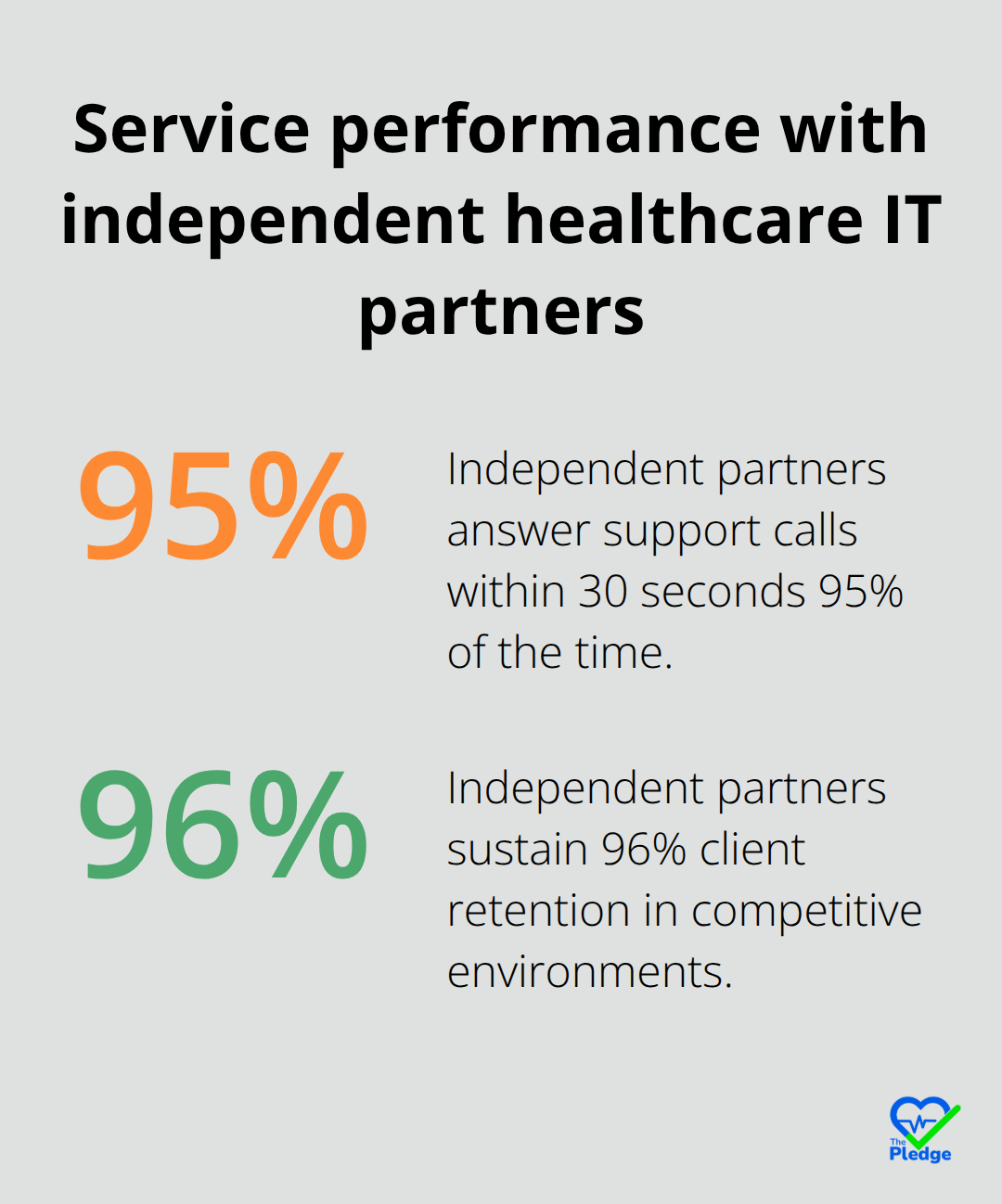
Large platform vendors struggle with 30-minute holds and deprioritized support for smaller accounts. Independent healthcare IT partners answer 95 percent of their calls within 30 seconds-a dramatic difference when your team needs help fast.
Silos Break Care Coordination
Payors and providers operate in separate silos because their systems weren’t designed to communicate. A claims system doesn’t automatically feed into care coordination tools. Benefit information doesn’t sync with clinical workflows. Employees see fragmented experiences across multiple apps, each requiring separate logins and duplicate information entry.
This fragmentation drives unnecessary costs through duplicate testing, missed preventive care opportunities, and administrative overhead. When vendors control access to your data and limit interoperability, you lose negotiating power. You can’t easily compare solutions or mix best-of-breed services from different providers. You’re locked into whatever roadmap the vendor chooses, regardless of whether it matches your strategic priorities.
The organizations winning today recognize that staying fragmented isn’t just inefficient-it’s expensive. They’re moving toward platforms that break down these walls and put control back in their hands. This shift toward flexibility and interoperability is reshaping how employers evaluate their health technology investments.
How Vendor Agnostic Platforms Break Down Silos
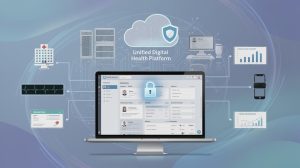
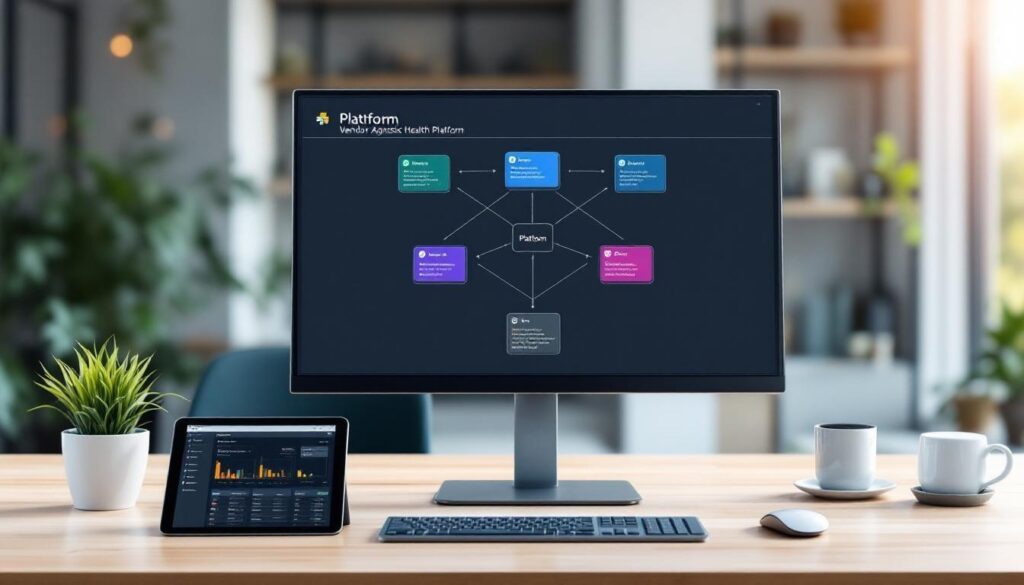
Vendor agnostic health platforms work because they prioritize interoperability over loyalty. Instead of forcing your organization into a single vendor’s ecosystem, they integrate with whatever systems you already use-your EHR, claims processor, benefits platform, pharmacy network. Healthcare organizations typically run 5 to 10 different systems simultaneously. Your payroll feeds into benefits administration. Benefits data needs to sync with claims. Claims connect to care coordination.
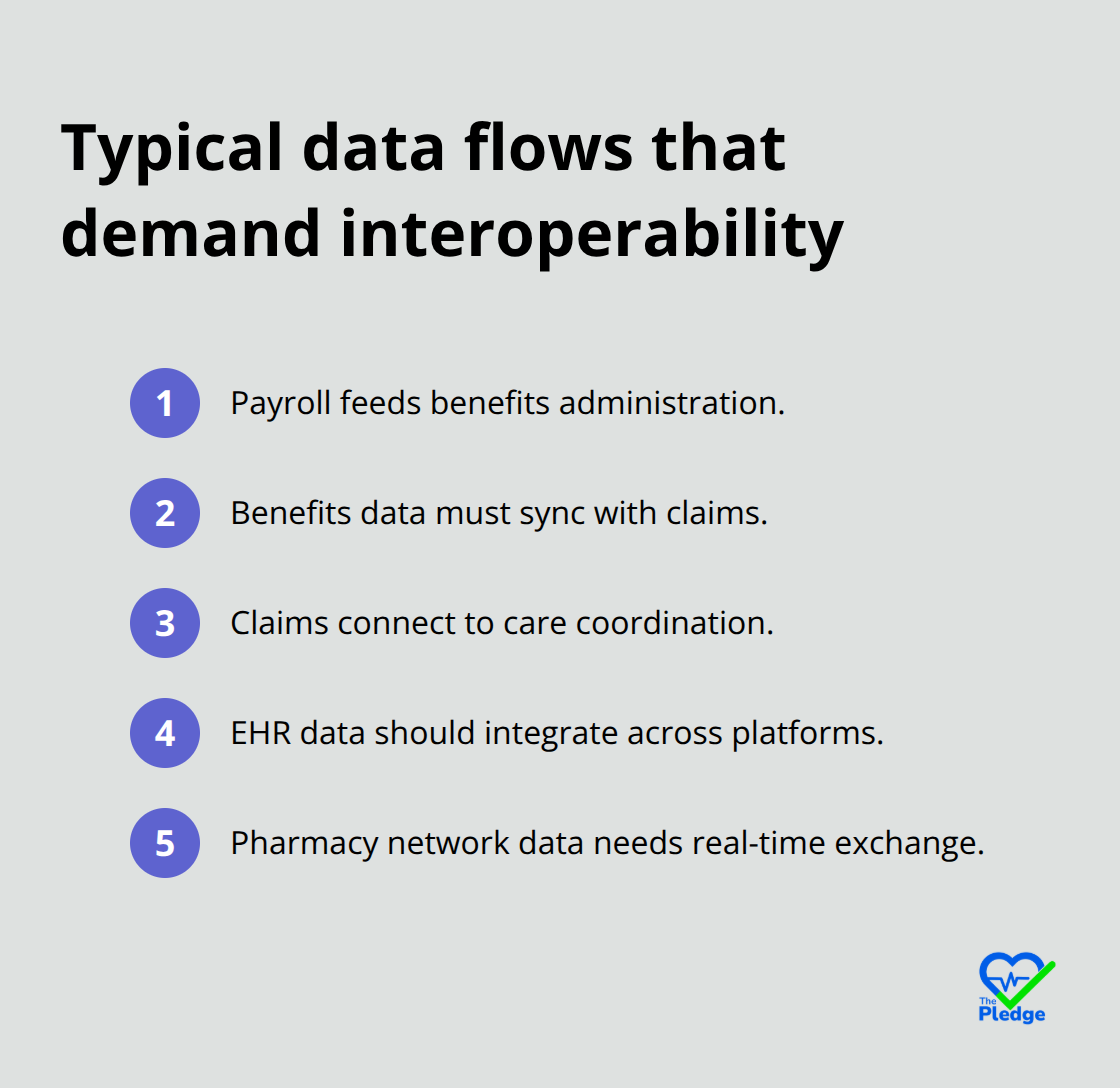
When these systems can’t communicate, you lose visibility into the full patient picture. A vendor agnostic approach treats interoperability as non-negotiable, using open standards like FHIR and HL7 to enable real-time data exchange across platforms.
Real-Time Data Transforms Decision-Making
The difference between fragmented and integrated systems shows up immediately in decision-making speed. With a vendor agnostic platform, your care team sees claims data, clinical notes, and medication history simultaneously. An ER physician knows within seconds that a patient is allergic to NSAIDs or already has a scheduled specialist visit. A benefits administrator sees which employees engage with preventive services and which ones face risk. This real-time visibility eliminates the back-and-forth emails, phone calls, and manual chart reviews that waste administrative time in traditional fragmented systems. Organizations act on data while it remains relevant, not weeks later when information finally propagates through disconnected systems. Employers identify cost drivers faster and adjust programs accordingly. Providers intervene before a patient’s condition worsens.
Switching Vendors Without Rebuilding Infrastructure
Vendor agnostic platforms give you genuine flexibility. If your current EHR vendor raises prices, delivers poor support, or fails to build features you need, switching doesn’t require rebuilding your entire infrastructure. Your data stays in open formats rather than locked into proprietary systems. Your workflows remain independent of one vendor’s API decisions. You can replace individual components-swap one benefits platform for another, add a new care coordination tool, upgrade your analytics layer-without cascading implementation projects. This flexibility fundamentally changes your negotiating position. Vendors know you can leave. That accountability drives better service, faster feature development, and more transparent pricing.
Independent healthcare IT partners report 100 percent on-time implementation rates and 96 percent client retention because they operate in this competitive environment. Large monolithic vendors, by contrast, know switching costs are prohibitive, which removes their incentive to innovate aggressively or maintain service quality. When vendors compete for your business rather than trap you within their ecosystem, everyone wins-except the vendors banking on lock-in.
Breaking Free Unlocks Strategic Control
Staying locked into a single vendor means accepting whatever roadmap that vendor chooses, regardless of whether it matches your strategic priorities. A vendor agnostic approach returns control to your organization. You can mix best-of-breed services from different providers. You can prioritize features that matter to your employees rather than features the vendor wants to sell. You can negotiate pricing based on actual value delivered, not switching penalties. This control extends to your data. You own it. You access it. You decide who sees it and how it flows through your health ecosystem.
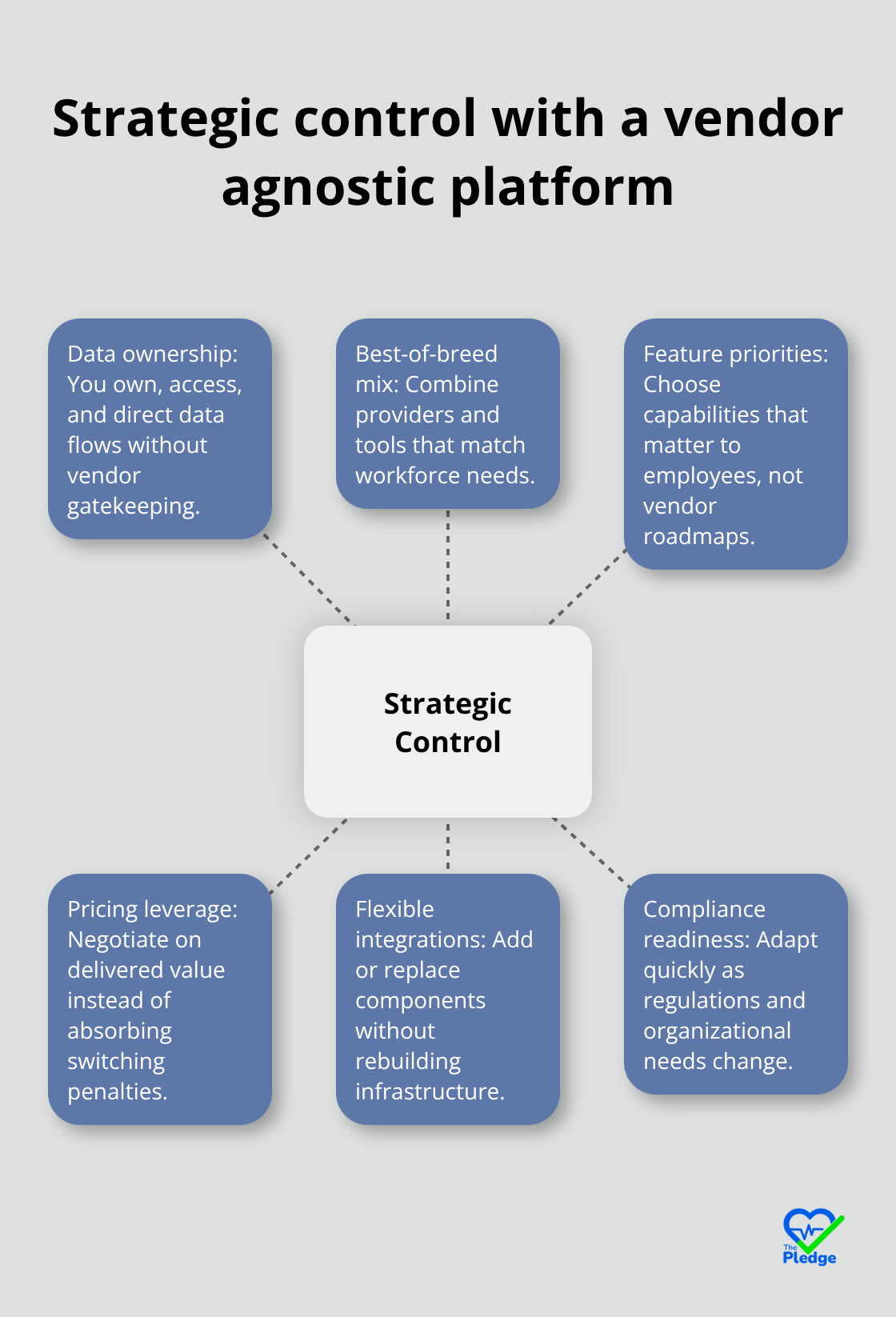
That ownership matters when regulations shift, when your organization grows, or when new technologies emerge that could improve care.
The organizations winning today recognize that vendor lock-in isn’t just inefficient-it’s a strategic liability. They’re moving toward platforms that break down these walls and put control back in their hands. This shift toward flexibility and interoperability is reshaping how employers evaluate their health technology investments and prepare for the next generation of care coordination challenges.
Why Employers Choose Vendor Agnostic Health Platforms
The Switching Cost Trap
Employers face a straightforward calculation: vendor lock-in drains budgets while vendor agnostic platforms protect them. The math is compelling. When you’re locked into a single health platform vendor, your switching costs compound annually. You’ve trained HR teams on proprietary interfaces, integrated payroll and benefits systems around one vendor’s architecture, and embedded their workflows into your health benefits strategy. Walking away means retraining staff, rebuilding integrations from scratch, and managing implementation disruption that stretches 4 to 8 weeks. Most employers accept mediocre service rather than absorb those costs. Vendor agnostic platforms eliminate this penalty entirely. Your data stays portable. Your workflows remain independent of one vendor’s decisions. If your current provider raises prices 40 percent, delivers poor support, or stops building features you need, you can switch. That competitive pressure forces vendors to innovate faster, maintain service quality, and price transparently.
Competitive Pressure Drives Better Service
Independent healthcare IT partners report 96 percent client retention compared to the 75 to 84 percent industry standard for large platform vendors. That gap isn’t incidence-it reflects the difference between competing for business and assuming customers are trapped. Large platform vendors struggle with 30-minute holds and deprioritized support for smaller accounts. Independent partners answer 95 percent of their calls within 30 seconds, a dramatic difference when your team needs help fast. When vendors know you can leave, they prioritize your needs differently. They respond faster to feature requests. They invest in implementation quality rather than assuming you’ll tolerate poor execution. They price transparently instead of hiding fees in contracts.
Control Unlocks Better Employee Outcomes
Control over your health ecosystem translates directly into better employee outcomes. When you’re not locked into one vendor’s roadmap, you can assemble best-of-breed solutions that match your workforce’s actual needs. You can prioritize preventive care modules that reduce chronic disease burden rather than adopt features the vendor wants to push. You can integrate with your EHR, claims processor, pharmacy network, and emerging digital health tools without waiting for vendor approval or paying integration fees. The Pledge centralizes health data across your existing systems, enabling real-time visibility into employee health trends and engagement metrics. Employers using vendor agnostic platforms achieve 4x industry-standard engagement rates because employees experience seamless care coordination instead of fragmented tool sprawl.
Real Engagement Drives Real Outcomes
When your benefits data syncs automatically with clinical workflows, when employees receive personalized reminders tied to their actual health plan coverage, when family members can coordinate care without duplicate data entry, engagement follows. That engagement drives measurable outcomes: employees catch preventive care windows before conditions escalate, providers coordinate more effectively, and administrative overhead shrinks. Employers reduce long-term healthcare spend because they’re optimizing care delivery, not paying switching penalties to a captive vendor. The flexibility to mix services from multiple providers means you can respond to your workforce’s changing needs without renegotiating contracts or managing vendor transitions. You control which features matter, which integrations you prioritize, and how your health ecosystem evolves.
Final Thoughts
The shift toward vendor agnostic health platforms isn’t a trend-it’s becoming the standard that forward-thinking employers demand. Organizations that break free from single-vendor ecosystems gain immediate advantages: faster decision-making, lower switching costs, and genuine control over their health strategy. When your data flows freely across systems instead of sitting trapped in proprietary silos, your team responds to employee needs in real time rather than weeks later.
Employers using vendor agnostic solutions negotiate from strength because vendors compete for your business instead of assuming you’re locked in. That accountability drives better service, faster innovation, and transparent pricing. Your employees experience seamless care coordination across providers, payors, and family members instead of juggling disconnected apps and duplicate data entry, which translates into engagement rates that outpace industry standards by 4x.
The path forward requires centralizing your health data and breaking down the walls between your existing systems. A vendor agnostic health platform integrates seamlessly with your current benefits infrastructure, your EHR, your claims processor, and emerging digital health tools-enabling real-time data flows that automatically deliver personalized reminders tied to actual coverage while providers see complete patient histories instantly. Explore how The Pledge transforms health data into actionable insights for your workforce.