

Workplace wellness isn’t a luxury perk anymore-it’s a business necessity. Companies that invest in employee health see measurable returns through lower healthcare costs, higher productivity, and stronger retention rates.
At The Pledge, we’ve seen firsthand how creating a culture of wellness in the workplace transforms organizations from the inside out. This guide walks you through building a program that actually sticks.
Why Wellness Matters to Your Bottom Line
Burned-out employees cost organizations between 15% and 20% of annual payroll through voluntary turnover alone. Globally, low workplace wellbeing drains roughly $322 billion from economies each year. For employers, this translates into constant recruitment cycles, lost institutional knowledge, and teams stretched thin covering vacant roles. Healthcare costs compound the problem. When employees lack adequate wellness support, they’re 63% more likely to miss work and twice as likely to start job hunting. These aren’t abstract metrics-they’re direct hits to productivity and your ability to retain talent.
The Engagement and Retention Connection
Wellness culture and retention connect directly and measurably. WebMD Health Services’ 2025 Workplace and Employee Survey found that employees are 34% more likely to stay with their employer when wellbeing is genuinely valued. More striking, 56% higher engagement occurs when employees feel their organization cares about their wellbeing.
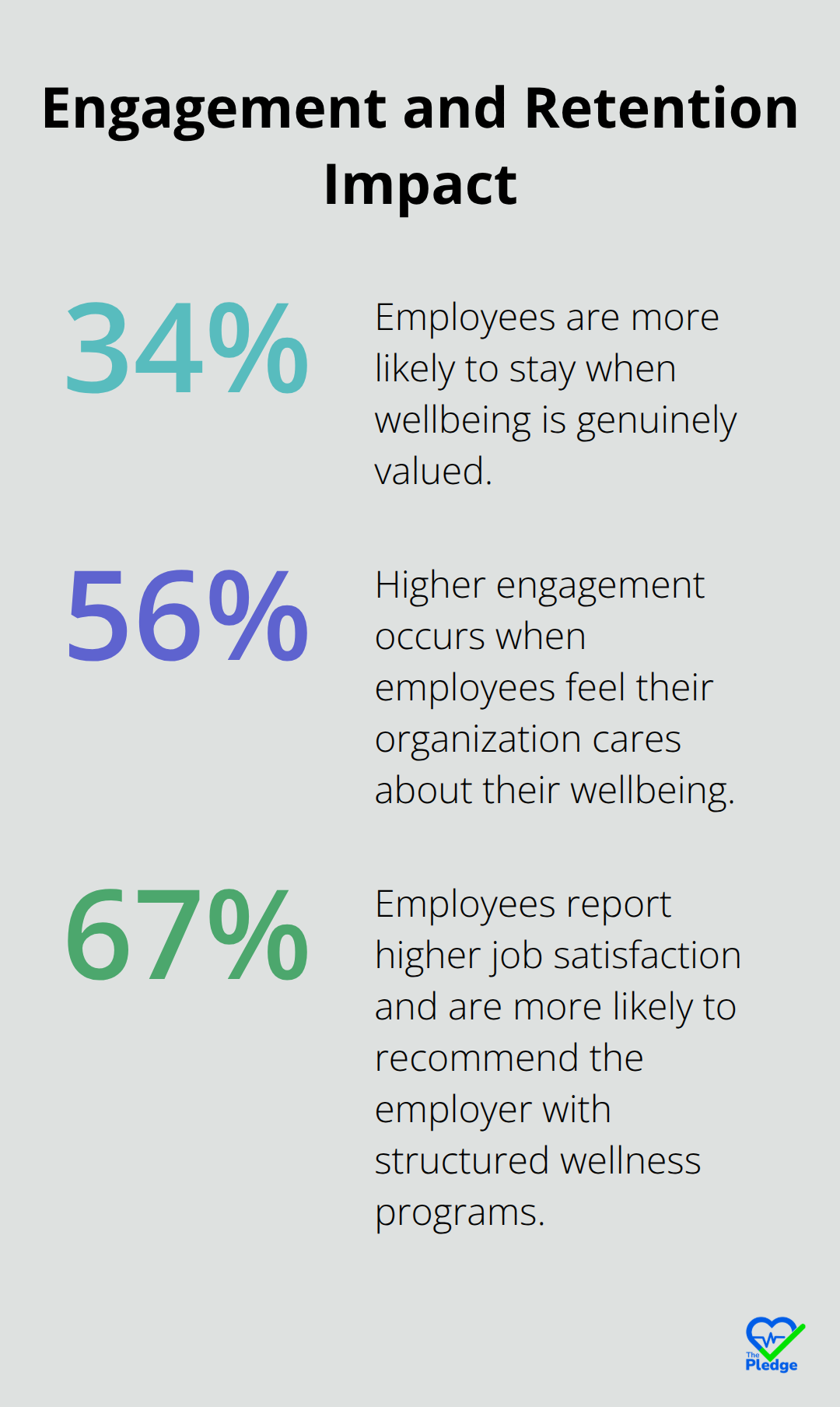
This engagement translates into meaningful work output. Employees who experience strong organizational support for wellbeing tend to work more hours not because they’re forced to, but because they find their work meaningful. Companies with structured wellness programs see 67% of their workforce reporting higher job satisfaction and greater likelihood to recommend the employer to others. The inverse is equally telling: lacking a sense of belonging at work makes employees 12 times more disengaged and five times more likely to seek employment elsewhere. Recognition-led wellness approaches reduce burnout by up to 90%, with employees evaluating their lives more positively at double the rate compared to those without such programs.
Healthcare Costs and Prevention
Rising healthcare expenses force employers to choose between absorbing costs or shifting burdens to employees through higher premiums and deductibles. Wellness programs address this through prevention and early intervention. About 80% of large U.S. employers now offer wellness programs, reflecting the $8 billion industry built around this need. A randomized controlled trial published in JAMA in 2019 evaluated a workplace wellness program across 20 sites with over 4,000 employees. After 18 months, participating sites saw an 8.3 percentage-point higher rate of employees reporting regular exercise and a 13.6 percentage-point increase in active weight management compared to control groups. While the study found no significant short-term changes in healthcare spending or clinical markers, it underscored that health behaviors respond to wellness interventions. The researchers noted that 18 months may be insufficient to observe full cost reductions, and longer follow-up periods likely reveal stronger financial returns.
What This Means for Your Organization
The evidence points to one clear reality: wellness programs work when organizations commit to them strategically. Employers who act on wellness today build the foundation for healthier, more engaged workforces tomorrow. The next step involves assessing where your organization stands and what your employees actually need.
Where to Start Building Your Wellness Program
Start by listening to your employees, not guessing what they need. Many organizations launch wellness programs based on assumptions, only to watch participation rates languish between 20% and 40%. The disconnect happens because companies invest in solutions that don’t match their workforce’s actual health priorities. Conduct a rapid health needs assessment before spending a dime. This doesn’t require expensive consultants. A simple anonymous survey asking employees about their top health concerns, current barriers to wellness, and preferred program formats reveals far more than any generic template. WebMD Health Services recommends actively listening through quick surveys or virtual focus groups and sharing results plus planned actions with transparent representation across generations, race, gender, and orientation. Include questions about mental health specifically, since anxiety is now the top mental health issue in the workplace according to SHRM. Ask about stress levels, sleep quality, physical activity frequency, and whether employees feel their organization cares about their wellbeing. The answers guide everything that follows and prevent wasted spending on irrelevant programs.
Getting Leadership to Commit
No wellness program survives without visible leadership support. This isn’t about executives sending cheerful emails about fitness challenges. It means tying wellbeing directly to organizational priorities and performance metrics. McKinsey research shows that effective wellbeing hinges on empathetic leadership, strong benefits, and psychological safety rather than only perks like snacks or yoga. Have senior leaders tie a percentage of their own performance goals to wellbeing outcomes-a VP might allocate 35% of goals to wellbeing metrics. Leaders should participate visibly in wellness activities, take time off without apologizing, and discuss personal wellbeing in town halls to normalize it across the organization. This signals that wellbeing isn’t an afterthought or a distraction from real work. Budget allocation follows naturally once leadership understands the math. If voluntary turnover costs between 50% and two times an employee’s annual salary depending on role, a wellness investment of 1% to 2% of payroll becomes obviously rational. Present this calculation to finance and board leadership. Show them the JAMA study data: while immediate healthcare cost reductions took longer than 18 months to materialize, behavioral changes in exercise and weight management appeared quickly, setting the stage for long-term savings.
Choosing Technology That Actually Works
Many organizations buy wellness platforms and wonder why adoption stalls. The problem isn’t the platform itself but poor integration with existing systems and workflows. Employees shouldn’t need to log into five different apps to track their health. Gartner research emphasizes lowering barriers to entry, making benefits clear, reducing stigma, and simplifying participation to build a human-centric employee value proposition. Your wellness technology should integrate seamlessly with your existing health plans, centralize health data, and provide real-time reminders that feel helpful rather than intrusive. Look for platforms offering personalized health dashboards, not generic ones. The technology should send employees reminders tied to their personal health goals like sleep and daily movement, not just generic wellness tips. Prioritize platforms that connect with your payroll system, benefits provider, and health plan data. Avoid solutions requiring manual data entry, which guarantees low adoption. Test any platform with a small group before rolling out organization-wide. Ask employees whether the user experience feels intuitive and whether the app helps them take action on their health, not just track information passively.
Moving From Selection to Implementation
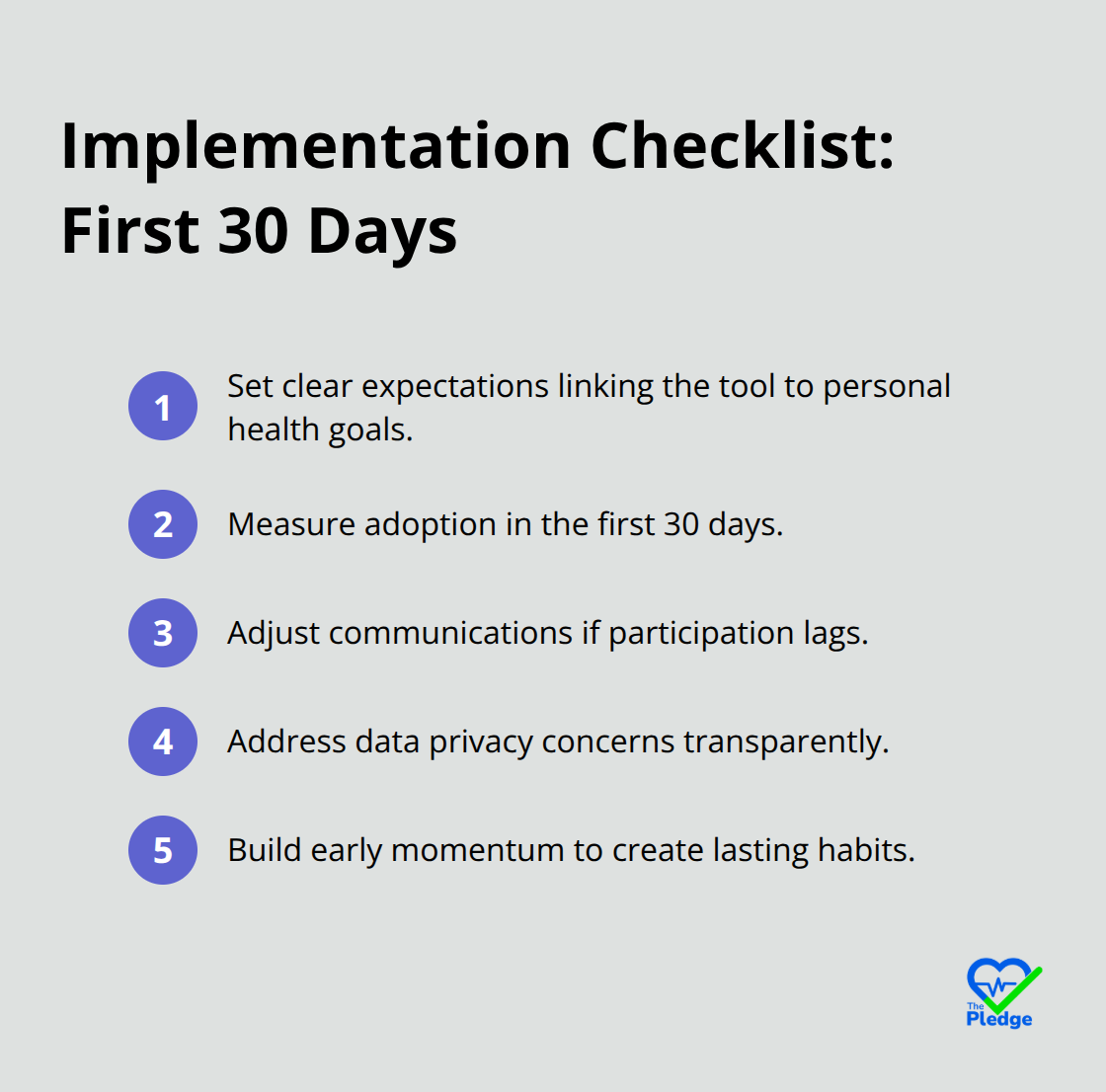
The right technology choice matters, but implementation determines success. Assign a cross-functional wellness team to oversee rollout, communicate transparently about what the platform offers, and address employee concerns about data privacy head-on. Set clear expectations about what employees can accomplish with the tool and how it connects to their personal health goals. Measure adoption rates in the first 30 days and adjust your communication strategy if participation lags. Early momentum builds habits that stick.
With leadership committed, employee needs understood, and technology in place, your organization stands ready to launch initiatives that employees actually want to participate in.
Make Wellness Personal, Not Generic
Personalization separates programs that stick from those that gather dust. Generic approaches fail because they treat everyone as identical. A 28-year-old software engineer and a 52-year-old operations manager have completely different health priorities, barriers, and motivations. Start by segmenting your workforce based on actual health data, not assumptions. Your wellness platform should identify who struggles with sleep, who faces cardiovascular risk, who manages chronic conditions, and who simply needs to move more. Then build targeted interventions for each group.
Someone tracking prediabetes needs different messaging and resources than someone managing anxiety. The WebMD Health Services survey found that aligning programs with organizational mission and values boosts authenticity and engagement, with team-based challenges driving collaboration while personalized coaching supports individual growth. Implement biometric screenings early to provide concrete health snapshots including cholesterol and glucose levels, then pair those results with one-on-one coaching rather than generic group sessions. This approach costs more upfront but generates measurable behavior change.
Data-Driven Segmentation Drives Results
Research from the JAMA study showed that personalized programs increased regular exercise participation by 8.3 percentage points within 18 months. The data proves that customization works where one-size-fits-all fails. Set up your wellness platform to send personalized health reminders tied to individual goals like sleep quality and daily movement targets, not just generic wellness tips that employees ignore. Make health assessments available regularly so people understand their current habits and identify clear next steps without judgment.
Lower Barriers to Boost Participation
Participation crumbles when people feel forced rather than supported. Research consistently shows wellness program participation ranges between 20% and 40%, with financial incentives proving ineffective for most large employers. Instead, focus on lowering barriers and clarifying benefits. Create peer ambassador programs where respected employees lead wellness activities and normalize participation within their teams. Recognize groups and teams publicly when they engage in wellness, since research shows employees who receive mostly public recognition are up to three times more likely to feel they belong.
Build Wellness Into Daily Work Life
Foster everyday conversations about wellness through manager prompts and team rituals like walking meetings or outdoor activities. Build flexibility into work arrangements with self-scheduling options, four-day weeks, and no-meeting days that signal the organization genuinely values wellbeing. Offer scalable physical activity options including onsite yoga, after-work sports, park runs, and discounted gym memberships so people find activities matching their preferences. Encourage daily micro-breaks and movement throughout the day, with leadership modeling by taking breaks visibly themselves.
Prioritize Mental Health Support
Make mental health a priority by promoting Employee Assistance Program resources and offering mindfulness, resilience, and stress-reduction options specifically. Anxiety ranks as the top mental health issue in the workplace, so these resources address real employee needs rather than theoretical concerns. Monitor what’s working by collecting employee feedback quarterly and adjusting initiatives based on actual participation patterns and sentiment, not what leadership assumes people want.
Final Thoughts
Creating a culture of wellness in the workplace requires commitment, but the payoff justifies the investment. Organizations that move beyond generic programs and implement personalized, data-driven initiatives see measurable improvements in employee engagement, retention, and productivity. When employees feel their organization genuinely cares about their wellbeing, they stay longer, work more meaningfully, and contribute more fully to organizational goals.
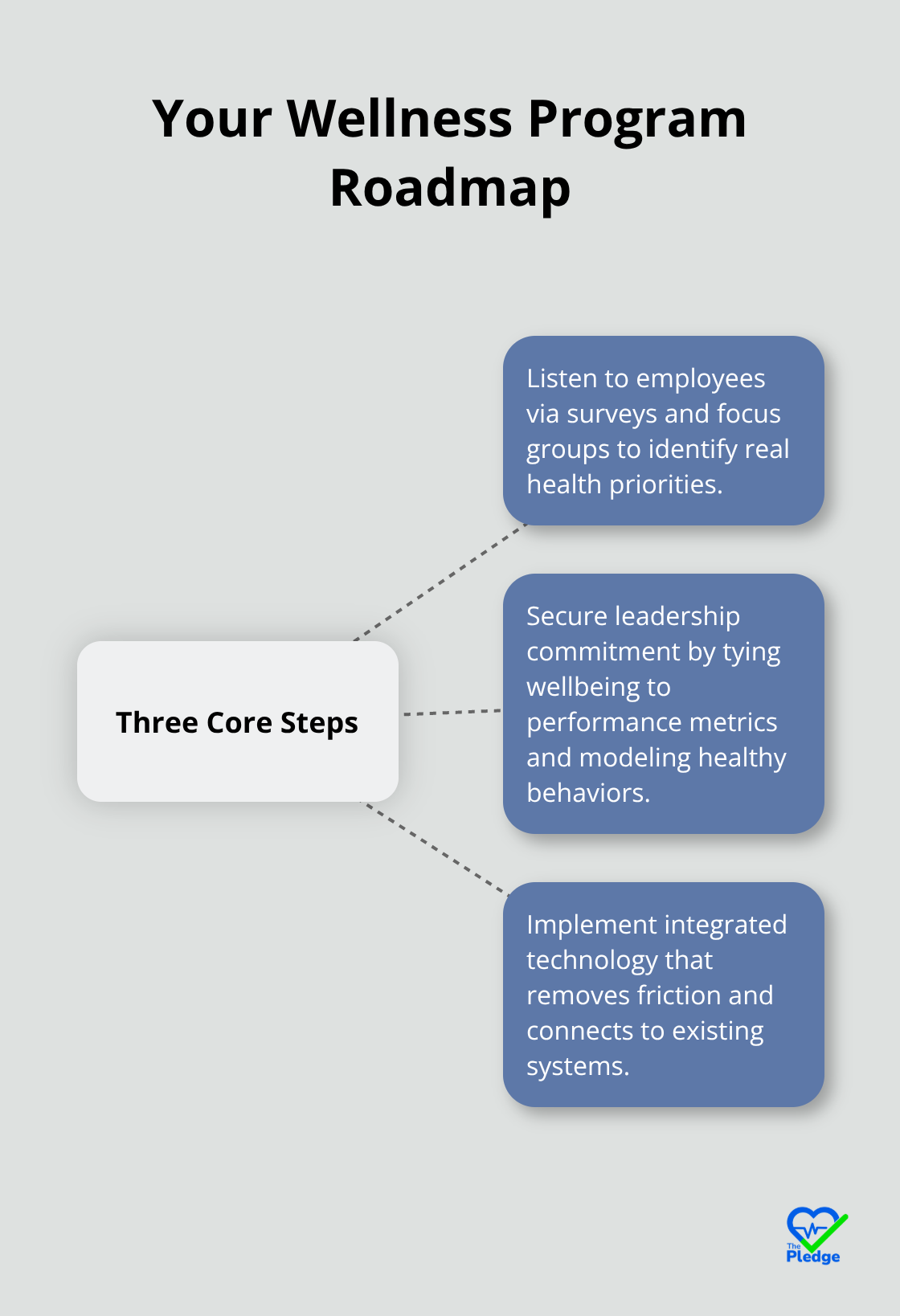
The path forward involves three concrete steps: listen to your employees through surveys and focus groups to understand their actual health priorities rather than guessing; secure visible leadership commitment by tying wellbeing to performance metrics and having executives model healthy behaviors; and implement technology that integrates seamlessly with existing systems and removes friction from participation. Avoid the trap of launching programs that gather dust because they don’t match employee needs or require too much effort to access. Long-term success depends on treating wellness as an ongoing organizational practice, not a one-time initiative, while measuring progress quarterly and adjusting based on actual participation patterns and employee feedback.
The financial case remains compelling-voluntary turnover costs between 50% and two times an employee’s annual salary, making even modest wellness investments rational from a pure cost perspective. Beyond the numbers, organizations that prioritize employee wellbeing build stronger cultures where people feel they belong and find meaning in their work. The Pledge centralizes health data and delivers personalized reminders that drive real engagement, helping your organization build sustainable wellness programs that actually stick.