
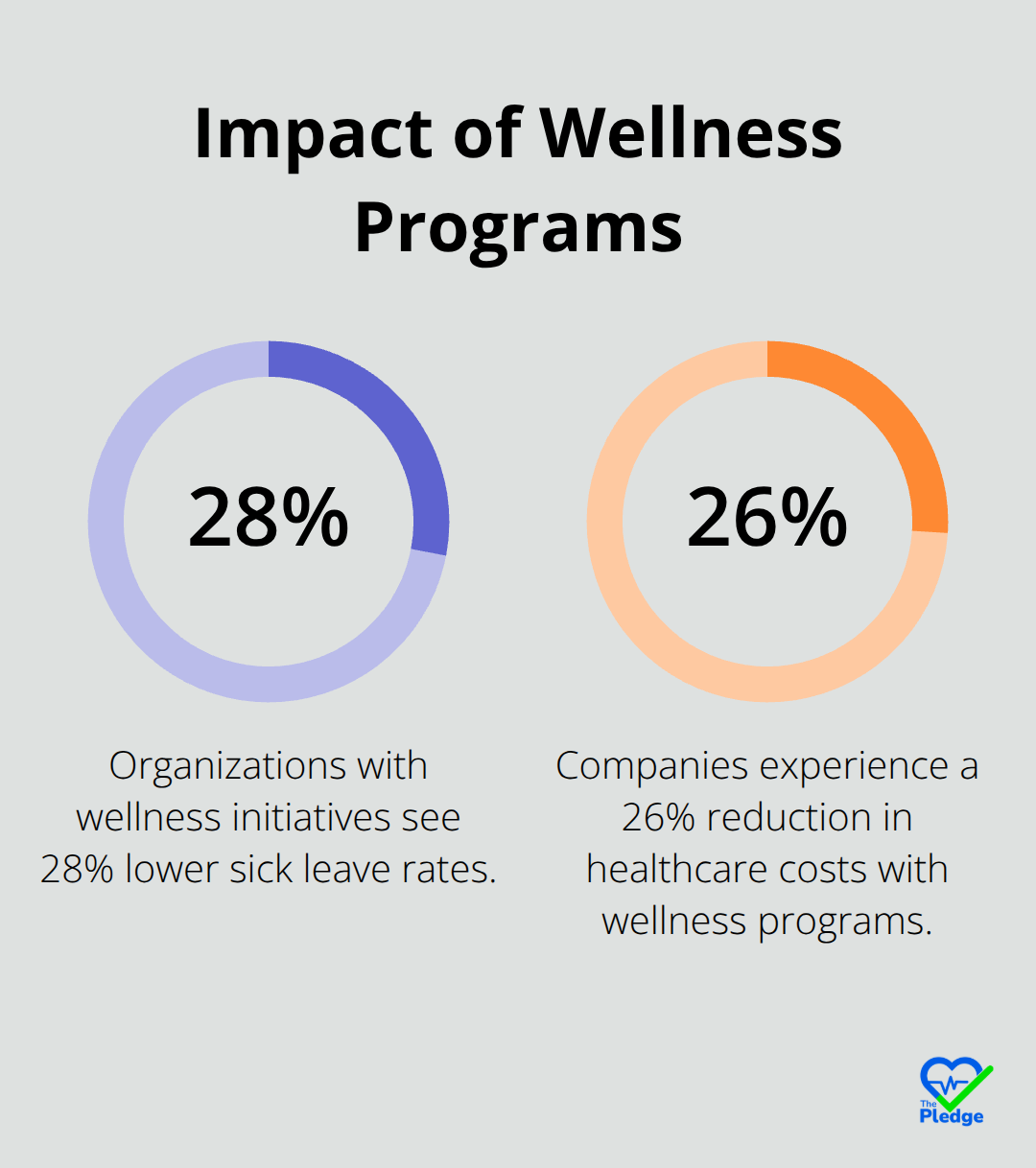
Employee wellness programs have become a top priority for forward-thinking companies. Research shows that organizations with comprehensive wellness initiatives see 28% lower sick leave rates and 26% reduction in healthcare costs.
We at The Pledge believe that implementing effective wellness ideas in the workplace creates healthier, more productive teams. The right strategies can transform your office culture while boosting both employee satisfaction and business performance.
How Physical Wellness Transforms Your Workplace
Physical wellness initiatives generate measurable returns that smart companies can’t ignore. Johnson & Johnson saved $250 million over a decade through their comprehensive wellness programs, while Harvard research shows every dollar spent on workplace health initiatives returns $3.27 in reduced costs and improved productivity. The key lies in strategic physical wellness programs that address the reality that only 39% of employees consider themselves physically fit.
On-Site Fitness Solutions That Work
Companies that install on-site fitness facilities report significant engagement improvements, but the approach matters more than the equipment budget. Workplace wellness programs cover over 50 million U.S. workers and are intended to reduce medical spending, increase productivity, and improve well-being when leadership actively uses the facilities (engagement rates jump to 80% according to workplace wellness studies). Simple installations like bike racks paired with bike-to-work incentives create immediate impact without major capital investment. Multi-sports courts and outdoor fitness areas generate higher usage than traditional indoor gyms because they encourage group activities and team bonding during breaks.
Ergonomic Workstations and Movement Integration
Standing desks reduce sedentary time by up to 66% according to BMC Public Health research, directly addressing the productivity drain from prolonged sitting. However, the real game-changer comes from mandatory movement breaks every 90 minutes combined with walking meetings. California companies that implement structured deskercise sessions see 23% fewer workplace injuries and reduced healthcare claims. Walking meetings boost creativity while burning calories, and posted maps of nearby walking routes increase break-time physical activity by 35%.
Movement Policies That Drive Results
The most successful programs mandate rather than suggest these movement breaks, treating them as non-negotiable productivity tools rather than optional wellness perks. Companies report that employees initially resist structured movement policies but quickly adapt when they experience the energy boost and mental clarity benefits. Physical wellness programs work best when they complement mental health initiatives (which we’ll explore next), creating a comprehensive approach to employee wellbeing that boosts productivity, reduces healthcare costs, and creates a positive company culture.
Mental Health Programs That Actually Move the Needle
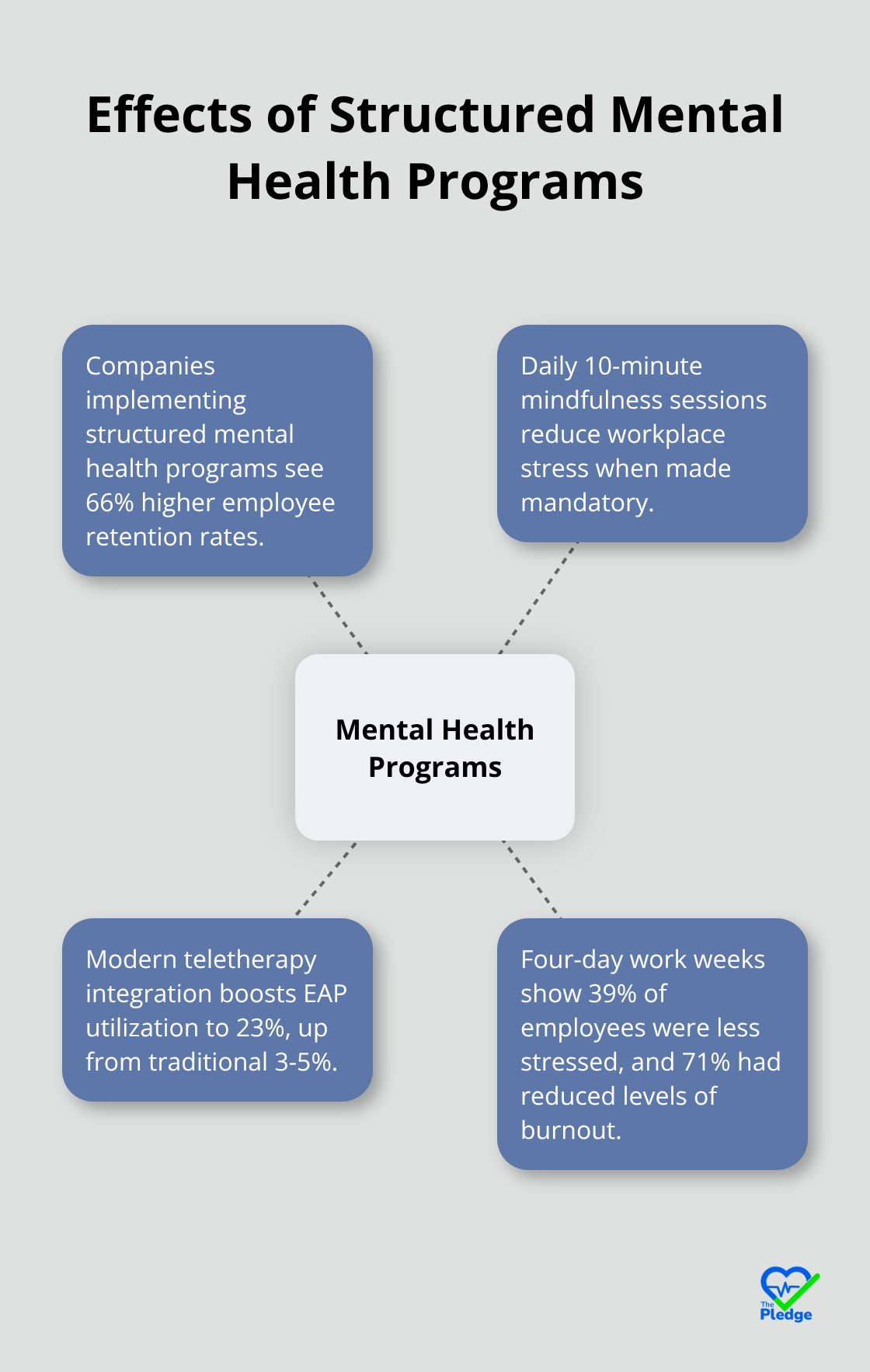
Mental health initiatives deliver the highest returns in workplace wellness when companies abandon generic approaches for targeted interventions. The American Psychological Association reports that 59% of employees experienced negative impacts from work-related stress in the past month, which costs employers $225 billion annually in lost productivity. Companies that implement structured mental health programs see 66% higher employee retention rates according to Talkspace research, but success depends on three specific strategies that most organizations execute poorly.
Structured Mindfulness Programs With Measurable Outcomes
Daily 10-minute mindfulness sessions reduce workplace stress when participation becomes mandatory rather than optional. Companies like Aetna report $3,000 per employee productivity gains from structured meditation programs that track participation rates and stress level improvements through biometric monitoring. The key lies in scheduling these sessions during peak stress periods (typically 2-4 PM) and measuring cortisol level changes rather than relying on subjective feedback surveys.
Employee Assistance Programs That Employees Actually Use
Traditional EAPs fail because only 3-5% of employees use them, but modern teletherapy integration boosts utilization to 23% when companies provide dedicated mental health days and remove barriers to access. Financial stress affects 77% of employees according to BrightPlan research, which makes financial counseling integration essential for comprehensive mental health support. The most effective programs combine immediate crisis support with proactive mental health screening and follow-up care coordination.
Flexible Work Policies That Reduce Burnout
Four-day work weeks show that 39% of employees were less stressed, and 71% had reduced levels of burnout while maintaining productivity levels, according to recent pilot programs across multiple industries. However, flexible scheduling works better than shortened weeks for most companies, particularly when combined with mandatory disconnection policies that prohibit after-hours communication. Time management tools integrated with project management systems help employees set boundaries while meeting deadlines and create sustainable work patterns that support long-term mental health.
Mental health programs work best when they connect directly to nutrition initiatives, as physical and psychological wellness reinforce each other in measurable ways.
What Nutrition Changes Actually Boost Employee Performance
Workplace nutrition programs fail when companies focus on generic healthy eating campaigns instead of strategic food environment changes that drive measurable behavior shifts. Poor nutrition contributes to over $225 billion in lost productivity annually in the U.S., but companies that implement targeted nutrition interventions see 40% higher employee satisfaction rates and 15% productivity gains according to workplace wellness studies. The Journal of Telemedicine and Telecare reports that employees who participated in workplace nutrition counseling lost 6% more weight over six months compared to those who did not, which proves that structured programs outperform awareness campaigns every time.
Strategic Food Environment Design That Changes Behavior
Successful nutrition programs start with the elimination of junk food from break rooms and replacement of vending machines with fresh fruit delivery services, which increases healthy snacking by 73% according to nutrition intervention studies. Companies should coordinate community-supported agriculture programs or establish partnerships with local farmers’ markets to provide weekly fresh produce deliveries directly to employee break areas. Healthy catered meals during company events and meetings create 300% more engagement than educational seminars about nutrition, while negotiated discounts for healthy food options within a 2-mile radius of the office provide practical value that employees actually use.
Hydration Infrastructure That Drives Results
Companies that install hydration stations with filtered water systems increase daily water consumption by 45% when they combine infrastructure with personalized hydration tracking through workplace wellness apps. Organizations that stock electrolyte supplements and herbal teas alongside water stations report higher utilization rates and improved afternoon energy levels among employees (particularly during the 2-4 PM productivity dip). The most effective approach combines infrastructure improvements with monthly nutrition workshops that teach meal planning and provide recipe exchanges.
Nutrition Education Programs That Stick
Monthly workshops that focus on practical meal planning skills generate higher participation rates than general nutrition awareness sessions, with workplace interventions proving effective for improving healthy behavior. Companies achieve the best results when they combine hands-on cooking demonstrations with recipe exchanges and healthy potluck events that create social engagement around nutrition goals. Financial incentives for participation (such as gift cards for healthy grocery purchases) boost attendance by 45% and create lasting behavior changes that extend beyond the workplace environment through effective employee wellness programs.
Final Thoughts
Successful wellness ideas in the workplace require systematic measurement and sustained commitment rather than sporadic initiatives. Companies that track participation rates, healthcare cost reductions, and employee satisfaction scores through quarterly assessments achieve 300% higher program effectiveness than organizations that rely on annual surveys alone. The most impactful measurement combines biometric data with productivity metrics and absenteeism data to demonstrate concrete returns on wellness investments.
Leadership participation drives cultural change and integration with existing business processes. When executives actively participate in wellness programs, employee engagement rates jump from 44% to 80% (proving that cultural change starts at the top). Organizations achieve the best results when they embed wellness activities into daily operations rather than treat them as separate initiatives.
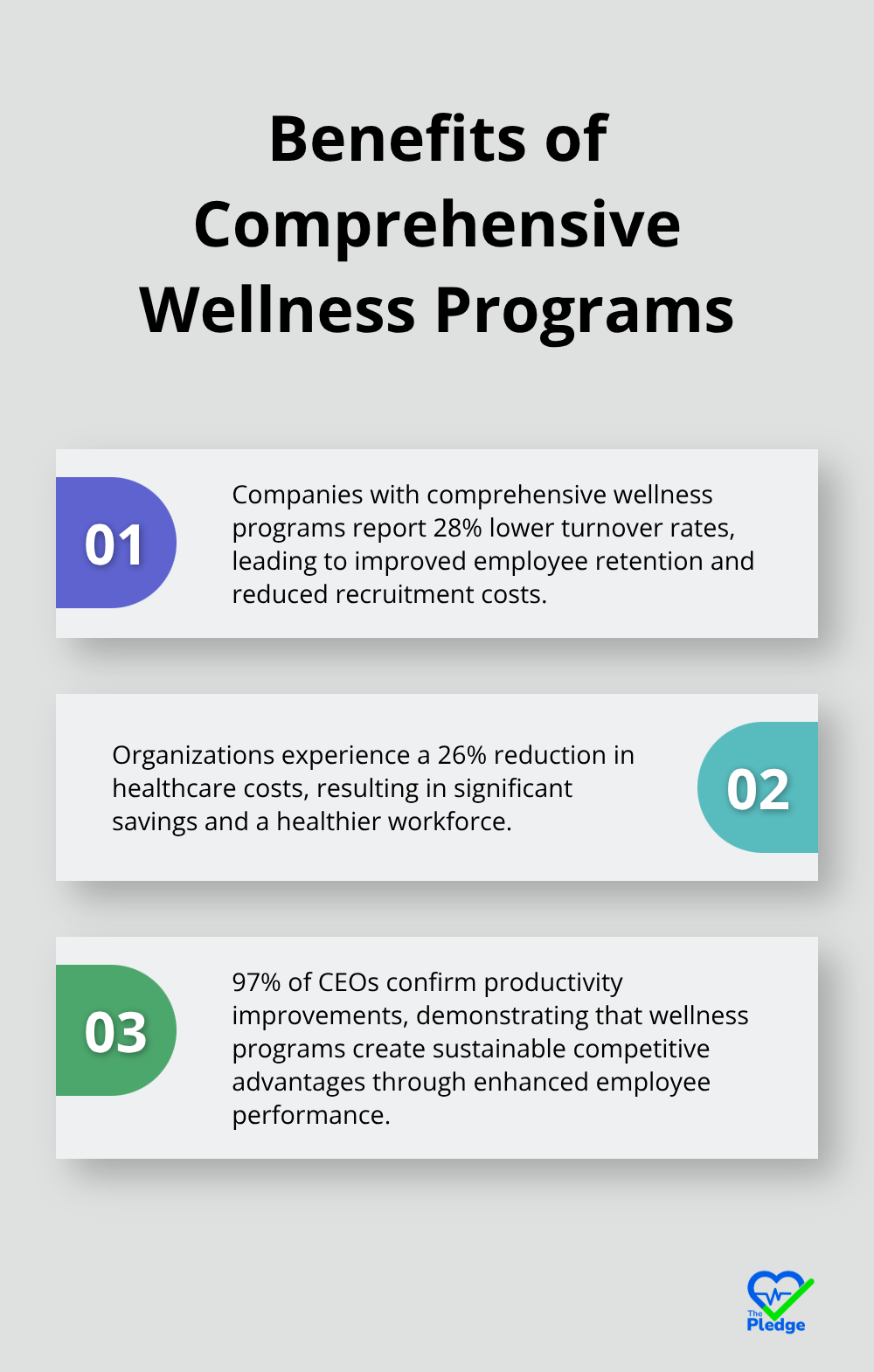
Companies with comprehensive wellness programs report 28% lower turnover rates, 26% reduction in healthcare costs, and 97% of CEOs confirm productivity improvements. These programs generate sustainable competitive advantages through improved employee retention, reduced recruitment costs, and enhanced company reputation in talent markets. Modern wellness platforms like The Pledge streamline program management with centralized health data and real-time capabilities that help companies measure success and maintain employee engagement.