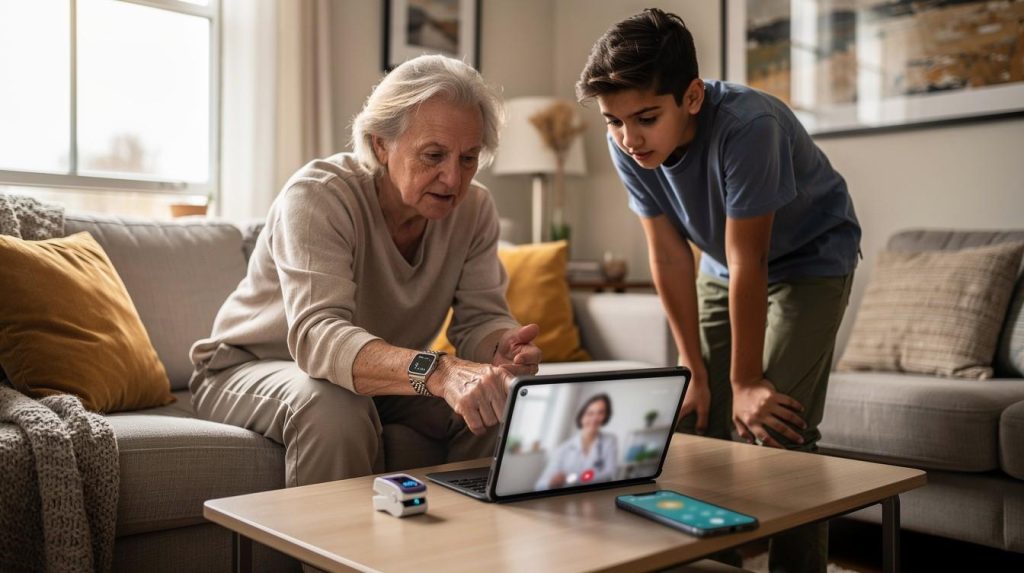
Remote patient monitoring has transformed how families stay informed about their loved ones’ health. Instead of waiting for scheduled doctor visits or worrying between check-ins, families now get real-time updates that keep everyone connected and in control.
At The Pledge, we’ve seen firsthand how the right technology removes barriers between caregivers and seniors, making it easier to spot health changes early and make decisions together.
How Remote Monitoring Keeps Families in the Loop
Real-time health data transforms family communication from reactive to proactive. When a senior’s blood pressure spikes or glucose levels drop, family members receive immediate alerts instead of discovering problems at the next scheduled appointment. Research on remote monitoring systems for older adults shows that programs combining telemonitoring devices with automated alerts significantly reduce unplanned hospitalizations, with some studies reporting up to 57% relative risk reduction. Families now spot deterioration early and coordinate care before emergencies happen.
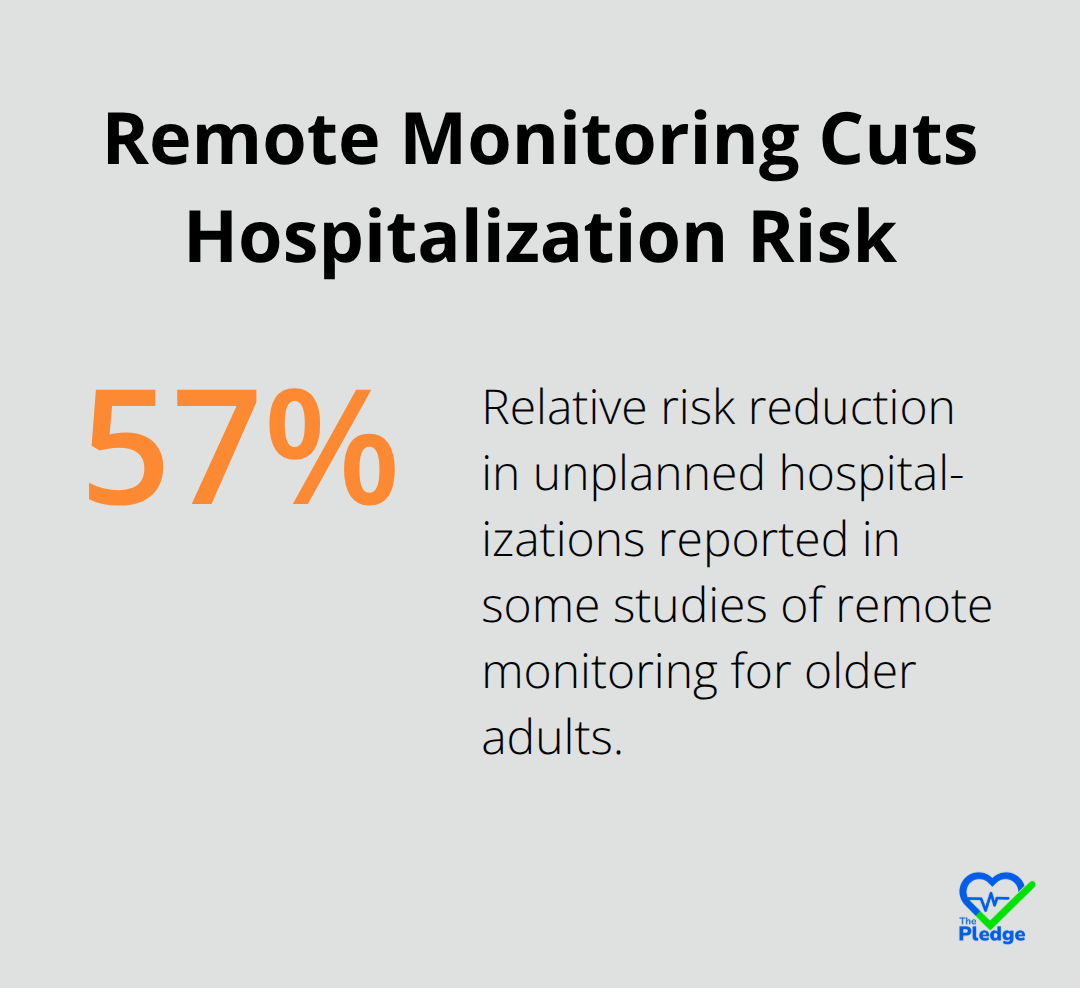
Continuous home-based monitoring enables earlier detection of health changes and prompt intervention, shifting how families manage chronic conditions.
What Constant Access Means for Family Peace of Mind
Anxiety drops dramatically when families have visibility into daily health metrics. Instead of calling a parent repeatedly or waiting nervously between doctor visits, caregivers access real-time dashboards showing blood pressure readings, activity levels, weight, and symptom reports. Research on remote monitoring systems found that quality of life improved significantly for patients using monitored care, measured through standardized assessments like EQ-5D-5L and SF-36 scores. Families report that knowing their loved ones are being tracked reduces the mental burden of wondering whether something is wrong. The psychological benefit matters as much as the clinical one-caregivers feel empowered rather than helpless, and seniors appreciate the safety net without feeling suffocated by constant check-ins.
Moving from Waiting to Acting Together
Remote monitoring data enables families to make informed decisions collaboratively with healthcare providers. When a caregiver sees concerning trends in the data (say, declining activity or weight loss), they discuss these patterns with the care team before a crisis develops. Access to patient-generated data improves patient education and fosters perceived control, supporting better self-management across the family unit. Families using these systems report more meaningful conversations with doctors because they bring concrete data rather than vague concerns. This shifts the conversation from “Mom seems off lately” to “Here’s her activity level declining by 30% over two weeks-what should we adjust in her care plan?” Faster clinical decision-making and stronger family involvement in treatment decisions follow naturally.
How Technology Bridges the Communication Gap
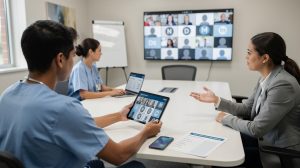
The right platform centralizes health information so families and providers access the same data simultaneously. Wearable devices, mobile apps, and telehealth platforms work together to eliminate the fragmented communication that once delayed care. When a family member shares data with a provider through a secure system, everyone operates from the same facts. This eliminates confusion about medication changes, appointment schedules, or symptom progression. Families no longer play telephone tag or wonder whether their concerns reached the right person. The technology handles the coordination, freeing families to focus on what matters-supporting their loved one’s health.
From Information to Action
Real-time dashboards do more than inform-they empower families to act. A caregiver who notices a pattern in blood sugar readings can adjust meal timing before a dangerous spike occurs. A family member who sees declining activity levels can suggest a walk or contact the care team about potential depression. These small interventions, made possible by constant visibility into health data, prevent minor issues from becoming major crises. Families transition from passive observers waiting for bad news to active participants shaping their loved one’s health trajectory. This shift in agency strengthens both the family relationship and the clinical outcomes.
The tools families need to stay connected are now available-what matters next is understanding which technologies fit your specific situation and how to integrate them into your care routine.
What Remote Monitoring Devices Actually Deliver
The market offers three categories of remote monitoring technology, and families need to understand which solves their actual problem rather than chasing the latest gadget. Wearable devices like smartwatches and fitness trackers capture activity, heart rate, and sleep patterns, but they work best when integrated with a platform that alerts your care team to concerning trends.
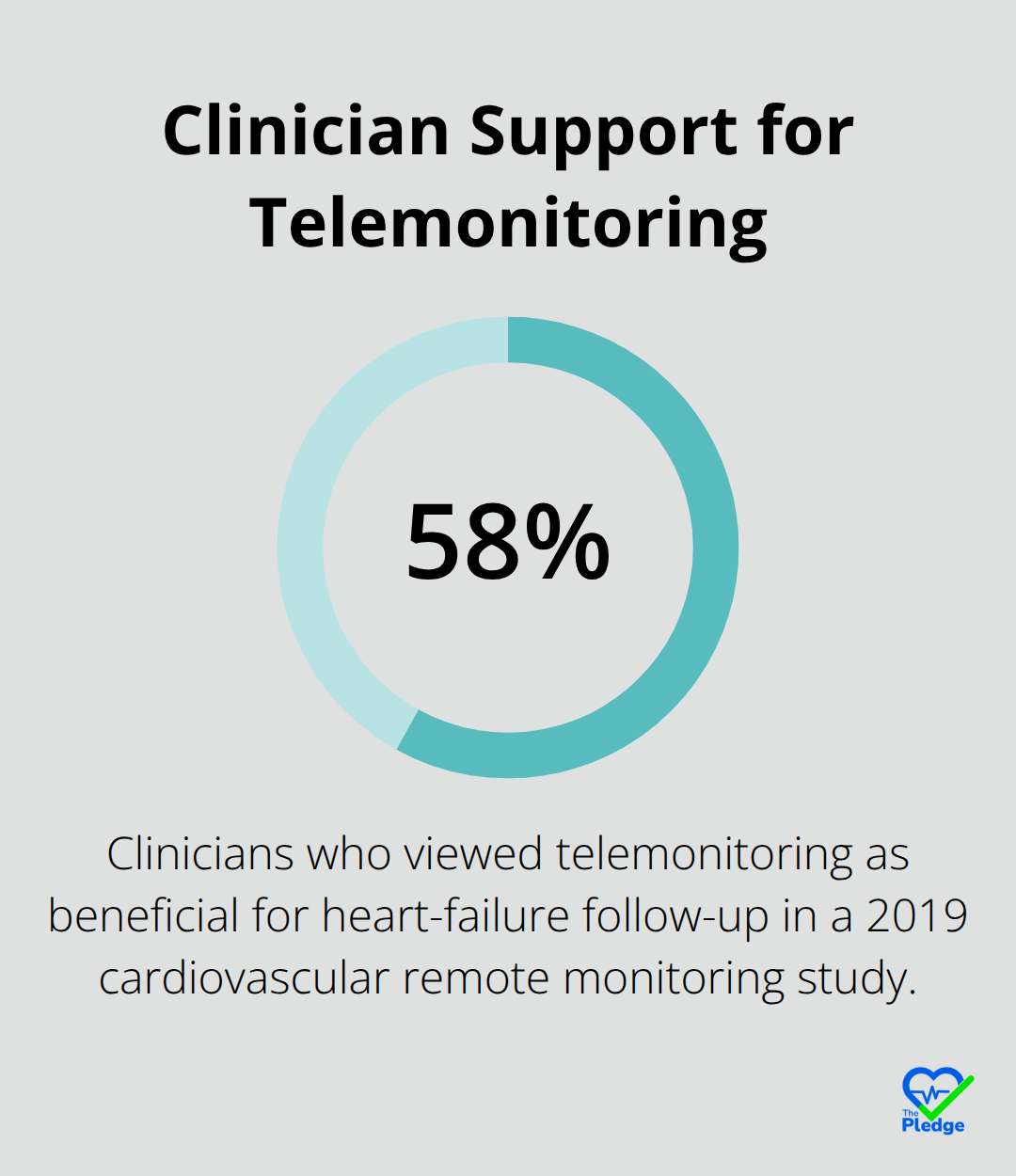
A 2019 study on cardiovascular remote monitoring found that 58% of clinicians in Norway viewed telemonitoring as beneficial for heart-failure follow-up, yet the benefit came from organized systems with alerts and nurse review, not from the device alone. Standalone wearables generate endless data that families ignore because nobody translates it into actionable insights.
Mobile Apps and Centralized Dashboards
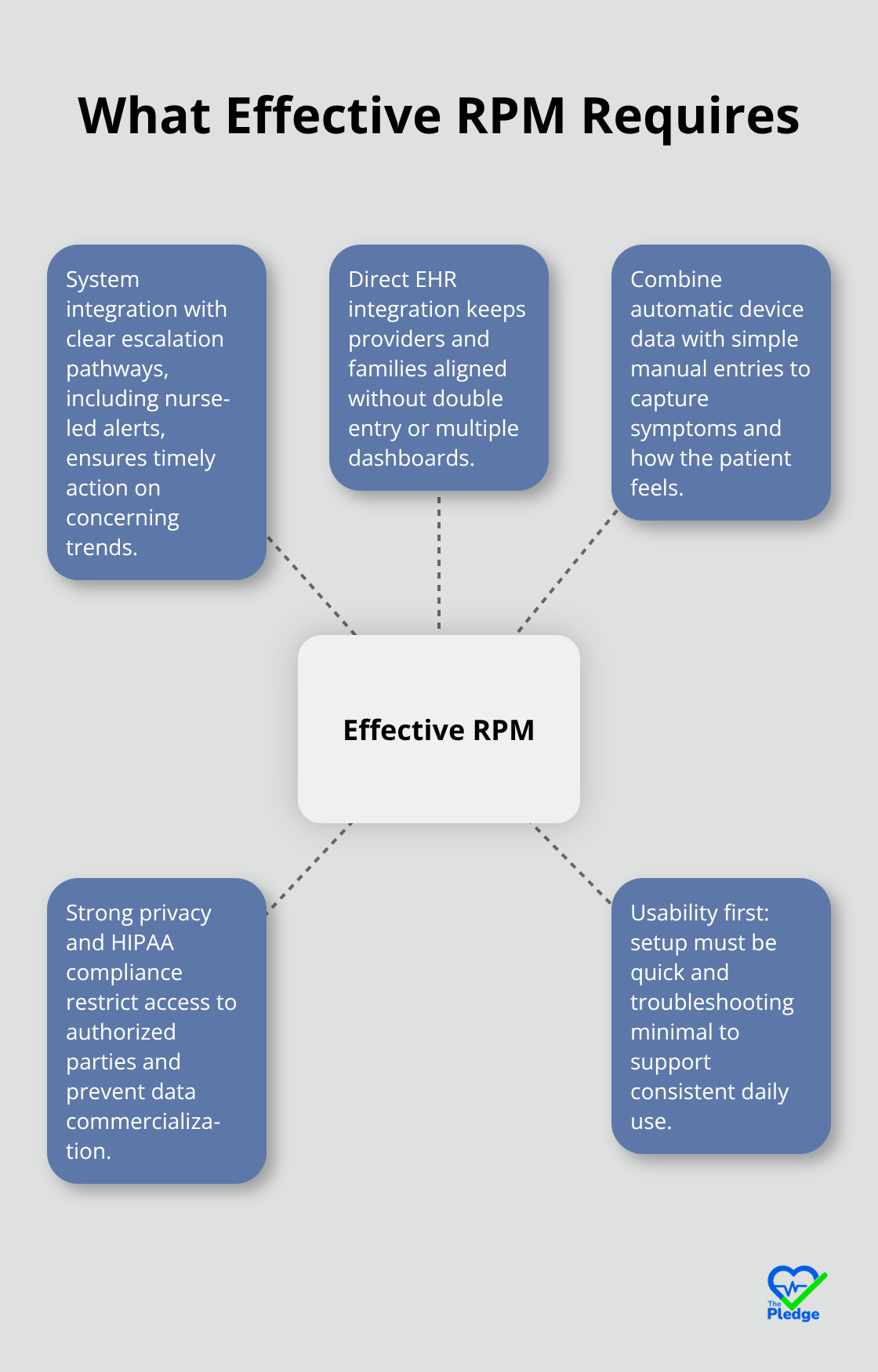
Mobile apps for care coordination eliminate fragmentation by centralizing vitals, symptom reports, and medication adherence in one dashboard that both families and providers access simultaneously. The most effective setups combine wearable data with manual entries-a parent logs blood pressure readings from a home cuff while a smartwatch tracks activity automatically, and the app flags patterns that need attention. Telehealth platforms layered on top create the complete picture: families see real-time metrics, receive video consultations with providers who review that data, and get alerts when metrics cross safety thresholds. Research on remote monitoring systems for older adults shows that programs combining telemonitoring devices with automated nurse-led alerts achieved significant benefits, while programs lacking integration and clear escalation protocols produced no significant benefit.
Matching Technology to Specific Health Conditions
Choosing the right combination requires matching the patient’s condition to what each tool actually monitors. For diabetes management, continuous glucose monitors paired with apps that share readings with providers in real time reduce nocturnal hypoglycemia and enable faster responses to abnormal values-pediatric studies show this approach works because glucose swings happen rapidly and require immediate adjustment. For heart failure or COPD, daily weight checks, blood pressure readings, and activity levels matter more than continuous tracking, so a simple scale and blood pressure cuff connected to an app with daily check-ins suffice. Asthma management benefits from sensor-based devices that track medication use and trigger reminders, with studies showing high adherence rates versus lower rates for traditional inhalers without sensors.
Integration and Interoperability Matter Most
Families often over-invest in wearable complexity when a straightforward approach works better-a parent managing a senior’s multiple chronic conditions needs one app dashboard that integrates data from three different devices, not three separate apps creating alert fatigue. Interoperability matters enormously here: confirm that any device or app syncs directly with your provider’s electronic health record system, not through a separate login or manual data transfer. The worst systems require families to enter data twice or check multiple dashboards. Look for platforms that combine automatic data capture from devices with simple manual entry for subjective information like how the patient feels, because real-world monitoring mixes objective metrics with patient-reported outcomes. Health Recovery Solutions earned Best in KLAS recognition for remote patient monitoring for four consecutive years specifically because their platform prioritizes seamless EHR integration and reduces clinician friction when reviewing data.
Privacy, Security, and Usability
Privacy and security matter equally-verify that any platform limits data access to authorized family members and providers only, protects patient information against third-party commercialization, and complies with HIPAA requirements. The technology should feel invisible to families; if setup requires hours of configuration or daily troubleshooting, adoption fails. The technology itself matters far less than how it connects to clinical action and whether families actually use it consistently. Understanding these distinctions helps you select tools that fit your family’s workflow rather than adding complexity to an already demanding caregiving situation.
How Remote Monitoring Transforms Daily Life for Families
Remote monitoring fundamentally changes how seniors live and how families support them. A senior with heart failure who receives daily weight monitoring alerts can catch fluid buildup before it becomes dangerous, allowing them to contact their provider and adjust medication rather than ending up in the emergency department. That’s the difference between independence and loss of autonomy. Research on remote monitoring systems for older adults found that programs combining telemonitoring devices with automated nurse-led alerts reduced unplanned hospitalizations by up to 57% in some cases, with other studies showing 28–30% reductions. These improvements translate directly into seniors staying home longer, avoiding the physical and emotional trauma of hospitalization, and maintaining control over their own lives. When a caregiver can see that a parent’s activity level remains stable and blood pressure stays controlled, they stop making unnecessary visits or pushing for premature moves to assisted living. The parent retains dignity and choice because the data proves they’re managing well.
Speed Changes Everything in Real-World Care
The speed of caregiver response matters enormously in real-world outcomes. A family member who receives an alert that a loved one’s glucose is dropping dangerously low can call immediately to check on them and ensure they eat something, preventing a fall or loss of consciousness. Without that alert, the problem goes unnoticed until someone visits or the person becomes symptomatic. Caregivers using remote monitoring systems respond to health changes within hours rather than days, which prevents minor problems from cascading into emergencies that consume far more time and resources. One remote monitoring program at Frederick Health significantly reduced hospitalizations and ED visits because alerts enabled early intervention before patients deteriorated enough to require hospitalization.
Data Transforms Family Conversations
Families make fundamentally different decisions when they work with concrete data rather than guesses about what’s happening. When a daughter sees her mother’s weight climbing steadily despite reported diet compliance, she can discuss whether the scale is accurate, whether the mother is eating more than she realizes, or whether medication changes are causing fluid retention-and then adjust the care plan accordingly with the provider. That conversation happens weeks earlier than it would without the data, and it’s grounded in facts rather than frustration or worry. The family stops second-guessing themselves because they have concrete information showing what’s actually happening, enabling them to make informed decisions that reflect their loved one’s true health status and preferences.
Final Thoughts
Remote patient monitoring has moved beyond experimental technology into everyday practice for families managing chronic conditions. The evidence is clear: families using these systems catch health problems earlier, respond faster when issues emerge, and make better decisions together with their care teams. Seniors maintain independence longer because data proves they’re managing well, and caregivers feel empowered rather than anxious because they have visibility into what’s actually happening instead of guessing between visits.
The real shift isn’t about the devices themselves-it’s about how families operate when they have access to the same information their providers see. Conversations become concrete instead of vague, interventions happen before crises develop, and relationships strengthen because caregivers can support their loved ones proactively rather than reactively. Studies consistently show that remote patient monitoring reduces unplanned hospitalizations, improves quality of life, and often generates cost savings that matter to families stretched thin (with some programs reporting up to 57% reductions in hospitalization risk).
Technology makes this accessible now, and we at The Pledge help families coordinate care across providers and make informed decisions together through secure data sharing and personalized health insights. Start with your family’s actual needs, choose tools that integrate cleanly with your providers, and watch how visibility transforms your approach to supporting your loved ones’ health. Explore how The Pledge can simplify your family’s health management and connect everyone who matters to your care.
![[Guide] Incentives That Drive Preventive Health Participation](https://thepledge.app/wp-content/uploads/emplibot/Guide_-Incentives-That-Drive-Preventive-Health-Participation_1783650286-300x168.jpeg)